
Motmot

Dunnock vs House Sparrow

Prunella modularis versus Passer domesticus

Play a quiz with Dunnock and House Sparrow
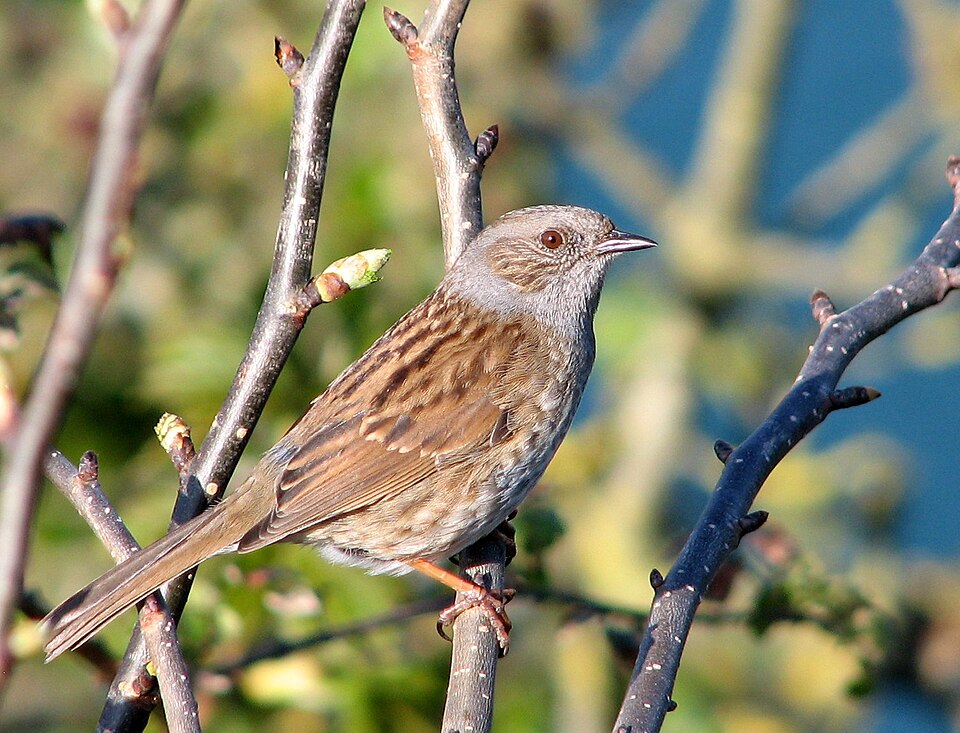
Dunnock (Prunella modularis) Dunnock
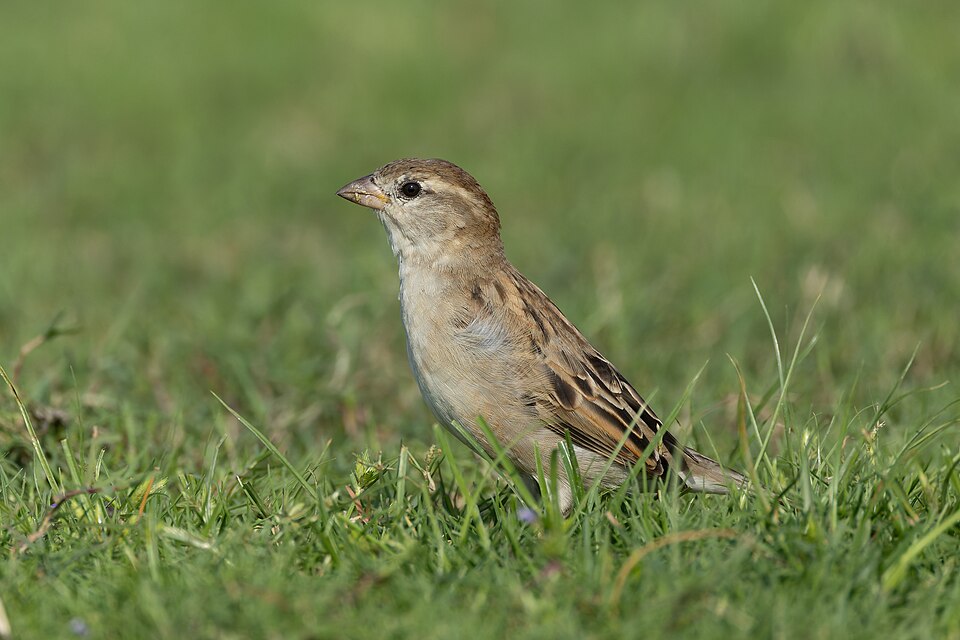
House Sparrow (Passer domesticus) House Sparrow

Media

Loading…

In short

The most reliable way to separate Dunnock from House Sparrow is by structure and head pattern: Dunnocks have a fine, pointed bill and a plain, dull grey head, while House Sparrows have a thick, conical bill and, in males, bold head markings. Juvenile and female House Sparrows are more uniformly brown and can look similar to Dunnocks, but Dunnocks always show a more slender, delicate build and frequent wing-flicking behavior. Dunnocks are smaller and slimmer, with a less robust, more 'creeping' jizz, and both sexes look alike, unlike the strongly dimorphic House Sparrow. Pay close attention to bill shape, head color, and any wing-flicking or feeding behavior for a confident ID.

Identification tips

  1. Bill shape: Dunnock has a fine, slender, pointed bill (insect-eater); House Sparrow has a thick, conical bill (seed-eater). This is often the quickest field mark at close range.
  2. Head pattern (adult): Dunnock shows a plain, dull grey head with no strong markings; House Sparrow male has a bold black bib, grey crown, and chestnut nape, while female/juvenile is plain brown with a pale supercilium but never grey-headed.
  3. Juvenile confusion: Juvenile Dunnocks are browner on the head, more obviously streaked, and 'fluffy'; juvenile House Sparrows are paler below, with broader buff feather edges and a pale supercilium, but lack the Dunnock's grey tones. Both can look scruffy, but Dunnock is more streaked overall.
  4. Sexual dimorphism: House Sparrow is strongly dimorphic (males with bold head/bib, females plain); Dunnock sexes look alike.
  5. Body shape and jizz: Dunnock is slimmer, more elongated, and moves with a creeping, shuffling gait, often low in cover. House Sparrow is chunkier, more upright, and hops or runs openly.
  6. Wing-flicking: Dunnock frequently flicks its wings, especially when agitated or foraging; House Sparrow does not show this behavior.
  7. Size: House Sparrow is larger and bulkier (16 cm, 30.5 g) than Dunnock (13–14.5 cm, lighter build).
  8. Plumage contrast: Dunnock has a brown, black-streaked back and grey head; House Sparrow is more uniformly brown above (female/juvenile) or boldly marked (male).
  9. Habitat: House Sparrow is closely tied to human habitation, often in flocks; Dunnock prefers hedges, shrubs, and is usually solitary or in pairs.
  10. Vocalizations: Dunnock's song is a thin, tinkling warble; House Sparrow gives repeated, harsh 'chirrup' calls.
  11. Feeding behavior: Dunnock feeds quietly, often close to cover; House Sparrow feeds openly, often in groups.
  12. Tail shape: Not strongly diagnostic, but Dunnock's tail may appear longer and more flicked, while House Sparrow's is shorter and more square.
  13. Seasonal variation: House Sparrow males are most striking in breeding plumage; females and juveniles are always plainer, but never show the Dunnock's grey head.
  14. Group size: House Sparrows are often in flocks, especially outside breeding season; Dunnocks are rarely seen in groups.
  15. Context: If seen in dense shrubbery, especially flicking wings and creeping, suspect Dunnock; if in open, noisy groups near people, likely House Sparrow.

Size

House Sparrow is noticeably bulkier and longer, averaging about 16 cm in length and 30.5 g in mass [wikidata], while Dunnock is smaller at 13–14.5 cm and lighter (no precise mass in sources, but clearly less robust) [wikipedia]. House Sparrows have a full chest and large, rounded head, making them appear chunkier than the slender, more delicate Dunnock. In direct comparison, a Dunnock will look slimmer and more elongated, especially in the bill and tail.

Plumage

Juvenile and female House Sparrows are the main confusion risk, as both are brown and streaked above with pale underparts, but House Sparrows are paler below and have less contrast between head and body. Dunnock adults (all ages/sexes) have a dull grey head and brown, black-streaked back, with a fine, pointed bill; juveniles are browner on the head and more obviously streaked, with 'fluffy' feathering. House Sparrow males are easily told by their bold black bib, grey crown, and chestnut nape, but females and juveniles lack these and are buffy-brown with a pale supercilium and plain face. House Sparrows never show the Dunnock's plain grey face or the same subtle, streaked brown upperparts. No distinctive age-specific upperwing pattern is described for either species in flight, but the overall impression is that House Sparrows are chunkier and more uniform, while Dunnocks are more finely streaked and 'soft' looking, especially as juveniles.

Behaviour

Dunnocks are often seen creeping low in vegetation, flicking their wings frequently (a unique behavior among small brown birds in Europe), and are less likely to hop openly on the ground. House Sparrows are more gregarious, often in noisy flocks, feeding openly on the ground or around human habitation. Dunnocks are solitary or in loose pairs, rarely forming flocks, and their wing-flicking ('shufflewing') is a strong behavioral clue. House Sparrows are bolder, more upright, and less secretive.

Habitat

Both species can occur in gardens, parks, and urban areas, but House Sparrows are much more closely associated with human habitation, often nesting in buildings and feeding in open, busy places. Dunnocks prefer denser cover, hedgerows, and shrubby edges, and are less likely to be seen in the open or in large groups. If the bird is in a busy, built-up area, House Sparrow is more likely; if skulking in a hedge or low shrubbery, especially alone, consider Dunnock.

Voice

Dunnock gives a thin, rapid, tinkling warble for its song and a persistent, shrill 'tseep' call. House Sparrow calls are more chirpy and less musical, with repeated 'chirrup' or 'cheep' notes. Dunnock's song is more delicate and less harsh than the House Sparrow's vocalizations.

Submit a better description

Use the same sections as the comparison. Your text is published immediately.

The most reliable way to separate Dunnock from House Sparrow is by structure and head pattern: Dunnocks have a fine, pointed bill and a plain, dull grey head, while House Sparrows have a thick, conical bill and, in males, bold head markings. Juvenile and female House Sparrows are more uniformly brown and can look similar to Dunnocks, but Dunnocks always show a more slender, delicate build and frequent wing-flicking behavior. Dunnocks are smaller and slimmer, with a less robust, more 'creeping' jizz, and both sexes look alike, unlike the strongly dimorphic House Sparrow. Pay close attention to bill shape, head color, and any wing-flicking or feeding behavior for a confident ID.

  1. Bill shape: Dunnock has a fine, slender, pointed bill (insect-eater); House Sparrow has a thick, conical bill (seed-eater). This is often the quickest field mark at close range.
  2. Head pattern (adult): Dunnock shows a plain, dull grey head with no strong markings; House Sparrow male has a bold black bib, grey crown, and chestnut nape, while female/juvenile is plain brown with a pale supercilium but never grey-headed.
  3. Juvenile confusion: Juvenile Dunnocks are browner on the head, more obviously streaked, and 'fluffy'; juvenile House Sparrows are paler below, with broader buff feather edges and a pale supercilium, but lack the Dunnock's grey tones. Both can look scruffy, but Dunnock is more streaked overall.
  4. Sexual dimorphism: House Sparrow is strongly dimorphic (males with bold head/bib, females plain); Dunnock sexes look alike.
  5. Body shape and jizz: Dunnock is slimmer, more elongated, and moves with a creeping, shuffling gait, often low in cover. House Sparrow is chunkier, more upright, and hops or runs openly.
  6. Wing-flicking: Dunnock frequently flicks its wings, especially when agitated or foraging; House Sparrow does not show this behavior.
  7. Size: House Sparrow is larger and bulkier (16 cm, 30.5 g) than Dunnock (13–14.5 cm, lighter build).
  8. Plumage contrast: Dunnock has a brown, black-streaked back and grey head; House Sparrow is more uniformly brown above (female/juvenile) or boldly marked (male).
  9. Habitat: House Sparrow is closely tied to human habitation, often in flocks; Dunnock prefers hedges, shrubs, and is usually solitary or in pairs.
  10. Vocalizations: Dunnock's song is a thin, tinkling warble; House Sparrow gives repeated, harsh 'chirrup' calls.
  11. Feeding behavior: Dunnock feeds quietly, often close to cover; House Sparrow feeds openly, often in groups.
  12. Tail shape: Not strongly diagnostic, but Dunnock's tail may appear longer and more flicked, while House Sparrow's is shorter and more square.
  13. Seasonal variation: House Sparrow males are most striking in breeding plumage; females and juveniles are always plainer, but never show the Dunnock's grey head.
  14. Group size: House Sparrows are often in flocks, especially outside breeding season; Dunnocks are rarely seen in groups.
  15. Context: If seen in dense shrubbery, especially flicking wings and creeping, suspect Dunnock; if in open, noisy groups near people, likely House Sparrow.

House Sparrow is noticeably bulkier and longer, averaging about 16 cm in length and 30.5 g in mass [wikidata], while Dunnock is smaller at 13–14.5 cm and lighter (no precise mass in sources, but clearly less robust) [wikipedia]. House Sparrows have a full chest and large, rounded head, making them appear chunkier than the slender, more delicate Dunnock. In direct comparison, a Dunnock will look slimmer and more elongated, especially in the bill and tail.

Juvenile and female House Sparrows are the main confusion risk, as both are brown and streaked above with pale underparts, but House Sparrows are paler below and have less contrast between head and body. Dunnock adults (all ages/sexes) have a dull grey head and brown, black-streaked back, with a fine, pointed bill; juveniles are browner on the head and more obviously streaked, with 'fluffy' feathering. House Sparrow males are easily told by their bold black bib, grey crown, and chestnut nape, but females and juveniles lack these and are buffy-brown with a pale supercilium and plain face. House Sparrows never show the Dunnock's plain grey face or the same subtle, streaked brown upperparts. No distinctive age-specific upperwing pattern is described for either species in flight, but the overall impression is that House Sparrows are chunkier and more uniform, while Dunnocks are more finely streaked and 'soft' looking, especially as juveniles.

Dunnocks are often seen creeping low in vegetation, flicking their wings frequently (a unique behavior among small brown birds in Europe), and are less likely to hop openly on the ground. House Sparrows are more gregarious, often in noisy flocks, feeding openly on the ground or around human habitation. Dunnocks are solitary or in loose pairs, rarely forming flocks, and their wing-flicking ('shufflewing') is a strong behavioral clue. House Sparrows are bolder, more upright, and less secretive.

Both species can occur in gardens, parks, and urban areas, but House Sparrows are much more closely associated with human habitation, often nesting in buildings and feeding in open, busy places. Dunnocks prefer denser cover, hedgerows, and shrubby edges, and are less likely to be seen in the open or in large groups. If the bird is in a busy, built-up area, House Sparrow is more likely; if skulking in a hedge or low shrubbery, especially alone, consider Dunnock.

Dunnock gives a thin, rapid, tinkling warble for its song and a persistent, shrill 'tseep' call. House Sparrow calls are more chirpy and less musical, with repeated 'chirrup' or 'cheep' notes. Dunnock's song is more delicate and less harsh than the House Sparrow's vocalizations.

Discard your changes?

You have unsaved edits. If you leave now, those changes will be lost.

Dunnock · House Sparrow · My Tricky Birds