
Motmot

Daurian Partridge vs Common Quail

Perdix dauurica versus Coturnix coturnix

Play a quiz with Daurian Partridge and Common Quail
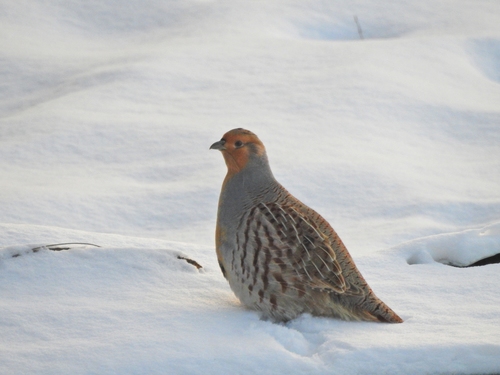
Daurian Partridge (Perdix dauurica) Daurian Partridge
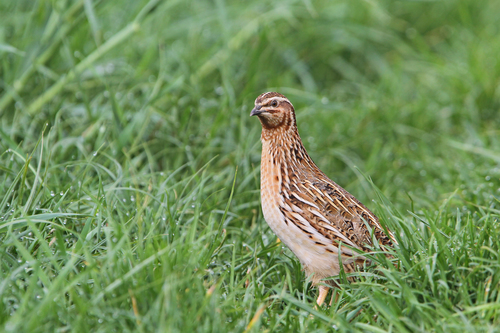
Common Quail (Coturnix coturnix) Common Quail

Media

Loading…

In short

The most reliable field mark to separate Daurian Partridge from Common Quail is size and structure: Daurian Partridge is much larger, bulkier, and more rotund, with a sandy-orange face and a distinctive 'beard' of long feathers under the beak, while Common Quail is a small, compact bird with a streaked brown plumage and a white eyestripe. In flight, Daurian Partridge shows a pale slate-grey underpart with a black belly patch, whereas Common Quail is overall streaked brown and lacks any facial 'beard' or belly patch. The two species also differ in wing length and flight style: Common Quail has long, pointed wings suited to migration, while Daurian Partridge has short, rounded wings and explosive, whirring flight for short distances.

Identification tips

  1. Size is the easiest field mark: Daurian Partridge is nearly twice as long and several times heavier than Common Quail. If the bird appears small and sparrow-sized, it is almost certainly a quail.
  2. Facial pattern: Daurian Partridge has a sandy-orange face with a conspicuous 'beard' of long feathers under the beak; Common Quail lacks both, instead showing a white eyestripe and, in males, a white chin.
  3. Belly patch: Look for a black belly patch on Daurian Partridge (smaller and duller in females); Common Quail never shows a belly patch.
  4. Plumage tones: Daurian Partridge is pale slate-grey with buff and orange highlights; Common Quail is streaked brown and cryptic, blending into dry grass.
  5. Wing shape in flight: Daurian Partridge has short, rounded wings and a chunky body, giving a whirring, explosive flight for short distances. Common Quail has noticeably longer, pointed wings and a more direct, sustained flight, suited to migration.
  6. Flight behavior: Partridge typically flushes explosively and lands quickly in nearby cover; quail flies further and more directly when flushed.
  7. Group size: Daurian Partridge often forms flocks outside the breeding season; Common Quail is usually solitary or in small, loose groups.
  8. Voice: Daurian Partridge gives a shrill, grating 'kieerr-ik!' or rapid 'hek-hek-hek!' when flushed. Common Quail's call is a series of three repeated chirps, often heard at dusk or dawn.
  9. Habitat context: If the bird is in open steppe or grassland with bushes in temperate East Asia and is non-migratory, Daurian Partridge is more likely. In migratory contexts or in Europe/North Africa, Common Quail is expected.
  10. Bill and head structure: Daurian Partridge has a stouter bill and a rounder head; Common Quail's bill is finer and the head more streamlined.
  11. Sex differences: Female Daurian Partridges have a smaller, duller belly patch but still show the orange face and beard; female Common Quail is similar to the male but lacks the white chin.
  12. Juvenile confusion: Juvenile Daurian Partridges are pale yellow-brown with rufous and dark brown dappling, but chicks are rarely seen in the open and are unlikely to be confused with quail.
  13. Overlap pitfalls: In regions where both species occur, always check for the facial beard and belly patch for partridge, and the white eyestripe and streaked brown plumage for quail.
  14. Perched vs. in flight: Both species are most often seen when flushed, but the partridge's bulk and short wings are obvious in flight, while quail appears more streamlined and swift.
  15. Seasonal context: Daurian Partridge is resident year-round; Common Quail is present only in breeding or migration seasons in its range.

Size

Daurian Partridge is substantially larger, measuring 28–30 cm in length and weighing 200–340 g (males) or 290–330 g (females) [wikipedia]. In contrast, Common Quail is much smaller at 16–18 cm in length and 70–140 g in weight [wikipedia]. The partridge is noticeably bulkier and rounder, while the quail is compact and lightweight. This size difference is obvious in the field, especially if seen side by side or with familiar objects for scale.

Plumage

No distinctive juvenile or immature upperwing pattern is described for either species, so focus is on adult and general plumage. Daurian Partridge of all ages shows a sandy-orange face and a long feather 'beard' under the beak, with pale slate-grey head and underparts, a buff chest line, and a black belly patch (smaller and duller in females). Common Quail, regardless of age, lacks any facial beard or orange tones; instead, it is streaked brown overall with a white eyestripe and, in males, a white chin. The quail's plumage is cryptic and lacks the bold face and belly markings of the partridge. In flight, Common Quail's long wings contrast with the partridge's short, rounded wings. Juvenile Daurian Partridges are described as pale yellow-brown dappled with dark brown and rufous, but this is mainly relevant for chicks, which are rarely confused with quail in the field.

Behaviour

Daurian Partridge is a non-migratory, terrestrial species that forages and moves most actively at dawn and dusk, often forming flocks outside the breeding season. When disturbed, it explodes upward with whirring wings and quickly flies to nearby cover, calling loudly. Common Quail, in contrast, is migratory and more likely to flush with rapid, direct flight over longer distances due to its longer wings. Quail are more often heard than seen and tend to be solitary or in loose groups, rarely forming large flocks like partridges.

Habitat

Daurian Partridge inhabits open grasslands, steppe, and farmland with some bushes or open woodland, mainly across temperate East Asia. Common Quail breeds in a wide range of open habitats across the Palearctic, including grasslands and agricultural fields, but is migratory and winters in Africa and southern India. Overlap is possible in Eurasian steppe regions, but Daurian Partridge is strictly resident while Common Quail is migratory and more widespread.

Voice

Daurian Partridge gives a shrill, grating 'kieerr-ik!' and, when flushed, a rapid staccato 'hek-hek-hek!'—both higher-pitched and faster than the calls of the related Grey Partridge. Common Quail is best known for its distinctive call: three repeated chirps, each repeated three times in quick succession. In the field, quail are more often detected by voice than by sight, while partridges are more likely to be seen or heard when flushed.

Submit a better description

Use the same sections as the comparison. Your text is published immediately.

The most reliable field mark to separate Daurian Partridge from Common Quail is size and structure: Daurian Partridge is much larger, bulkier, and more rotund, with a sandy-orange face and a distinctive 'beard' of long feathers under the beak, while Common Quail is a small, compact bird with a streaked brown plumage and a white eyestripe. In flight, Daurian Partridge shows a pale slate-grey underpart with a black belly patch, whereas Common Quail is overall streaked brown and lacks any facial 'beard' or belly patch. The two species also differ in wing length and flight style: Common Quail has long, pointed wings suited to migration, while Daurian Partridge has short, rounded wings and explosive, whirring flight for short distances.

  1. Size is the easiest field mark: Daurian Partridge is nearly twice as long and several times heavier than Common Quail. If the bird appears small and sparrow-sized, it is almost certainly a quail.
  2. Facial pattern: Daurian Partridge has a sandy-orange face with a conspicuous 'beard' of long feathers under the beak; Common Quail lacks both, instead showing a white eyestripe and, in males, a white chin.
  3. Belly patch: Look for a black belly patch on Daurian Partridge (smaller and duller in females); Common Quail never shows a belly patch.
  4. Plumage tones: Daurian Partridge is pale slate-grey with buff and orange highlights; Common Quail is streaked brown and cryptic, blending into dry grass.
  5. Wing shape in flight: Daurian Partridge has short, rounded wings and a chunky body, giving a whirring, explosive flight for short distances. Common Quail has noticeably longer, pointed wings and a more direct, sustained flight, suited to migration.
  6. Flight behavior: Partridge typically flushes explosively and lands quickly in nearby cover; quail flies further and more directly when flushed.
  7. Group size: Daurian Partridge often forms flocks outside the breeding season; Common Quail is usually solitary or in small, loose groups.
  8. Voice: Daurian Partridge gives a shrill, grating 'kieerr-ik!' or rapid 'hek-hek-hek!' when flushed. Common Quail's call is a series of three repeated chirps, often heard at dusk or dawn.
  9. Habitat context: If the bird is in open steppe or grassland with bushes in temperate East Asia and is non-migratory, Daurian Partridge is more likely. In migratory contexts or in Europe/North Africa, Common Quail is expected.
  10. Bill and head structure: Daurian Partridge has a stouter bill and a rounder head; Common Quail's bill is finer and the head more streamlined.
  11. Sex differences: Female Daurian Partridges have a smaller, duller belly patch but still show the orange face and beard; female Common Quail is similar to the male but lacks the white chin.
  12. Juvenile confusion: Juvenile Daurian Partridges are pale yellow-brown with rufous and dark brown dappling, but chicks are rarely seen in the open and are unlikely to be confused with quail.
  13. Overlap pitfalls: In regions where both species occur, always check for the facial beard and belly patch for partridge, and the white eyestripe and streaked brown plumage for quail.
  14. Perched vs. in flight: Both species are most often seen when flushed, but the partridge's bulk and short wings are obvious in flight, while quail appears more streamlined and swift.
  15. Seasonal context: Daurian Partridge is resident year-round; Common Quail is present only in breeding or migration seasons in its range.

Daurian Partridge is substantially larger, measuring 28–30 cm in length and weighing 200–340 g (males) or 290–330 g (females) [wikipedia]. In contrast, Common Quail is much smaller at 16–18 cm in length and 70–140 g in weight [wikipedia]. The partridge is noticeably bulkier and rounder, while the quail is compact and lightweight. This size difference is obvious in the field, especially if seen side by side or with familiar objects for scale.

No distinctive juvenile or immature upperwing pattern is described for either species, so focus is on adult and general plumage. Daurian Partridge of all ages shows a sandy-orange face and a long feather 'beard' under the beak, with pale slate-grey head and underparts, a buff chest line, and a black belly patch (smaller and duller in females). Common Quail, regardless of age, lacks any facial beard or orange tones; instead, it is streaked brown overall with a white eyestripe and, in males, a white chin. The quail's plumage is cryptic and lacks the bold face and belly markings of the partridge. In flight, Common Quail's long wings contrast with the partridge's short, rounded wings. Juvenile Daurian Partridges are described as pale yellow-brown dappled with dark brown and rufous, but this is mainly relevant for chicks, which are rarely confused with quail in the field.

Daurian Partridge is a non-migratory, terrestrial species that forages and moves most actively at dawn and dusk, often forming flocks outside the breeding season. When disturbed, it explodes upward with whirring wings and quickly flies to nearby cover, calling loudly. Common Quail, in contrast, is migratory and more likely to flush with rapid, direct flight over longer distances due to its longer wings. Quail are more often heard than seen and tend to be solitary or in loose groups, rarely forming large flocks like partridges.

Daurian Partridge inhabits open grasslands, steppe, and farmland with some bushes or open woodland, mainly across temperate East Asia. Common Quail breeds in a wide range of open habitats across the Palearctic, including grasslands and agricultural fields, but is migratory and winters in Africa and southern India. Overlap is possible in Eurasian steppe regions, but Daurian Partridge is strictly resident while Common Quail is migratory and more widespread.

Daurian Partridge gives a shrill, grating 'kieerr-ik!' and, when flushed, a rapid staccato 'hek-hek-hek!'—both higher-pitched and faster than the calls of the related Grey Partridge. Common Quail is best known for its distinctive call: three repeated chirps, each repeated three times in quick succession. In the field, quail are more often detected by voice than by sight, while partridges are more likely to be seen or heard when flushed.

Discard your changes?

You have unsaved edits. If you leave now, those changes will be lost.

Daurian Partridge · Common Quail · My Tricky Birds