
Motmot

Crested Tit vs Marsh Tit

Lophophanes cristatus versus Poecile palustris

Play a quiz with Crested Tit and Marsh Tit

Crested Tit (Lophophanes cristatus) Crested Tit
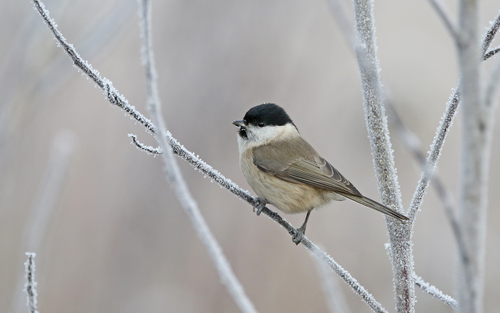
Marsh Tit (Poecile palustris) Marsh Tit

Media

Loading…

In short

The most reliable field mark to separate Crested Tit from Marsh Tit is the prominent, spiky crest on the Crested Tit’s head, which is entirely absent in Marsh Tit of all ages. Crested Tit also shows a bold black-and-white face pattern with a distinctive black gorget and collar, while Marsh Tit has a plain black cap, small bib, and pale cheeks. Juvenile Marsh Tits can show a faint pale wing panel, but this is not a feature of Crested Tit. Both species are small, active tits, but their head patterns and structure are quite different and diagnostic at all ages.

Identification tips

  1. Crest: Only Crested Tit has a prominent, spiky crest at all ages; Marsh Tit never shows any crest. This is the single most reliable field mark.
  2. Head pattern: Crested Tit has a bold black-and-white face, with a black gorget and collar; Marsh Tit has a plain black cap, small bib, and pale cheeks with dusky brown ear coverts.
  3. Bib size: Crested Tit’s black throat patch is larger and forms a collar; Marsh Tit’s bib is small and neat.
  4. Crown sheen: Marsh Tit’s black cap is glossy with a blue sheen at close range; Crested Tit’s crest is matte and streaked.
  5. Juvenile wing panel: Juvenile Marsh Tits can show a faint pale wing panel, but this is variable and not always present. Crested Tit never shows a pale wing panel at any age.
  6. Cheek color: Marsh Tit has white cheeks that turn dusky brown on the ear coverts; Crested Tit’s cheeks are pale and sharply set off by the black collar.
  7. Bill structure: Marsh Tit may show a pale cutting edge to the bill in good views; Crested Tit’s bill is typical for a tit, with no distinctive pale edge.
  8. Upperparts: Marsh Tit’s upperparts are brownish-grey and neatly marked; Crested Tit’s back is less distinctly marked, but the head pattern dominates.
  9. Size and shape: Both species are similar in size and overall structure; size is not a useful separator.
  10. Behavior: Both species are active and agile, often in pairs or small flocks; behavioral differences are not reliable for field ID.
  11. Habitat: Crested Tit is almost always in coniferous forest, especially pine; Marsh Tit prefers deciduous woodland. Habitat can support an ID but is not diagnostic alone.
  12. Voice: Crested Tit gives a 'zee, zee, zee' call; Marsh Tit’s calls are more explosive and varied, with 'pitchou' and several song types. Voice can help but is less reliable than plumage.
  13. Flight views: In flight, look for the crest on Crested Tit and the plain-headed profile of Marsh Tit. Juvenile Marsh Tits may show a faint wing panel, but this is not always present and is not a feature of Crested Tit.
  14. Season: Both species are resident and do not show strong seasonal plumage changes; age-related differences in Marsh Tit are subtle and mostly limited to cap and bib color in juveniles.
  15. Pitfalls: Do not rely on size, general behavior, or subtle plumage shades; focus on the presence or absence of the crest and the head pattern for confident separation.

Size

Both species are very similar in size, with Marsh Tit measuring around 11.5–12 cm in length and weighing about 12 g [wikidata]. No measurement is given for Crested Tit, but in the field, neither species appears noticeably larger or smaller than the other. Size is not a helpful separator between these two.

Plumage

Crested Tit of all ages is instantly recognized by its prominent, pointed crest, which is often recurved at the tip. It also has a bold black-and-white face pattern, with a black gorget and collar that stand out against pale cheeks. Marsh Tit, both adult and juvenile, lacks any crest and instead shows a glossy black cap and nape, small black bib, and pale cheeks that shade to dusky brown on the ear coverts. Juvenile Marsh Tits have a duller cap and bib and slightly paler underparts, but otherwise resemble adults. Notably, juvenile Marsh Tits can sometimes show a faint pale wing panel, but this is variable and not always present; Crested Tit never shows a pale wing panel at any age. The upperparts of Marsh Tit are brownish-grey, with neat, crisp markings, while Crested Tit’s back is less distinctly marked but the head pattern is always striking.

Behaviour

Crested Tit often feeds low in coniferous trees and is known to join mixed tit flocks in winter. It is not especially shy but can be hard to approach closely. Marsh Tit is similarly active and agile in the canopy and undergrowth, but behavioral differences are subtle and not reliable for field separation. Both species are talkative and often found in pairs or small groups.

Habitat

Crested Tit is strongly associated with coniferous forests, especially ancient pinewoods in northern and central Europe, and is highly localized in the UK (mainly in Scottish pinewoods). Marsh Tit, on the other hand, favors deciduous woodland and is more widespread in suitable broadleaf habitats. While some overlap can occur, especially in mixed woods, the presence of extensive conifers strongly favors Crested Tit, while broadleaf woodland is more typical for Marsh Tit.

Voice

Crested Tit gives a constant 'zee, zee, zee' call, similar to Coal Tit, and is generally vocal in flocks. Marsh Tit has a distinctive, explosive 'pitchou' call, often followed by 'pitchou-bee-bee-bee', and a varied song repertoire including 'schip-schip-schip' and 'tu-tu-tu-tu-tu'. Marsh Tit’s song is more complex and varied than Crested Tit’s, but both can be quite vocal. Voice can help, but the head pattern is more reliable.

Submit a better description

Use the same sections as the comparison. Your text is published immediately.

The most reliable field mark to separate Crested Tit from Marsh Tit is the prominent, spiky crest on the Crested Tit’s head, which is entirely absent in Marsh Tit of all ages. Crested Tit also shows a bold black-and-white face pattern with a distinctive black gorget and collar, while Marsh Tit has a plain black cap, small bib, and pale cheeks. Juvenile Marsh Tits can show a faint pale wing panel, but this is not a feature of Crested Tit. Both species are small, active tits, but their head patterns and structure are quite different and diagnostic at all ages.

  1. Crest: Only Crested Tit has a prominent, spiky crest at all ages; Marsh Tit never shows any crest. This is the single most reliable field mark.
  2. Head pattern: Crested Tit has a bold black-and-white face, with a black gorget and collar; Marsh Tit has a plain black cap, small bib, and pale cheeks with dusky brown ear coverts.
  3. Bib size: Crested Tit’s black throat patch is larger and forms a collar; Marsh Tit’s bib is small and neat.
  4. Crown sheen: Marsh Tit’s black cap is glossy with a blue sheen at close range; Crested Tit’s crest is matte and streaked.
  5. Juvenile wing panel: Juvenile Marsh Tits can show a faint pale wing panel, but this is variable and not always present. Crested Tit never shows a pale wing panel at any age.
  6. Cheek color: Marsh Tit has white cheeks that turn dusky brown on the ear coverts; Crested Tit’s cheeks are pale and sharply set off by the black collar.
  7. Bill structure: Marsh Tit may show a pale cutting edge to the bill in good views; Crested Tit’s bill is typical for a tit, with no distinctive pale edge.
  8. Upperparts: Marsh Tit’s upperparts are brownish-grey and neatly marked; Crested Tit’s back is less distinctly marked, but the head pattern dominates.
  9. Size and shape: Both species are similar in size and overall structure; size is not a useful separator.
  10. Behavior: Both species are active and agile, often in pairs or small flocks; behavioral differences are not reliable for field ID.
  11. Habitat: Crested Tit is almost always in coniferous forest, especially pine; Marsh Tit prefers deciduous woodland. Habitat can support an ID but is not diagnostic alone.
  12. Voice: Crested Tit gives a 'zee, zee, zee' call; Marsh Tit’s calls are more explosive and varied, with 'pitchou' and several song types. Voice can help but is less reliable than plumage.
  13. Flight views: In flight, look for the crest on Crested Tit and the plain-headed profile of Marsh Tit. Juvenile Marsh Tits may show a faint wing panel, but this is not always present and is not a feature of Crested Tit.
  14. Season: Both species are resident and do not show strong seasonal plumage changes; age-related differences in Marsh Tit are subtle and mostly limited to cap and bib color in juveniles.
  15. Pitfalls: Do not rely on size, general behavior, or subtle plumage shades; focus on the presence or absence of the crest and the head pattern for confident separation.

Both species are very similar in size, with Marsh Tit measuring around 11.5–12 cm in length and weighing about 12 g [wikidata]. No measurement is given for Crested Tit, but in the field, neither species appears noticeably larger or smaller than the other. Size is not a helpful separator between these two.

Crested Tit of all ages is instantly recognized by its prominent, pointed crest, which is often recurved at the tip. It also has a bold black-and-white face pattern, with a black gorget and collar that stand out against pale cheeks. Marsh Tit, both adult and juvenile, lacks any crest and instead shows a glossy black cap and nape, small black bib, and pale cheeks that shade to dusky brown on the ear coverts. Juvenile Marsh Tits have a duller cap and bib and slightly paler underparts, but otherwise resemble adults. Notably, juvenile Marsh Tits can sometimes show a faint pale wing panel, but this is variable and not always present; Crested Tit never shows a pale wing panel at any age. The upperparts of Marsh Tit are brownish-grey, with neat, crisp markings, while Crested Tit’s back is less distinctly marked but the head pattern is always striking.

Crested Tit often feeds low in coniferous trees and is known to join mixed tit flocks in winter. It is not especially shy but can be hard to approach closely. Marsh Tit is similarly active and agile in the canopy and undergrowth, but behavioral differences are subtle and not reliable for field separation. Both species are talkative and often found in pairs or small groups.

Crested Tit is strongly associated with coniferous forests, especially ancient pinewoods in northern and central Europe, and is highly localized in the UK (mainly in Scottish pinewoods). Marsh Tit, on the other hand, favors deciduous woodland and is more widespread in suitable broadleaf habitats. While some overlap can occur, especially in mixed woods, the presence of extensive conifers strongly favors Crested Tit, while broadleaf woodland is more typical for Marsh Tit.

Crested Tit gives a constant 'zee, zee, zee' call, similar to Coal Tit, and is generally vocal in flocks. Marsh Tit has a distinctive, explosive 'pitchou' call, often followed by 'pitchou-bee-bee-bee', and a varied song repertoire including 'schip-schip-schip' and 'tu-tu-tu-tu-tu'. Marsh Tit’s song is more complex and varied than Crested Tit’s, but both can be quite vocal. Voice can help, but the head pattern is more reliable.

Discard your changes?

You have unsaved edits. If you leave now, those changes will be lost.

Crested Tit · Marsh Tit · My Tricky Birds