
Crested Tit vs Great Tit
Lophophanes cristatus versus Parus major
Play a quiz with Crested Tit and Great Tit
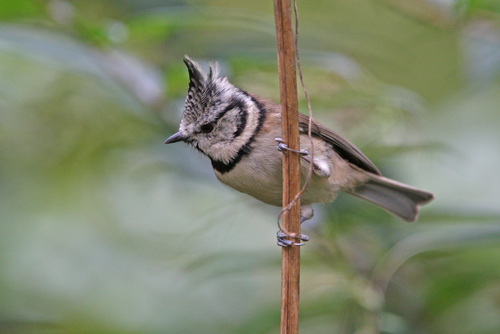 Crested Tit
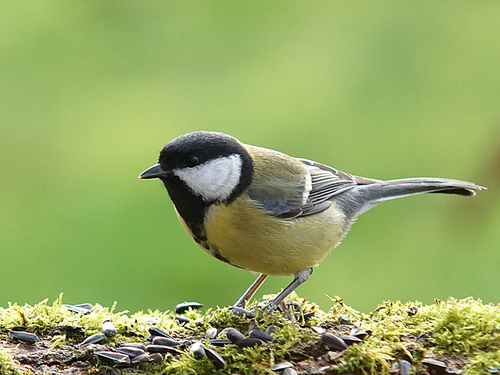 Great Tit
In short
The most reliable way to separate Crested Tit from Great Tit in any plumage is the prominent, pointed crest of the Crested Tit, which is never shown by Great Tit. In all ages and seasons, Crested Tit also has a sharply defined black-and-white face pattern with a black gorget and collar, while Great Tit shows a bold white cheek patch, black head, and a bright yellow underpart with a central black stripe. Juvenile and adult Great Tits lack any crest and have a much more robust, rounded appearance. Both species are common in European woodlands, but Crested Tit is strongly tied to coniferous forests, especially in northern and central Europe, and is rare in Britain outside Scottish pinewoods.
Identification tips
- Crest: Only Crested Tit has a pointed, erectile crest—always absent in Great Tit. This is the single most reliable field mark at any distance or angle.
- Head pattern: Crested Tit shows a sharply defined black-and-white face with a black gorget and collar, while Great Tit has a glossy black crown, nape, and throat with bold white cheeks and no collar.
- Underparts: Great Tit has bright yellow underparts with a broad black central stripe (bib to vent), most prominent in adult males. Crested Tit lacks yellow entirely and has more muted, pale underparts.
- Cheek patch: Great Tit's white cheek patch is large and isolated by black, while Crested Tit's face is more intricately patterned with black and white, including the collar and gorget.
- Bill and structure: Great Tit is bulkier and has a stouter bill; Crested Tit is smaller, lighter, and more delicate, with a finer bill and more agile jizz.
- Juvenile plumage: Juvenile Great Tits are duller than adults, with olive-brown napes and necks and less distinct white tail tips, but still show the white cheek patch and lack any crest or collar. Crested Tit juveniles already show the crest and facial pattern.
- Sex differences: Female Great Tits are duller than males, with a narrower or broken black belly stripe, but the overall pattern remains the same. Crested Tit shows little sexual dimorphism in plumage.
- Flight views: No distinctive upperwing or flight pattern is noted for either species, so rely on head and body pattern even in flight.
- Vocalizations: Listen for Crested Tit's 'zee, zee, zee' versus Great Tit's 'teacher-teacher' or 'see-saw' calls. The latter is much more varied and ringing.
- Habitat: In Britain, Crested Tit is almost exclusively in ancient pinewoods of northern Scotland; Great Tit is widespread in all woodland types, parks, and gardens.
- Behavior: Great Tit is bolder and more likely to visit feeders or approach people; Crested Tit is more retiring and stays low in trees.
- Mixed flocks: Both can join mixed tit flocks, but Crested Tit is less likely outside its coniferous strongholds.
- Range: If outside central/northern Europe or Scottish pinewoods, a 'crested' tit is almost certainly not Crested Tit.
- Pitfalls: Do not confuse the black bib and white cheek of Great Tit for the collar and crest of Crested Tit; the overall head shape and pattern are quite different when seen well.
- Perched vs. in flight: The crest of Crested Tit is visible both perched and in flight, while Great Tit always appears smooth-headed.
Size
Great Tit is distinctly larger and heavier than Crested Tit, with an average body mass of 18.5g [wikidata]. It also appears bulkier and more robust overall, with a stouter bill and a longer body. Crested Tit is smaller, lighter, and more delicate in structure, with a finer bill and a more compact, agile jizz. This difference is most apparent when both species are seen side by side, but can be subtle in the field if only one is present.
Plumage
No age-specific upperwing or flight pattern is described for either species in the sources, so focus is on head and body plumage. Crested Tit of all ages shows a unique erectile crest, often recurved at the tip, and a sharply defined black-and-white face with a black gorget and collar. Great Tit, in all plumages, has a glossy black crown and nape, white cheeks, and a broad black line running down the bright yellow underparts. Juvenile Great Tits are duller, with olive-brown napes and necks, greyer tails, and less distinct white tips, but still lack any crest or black collar. Female Great Tits are similar to males but with duller colors and a narrower, sometimes broken, black belly stripe. Crested Tit's plumage is more muted overall, with no yellow and a more intricate facial pattern.
Behaviour
Crested Tit often feeds low in trees and is less approachable, though not particularly shy. It frequently joins mixed winter tit flocks but is usually seen in pairs or small groups. Great Tit is bolder and more likely to approach feeders or humans, often dominating mixed flocks. Both species are active and vocal, but Great Tit is generally more conspicuous and adaptable in behavior.
Habitat
Crested Tit is highly specialized for coniferous forests, especially ancient pinewoods in northern and central Europe, and is rarely found outside this habitat in Britain. Great Tit is much more generalist, occurring in any type of woodland (deciduous or coniferous), parks, gardens, and even urban areas across a much wider range. If you are in a dense pine forest in Scotland, Crested Tit is possible; in most other wooded habitats, especially outside Scotland, Great Tit is far more likely.
Voice
Crested Tit gives a constant 'zee, zee, zee' call, similar to Coal Tit but slightly different in tone. Great Tit has a much wider repertoire, but its most common call is a clear, ringing 'teacher-teacher' or 'see-saw' phrase, quite unlike the Crested Tit's more monotonous call. Both are vocal, but the structure and tone of their calls are distinct.