

Motmot

Cream-coloured Courser vs Oriental Pratincole

Cursorius cursor versus Glareola maldivarum

Play a quiz with Cream-coloured Courser and Oriental Pratincole
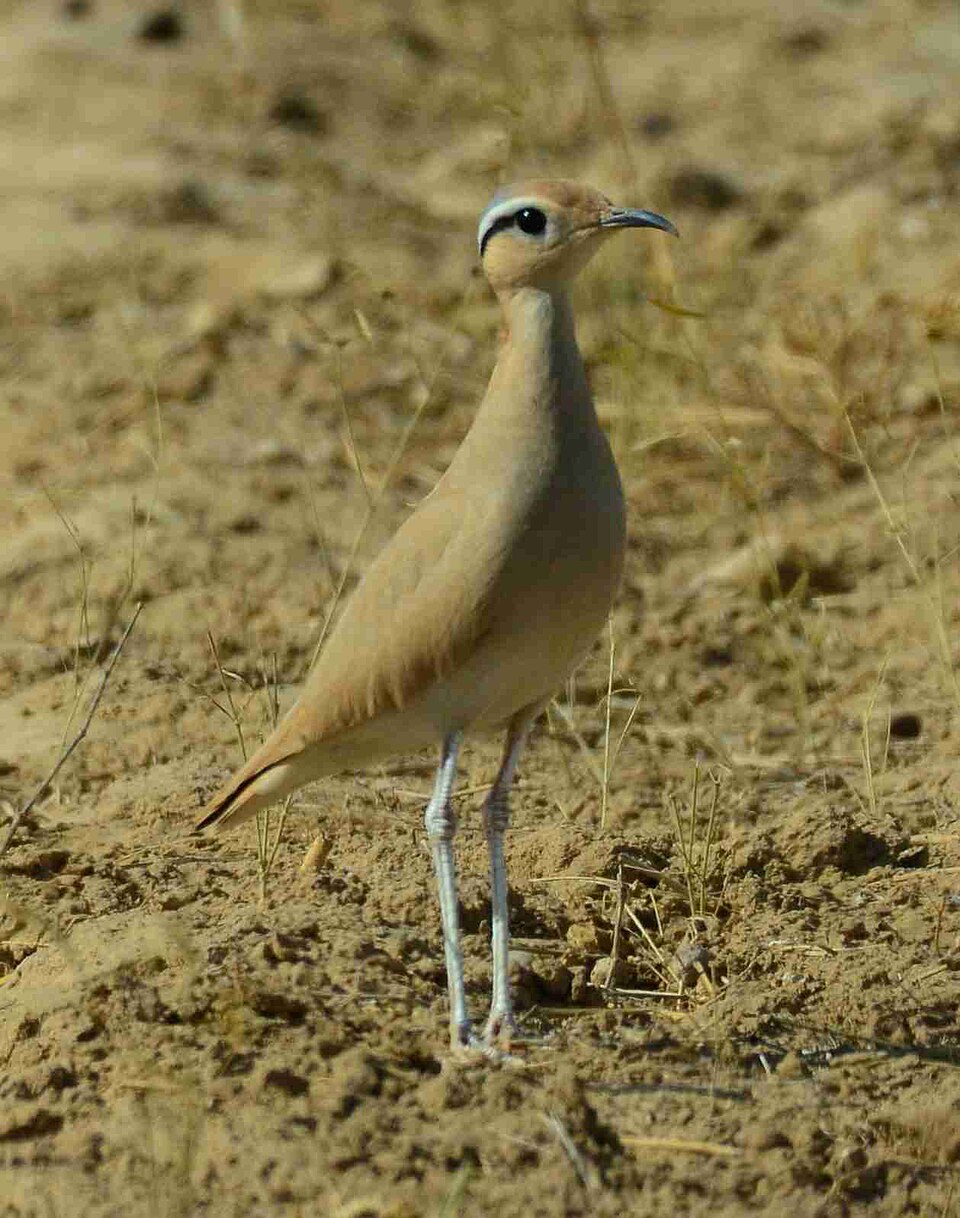
Cream-coloured Courser (Cursorius cursor) Cream-coloured Courser
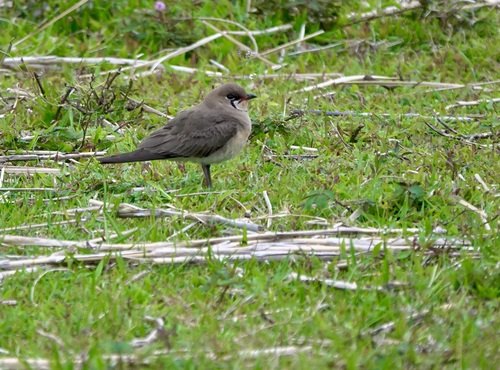
Oriental Pratincole (Glareola maldivarum) Oriental Pratincole

Media

Loading…

In short

The most reliable field mark to separate Cream-coloured Courser from Oriental Pratincole is the underwing color in flight: coursers show distinctly black underwings and outer upperwings, while Oriental Pratincole has chestnut underwings (which can look dark or blackish except in excellent light). Juvenile coursers are mottled above and have duller head patterns, while pratincoles do not show this. Structurally, coursers are longer-legged with a more upright stance and a downcurved bill, compared to the pratincole’s short legs, short bill, and long, deeply forked tail. Both species can be seen running on the ground, but pratincoles are more aerial, often hawking insects in flight. Size is also a clue: coursers are heavier and bulkier than the more slender pratincole.

Identification tips

  1. Underwing color in flight: Cream-coloured Courser shows black underwings and black outer upperwings in all ages, while Oriental Pratincole has chestnut underwings (which may appear blackish unless seen in strong light). This is the single most reliable field mark when the bird is airborne.
  2. Juvenile upperparts: Juvenile coursers are mottled dark above and have a duller head pattern, while juvenile pratincoles do not show this mottling and have more uniform brown upperparts.
  3. Head pattern: Adult coursers have a bold black eyestripe and a striking white supercilium, with a grey to blue-grey crown. Pratincoles lack this strong facial contrast and have a more uniformly brown head.
  4. Leg length and color: Coursers have very long, pale grey legs, giving them a tall, upright stance. Pratincoles have much shorter legs, and appear lower to the ground when standing.
  5. Bill shape: Courser’s bill is slightly downcurved and longer, while pratincole’s bill is short and straight, adapted for aerial feeding.
  6. Tail shape: Pratincole has a long, deeply forked tail, especially obvious in flight or when fanned. Courser’s tail is shorter and not forked.
  7. Flight style: Courser’s flight is relaxed with pointed wings, but less agile than pratincole. Pratincole’s flight is swift, agile, and swallow-like, often with sallying aerial maneuvers.
  8. Body color: Courser is sandy above and whitish below, blending with arid ground. Pratincole is brown above with a white belly, less sandy overall.
  9. Habitat context: Coursers are almost always in dry, open, semi-desert or steppe, often far from water. Pratincoles are more likely near water or in moist open country.
  10. Behavior on the ground: Courser spends most time running on the ground, rarely flying except when flushed. Pratincole alternates between ground and aerial feeding, and is often seen hawking insects in flight.
  11. Relative size: If seen together or with known species, courser is heavier and bulkier than pratincole.
  12. Supercilium: The courser’s white supercilium is a key mark at rest; pratincole lacks this.
  13. Crown color: Courser’s crown is grey to blue-grey, contrasting with sandy body; pratincole’s crown is brown, matching the back.
  14. Eyestripe: Courser’s black eyestripe is bold; pratincole’s face is plainer.
  15. When marks fail: In poor light or distant flight views, focus on structure (leg length, tail shape) and habitat for clues, as underwing color may be hard to judge.

Size

Cream-coloured Courser is significantly heavier (average 129 g) than Oriental Pratincole (average 76 g) [wikidata]. Coursers also appear bulkier and longer-legged, with a more upright posture, while pratincoles are more slender and compact, with proportionally longer wings and tail. In the field, the courser’s size and long legs are usually obvious when both species are seen well.

Plumage

Juvenile Cream-coloured Coursers are mottled dark above and have a duller, less distinct head pattern than adults, which can help separate them from pratincoles of any age, which lack this mottling. In all ages, coursers show sandy upperparts, a grey to blue-grey crown, a bold black eyestripe, and a conspicuous white supercilium. In flight, adult and juvenile coursers show black outer upperwings and black underwings, contrasting with their pale sandy body. Oriental Pratincole, by contrast, has brown upperparts and head, with a white belly and chestnut underwings (which may appear blackish unless seen in good light). The pratincole’s wings are brown above with black flight feathers, and the underwing color is chestnut, not black. The pratincole’s tail is long and deeply forked, unlike the courser’s. The pratincole’s head pattern is less contrasting, lacking the courser’s bold supercilium and eyestripe.

Behaviour

Cream-coloured Coursers are ground runners, typically seen running swiftly across open dry ground, pausing to pick insects. Their flight is described as relaxed, with pointed wings, but they spend more time on the ground. Oriental Pratincoles, while also capable of running on the ground, are much more aerial, frequently seen hawking insects on the wing, especially near water in the evening. Their flight is agile and swallow-like, with long pointed wings and a forked tail. Coursers rarely sally for insects in the air, while pratincoles often do.

Habitat

Cream-coloured Coursers favor dry, open semi-desert or arid steppe habitats, often far from water, and are typically found in the Middle East, North Africa, and parts of South Asia. Oriental Pratincoles prefer open country but are more often seen near water, especially in the evening, and are widespread in Asia. If the bird is seen in a dry, arid setting far from water, courser is more likely; if near water or in lush open country, pratincole is favored.

Submit a better description

Use the same sections as the comparison. Your text is published immediately.

The most reliable field mark to separate Cream-coloured Courser from Oriental Pratincole is the underwing color in flight: coursers show distinctly black underwings and outer upperwings, while Oriental Pratincole has chestnut underwings (which can look dark or blackish except in excellent light). Juvenile coursers are mottled above and have duller head patterns, while pratincoles do not show this. Structurally, coursers are longer-legged with a more upright stance and a downcurved bill, compared to the pratincole’s short legs, short bill, and long, deeply forked tail. Both species can be seen running on the ground, but pratincoles are more aerial, often hawking insects in flight. Size is also a clue: coursers are heavier and bulkier than the more slender pratincole.

  1. Underwing color in flight: Cream-coloured Courser shows black underwings and black outer upperwings in all ages, while Oriental Pratincole has chestnut underwings (which may appear blackish unless seen in strong light). This is the single most reliable field mark when the bird is airborne.
  2. Juvenile upperparts: Juvenile coursers are mottled dark above and have a duller head pattern, while juvenile pratincoles do not show this mottling and have more uniform brown upperparts.
  3. Head pattern: Adult coursers have a bold black eyestripe and a striking white supercilium, with a grey to blue-grey crown. Pratincoles lack this strong facial contrast and have a more uniformly brown head.
  4. Leg length and color: Coursers have very long, pale grey legs, giving them a tall, upright stance. Pratincoles have much shorter legs, and appear lower to the ground when standing.
  5. Bill shape: Courser’s bill is slightly downcurved and longer, while pratincole’s bill is short and straight, adapted for aerial feeding.
  6. Tail shape: Pratincole has a long, deeply forked tail, especially obvious in flight or when fanned. Courser’s tail is shorter and not forked.
  7. Flight style: Courser’s flight is relaxed with pointed wings, but less agile than pratincole. Pratincole’s flight is swift, agile, and swallow-like, often with sallying aerial maneuvers.
  8. Body color: Courser is sandy above and whitish below, blending with arid ground. Pratincole is brown above with a white belly, less sandy overall.
  9. Habitat context: Coursers are almost always in dry, open, semi-desert or steppe, often far from water. Pratincoles are more likely near water or in moist open country.
  10. Behavior on the ground: Courser spends most time running on the ground, rarely flying except when flushed. Pratincole alternates between ground and aerial feeding, and is often seen hawking insects in flight.
  11. Relative size: If seen together or with known species, courser is heavier and bulkier than pratincole.
  12. Supercilium: The courser’s white supercilium is a key mark at rest; pratincole lacks this.
  13. Crown color: Courser’s crown is grey to blue-grey, contrasting with sandy body; pratincole’s crown is brown, matching the back.
  14. Eyestripe: Courser’s black eyestripe is bold; pratincole’s face is plainer.
  15. When marks fail: In poor light or distant flight views, focus on structure (leg length, tail shape) and habitat for clues, as underwing color may be hard to judge.

Cream-coloured Courser is significantly heavier (average 129 g) than Oriental Pratincole (average 76 g) [wikidata]. Coursers also appear bulkier and longer-legged, with a more upright posture, while pratincoles are more slender and compact, with proportionally longer wings and tail. In the field, the courser’s size and long legs are usually obvious when both species are seen well.

Juvenile Cream-coloured Coursers are mottled dark above and have a duller, less distinct head pattern than adults, which can help separate them from pratincoles of any age, which lack this mottling. In all ages, coursers show sandy upperparts, a grey to blue-grey crown, a bold black eyestripe, and a conspicuous white supercilium. In flight, adult and juvenile coursers show black outer upperwings and black underwings, contrasting with their pale sandy body. Oriental Pratincole, by contrast, has brown upperparts and head, with a white belly and chestnut underwings (which may appear blackish unless seen in good light). The pratincole’s wings are brown above with black flight feathers, and the underwing color is chestnut, not black. The pratincole’s tail is long and deeply forked, unlike the courser’s. The pratincole’s head pattern is less contrasting, lacking the courser’s bold supercilium and eyestripe.

Cream-coloured Coursers are ground runners, typically seen running swiftly across open dry ground, pausing to pick insects. Their flight is described as relaxed, with pointed wings, but they spend more time on the ground. Oriental Pratincoles, while also capable of running on the ground, are much more aerial, frequently seen hawking insects on the wing, especially near water in the evening. Their flight is agile and swallow-like, with long pointed wings and a forked tail. Coursers rarely sally for insects in the air, while pratincoles often do.

Cream-coloured Coursers favor dry, open semi-desert or arid steppe habitats, often far from water, and are typically found in the Middle East, North Africa, and parts of South Asia. Oriental Pratincoles prefer open country but are more often seen near water, especially in the evening, and are widespread in Asia. If the bird is seen in a dry, arid setting far from water, courser is more likely; if near water or in lush open country, pratincole is favored.

Discard your changes?

You have unsaved edits. If you leave now, those changes will be lost.

Cream-coloured Courser · Oriental Pratincole · My Tricky Birds