

Corn Bunting vs Common Reed Bunting
Emberiza calandra versus Emberiza schoeniclus
Play a quiz with Corn Bunting and Common Reed Bunting
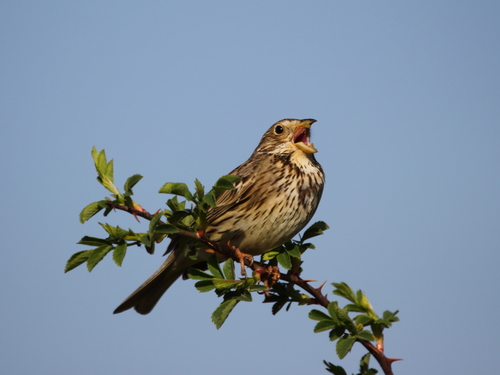 Corn Bunting
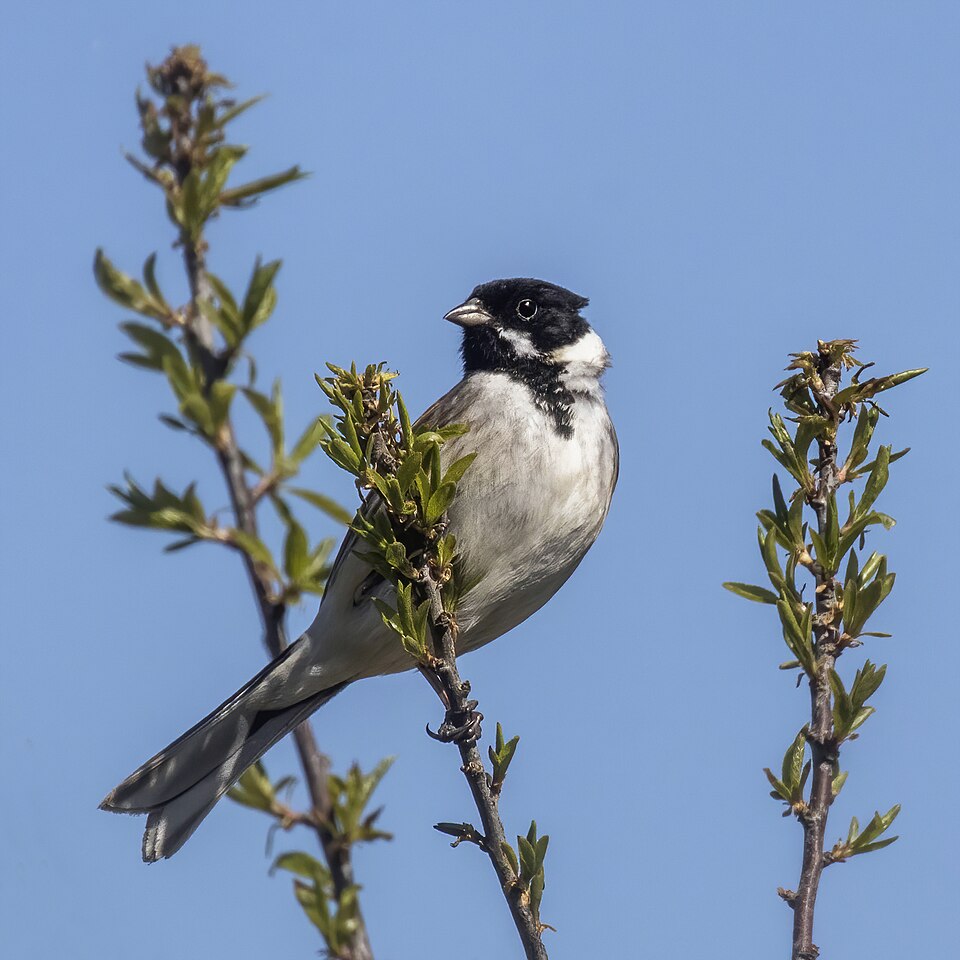 Common Reed Bunting
In short
The most reliable way to separate Corn Bunting from Common Reed Bunting is by overall structure and head pattern: Corn Bunting is noticeably larger and bulkier, with a plain, streaked face and no strong head markings, while male Reed Buntings (in breeding plumage) show a striking black head and white collar, and even females have a more patterned face. In all plumages, Corn Bunting lacks the sharp contrast and crisp face markings typical of Reed Bunting. If you see a large, heavy, lark-like bunting with a plain brown tail and no obvious head pattern, it's likely a Corn Bunting. If the bird is slimmer, with a small bill and (in males) a black head or (in females) a more finely streaked, patterned face, it's a Reed Bunting. Size and structure are especially helpful when birds are perched or in flocks.
Identification tips
- Size and bulk: Corn Bunting is much larger and heavier than Reed Bunting. If the bird looks lark-sized or bigger than a Skylark, think Corn Bunting. Reed Bunting is closer in size to a House Sparrow.
- Bill size and color: Corn Bunting has a large, thick, yellowish bill; Reed Bunting's bill is smaller, more delicate, and less obviously colored.
- Head pattern (males, breeding): Male Reed Bunting has a striking black head and throat with a white collar—unique and unmistakable. Corn Bunting males never show black or white on the head, remaining plain and streaked.
- Head pattern (females and non-breeding): Female Reed Bunting has a streaked brown head with a clear pale supercilium and more facial contrast than Corn Bunting. Corn Bunting females are plain-faced, lacking strong facial markings.
- Underparts: Corn Bunting has whitish underparts with streaking on the breast and flanks, forming a loose gorget. Reed Bunting is more heavily barred below, especially in females.
- Back and upperparts: Both species are streaked brown above, but Corn Bunting is more uniform and less crisply marked than Reed Bunting.
- Tail: Corn Bunting's tail is plain brown, while Reed Bunting's tail is not specifically described as plain and may show more patterning.
- Wing coverts: Corn Bunting has dark lesser coverts with white tips, but this is subtle and not a primary field mark.
- Flight style: Corn Bunting's flight is heavy and undulating, reflecting its bulk. Reed Bunting is lighter and more agile in flight.
- Perching behavior: Corn Bunting often perches on wires or posts in the open; Reed Bunting is more likely to be seen in or near reeds or low vegetation.
- Habitat: Corn Bunting prefers dry, open farmland; Reed Bunting is usually found in or near wetlands, reeds, or marshy ground.
- Song: Corn Bunting's song is a metallic, jangling series; Reed Bunting's is a repetitive, simple 'srip.'
- Sexual dimorphism: Corn Bunting sexes are similar, with males only slightly larger. Reed Bunting shows strong sexual dimorphism in breeding plumage, with males much more striking.
- Season: In winter, Reed Buntings may be found in farmland, but still show more facial patterning than Corn Bunting.
- Pitfalls: Immature and female Reed Buntings can be confused with Corn Bunting due to streaked brown plumage, but always check for size, bill shape, and head pattern—Corn Bunting is plainer and bulkier.
Size
Corn Bunting is substantially larger and bulkier than Common Reed Bunting. Corn Bunting measures 16–19 cm in length, making it the largest bunting in the region, while Reed Bunting is medium-sized at 13.5–15.5 cm. The Corn Bunting also appears heavier and more robust, with a thicker neck and a larger, more conical bill. Reed Bunting is slimmer, with a smaller, more delicate bill. In mixed flocks or side-by-side, Corn Bunting stands out due to its size and bulk.
Plumage
Age-specific wing pattern is not described as a key separator for these two species. Instead, focus on head and body plumage. Corn Bunting of all ages and sexes is streaked grey-brown above and whitish below, with streaking on the breast and flanks forming a loose gorget around the throat. The face is plain, lacking strong markings, and the tail is plain brown. The lesser wing coverts are dark with white tips, but this is subtle. In contrast, male Reed Buntings in breeding plumage have a bold black head and throat, a white collar, and white underparts, with a heavily barred brown back. Females and non-breeding males are duller but still show a streaked brown head with more facial patterning and more barring below than Corn Bunting. The Reed Bunting's tail is not described as plain brown, and its face is always more patterned than the Corn Bunting's.
Behaviour
Corn Bunting often perches conspicuously on wires, posts, or exposed bushes in open farmland, sometimes in small groups outside the breeding season. Its flight is heavy and undulating, reflecting its bulk. Reed Bunting is more often seen in or near reedbeds, wet ditches, or marshy ground, and is less likely to perch in the open for long. Reed Buntings are more agile and less bulky in flight, and tend to be more secretive, especially outside the breeding season.
Habitat
Corn Bunting favors open country with scattered trees, such as farmland and weedy fields, and avoids wet habitats. Reed Bunting is closely tied to wetland habitats—reedbeds, marshes, wet meadows, and ditches—but can also be found in farmland and hedgerows, especially outside the breeding season. If you find a bunting in a dry, open arable field, Corn Bunting is more likely; in or near reeds or marshy ground, Reed Bunting is expected.
Voice
Corn Bunting's song is a repetitive, metallic jangling, often compared to jangling keys, delivered from a prominent perch. Reed Bunting's song is a repetitive, simple 'srip' or short phrase, less metallic and more subdued. Calls are not described in detail, but the songs are quite different if heard well.