

Motmot

Common Yellowthroat vs Blackpoll Warbler

Geothlypis trichas versus Setophaga striata

Play a quiz with Common Yellowthroat and Blackpoll Warbler
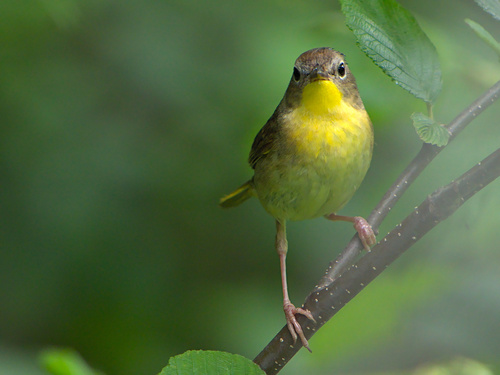
Common Yellowthroat (Geothlypis trichas) Common Yellowthroat
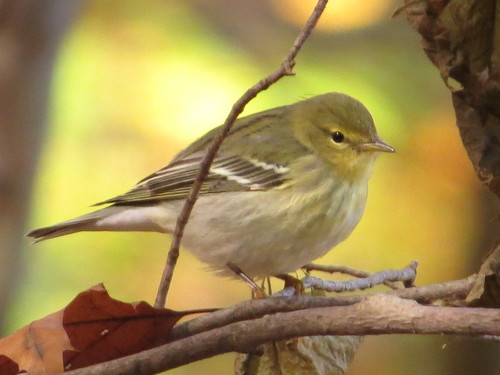
Blackpoll Warbler (Setophaga striata) Blackpoll Warbler

Media

Loading…

In short

The most reliable field mark between Common Yellowthroat and Blackpoll Warbler is the face pattern: adult male Common Yellowthroats show a distinctive black mask bordered with pale above, while Blackpoll Warblers (especially breeding males) have a black cap and white cheeks, never a mask. Immature and female Common Yellowthroats lack the mask but are plain-faced and olive above, contrasting with the streaked, white-faced look of Blackpolls. In flight or perched, Blackpolls always show two white wing bars and streaked underparts, while Yellowthroats have plain olive wings and no wing bars. Blackpolls are slightly larger and longer-winged, but structure is less helpful than plumage. Both can be found in migration, but Blackpolls favor trees and Yellowthroats prefer low, dense cover.

Identification tips

  1. Face pattern is key: Adult male Common Yellowthroat has a black mask bordered above with white or gray—never seen in Blackpoll Warbler. Females and immatures lack the mask but have plain faces.
  2. Wing bars: Blackpoll Warbler always shows two white wing bars on the wing, regardless of age or season. Common Yellowthroat never shows wing bars at any age.
  3. Underpart streaking: Blackpolls (all ages except some very young immatures) show black or dark streaks on white underparts; Yellowthroats are unstreaked below.
  4. Back and upperparts: Common Yellowthroat is olive above, plain and unmarked. Blackpolls have dark-streaked brown or greenish upperparts.
  5. Throat and chest color: Yellowthroat has a bright yellow throat and chest, fading to white on the belly; Blackpolls have white or yellowish underparts with streaking, and yellow can extend to the belly in young birds.
  6. Cap and cheeks: Breeding male Blackpoll has a black cap and white cheeks; females and immatures have grayish or greenish caps and pale faces, but always with some contrast. Yellowthroats never have a black cap or white cheeks.
  7. Bill and structure: Both have typical warbler bills, but Blackpoll may appear slightly longer-billed and longer-winged. Not a strong field mark.
  8. Leg color: Blackpoll Warbler has bright orangish-pink legs, which can be a subtle but useful mark if seen well. Yellowthroat's legs are not described as distinctive.
  9. Habitat: If seen in dense, low, wet vegetation, suspect Yellowthroat; if foraging in trees, especially during migration, suspect Blackpoll.
  10. Behavior: Yellowthroats are more skulking and stay low; Blackpolls are more active and arboreal.
  11. Song: If you hear a loud 'twichety twichety twichety twich,' it's a Common Yellowthroat. Blackpoll's song is not described here.
  12. Seasonal context: In late spring and summer, Blackpolls are mostly in the far north; in migration, both can overlap, so rely on plumage.
  13. Sex and age pitfalls: First-year male Yellowthroats may show a faint mask, but never a cap or wing bars. Female/immature Blackpolls can be dull but always have wing bars and some streaking.
  14. Plumage brightness: Southwestern Yellowthroats are the brightest yellow below; Blackpolls are never as bright and have more white or greenish tones.
  15. Migration timing: Blackpolls are later migrants in spring; Yellowthroats can be present earlier. Use with caution, as overlap occurs.

Size

Blackpoll Warbler is slightly larger and heavier on average (body mass ~12.3g) compared to Common Yellowthroat (no exact mass given, but typically lighter and more compact). Blackpolls have a longer wingspan (20–25 cm) and longer body length (12.5–15 cm) than Common Yellowthroat, which is a smaller, rounder warbler. In the field, Blackpolls may appear slimmer and longer-winged, especially in flight, but size overlap is substantial and not a primary field mark.

Plumage

Juvenile and immature birds are a common source of confusion. Immature and female Common Yellowthroats are olive above and lack any wing bars, with plain yellow throats and chests and white bellies; their faces are plain, without strong markings. First-year male Yellowthroats may show a faint black mask, but never a cap or wing bars. Blackpoll Warblers, regardless of age or season, always show two white wing bars and streaked underparts. Breeding male Blackpolls are striking with a black cap, white cheeks, and heavily streaked white underparts, while females and non-breeding birds are duller but still show wing bars and some streaking, with greenish tones above and yellowish below in fall/immature plumage. The face of Blackpolls is always more patterned than Yellowthroat, with either a black cap and white cheeks (breeding male) or a pale, contrasting face (female/immature). The yellow on Yellowthroat is concentrated on the throat and chest, never extending to the belly as in young Blackpolls.

Behaviour

Common Yellowthroats are typically seen low in dense vegetation, often skulking in reeds, cattails, or brushy edges. They rarely forage high in trees. Blackpoll Warblers are more arboreal, often foraging in the canopy or mid-levels of trees, especially during migration. Flight style is not distinctive enough to separate them, but context—low and secretive (Yellowthroat) versus higher and more active (Blackpoll)—can help.

Habitat

Common Yellowthroat prefers marshes, wet fields, and dense brush, rarely venturing far from thick, low cover. Blackpoll Warbler is most often found in forests and woodlands, especially in migration, where it frequents trees and shrubs at various heights. During migration, Blackpolls are more likely to be seen in a wider range of wooded habitats, while Yellowthroats stick to wetter, denser places.

Voice

Common Yellowthroat sings a loud, distinctive 'twichety twichety twichety twich' and gives a soft 'jip' call. Blackpoll Warbler's song and call are not described in the provided notes, so voice is only diagnostic if the Yellowthroat's song is heard. In silence, rely on plumage and structure.

Submit a better description

Use the same sections as the comparison. Your text is published immediately.

The most reliable field mark between Common Yellowthroat and Blackpoll Warbler is the face pattern: adult male Common Yellowthroats show a distinctive black mask bordered with pale above, while Blackpoll Warblers (especially breeding males) have a black cap and white cheeks, never a mask. Immature and female Common Yellowthroats lack the mask but are plain-faced and olive above, contrasting with the streaked, white-faced look of Blackpolls. In flight or perched, Blackpolls always show two white wing bars and streaked underparts, while Yellowthroats have plain olive wings and no wing bars. Blackpolls are slightly larger and longer-winged, but structure is less helpful than plumage. Both can be found in migration, but Blackpolls favor trees and Yellowthroats prefer low, dense cover.

  1. Face pattern is key: Adult male Common Yellowthroat has a black mask bordered above with white or gray—never seen in Blackpoll Warbler. Females and immatures lack the mask but have plain faces.
  2. Wing bars: Blackpoll Warbler always shows two white wing bars on the wing, regardless of age or season. Common Yellowthroat never shows wing bars at any age.
  3. Underpart streaking: Blackpolls (all ages except some very young immatures) show black or dark streaks on white underparts; Yellowthroats are unstreaked below.
  4. Back and upperparts: Common Yellowthroat is olive above, plain and unmarked. Blackpolls have dark-streaked brown or greenish upperparts.
  5. Throat and chest color: Yellowthroat has a bright yellow throat and chest, fading to white on the belly; Blackpolls have white or yellowish underparts with streaking, and yellow can extend to the belly in young birds.
  6. Cap and cheeks: Breeding male Blackpoll has a black cap and white cheeks; females and immatures have grayish or greenish caps and pale faces, but always with some contrast. Yellowthroats never have a black cap or white cheeks.
  7. Bill and structure: Both have typical warbler bills, but Blackpoll may appear slightly longer-billed and longer-winged. Not a strong field mark.
  8. Leg color: Blackpoll Warbler has bright orangish-pink legs, which can be a subtle but useful mark if seen well. Yellowthroat's legs are not described as distinctive.
  9. Habitat: If seen in dense, low, wet vegetation, suspect Yellowthroat; if foraging in trees, especially during migration, suspect Blackpoll.
  10. Behavior: Yellowthroats are more skulking and stay low; Blackpolls are more active and arboreal.
  11. Song: If you hear a loud 'twichety twichety twichety twich,' it's a Common Yellowthroat. Blackpoll's song is not described here.
  12. Seasonal context: In late spring and summer, Blackpolls are mostly in the far north; in migration, both can overlap, so rely on plumage.
  13. Sex and age pitfalls: First-year male Yellowthroats may show a faint mask, but never a cap or wing bars. Female/immature Blackpolls can be dull but always have wing bars and some streaking.
  14. Plumage brightness: Southwestern Yellowthroats are the brightest yellow below; Blackpolls are never as bright and have more white or greenish tones.
  15. Migration timing: Blackpolls are later migrants in spring; Yellowthroats can be present earlier. Use with caution, as overlap occurs.

Blackpoll Warbler is slightly larger and heavier on average (body mass ~12.3g) compared to Common Yellowthroat (no exact mass given, but typically lighter and more compact). Blackpolls have a longer wingspan (20–25 cm) and longer body length (12.5–15 cm) than Common Yellowthroat, which is a smaller, rounder warbler. In the field, Blackpolls may appear slimmer and longer-winged, especially in flight, but size overlap is substantial and not a primary field mark.

Juvenile and immature birds are a common source of confusion. Immature and female Common Yellowthroats are olive above and lack any wing bars, with plain yellow throats and chests and white bellies; their faces are plain, without strong markings. First-year male Yellowthroats may show a faint black mask, but never a cap or wing bars. Blackpoll Warblers, regardless of age or season, always show two white wing bars and streaked underparts. Breeding male Blackpolls are striking with a black cap, white cheeks, and heavily streaked white underparts, while females and non-breeding birds are duller but still show wing bars and some streaking, with greenish tones above and yellowish below in fall/immature plumage. The face of Blackpolls is always more patterned than Yellowthroat, with either a black cap and white cheeks (breeding male) or a pale, contrasting face (female/immature). The yellow on Yellowthroat is concentrated on the throat and chest, never extending to the belly as in young Blackpolls.

Common Yellowthroats are typically seen low in dense vegetation, often skulking in reeds, cattails, or brushy edges. They rarely forage high in trees. Blackpoll Warblers are more arboreal, often foraging in the canopy or mid-levels of trees, especially during migration. Flight style is not distinctive enough to separate them, but context—low and secretive (Yellowthroat) versus higher and more active (Blackpoll)—can help.

Common Yellowthroat prefers marshes, wet fields, and dense brush, rarely venturing far from thick, low cover. Blackpoll Warbler is most often found in forests and woodlands, especially in migration, where it frequents trees and shrubs at various heights. During migration, Blackpolls are more likely to be seen in a wider range of wooded habitats, while Yellowthroats stick to wetter, denser places.

Common Yellowthroat sings a loud, distinctive 'twichety twichety twichety twich' and gives a soft 'jip' call. Blackpoll Warbler's song and call are not described in the provided notes, so voice is only diagnostic if the Yellowthroat's song is heard. In silence, rely on plumage and structure.

Discard your changes?

You have unsaved edits. If you leave now, those changes will be lost.

Common Yellowthroat · Blackpoll Warbler · My Tricky Birds