

Motmot

Common Whitethroat vs Eurasian Nuthatch

Curruca communis versus Sitta europaea

Play a quiz with Common Whitethroat and Eurasian Nuthatch
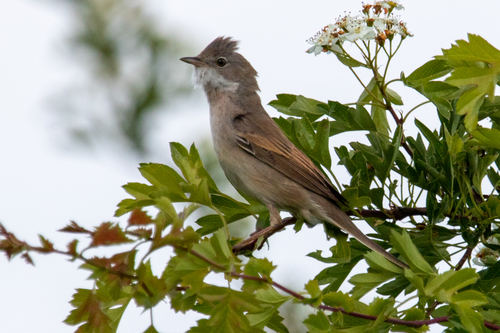
Common Whitethroat (Curruca communis) Common Whitethroat
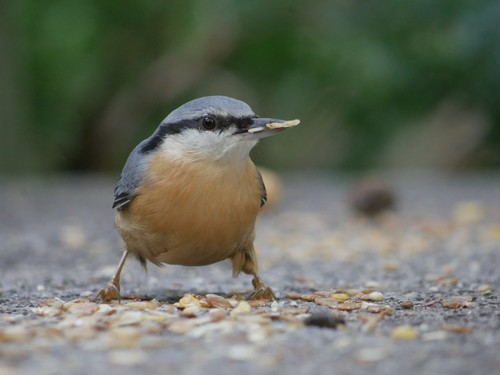
Eurasian Nuthatch (Sitta europaea) Eurasian Nuthatch

Media

Loading…

In short

The most reliable field mark to separate Common Whitethroat from Eurasian Nuthatch is overall structure and posture: nuthatches are compact, short-tailed, blue-grey birds that often climb tree trunks, while whitethroats are slim, long-tailed, brownish warblers that perch upright in bushes. In flight or at rest, the nuthatch’s blue-grey upperparts and bold black eye-stripe are distinctive, as is its habit of moving headfirst down tree bark. Whitethroats show chestnut-edged wings, a white throat, and (in males) a grey head, and are never seen creeping on trunks. Juvenile and immature wing patterns are not described as diagnostic for either species in the sources, so focus on structure and plumage. Vocalizations are also quite different: the nuthatch gives a repeated, loud 'dwip', while the whitethroat’s song is scratchy and its call is a hoarse 'wed-wed'.

Identification tips

  1. Structure and posture: Nuthatch is compact, short-tailed, and large-headed; whitethroat is slim, long-tailed, and upright. This is visible at all ages and in all seasons.
  2. Bill shape: Nuthatch has a long, strong, pointed bill suited for probing bark; whitethroat’s bill is finer and more delicate, typical of insectivorous warblers.
  3. Tail: Nuthatch’s tail is short and square, never used for support; whitethroat’s tail is longer and often flicked or fanned.
  4. Upperparts color: Nuthatch is blue-grey above with a bold black eye-stripe; whitethroat is brown above with chestnut-edged wings and no eye-stripe.
  5. Head pattern: Nuthatch has a strong black eye-stripe through a white face; male whitethroat has a grey head and white throat, female is browner and less contrasting, but neither has a black eye-stripe.
  6. Underparts: Nuthatch has white throat and cheeks, orange-buff flanks and belly; whitethroat is buff below with a white throat (less contrasting than nuthatch).
  7. Sexual dimorphism: Only the whitethroat is sexually dimorphic, with males showing a grey head; nuthatch sexes are similar, with females slightly duller.
  8. Juvenile plumage: Juvenile nuthatch is duller but still blue-grey with an eye-stripe; juvenile whitethroat is browner and lacks strong head patterns.
  9. Behavior: Nuthatch climbs on tree trunks and branches, often headfirst; whitethroat never does this, instead perching upright in bushes and moving with short flights.
  10. Flight: Nuthatch has a fast, bounding flight with wings closed between beats and a pointed head; whitethroat’s flight is more fluttery and warbler-like.
  11. Habitat: Nuthatch is found in mature woodland and parks with large trees; whitethroat prefers open country, hedgerows, and scrub.
  12. Vocalizations: Nuthatch gives a loud, repeated 'dwip'; whitethroat’s song is scratchy and its call is a hoarse 'wed-wed'.
  13. Seasonal context: Whitethroat is a summer migrant in much of its range, absent in winter; nuthatch is resident year-round.
  14. Pitfalls: Female whitethroat may appear dull and could be confused with other brownish birds, but never shows blue-grey or a black eye-stripe. Nuthatch is unlikely to be confused with any warbler due to its structure and behavior.
  15. When in doubt: If you see a bird climbing on bark, it is a nuthatch; if it is flitting in a bush, it is a whitethroat.

Size

Eurasian Nuthatch is noticeably heavier and more robust than Common Whitethroat, with an average body mass of 23.0 g compared to the whitethroat’s 14.5 g [wikidata]. Nuthatch appears stocky, with a short, square tail and a large head and bill, while the whitethroat is slimmer and more delicate, with a longer tail and a finer, warbler-like bill. In the field, nuthatch’s compact silhouette and strong bill stand out, especially when seen side-by-side with the more slender, long-tailed whitethroat.

Plumage

There are no age-specific upperwing or flight patterns described as diagnostic for either species. For adults, Common Whitethroat is mainly brown above with chestnut fringes to the secondaries, buff below, and a white throat; males have a grey head, while females are browner and lack the grey. Eurasian Nuthatch adults (both sexes) are blue-grey above with a bold black eye-stripe, white throat and cheeks, and orange-buff flanks and belly. Juveniles of both species are duller, but nuthatch young still show the blue-grey upperparts and eye-stripe, while juvenile whitethroats are browner overall. Nuthatch’s plumage is consistent year-round, while whitethroat shows subtle sexual dimorphism and seasonal wear, but these differences are less striking than the overall color and pattern contrasts between the two.

Behaviour

Eurasian Nuthatch is unique in its movement: it climbs up, down, and around tree trunks and branches, often headfirst, using short leaps and never using its tail for support. Whitethroat is a typical warbler, perching upright in shrubs or low trees, flitting between perches, and never climbing on bark. In flight, nuthatch is fast with rounded wings and a short tail, while whitethroat has a more fluttery, warbler-like flight with a longer tail. Nuthatch is also more likely to be seen alone or in pairs, while whitethroat may be more active and visible in open scrub.

Habitat

Common Whitethroat is most often found in open country, hedgerows, scrub, and bushy areas, rarely venturing into mature woodland. Eurasian Nuthatch is a woodland specialist, almost always associated with mature trees, especially broadleaf forests and wooded parks. If you see a small bird creeping on a tree trunk in a wooded area, it is almost certainly a nuthatch; a small bird flitting in a bush or hedge in open country is likely a whitethroat.

Voice

The vocalizations are very different. Eurasian Nuthatch gives a repeated, loud 'dwip' call, which is sharp and carries well. Common Whitethroat’s song is fast, scratchy, and scolding, and its call is a hoarse, slightly nasal 'wed-wed' or 'woid-woid'. The warning cry is a long, rough 'tschehr'. If you hear a loud, metallic 'dwip' from a tree, it is nuthatch; a scratchy, chattering song or hoarse call from a bush suggests whitethroat.

Submit a better description

Use the same sections as the comparison. Your text is published immediately.

The most reliable field mark to separate Common Whitethroat from Eurasian Nuthatch is overall structure and posture: nuthatches are compact, short-tailed, blue-grey birds that often climb tree trunks, while whitethroats are slim, long-tailed, brownish warblers that perch upright in bushes. In flight or at rest, the nuthatch’s blue-grey upperparts and bold black eye-stripe are distinctive, as is its habit of moving headfirst down tree bark. Whitethroats show chestnut-edged wings, a white throat, and (in males) a grey head, and are never seen creeping on trunks. Juvenile and immature wing patterns are not described as diagnostic for either species in the sources, so focus on structure and plumage. Vocalizations are also quite different: the nuthatch gives a repeated, loud 'dwip', while the whitethroat’s song is scratchy and its call is a hoarse 'wed-wed'.

  1. Structure and posture: Nuthatch is compact, short-tailed, and large-headed; whitethroat is slim, long-tailed, and upright. This is visible at all ages and in all seasons.
  2. Bill shape: Nuthatch has a long, strong, pointed bill suited for probing bark; whitethroat’s bill is finer and more delicate, typical of insectivorous warblers.
  3. Tail: Nuthatch’s tail is short and square, never used for support; whitethroat’s tail is longer and often flicked or fanned.
  4. Upperparts color: Nuthatch is blue-grey above with a bold black eye-stripe; whitethroat is brown above with chestnut-edged wings and no eye-stripe.
  5. Head pattern: Nuthatch has a strong black eye-stripe through a white face; male whitethroat has a grey head and white throat, female is browner and less contrasting, but neither has a black eye-stripe.
  6. Underparts: Nuthatch has white throat and cheeks, orange-buff flanks and belly; whitethroat is buff below with a white throat (less contrasting than nuthatch).
  7. Sexual dimorphism: Only the whitethroat is sexually dimorphic, with males showing a grey head; nuthatch sexes are similar, with females slightly duller.
  8. Juvenile plumage: Juvenile nuthatch is duller but still blue-grey with an eye-stripe; juvenile whitethroat is browner and lacks strong head patterns.
  9. Behavior: Nuthatch climbs on tree trunks and branches, often headfirst; whitethroat never does this, instead perching upright in bushes and moving with short flights.
  10. Flight: Nuthatch has a fast, bounding flight with wings closed between beats and a pointed head; whitethroat’s flight is more fluttery and warbler-like.
  11. Habitat: Nuthatch is found in mature woodland and parks with large trees; whitethroat prefers open country, hedgerows, and scrub.
  12. Vocalizations: Nuthatch gives a loud, repeated 'dwip'; whitethroat’s song is scratchy and its call is a hoarse 'wed-wed'.
  13. Seasonal context: Whitethroat is a summer migrant in much of its range, absent in winter; nuthatch is resident year-round.
  14. Pitfalls: Female whitethroat may appear dull and could be confused with other brownish birds, but never shows blue-grey or a black eye-stripe. Nuthatch is unlikely to be confused with any warbler due to its structure and behavior.
  15. When in doubt: If you see a bird climbing on bark, it is a nuthatch; if it is flitting in a bush, it is a whitethroat.

Eurasian Nuthatch is noticeably heavier and more robust than Common Whitethroat, with an average body mass of 23.0 g compared to the whitethroat’s 14.5 g [wikidata]. Nuthatch appears stocky, with a short, square tail and a large head and bill, while the whitethroat is slimmer and more delicate, with a longer tail and a finer, warbler-like bill. In the field, nuthatch’s compact silhouette and strong bill stand out, especially when seen side-by-side with the more slender, long-tailed whitethroat.

There are no age-specific upperwing or flight patterns described as diagnostic for either species. For adults, Common Whitethroat is mainly brown above with chestnut fringes to the secondaries, buff below, and a white throat; males have a grey head, while females are browner and lack the grey. Eurasian Nuthatch adults (both sexes) are blue-grey above with a bold black eye-stripe, white throat and cheeks, and orange-buff flanks and belly. Juveniles of both species are duller, but nuthatch young still show the blue-grey upperparts and eye-stripe, while juvenile whitethroats are browner overall. Nuthatch’s plumage is consistent year-round, while whitethroat shows subtle sexual dimorphism and seasonal wear, but these differences are less striking than the overall color and pattern contrasts between the two.

Eurasian Nuthatch is unique in its movement: it climbs up, down, and around tree trunks and branches, often headfirst, using short leaps and never using its tail for support. Whitethroat is a typical warbler, perching upright in shrubs or low trees, flitting between perches, and never climbing on bark. In flight, nuthatch is fast with rounded wings and a short tail, while whitethroat has a more fluttery, warbler-like flight with a longer tail. Nuthatch is also more likely to be seen alone or in pairs, while whitethroat may be more active and visible in open scrub.

Common Whitethroat is most often found in open country, hedgerows, scrub, and bushy areas, rarely venturing into mature woodland. Eurasian Nuthatch is a woodland specialist, almost always associated with mature trees, especially broadleaf forests and wooded parks. If you see a small bird creeping on a tree trunk in a wooded area, it is almost certainly a nuthatch; a small bird flitting in a bush or hedge in open country is likely a whitethroat.

The vocalizations are very different. Eurasian Nuthatch gives a repeated, loud 'dwip' call, which is sharp and carries well. Common Whitethroat’s song is fast, scratchy, and scolding, and its call is a hoarse, slightly nasal 'wed-wed' or 'woid-woid'. The warning cry is a long, rough 'tschehr'. If you hear a loud, metallic 'dwip' from a tree, it is nuthatch; a scratchy, chattering song or hoarse call from a bush suggests whitethroat.

Discard your changes?

You have unsaved edits. If you leave now, those changes will be lost.

Common Whitethroat · Eurasian Nuthatch · My Tricky Birds