
Motmot

Common Tailorbird vs Dark-necked Tailorbird

Orthotomus sutorius versus Orthotomus atrogularis

Play a quiz with Common Tailorbird and Dark-necked Tailorbird
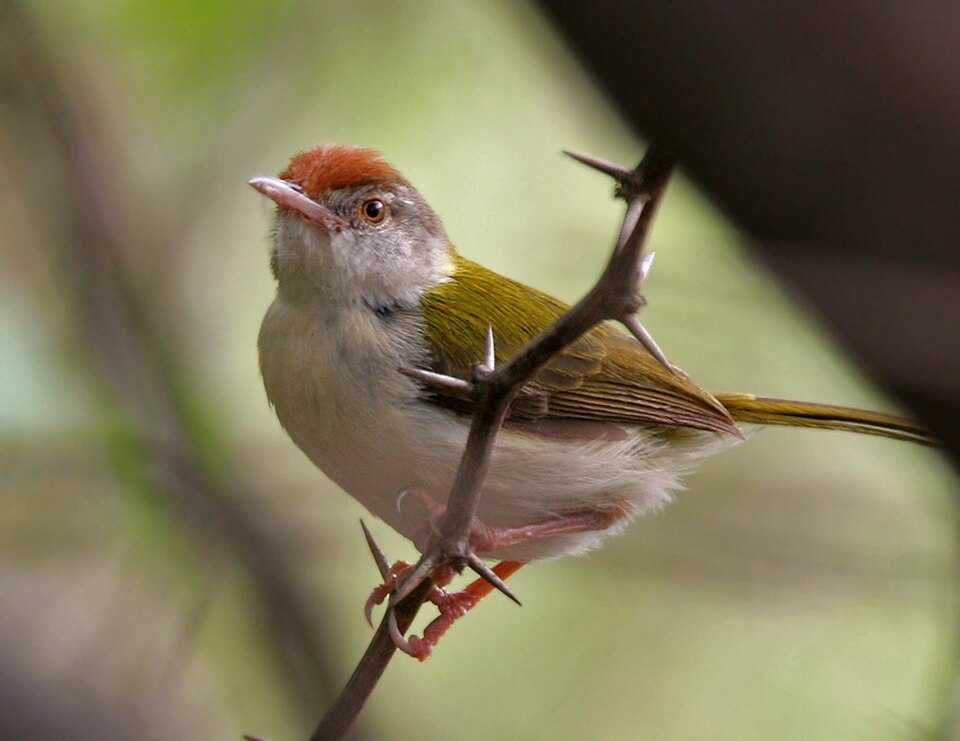
Common Tailorbird (Orthotomus sutorius) Common Tailorbird
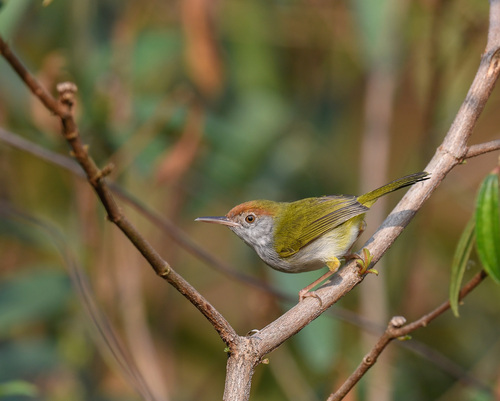
Dark-necked Tailorbird (Orthotomus atrogularis) Dark-necked Tailorbird

Media

Loading…

In short

The most reliable field mark between Common Tailorbird and Dark-necked Tailorbird is the presence of a distinct dark patch or 'neck' on the sides of the neck in Dark-necked, which is lacking or only briefly visible in Common. Both are small, active warblers with green upperparts and pale underparts, but Common Tailorbird shows a bright rufous crown and is a familiar sight in urban gardens, while Dark-necked Tailorbird prefers denser, wetter forests and mangroves. Juvenile and non-breeding birds can be duller and trickier, but the habitat and the extent of dark on the neck remain key. Structural differences are subtle, so careful attention to plumage and context is crucial.

Identification tips

  1. Dark neck patch: Dark-necked Tailorbird shows a distinct dark patch or 'necklace' on the sides and front of the neck in both sexes and most ages; Common Tailorbird lacks this, though it may show a temporary dark area on the neck sides when calling due to bare skin, but this is not a plumage feature and is often invisible.
  2. Crown color: Common Tailorbird has a bright rufous crown, very prominent in adults and still visible in most immatures; Dark-necked has a less pronounced or absent rufous crown.
  3. Tail structure: Both species have long, cocked tails, but male Common Tailorbird in breeding season may show especially long central tail feathers. This is not a reliable mark outside breeding or in females/immatures.
  4. Upperparts: Both are green above and pale below, but Common Tailorbird tends to be brighter and more contrasting, especially in fresh plumage. Dark-necked may appear duller overall.
  5. Underparts: Both have creamy or pale underparts; not a separator.
  6. Juvenile/immature plumage: Young Common Tailorbirds are duller but still show the rufous crown; no detailed information for Dark-necked, but the neck patch is expected to be present from a young age.
  7. Habitat: Common Tailorbird is common in urban gardens, parks, and open areas; Dark-necked is found in moist lowland forests and mangroves, rarely if ever in gardens.
  8. Behavior: Both are active and skulk in dense foliage, but Common is bolder in open areas, while Dark-necked is more secretive in dense, wet habitats.
  9. Bill and structure: Both have sharp, slightly decurved bills; not a separator.
  10. Voice: Both are loud, but vocalizations are not reliably distinct in the field without local experience.
  11. Sex differences: Male Common Tailorbird may have longer central tail feathers in breeding season, but this is not always reliable and not present in Dark-necked.
  12. Flight views: No distinctive upperwing or flight pattern differences are described; focus on plumage and habitat.
  13. Seasonal variation: Both species may appear duller outside breeding, but the neck patch in Dark-necked and rufous crown in Common remain useful.
  14. Pitfalls: Beware of Common Tailorbird showing dark neck sides when calling—this is not a true plumage mark. Always look for the consistent, plumage-based dark 'necklace' in Dark-necked.
  15. Range: If in urban or garden habitat, Common is vastly more likely; in dense forest or mangrove, check carefully for Dark-necked.

Size

Common Tailorbird averages about 7.5 g in body mass and measures 10–14 cm in length. No direct mass data is available for Dark-necked Tailorbird, but both are similarly small and lightweight. In the field, size is not a reliable separator between these two; both appear as tiny, slim, long-tailed warblers. Any perceived difference is likely due to posture or feather wear rather than true size.

Plumage

For all ages, Common Tailorbird is bright green above with a distinctive rufous crown and creamy underparts. The sides of the neck may show dark patches when calling, but these are due to bare skin and are not always visible. Young birds are duller but retain the basic pattern. In contrast, Dark-necked Tailorbird is named for its obvious dark patch or 'necklace' on the sides and front of the neck, which is present in both sexes and most ages, making it a key field mark. Both species have similar greenish upperparts and pale underparts, but the rufous crown is much more pronounced in Common Tailorbird. Tailorbirds in general have long, often cocked tails, but the male Common Tailorbird may show especially long central tail feathers in breeding season, a feature not noted for Dark-necked. Juvenile and immature plumages are not described in detail for Dark-necked, but the neck patch is a consistent difference.

Behaviour

Both species are active, restless, and often skulk in dense vegetation, flicking their tails. Common Tailorbird is more likely to be seen in open, urban, or garden settings, sometimes venturing into view. Dark-necked Tailorbird tends to stay in denser, wetter forest or mangrove, and is less likely to be found in gardens. Both are insectivorous and may be detected by their calls before being seen.

Habitat

Common Tailorbird is a classic bird of urban gardens, parks, and open scrub across tropical and subtropical Asia, often close to human habitation. In contrast, Dark-necked Tailorbird is restricted to subtropical or tropical moist lowland forests and mangroves, and is not typically found in urban or garden environments. If you see a tailorbird in a city park or garden, it is almost certainly Common; if deep in forest or mangrove, check for the dark neck patch of Dark-necked.

Voice

Both species are described as loud and vocal, but the notes do not provide diagnostic differences in song or calls. Common Tailorbird has a loud, repeated 'cheeup-cheeup-cheeup' with regional variation, but no distinctive vocal mark is given for Dark-necked. In practice, voice alone is not a safe separator without local experience.

Submit a better description

Use the same sections as the comparison. Your text is published immediately.

The most reliable field mark between Common Tailorbird and Dark-necked Tailorbird is the presence of a distinct dark patch or 'neck' on the sides of the neck in Dark-necked, which is lacking or only briefly visible in Common. Both are small, active warblers with green upperparts and pale underparts, but Common Tailorbird shows a bright rufous crown and is a familiar sight in urban gardens, while Dark-necked Tailorbird prefers denser, wetter forests and mangroves. Juvenile and non-breeding birds can be duller and trickier, but the habitat and the extent of dark on the neck remain key. Structural differences are subtle, so careful attention to plumage and context is crucial.

  1. Dark neck patch: Dark-necked Tailorbird shows a distinct dark patch or 'necklace' on the sides and front of the neck in both sexes and most ages; Common Tailorbird lacks this, though it may show a temporary dark area on the neck sides when calling due to bare skin, but this is not a plumage feature and is often invisible.
  2. Crown color: Common Tailorbird has a bright rufous crown, very prominent in adults and still visible in most immatures; Dark-necked has a less pronounced or absent rufous crown.
  3. Tail structure: Both species have long, cocked tails, but male Common Tailorbird in breeding season may show especially long central tail feathers. This is not a reliable mark outside breeding or in females/immatures.
  4. Upperparts: Both are green above and pale below, but Common Tailorbird tends to be brighter and more contrasting, especially in fresh plumage. Dark-necked may appear duller overall.
  5. Underparts: Both have creamy or pale underparts; not a separator.
  6. Juvenile/immature plumage: Young Common Tailorbirds are duller but still show the rufous crown; no detailed information for Dark-necked, but the neck patch is expected to be present from a young age.
  7. Habitat: Common Tailorbird is common in urban gardens, parks, and open areas; Dark-necked is found in moist lowland forests and mangroves, rarely if ever in gardens.
  8. Behavior: Both are active and skulk in dense foliage, but Common is bolder in open areas, while Dark-necked is more secretive in dense, wet habitats.
  9. Bill and structure: Both have sharp, slightly decurved bills; not a separator.
  10. Voice: Both are loud, but vocalizations are not reliably distinct in the field without local experience.
  11. Sex differences: Male Common Tailorbird may have longer central tail feathers in breeding season, but this is not always reliable and not present in Dark-necked.
  12. Flight views: No distinctive upperwing or flight pattern differences are described; focus on plumage and habitat.
  13. Seasonal variation: Both species may appear duller outside breeding, but the neck patch in Dark-necked and rufous crown in Common remain useful.
  14. Pitfalls: Beware of Common Tailorbird showing dark neck sides when calling—this is not a true plumage mark. Always look for the consistent, plumage-based dark 'necklace' in Dark-necked.
  15. Range: If in urban or garden habitat, Common is vastly more likely; in dense forest or mangrove, check carefully for Dark-necked.

Common Tailorbird averages about 7.5 g in body mass and measures 10–14 cm in length. No direct mass data is available for Dark-necked Tailorbird, but both are similarly small and lightweight. In the field, size is not a reliable separator between these two; both appear as tiny, slim, long-tailed warblers. Any perceived difference is likely due to posture or feather wear rather than true size.

For all ages, Common Tailorbird is bright green above with a distinctive rufous crown and creamy underparts. The sides of the neck may show dark patches when calling, but these are due to bare skin and are not always visible. Young birds are duller but retain the basic pattern. In contrast, Dark-necked Tailorbird is named for its obvious dark patch or 'necklace' on the sides and front of the neck, which is present in both sexes and most ages, making it a key field mark. Both species have similar greenish upperparts and pale underparts, but the rufous crown is much more pronounced in Common Tailorbird. Tailorbirds in general have long, often cocked tails, but the male Common Tailorbird may show especially long central tail feathers in breeding season, a feature not noted for Dark-necked. Juvenile and immature plumages are not described in detail for Dark-necked, but the neck patch is a consistent difference.

Both species are active, restless, and often skulk in dense vegetation, flicking their tails. Common Tailorbird is more likely to be seen in open, urban, or garden settings, sometimes venturing into view. Dark-necked Tailorbird tends to stay in denser, wetter forest or mangrove, and is less likely to be found in gardens. Both are insectivorous and may be detected by their calls before being seen.

Common Tailorbird is a classic bird of urban gardens, parks, and open scrub across tropical and subtropical Asia, often close to human habitation. In contrast, Dark-necked Tailorbird is restricted to subtropical or tropical moist lowland forests and mangroves, and is not typically found in urban or garden environments. If you see a tailorbird in a city park or garden, it is almost certainly Common; if deep in forest or mangrove, check for the dark neck patch of Dark-necked.

Both species are described as loud and vocal, but the notes do not provide diagnostic differences in song or calls. Common Tailorbird has a loud, repeated 'cheeup-cheeup-cheeup' with regional variation, but no distinctive vocal mark is given for Dark-necked. In practice, voice alone is not a safe separator without local experience.

Discard your changes?

You have unsaved edits. If you leave now, those changes will be lost.

Common Tailorbird · Dark-necked Tailorbird · My Tricky Birds