

Motmot

Common Swift vs Little Swift

Apus apus versus Apus affinis

Play a quiz with Common Swift and Little Swift
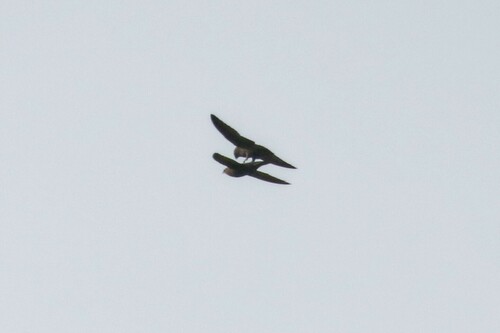
Common Swift (Apus apus) Common Swift
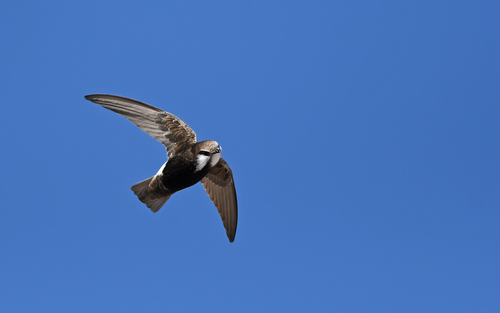
Little Swift (Apus affinis) Little Swift

Media

Loading…

In short

The most reliable way to separate Common Swift from Little Swift is by tail shape and rump pattern in flight: Common Swift shows a long, deeply forked tail and is uniformly dark except for a small, hard-to-see pale throat spot, while Little Swift has a short, square tail and a bold white rump patch that wraps onto the flanks, plus a white throat. Size is also a strong clue—Common Swift is noticeably larger and longer-winged, with a more crescent-shaped wing outline. In direct comparison, Little Swift's flight is more fluttery and reminiscent of a house martin, while Common Swift slices through the air with long, scythe-like wings. Both species are blackish overall, but the Little Swift's contrasting white rump is usually obvious at a distance.

Identification tips

  1. Tail shape: Common Swift has a long, deeply forked tail; Little Swift's tail is short, square, and lacks a fork. This is visible in flight and when perched.
  2. Rump patch: Little Swift shows a bold white rump patch extending onto the flanks, visible from above and below. Common Swift is uniformly dark except for a tiny pale throat spot.
  3. Throat color: Little Swift has a white throat, sometimes visible head-on or when perched; Common Swift's pale chin patch is much less obvious and rarely seen in the field.
  4. Wing shape: Common Swift's wings are long, narrow, and swept back, forming a crescent or boomerang; Little Swift's wings are shorter and broader, giving a more compact impression.
  5. Flight style: Common Swift slices through the air with fast, direct, gliding flight; Little Swift flutters more, with a flight reminiscent of house martins.
  6. Size: Common Swift is noticeably larger and longer-winged; Little Swift is smaller and chunkier. Use nearby swifts or martins for scale when possible.
  7. Plumage contrast: At a distance, Little Swift's white rump stands out in mixed flocks or against the sky; Common Swift appears uniformly dark.
  8. Perched birds: Both species rarely perch except on vertical surfaces, but tail shape and throat/rump pattern can be seen if you get a close view.
  9. Voice: Listen for Common Swift's loud, piercing scream versus Little Swift's high twittering. Calls are often diagnostic when birds are overhead.
  10. Habitat context: In Europe, Common Swift is widespread and abundant; Little Swift is a rare breeder or vagrant, more likely in urban or rocky settings.
  11. Pitfalls: Juvenile and immature plumages are not described as distinctive for either species, so rely on structural and rump/tail marks at all ages.
  12. Season: Common Swift is a migrant in Europe (April–August), absent in winter; Little Swift may be present year-round in its core range.
  13. Flock composition: Mixed swift flocks may contain both species in southern Europe or North Africa—look for the white rump and square tail to pick out Little Swift.
  14. Lighting: The white rump of Little Swift is visible in most conditions, but backlighting or poor light can obscure it—use tail shape and size as backup.
  15. Direct comparison: If both species are present, the size, tail, and rump differences are striking when seen side by side.

Size

Common Swift is the larger species, measuring 16–17 cm in length with a wingspan of 38–40 cm [wikipedia]. Little Swift is distinctly smaller, with a wingspan of about 33 cm [wikipedia]. This size difference is often apparent when both species are seen together or with familiar swifts/martins for scale. The more compact body and shorter wings of Little Swift give it a chunkier, less streamlined look compared to the long, slender Common Swift.

Plumage

Age-specific wing pattern is not described for either species, so focus is on adult and general flight views. Common Swift is entirely blackish-brown, with only a small pale chin patch that is rarely visible except at close range or ideal light. Its tail is long and deeply forked, and the wings are long, narrow, and swept back, forming a crescent or boomerang shape. Little Swift, by contrast, is also blackish but has a conspicuous white rump patch that extends onto the flanks, and a white throat. Its tail is short and square with rounded feather tips, lacking any fork. The contrasting white rump is visible from above and below in flight, and the white throat can sometimes be seen head-on or when perched. No seasonal or age-related plumage differences are noted for either species.

Behaviour

Both species spend most of their lives on the wing, rarely perching except on vertical surfaces. Common Swift's flight is fast, direct, and powerful, with long glides and rapid, scythe-like wingbeats. Little Swift has a more fluttery, less direct flight, often compared to house martins. This difference in flight style can be a helpful clue, especially when seen alongside other swifts or martins. Both feed on aerial insects and drink on the wing.

Habitat

Common Swift breeds across Europe and migrates to Africa for the winter, favoring lowlands and areas near water during migration and breeding [wikipedia]. Little Swift is resident in Africa and southwestern Asia, with some vagrancy and local breeding in southern Europe. It is more likely to be found in urban areas and on rocky cliffs, often nesting on buildings or natural vertical surfaces. While their ranges overlap in parts of Africa and southern Europe, Common Swift is much more widespread in Europe, and Little Swift is more tied to urban or rocky habitats.

Voice

Common Swift gives a loud, piercing scream, with males and females producing slightly different pitches. Little Swift's call is a high-pitched twittering, softer and less piercing than the Common Swift's scream. These vocal differences can help in mixed swift flocks or when birds are overhead but not easily seen.

Submit a better description

Use the same sections as the comparison. Your text is published immediately.

The most reliable way to separate Common Swift from Little Swift is by tail shape and rump pattern in flight: Common Swift shows a long, deeply forked tail and is uniformly dark except for a small, hard-to-see pale throat spot, while Little Swift has a short, square tail and a bold white rump patch that wraps onto the flanks, plus a white throat. Size is also a strong clue—Common Swift is noticeably larger and longer-winged, with a more crescent-shaped wing outline. In direct comparison, Little Swift's flight is more fluttery and reminiscent of a house martin, while Common Swift slices through the air with long, scythe-like wings. Both species are blackish overall, but the Little Swift's contrasting white rump is usually obvious at a distance.

  1. Tail shape: Common Swift has a long, deeply forked tail; Little Swift's tail is short, square, and lacks a fork. This is visible in flight and when perched.
  2. Rump patch: Little Swift shows a bold white rump patch extending onto the flanks, visible from above and below. Common Swift is uniformly dark except for a tiny pale throat spot.
  3. Throat color: Little Swift has a white throat, sometimes visible head-on or when perched; Common Swift's pale chin patch is much less obvious and rarely seen in the field.
  4. Wing shape: Common Swift's wings are long, narrow, and swept back, forming a crescent or boomerang; Little Swift's wings are shorter and broader, giving a more compact impression.
  5. Flight style: Common Swift slices through the air with fast, direct, gliding flight; Little Swift flutters more, with a flight reminiscent of house martins.
  6. Size: Common Swift is noticeably larger and longer-winged; Little Swift is smaller and chunkier. Use nearby swifts or martins for scale when possible.
  7. Plumage contrast: At a distance, Little Swift's white rump stands out in mixed flocks or against the sky; Common Swift appears uniformly dark.
  8. Perched birds: Both species rarely perch except on vertical surfaces, but tail shape and throat/rump pattern can be seen if you get a close view.
  9. Voice: Listen for Common Swift's loud, piercing scream versus Little Swift's high twittering. Calls are often diagnostic when birds are overhead.
  10. Habitat context: In Europe, Common Swift is widespread and abundant; Little Swift is a rare breeder or vagrant, more likely in urban or rocky settings.
  11. Pitfalls: Juvenile and immature plumages are not described as distinctive for either species, so rely on structural and rump/tail marks at all ages.
  12. Season: Common Swift is a migrant in Europe (April–August), absent in winter; Little Swift may be present year-round in its core range.
  13. Flock composition: Mixed swift flocks may contain both species in southern Europe or North Africa—look for the white rump and square tail to pick out Little Swift.
  14. Lighting: The white rump of Little Swift is visible in most conditions, but backlighting or poor light can obscure it—use tail shape and size as backup.
  15. Direct comparison: If both species are present, the size, tail, and rump differences are striking when seen side by side.

Common Swift is the larger species, measuring 16–17 cm in length with a wingspan of 38–40 cm [wikipedia]. Little Swift is distinctly smaller, with a wingspan of about 33 cm [wikipedia]. This size difference is often apparent when both species are seen together or with familiar swifts/martins for scale. The more compact body and shorter wings of Little Swift give it a chunkier, less streamlined look compared to the long, slender Common Swift.

Age-specific wing pattern is not described for either species, so focus is on adult and general flight views. Common Swift is entirely blackish-brown, with only a small pale chin patch that is rarely visible except at close range or ideal light. Its tail is long and deeply forked, and the wings are long, narrow, and swept back, forming a crescent or boomerang shape. Little Swift, by contrast, is also blackish but has a conspicuous white rump patch that extends onto the flanks, and a white throat. Its tail is short and square with rounded feather tips, lacking any fork. The contrasting white rump is visible from above and below in flight, and the white throat can sometimes be seen head-on or when perched. No seasonal or age-related plumage differences are noted for either species.

Both species spend most of their lives on the wing, rarely perching except on vertical surfaces. Common Swift's flight is fast, direct, and powerful, with long glides and rapid, scythe-like wingbeats. Little Swift has a more fluttery, less direct flight, often compared to house martins. This difference in flight style can be a helpful clue, especially when seen alongside other swifts or martins. Both feed on aerial insects and drink on the wing.

Common Swift breeds across Europe and migrates to Africa for the winter, favoring lowlands and areas near water during migration and breeding [wikipedia]. Little Swift is resident in Africa and southwestern Asia, with some vagrancy and local breeding in southern Europe. It is more likely to be found in urban areas and on rocky cliffs, often nesting on buildings or natural vertical surfaces. While their ranges overlap in parts of Africa and southern Europe, Common Swift is much more widespread in Europe, and Little Swift is more tied to urban or rocky habitats.

Common Swift gives a loud, piercing scream, with males and females producing slightly different pitches. Little Swift's call is a high-pitched twittering, softer and less piercing than the Common Swift's scream. These vocal differences can help in mixed swift flocks or when birds are overhead but not easily seen.

Discard your changes?

You have unsaved edits. If you leave now, those changes will be lost.

Common Swift · Little Swift · My Tricky Birds