
Common Starling vs Spotless Starling
Sturnus vulgaris versus Sturnus unicolor
Play a quiz with Common Starling and Spotless Starling
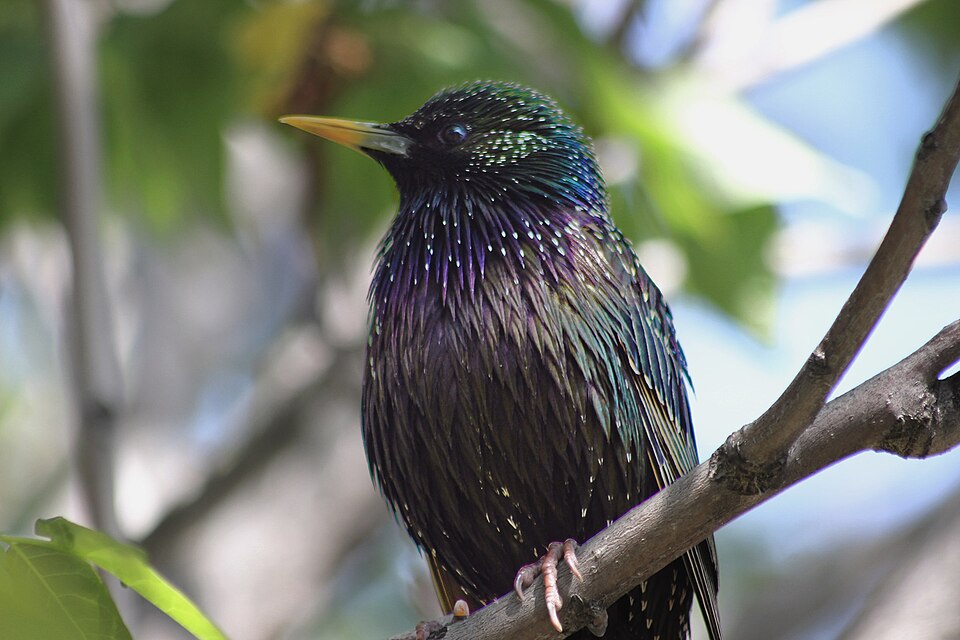 Common Starling
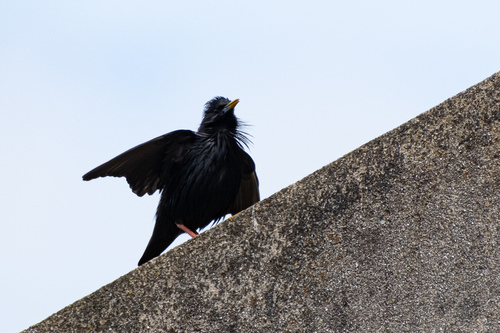 Spotless Starling
In short
The most reliable field mark for separating Common Starling from Spotless Starling is the presence or absence of pale spots on the body and wings, especially in spring and summer: Common Starling adults are distinctly spangled with white spots outside the breeding season, while Spotless Starling adults are truly spotless at this time. In winter, both species can show some pale tipping, but Spotless Starling's spots are much smaller and less obvious. Juveniles of both are dull brown, but young Spotless Starlings are darker overall. Spotless Starling is also slightly larger and has a shaggier, longer 'beard' of throat feathers, especially obvious when singing. Bill and leg color overlap but can help with close views. These species often occur together in southwestern Europe, so careful attention to plumage and structure is essential.
Identification tips
- Spotting in spring/summer: Adult Spotless Starlings are truly spotless—look for any white spangling on the body or wings; if present, it's a Common Starling (especially outside the overlap zone).
- Spotting in autumn/winter: Common Starling shows obvious white spots all over; Spotless Starling may have tiny pale tips but appears nearly spotless or only faintly marked, especially at a distance.
- Juvenile color: Juvenile Spotless Starlings are darker brown than juvenile Common Starlings; the latter are paler and may show retained brown on the head into first winter.
- Throat feathers: Spotless Starling has much longer, shaggier throat feathers, forming a 'beard'—most visible when the bird is singing or calling. Common Starling's throat is less pronounced, though males have longer feathers than females.
- Bill color (summer): Both species have yellow bills in summer, but in Spotless Starling, males have a bluish base and females a pinkish base; in Common Starling, males have a blue-grey base and females a pink base. This is subtle and requires close views.
- Bill color (winter): Both species have blackish bills in winter, so this is not useful for separation then.
- Leg color: Both have pinkish legs, but Spotless Starling's are described as brighter pink, especially in adults. Juvenile Spotless has brown legs.
- Gloss and sheen: Spotless Starling appears darker, more 'oily' black with a purple or green gloss in bright light, while Common Starling is glossier and more iridescent, especially in fresh plumage.
- Size and structure: Spotless Starling is slightly larger and bulkier, but this is subtle and best judged in direct comparison or mixed flocks.
- Flight and jizz: Both species have strong, direct flight with triangular wings and short tails; behavior is not a reliable separator.
- Habitat: Overlap in range and habitat is extensive in southwestern Europe and North Africa; do not rely on habitat alone.
- Voice: Both are noisy mimics with similar calls; Spotless may be louder but this is not a reliable field mark.
- Flock composition: In mixed flocks, look for the proportion of spangled (Common) vs. spotless (Spotless) birds, especially in spring/summer.
- Sexing by iris color: Only reliable for Common Starling—males have rich brown irises, females mouse-brown or grey; this is not described for Spotless Starling.
- When in doubt: In the overlap zone, prioritize the presence or absence of spots and the length of the throat feathers, especially in singing birds.
Size
Spotless Starling is marginally larger and heavier than Common Starling: Spotless averages 21–23 cm in length and 70–100 g in weight (with a typical mass around 90.6 g), compared to Common Starling's 19–23 cm and 58–101 g. The difference is subtle and not always apparent in the field, especially in mixed flocks, but Spotless can appear slightly bulkier and longer-bodied. Both have similar proportions, but Spotless may look a touch more robust.
Plumage
- Juvenile/First-year: Both species' juveniles are dull brown, but Spotless Starling young are darker overall, with a black bill and brown legs, while Common Starling juveniles are paler brown with a blackish bill in winter and pinkish legs. By first winter, both start to resemble adults but young Common Starlings often retain some brown on the head.
- Adult non-breeding (autumn/winter): Common Starling shows prominent white spots across the body and wings, created by pale feather tips. Spotless Starling in winter has only very small, subtle pale tips, so appears much less spangled—often nearly spotless at a distance.
- Adult breeding (spring/summer): Common Starling loses most of its pale spots as the feather tips wear off, but some faint spangling may persist. Spotless Starling is entirely spotless and appears as a glossy, oily black with purple or green sheen. The difference is most obvious in this season.
- Throat feathers: Spotless Starling has throat feathers twice as long as Common Starling, forming a shaggy 'beard'—especially obvious when singing. Common Starling's throat is less pronounced, though males have longer throat feathers than females.
Behaviour
Both species walk rather than hop and have a strong, direct flight with triangular wings and short tails. Spotless Starling may appear slightly more robust and, when singing, shows a more pronounced shaggy throat. Both species form flocks and exhibit coordinated, swirling flight patterns. In mixed flocks, behavior is not a reliable separator.
Habitat
Where their ranges overlap (Iberian Peninsula, southern France, Northwest Africa, and some Mediterranean islands), both species can be found in similar habitats: urban areas, farmland, open countryside, and near human settlements. Common Starling is much more widespread across Europe and into Asia and North America, while Spotless Starling is restricted to southwestern Europe and parts of North Africa. Habitat alone does not reliably separate them within the overlap zone.
Voice
Both are noisy, accomplished mimics with similar calls. Spotless Starling is described as louder, but in practice their vocalizations are very similar and not a reliable field mark for separation.