

Common Snipe vs Common Sandpiper
Gallinago gallinago versus Actitis hypoleucos
Play a quiz with Common Snipe and Common Sandpiper
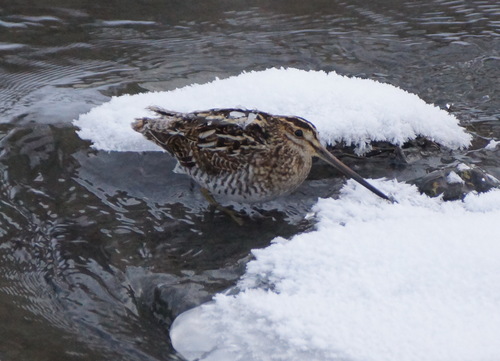 Common Snipe
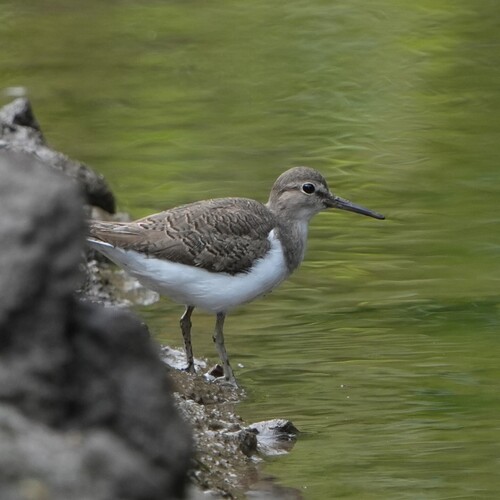 Common Sandpiper
In short
The most reliable way to separate Common Snipe from Common Sandpiper is by their structure and flight style: snipe are stocky, broad-winged birds with a very long, straight bill, while sandpipers are slimmer, shorter-billed, and show a distinctive low, stiff-winged flight. Juvenile Common Sandpipers have more barring on the upperparts and buff-edged wing feathers, but even then, the snipe’s cryptic, heavily striped plumage and zig-zag flush are unique. In perched views, focus on the snipe’s straw-yellow stripes and long bill versus the sandpiper’s clean white underparts and shorter, dark-tipped bill. Both can be found near water, but snipe prefer dense, marshy cover while sandpipers are more often seen along open shorelines.
Identification tips
- Bill length and shape: Common Snipe have a very long, straight, dark bill (5.5–7 cm), while Common Sandpipers have a much shorter bill with a pale base and dark tip. This is reliable at any age or season.
- Body shape and jizz: Snipe are stocky, with a short neck and broad wings; sandpipers are slimmer and more elongated. In flight, snipe look compact and powerful, sandpipers more delicate.
- Flight style: Snipe flush explosively, flying in a zig-zag pattern; sandpipers fly low over water with stiff, shallow wingbeats and a direct path.
- Upperpart pattern: Snipe show heavy mottling and straw-yellow stripes on the back, with a bold dark eye-stripe and pale supercilium. Sandpipers are plainer brown above, with less contrast and no bold striping.
- Underparts: Snipe are pale but streaked below, especially on the breast; sandpipers have clean white underparts with a sharp demarcation from the brown upperparts.
- Leg color: Snipe have short, greenish-grey legs; sandpipers have short, dark-yellowish legs and feet. This is subtle but can help at close range.
- Wing pattern (juvenile/first-winter): Juvenile sandpipers are more heavily barred above and have buff-edged wing feathers; snipe juveniles look much like adults, with strong striping and mottling.
- Tail and rump: Snipe have a relatively short tail with straw-yellow stripes above; sandpipers have a plain brown back and tail, with no strong pattern.
- Behavior on the ground: Snipe are secretive, often crouched or hidden in vegetation; sandpipers are active, bobbing their tails and walking along open mud or sand.
- Display behavior: Only snipe perform aerial 'winnowing' with a drumming sound; sandpipers do not.
- Habitat: Snipe are in dense, wet, marshy cover; sandpipers are in open, muddy or sandy shorelines.
- Size: Snipe are larger and heavier, but this is most apparent with direct comparison.
- Flush distance: Snipe flush only when very close; sandpipers are less shy and more visible.
- Voice: Snipe call sharply when flushed; sandpiper calls are not described here, but lack the snipe's mechanical 'drumming.'
- Seasonal changes: Sandpipers become duller in winter, but still lack the snipe's strong striping; snipe do not change much seasonally.
Size
Common Snipe are noticeably larger and heavier than Common Sandpipers. Snipe average about 119.5 g in body mass and measure 25–27 cm in length with a 44–47 cm wingspan. In contrast, Common Sandpipers are smaller and lighter, at 18–20 cm long with a 32–35 cm wingspan. This size difference is often apparent in direct comparison, but less so at a distance or with lone birds.
Plumage
Juvenile and first-winter Common Sandpipers show more pronounced barring above and buff edges to the wing feathers, but this is subtle and only obvious at close range. Common Snipe, regardless of age, have a heavily mottled brown upperpart pattern with straw-yellow stripes and a bold dark eye-stripe, giving a cryptic, streaked appearance. The snipe’s underparts are pale, but not as clean white as the sandpiper’s. In flight, snipe show pointed wings and a complex, camouflaged upperwing, while sandpipers have plainer upperwings with some barring in juveniles and a crisper, but less contrasting, wing pattern. The sandpiper’s winter plumage is duller, but still lacks the snipe’s bold striping.
Behaviour
Common Snipe are extremely shy, often flushing only when approached closely, and then flying off in a rapid, zig-zag pattern. They forage by probing in soft mud, often hidden in dense vegetation. Common Sandpipers are more often seen walking along open shorelines, bobbing their tails and moving with a characteristic stop-start gait. In flight, sandpipers are low and direct with stiff, shallow wingbeats, while snipe are more erratic and explosive when flushed. Snipe males perform a unique aerial 'winnowing' display during courtship, producing a drumming sound with their tail feathers.
Habitat
Common Snipe breed and forage in marshes, bogs, wet meadows, and tundra—always favoring dense, wet, vegetated habitats. They are rarely seen in the open. Common Sandpipers prefer open, muddy or sandy shorelines of lakes, rivers, and estuaries, and are seldom found in dense cover. Overlap can occur at the edges of wetlands, but their preferred habitats are usually distinct.
Voice
When flushed, Common Snipe give a sharp 'scape, scape' call, and males produce a unique 'drumming' or 'bleating' sound during display flights by vibrating their tail feathers. Common Sandpipers do not produce a comparable mechanical sound; their calls are not described in the provided notes.