

Motmot

Common Snipe vs Common Redshank

Gallinago gallinago versus Tringa totanus

Play a quiz with Common Snipe and Common Redshank
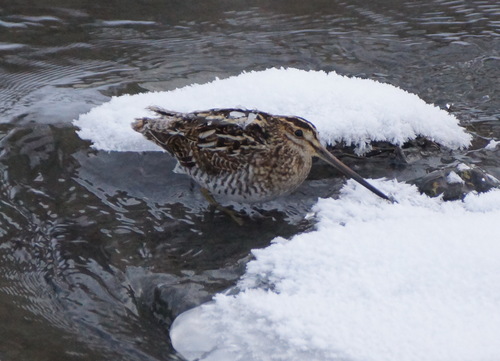
Common Snipe (Gallinago gallinago) Common Snipe
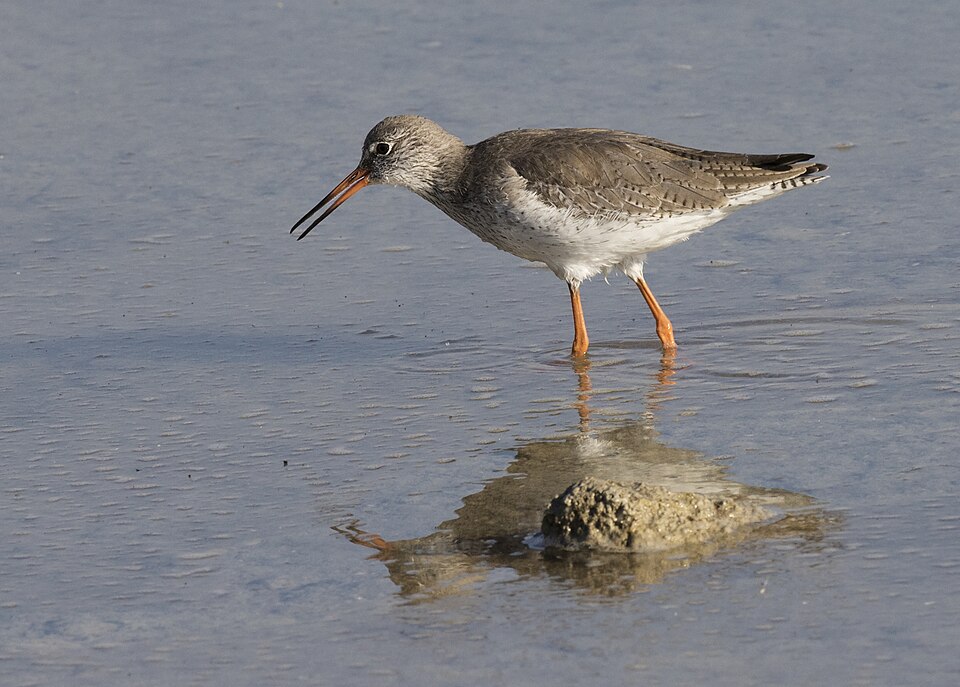
Common Redshank (Tringa totanus) Common Redshank

Media

Loading…

In short

The most reliable field mark between Common Snipe and Common Redshank is the striking difference in leg and bill color: Common Redshank shows vivid red legs and a red-based bill with a black tip, while Common Snipe has greenish-grey legs and a long, straight dark bill. In flight, Common Redshank flashes a bold white wedge up the back and broad white wing panels, unlike the Snipe’s more cryptic, mottled brown upperparts and pointed wings. Snipe are compact, stocky birds with short legs and a very long bill, often flushed from dense cover in a zig-zag flight, while Redshanks are taller, longer-legged, and more upright when standing. Both species may be found in wet habitats, but their structure, flight style, and especially leg color are the quickest ways to separate them in the field.

Identification tips

  1. Leg color: Redshank always shows vivid red legs, visible at great distance; Snipe has greenish-grey legs. This is the quickest field mark on the ground or in flight.
  2. Bill: Redshank’s bill is medium-length, straight, and red at the base with a black tip; Snipe’s bill is much longer, straight, and entirely dark. Bill length and color are reliable at close range.
  3. Flight pattern (upperwing and back): In all ages and seasons, Redshank flashes a bold white wedge up the back and broad white panels on the wings in flight. Snipe lacks any white on the back or wings, showing only mottled brown and straw-yellow stripes.
  4. Body shape and posture: Snipe is compact, short-legged, and crouches low; Redshank stands taller and more upright, with longer legs and a slimmer profile.
  5. Plumage (ground views): Snipe is intricately mottled brown above with straw-yellow stripes and a dark eye-stripe; Redshank is marbled brown above in breeding plumage, plainer grey-brown in winter, and always paler below, but lacks the Snipe’s fine streaking and striping.
  6. Supercilium and face pattern: Snipe has a strong pale supercilium above a dark eye-stripe; Redshank’s face is plainer, lacking strong facial stripes.
  7. Tail: Snipe has a short tail, not contrasting in flight; Redshank’s tail is white with dark bars, but the white up the back is more striking.
  8. Flush behavior: Snipe flushes suddenly from close range with a zig-zag, erratic flight; Redshank usually takes off earlier, flies directly, and often calls loudly.
  9. Vocalizations: Snipe gives a sharp 'scape' call and, in display, a unique 'drumming' sound; Redshank calls with a loud, ringing 'teu-teu-teu.'
  10. Habitat context: Snipe prefers dense, wet vegetation and is rarely seen in the open; Redshank is more often in open mudflats or grassy margins.
  11. Foraging behavior: Snipe probes in mud with its long bill, often hidden; Redshank picks at the surface or wades, often visible.
  12. Seasonal plumage: Redshank becomes plainer and greyer in winter but always shows red legs and white wing/back pattern in flight; Snipe remains cryptic year-round.
  13. Courtship display: Only Snipe performs aerial 'winnowing' with drumming sound; Redshank has no such display.
  14. Confusion risk: At a distance, a Redshank in poor light might seem brownish like a Snipe, but the red legs and white wing/back pattern in flight are always decisive.
  15. Age/sex differences: No age or sex of Snipe ever shows white wing panels or red legs; no age or sex of Redshank ever shows the Snipe’s cryptic striping or supercilium.

Size

Both species are similar in mass, with Common Snipe averaging about 119.5g and Common Redshank about 129g [wikidata]. However, Redshank is a slightly larger, taller bird with longer legs and a more upright stance, while Snipe is stockier and more compact. Snipe’s body length is 25–27 cm with a 44–47 cm wingspan [wikipedia], while Redshank is generally a bit longer and bulkier in appearance, especially due to its longer legs. In the field, the difference in leg length and posture is more obvious than any difference in bulk or wingspan.

Plumage

Juvenile and adult Common Redshank in flight show a bold white wedge up the back and broad white panels on the wings, which are visible in all plumages and are absent in Common Snipe. Snipe, regardless of age, is intricately mottled brown above with straw-yellow stripes and has no white on the back or wings in flight. On the ground, Redshank’s red legs and red-based bill with a black tip are always present and diagnostic. Snipe’s plumage is more cryptic, with a dark eye-stripe and pale supercilium, and its underparts are pale but not as clean white as Redshank’s. In non-breeding (winter) plumage, Redshank becomes plainer and greyer above, but still shows the white wing and back pattern in flight. Snipe remains well-camouflaged and streaky year-round. There are no age-specific upperwing patterns in Snipe that mimic Redshank’s white panels.

Behaviour

Common Snipe is shy, secretive, and usually flushes only when approached closely, flying off in a rapid, zig-zag pattern. Its flight is fast and erratic, often accompanied by a sharp 'scape' call. Snipe often conceals itself in dense vegetation and forages by probing in soft mud. Common Redshank is more conspicuous, often seen walking or wading in the open, and is less likely to flush at close range. Redshank’s flight is direct and strong, with steady wingbeats, and it often calls loudly when disturbed. On the ground, Redshank stands tall and upright, while Snipe crouches low and is more likely to freeze or hide.

Habitat

Both species use wetland habitats, but Common Snipe favors marshes, bogs, wet meadows, and areas with dense ground cover where it can hide. Redshank is more often found in open mudflats, wet grasslands, and the edges of lakes and estuaries, where it is more visible. While their habitats can overlap, Snipe is almost always in thicker cover, and Redshank is more likely to be seen in the open or along water margins.

Voice

Common Snipe gives a sharp 'scape, scape' call when flushed, and males produce a distinctive 'drumming' or 'winnowing' sound during display flights, created by vibrating tail feathers. This sound is unique and not produced by Redshank. Common Redshank has a loud, ringing 'teu-teu-teu' call, often repeated in flight or when alarmed. The vocalizations are quite different and can be a useful separation, especially in flight or during the breeding season.

Submit a better description

Use the same sections as the comparison. Your text is published immediately.

The most reliable field mark between Common Snipe and Common Redshank is the striking difference in leg and bill color: Common Redshank shows vivid red legs and a red-based bill with a black tip, while Common Snipe has greenish-grey legs and a long, straight dark bill. In flight, Common Redshank flashes a bold white wedge up the back and broad white wing panels, unlike the Snipe’s more cryptic, mottled brown upperparts and pointed wings. Snipe are compact, stocky birds with short legs and a very long bill, often flushed from dense cover in a zig-zag flight, while Redshanks are taller, longer-legged, and more upright when standing. Both species may be found in wet habitats, but their structure, flight style, and especially leg color are the quickest ways to separate them in the field.

  1. Leg color: Redshank always shows vivid red legs, visible at great distance; Snipe has greenish-grey legs. This is the quickest field mark on the ground or in flight.
  2. Bill: Redshank’s bill is medium-length, straight, and red at the base with a black tip; Snipe’s bill is much longer, straight, and entirely dark. Bill length and color are reliable at close range.
  3. Flight pattern (upperwing and back): In all ages and seasons, Redshank flashes a bold white wedge up the back and broad white panels on the wings in flight. Snipe lacks any white on the back or wings, showing only mottled brown and straw-yellow stripes.
  4. Body shape and posture: Snipe is compact, short-legged, and crouches low; Redshank stands taller and more upright, with longer legs and a slimmer profile.
  5. Plumage (ground views): Snipe is intricately mottled brown above with straw-yellow stripes and a dark eye-stripe; Redshank is marbled brown above in breeding plumage, plainer grey-brown in winter, and always paler below, but lacks the Snipe’s fine streaking and striping.
  6. Supercilium and face pattern: Snipe has a strong pale supercilium above a dark eye-stripe; Redshank’s face is plainer, lacking strong facial stripes.
  7. Tail: Snipe has a short tail, not contrasting in flight; Redshank’s tail is white with dark bars, but the white up the back is more striking.
  8. Flush behavior: Snipe flushes suddenly from close range with a zig-zag, erratic flight; Redshank usually takes off earlier, flies directly, and often calls loudly.
  9. Vocalizations: Snipe gives a sharp 'scape' call and, in display, a unique 'drumming' sound; Redshank calls with a loud, ringing 'teu-teu-teu.'
  10. Habitat context: Snipe prefers dense, wet vegetation and is rarely seen in the open; Redshank is more often in open mudflats or grassy margins.
  11. Foraging behavior: Snipe probes in mud with its long bill, often hidden; Redshank picks at the surface or wades, often visible.
  12. Seasonal plumage: Redshank becomes plainer and greyer in winter but always shows red legs and white wing/back pattern in flight; Snipe remains cryptic year-round.
  13. Courtship display: Only Snipe performs aerial 'winnowing' with drumming sound; Redshank has no such display.
  14. Confusion risk: At a distance, a Redshank in poor light might seem brownish like a Snipe, but the red legs and white wing/back pattern in flight are always decisive.
  15. Age/sex differences: No age or sex of Snipe ever shows white wing panels or red legs; no age or sex of Redshank ever shows the Snipe’s cryptic striping or supercilium.

Both species are similar in mass, with Common Snipe averaging about 119.5g and Common Redshank about 129g [wikidata]. However, Redshank is a slightly larger, taller bird with longer legs and a more upright stance, while Snipe is stockier and more compact. Snipe’s body length is 25–27 cm with a 44–47 cm wingspan [wikipedia], while Redshank is generally a bit longer and bulkier in appearance, especially due to its longer legs. In the field, the difference in leg length and posture is more obvious than any difference in bulk or wingspan.

Juvenile and adult Common Redshank in flight show a bold white wedge up the back and broad white panels on the wings, which are visible in all plumages and are absent in Common Snipe. Snipe, regardless of age, is intricately mottled brown above with straw-yellow stripes and has no white on the back or wings in flight. On the ground, Redshank’s red legs and red-based bill with a black tip are always present and diagnostic. Snipe’s plumage is more cryptic, with a dark eye-stripe and pale supercilium, and its underparts are pale but not as clean white as Redshank’s. In non-breeding (winter) plumage, Redshank becomes plainer and greyer above, but still shows the white wing and back pattern in flight. Snipe remains well-camouflaged and streaky year-round. There are no age-specific upperwing patterns in Snipe that mimic Redshank’s white panels.

Common Snipe is shy, secretive, and usually flushes only when approached closely, flying off in a rapid, zig-zag pattern. Its flight is fast and erratic, often accompanied by a sharp 'scape' call. Snipe often conceals itself in dense vegetation and forages by probing in soft mud. Common Redshank is more conspicuous, often seen walking or wading in the open, and is less likely to flush at close range. Redshank’s flight is direct and strong, with steady wingbeats, and it often calls loudly when disturbed. On the ground, Redshank stands tall and upright, while Snipe crouches low and is more likely to freeze or hide.

Both species use wetland habitats, but Common Snipe favors marshes, bogs, wet meadows, and areas with dense ground cover where it can hide. Redshank is more often found in open mudflats, wet grasslands, and the edges of lakes and estuaries, where it is more visible. While their habitats can overlap, Snipe is almost always in thicker cover, and Redshank is more likely to be seen in the open or along water margins.

Common Snipe gives a sharp 'scape, scape' call when flushed, and males produce a distinctive 'drumming' or 'winnowing' sound during display flights, created by vibrating tail feathers. This sound is unique and not produced by Redshank. Common Redshank has a loud, ringing 'teu-teu-teu' call, often repeated in flight or when alarmed. The vocalizations are quite different and can be a useful separation, especially in flight or during the breeding season.

Discard your changes?

You have unsaved edits. If you leave now, those changes will be lost.

Common Snipe · Common Redshank · My Tricky Birds