

Motmot

Common Scoter vs Red-breasted Merganser

Melanitta nigra versus Mergus serrator

Play a quiz with Common Scoter and Red-breasted Merganser
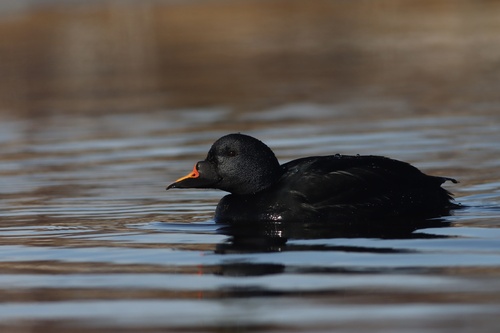
Common Scoter (Melanitta nigra) Common Scoter
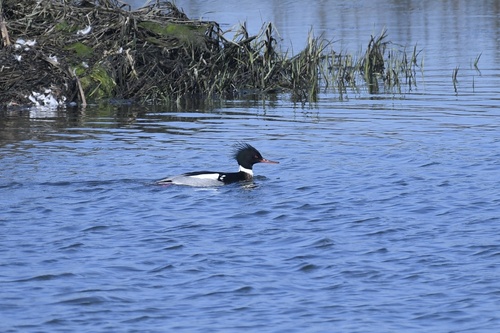
Red-breasted Merganser (Mergus serrator) Red-breasted Merganser

Media

Loading…

In short

The most reliable way to separate Common Scoter from Red-breasted Merganser is by overall structure and bill shape: scoters are compact, heavy-bodied sea ducks with a thick, bulbous bill, while mergansers are longer, slimmer birds with a long, thin, red, serrated bill and a spiky crest. In flight or on the water, male Common Scoters are entirely black with no white, whereas male Red-breasted Mergansers show a striking white neck and rusty breast in breeding plumage. Females of both species are brown, but mergansers have a rusty head and a clear spiky crest, while scoter females are bulkier with pale cheeks and lack a crest. Immature and female plumages can cause confusion, but bill and head shape remain distinctive. Both species dive for food, but their jizz and feeding behavior differ noticeably.

Identification tips

  1. Bill shape is key: Common Scoter has a thick, bulbous bill (male with some yellow at the base), while Red-breasted Merganser has a long, thin, red, serrated bill. This is diagnostic at all ages and sexes.
  2. Head and crest: Red-breasted Merganser always shows a spiky crest, especially obvious in females and immatures; Common Scoter never has a crest, giving a smooth, rounded head profile.
  3. Body shape and jizz: Scoters are compact, heavy-bodied, and sit low in the water, often in dense flocks. Mergansers are longer, slimmer, and ride higher, with a more horizontal, streamlined posture.
  4. Adult male plumage: Male Common Scoter is entirely black with no white; male Red-breasted Merganser in breeding plumage has a dark greenish head, white neck, rusty breast, black back, and white underparts.
  5. Female/immature confusion: Female scoter is brown with pale cheeks and no crest; female merganser is greyish-brown with a rusty head and a clear spiky crest. Juvenile mergansers have a shorter crest and smaller white wing patches, but still show the long, thin bill and rusty head.
  6. Wing pattern in flight: Red-breasted Merganser (all ages) shows white in the wing (smaller in juveniles), while Common Scoter is more uniformly dark above and below, lacking strong wing contrast.
  7. Flock structure: Scoters form tight, synchronized flocks on open water; mergansers are more scattered and active, often diving independently.
  8. Feeding behavior: Mergansers chase fish underwater and may be seen surfacing with prey; scoters dive for molluscs and crustaceans, less often seen with fish.
  9. Habitat context: Large, distant rafts offshore are more likely scoters; birds in estuaries, rocky coasts, or rivers may be either, but check structure and bill.
  10. Bill color: Male scoter has some yellow on the bill, especially near the nostrils; merganser bill is always red (both sexes).
  11. Voice: Calls are rarely diagnostic in the field, but if heard, scoter is lower and more guttural, merganser higher-pitched.
  12. Courtship display: Only merganser males perform the elaborate neck-stretching, synchronized display with fanned crests; scoters do not display in this way.
  13. Seasonal context: In winter, both can occur together on coasts, but scoters dominate large offshore flocks; mergansers are more often in smaller groups or alone, especially in estuaries.
  14. Juvenile confusion: Juvenile mergansers may lack a full crest and have reduced white in the wing, but still show the long, thin, red bill and rusty head, unlike any scoter.
  15. When in doubt: Focus on bill shape, head profile, and presence or absence of a crest—these are the most reliable field marks at distance or in poor light.

Size

Red-breasted Merganser is slightly larger and longer overall (51–64 cm length, 1021.5 g average mass [wikidata]) compared to the Common Scoter (43–54 cm [wikipedia]; mass not specified, but generally a bit lighter and more compact). Mergansers appear longer-necked and more slender in all postures, while scoters are stockier and rounder, especially on the water.

Plumage

Juvenile and female Common Scoters are brown with pale cheeks and lack any crest, while Red-breasted Merganser females and immatures are brownish-grey with a rusty head and a prominent spiky crest. In flight, neither species shows strong contrasting upperwing patterns as juveniles, but mergansers have white wing patches (smaller in juveniles), while scoters are more uniformly dark. Adult male Common Scoter is entirely black with a bulbous bill showing some yellow at the base, and no white anywhere on the plumage. Adult male Red-breasted Merganser in breeding plumage has a dark head with a green sheen, a white neck, rusty breast, and white underparts, plus a spiky crest. Female mergansers have a rusty head and a greyish-brown body, while female scoters are more uniform brown with pale cheeks and no crest. Bill color is also a clue: scoters have a dark bill with some yellow in males, while mergansers have a long, thin, red bill.

Behaviour

Both species dive for food, but Red-breasted Merganser specializes in chasing fish underwater using its serrated bill, often seen swimming rapidly with a low, horizontal posture. Common Scoter dives for crustaceans and molluscs and tends to form dense, compact flocks, especially in winter. Mergansers are more likely to be seen singly or in loose groups, often displaying active, animated behavior, especially during courtship. Scoters are more likely to be seen in large, tight rafts on open water.

Habitat

Both species can occur on saltwater, but Common Scoter is a classic sea duck, forming large flocks offshore, especially in winter, and breeding in northern lakes and rivers. Red-breasted Merganser breeds on lakes and rivers but winters mostly on coastal waters, making it the most marine of the Mergus genus. In the UK and Europe, scoters are most often seen in large numbers offshore, while mergansers are more often found in estuaries, sheltered bays, or along rocky coasts, and sometimes inland on lakes and rivers.

Voice

Common Scoter and Red-breasted Merganser have diagnosably different vocalizations, but these are rarely useful in the field for separation, as both are generally quiet outside of the breeding season and calls are seldom heard at sea. If heard, scoter calls are lower and more guttural, while merganser calls are higher-pitched and less duck-like.

Submit a better description

Use the same sections as the comparison. Your text is published immediately.

The most reliable way to separate Common Scoter from Red-breasted Merganser is by overall structure and bill shape: scoters are compact, heavy-bodied sea ducks with a thick, bulbous bill, while mergansers are longer, slimmer birds with a long, thin, red, serrated bill and a spiky crest. In flight or on the water, male Common Scoters are entirely black with no white, whereas male Red-breasted Mergansers show a striking white neck and rusty breast in breeding plumage. Females of both species are brown, but mergansers have a rusty head and a clear spiky crest, while scoter females are bulkier with pale cheeks and lack a crest. Immature and female plumages can cause confusion, but bill and head shape remain distinctive. Both species dive for food, but their jizz and feeding behavior differ noticeably.

  1. Bill shape is key: Common Scoter has a thick, bulbous bill (male with some yellow at the base), while Red-breasted Merganser has a long, thin, red, serrated bill. This is diagnostic at all ages and sexes.
  2. Head and crest: Red-breasted Merganser always shows a spiky crest, especially obvious in females and immatures; Common Scoter never has a crest, giving a smooth, rounded head profile.
  3. Body shape and jizz: Scoters are compact, heavy-bodied, and sit low in the water, often in dense flocks. Mergansers are longer, slimmer, and ride higher, with a more horizontal, streamlined posture.
  4. Adult male plumage: Male Common Scoter is entirely black with no white; male Red-breasted Merganser in breeding plumage has a dark greenish head, white neck, rusty breast, black back, and white underparts.
  5. Female/immature confusion: Female scoter is brown with pale cheeks and no crest; female merganser is greyish-brown with a rusty head and a clear spiky crest. Juvenile mergansers have a shorter crest and smaller white wing patches, but still show the long, thin bill and rusty head.
  6. Wing pattern in flight: Red-breasted Merganser (all ages) shows white in the wing (smaller in juveniles), while Common Scoter is more uniformly dark above and below, lacking strong wing contrast.
  7. Flock structure: Scoters form tight, synchronized flocks on open water; mergansers are more scattered and active, often diving independently.
  8. Feeding behavior: Mergansers chase fish underwater and may be seen surfacing with prey; scoters dive for molluscs and crustaceans, less often seen with fish.
  9. Habitat context: Large, distant rafts offshore are more likely scoters; birds in estuaries, rocky coasts, or rivers may be either, but check structure and bill.
  10. Bill color: Male scoter has some yellow on the bill, especially near the nostrils; merganser bill is always red (both sexes).
  11. Voice: Calls are rarely diagnostic in the field, but if heard, scoter is lower and more guttural, merganser higher-pitched.
  12. Courtship display: Only merganser males perform the elaborate neck-stretching, synchronized display with fanned crests; scoters do not display in this way.
  13. Seasonal context: In winter, both can occur together on coasts, but scoters dominate large offshore flocks; mergansers are more often in smaller groups or alone, especially in estuaries.
  14. Juvenile confusion: Juvenile mergansers may lack a full crest and have reduced white in the wing, but still show the long, thin, red bill and rusty head, unlike any scoter.
  15. When in doubt: Focus on bill shape, head profile, and presence or absence of a crest—these are the most reliable field marks at distance or in poor light.

Red-breasted Merganser is slightly larger and longer overall (51–64 cm length, 1021.5 g average mass [wikidata]) compared to the Common Scoter (43–54 cm [wikipedia]; mass not specified, but generally a bit lighter and more compact). Mergansers appear longer-necked and more slender in all postures, while scoters are stockier and rounder, especially on the water.

Juvenile and female Common Scoters are brown with pale cheeks and lack any crest, while Red-breasted Merganser females and immatures are brownish-grey with a rusty head and a prominent spiky crest. In flight, neither species shows strong contrasting upperwing patterns as juveniles, but mergansers have white wing patches (smaller in juveniles), while scoters are more uniformly dark. Adult male Common Scoter is entirely black with a bulbous bill showing some yellow at the base, and no white anywhere on the plumage. Adult male Red-breasted Merganser in breeding plumage has a dark head with a green sheen, a white neck, rusty breast, and white underparts, plus a spiky crest. Female mergansers have a rusty head and a greyish-brown body, while female scoters are more uniform brown with pale cheeks and no crest. Bill color is also a clue: scoters have a dark bill with some yellow in males, while mergansers have a long, thin, red bill.

Both species dive for food, but Red-breasted Merganser specializes in chasing fish underwater using its serrated bill, often seen swimming rapidly with a low, horizontal posture. Common Scoter dives for crustaceans and molluscs and tends to form dense, compact flocks, especially in winter. Mergansers are more likely to be seen singly or in loose groups, often displaying active, animated behavior, especially during courtship. Scoters are more likely to be seen in large, tight rafts on open water.

Both species can occur on saltwater, but Common Scoter is a classic sea duck, forming large flocks offshore, especially in winter, and breeding in northern lakes and rivers. Red-breasted Merganser breeds on lakes and rivers but winters mostly on coastal waters, making it the most marine of the Mergus genus. In the UK and Europe, scoters are most often seen in large numbers offshore, while mergansers are more often found in estuaries, sheltered bays, or along rocky coasts, and sometimes inland on lakes and rivers.

Common Scoter and Red-breasted Merganser have diagnosably different vocalizations, but these are rarely useful in the field for separation, as both are generally quiet outside of the breeding season and calls are seldom heard at sea. If heard, scoter calls are lower and more guttural, while merganser calls are higher-pitched and less duck-like.

Discard your changes?

You have unsaved edits. If you leave now, those changes will be lost.

Common Scoter · Red-breasted Merganser · My Tricky Birds