
Motmot

Common Redstart vs European Stonechat

Phoenicurus phoenicurus versus Saxicola rubicola

Play a quiz with Common Redstart and European Stonechat
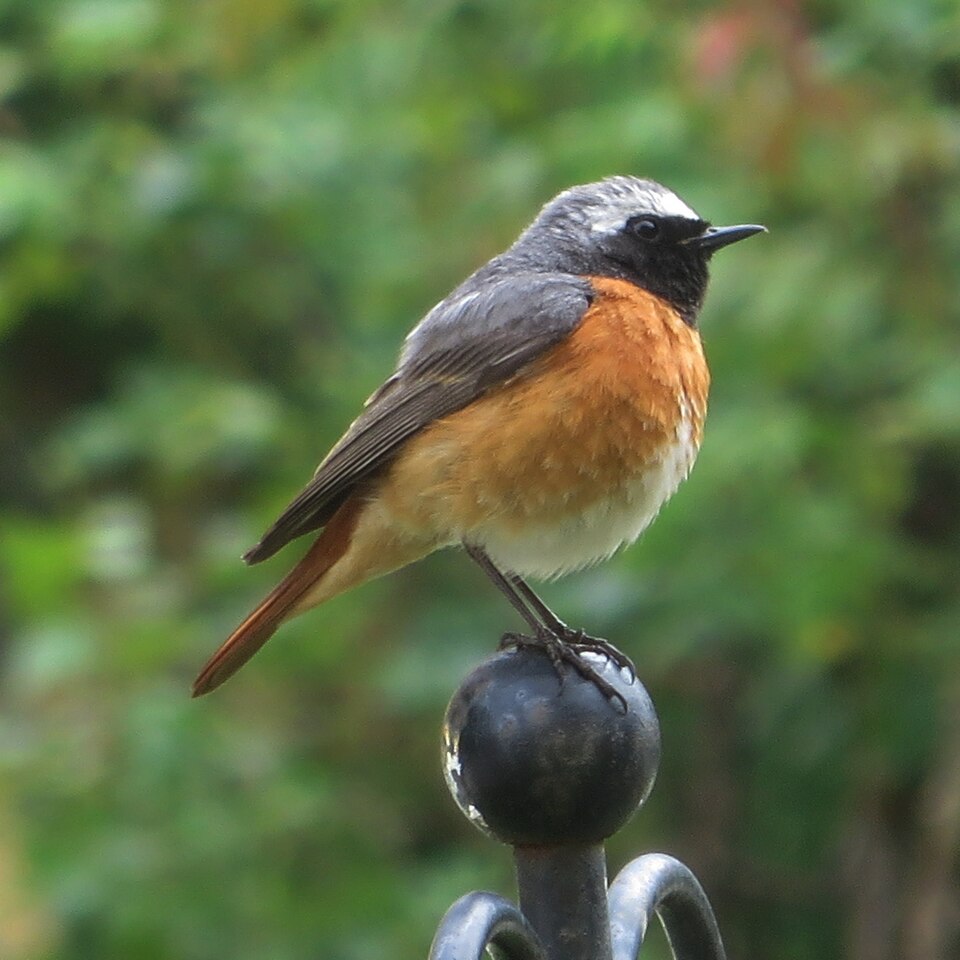
Common Redstart (Phoenicurus phoenicurus) Common Redstart
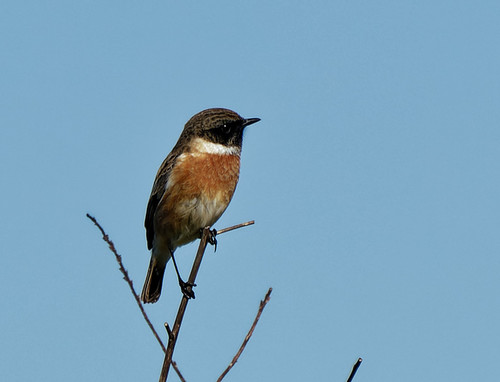
European Stonechat (Saxicola rubicola) European Stonechat

Media

Loading…

In short

The most reliable field mark between Common Redstart and European Stonechat is the tail color and movement: Common Redstart of all ages shows a bright orange-red tail that is frequently quivered, while European Stonechat has a darker tail and does not habitually quiver it. In flight or perched, check for the white wing patch—prominent in adult male Common Redstart (especially P. p. samamisicus), but only a small, often buffy-white scapular patch in Stonechat. Juvenile and female plumages can be confusing, but redstart's orange tail and lack of streaking on the underparts are key. Structure also helps: Redstart is slimmer and longer-tailed, while Stonechat is more compact with a shorter tail and wings. Habitat and behavior overlap, but Stonechat is more likely in open, shrubby grassland year-round, while Redstart is a summer migrant in woodland edges.

Identification tips

  1. Tail color and movement: Common Redstart of all ages has a bright orange-red tail that is frequently quivered; Stonechat's tail is dark and not habitually quivered. This is the single most reliable field mark.
  2. White wing panel: Adult male Redstart (especially P. p. samamisicus) shows a prominent white wing patch; Stonechat males have only a small white scapular patch and never a full white panel. Immature male and some female Redstarts may show a faint wing patch, but it's never as bold as in adult males.
  3. Overall structure: Redstart is slimmer, longer-tailed, and more upright when perched; Stonechat is more compact, with a shorter tail and wings, and often appears rounder.
  4. Head pattern (adult males): Redstart males have a slate-grey head, white forehead, and black face/throat; Stonechat males have a black head and throat, but also a white half-collar and orange breast.
  5. Underparts: Redstart males have orange flanks fading to a pale belly; Stonechat males have a white belly and vent, with a sharp contrast to the orange breast.
  6. Female/juvenile confusion: Female and juvenile Redstarts are plain grey-brown above, pale below, and always show a warm orange tail without streaking; female and juvenile Stonechats are brown above, heavily streaked below, and lack the orange tail, with only a buffy-white scapular patch.
  7. Streaking: Stonechat females and juveniles are streaked on the underparts; Redstart of all ages lacks underpart streaking.
  8. Rump and scapulars: Stonechat may show a small white rump patch (especially in pale southern birds) and a white scapular patch, but never a full white wing panel; Redstart's white is on the wing, not the rump.
  9. Seasonal effects: In autumn, male Redstarts can look washed out, but the orange tail remains; Stonechat males retain their black head and orange breast, but females and juveniles are always streaked and lack the orange tail.
  10. Behavior: Watch for tail quivering in Redstart and more flycatcher-like sallying; Stonechat tends to perch upright and make short, direct flights.
  11. Habitat: Redstart is more likely in woodland edge or mature gardens (especially in spring/summer); Stonechat is typical of open, shrubby grassland or heath, often year-round.
  12. Vocalizations: Redstart's song is soft and melancholy; Stonechat's calls are harsher and more 'chat-like.'
  13. Migration timing: Redstart is a summer migrant, usually present April–October; Stonechat is resident or short-distance migrant, present year-round in much of its range.
  14. Bill and legs: Both have black bills and legs; not a useful separator.
  15. Size: Redstart is slightly longer and slimmer, but size overlap is considerable; use in combination with other marks.

Size

Common Redstart is slightly larger and slimmer, measuring 13–14.5 cm in length and weighing 11–23 g. European Stonechat is a bit smaller and more compact, at 11.5–13 cm and 13–17 g. The Redstart's longer tail and overall slimmer build are often apparent in the field, while Stonechat appears rounder and shorter-tailed. Both are similar in size to European Robin, but Redstart is less chunky.

Plumage

For all ages and sexes, the tail is the most consistent separator: Common Redstart always shows a bright orange-red tail with dark central feathers, while Stonechat's tail is dark brown to blackish with only a faint rufous tinge at best. In flight, adult male Redstart (especially P. p. samamisicus) shows a conspicuous white wing panel formed by white outer webs on the remiges; this is less obvious but sometimes present in immature males and rarely in females. Stonechat males have only a small white scapular patch and sometimes a tiny white rump patch, but never a full white wing panel. Female and juvenile Redstarts are grey-brown above, buff-white or pale orange below, with a warm orange tail and no streaking; Stonechat females and juveniles are brown above, heavily streaked below, and lack the orange tail, with only a buffy-white scapular patch on the wing. In autumn, male Redstarts can appear washed out due to pale feather fringes, but the orange tail remains diagnostic. Stonechat males in summer have a black head, orange throat and breast, white belly, and a white half-collar, while Redstart males have a slate-grey head, white forehead, black face and throat, and orange flanks.

Behaviour

Common Redstart often behaves like a flycatcher, making aerial sallies from perches and frequently quivering its tail. European Stonechat tends to perch upright on exposed stems or shrubs, making short flights to catch insects but not sallying as much as Redstart. Redstart is more likely to be seen flitting through woodland edges or open woodland, while Stonechat prefers low perches in open, shrubby fields and grasslands. Both are active and alert, but Redstart's tail quivering is a standout behavioral clue.

Habitat

European Stonechat is typically found in open habitats with scattered shrubs—heathland, coastal dunes, rough grassland, gorse, or bramble—often year-round. Common Redstart prefers woodland edges, clearings, parks, and mature gardens, especially during the breeding season, and is a summer migrant in most of its range. If you see the bird in dense woodland or mature parkland, Redstart is more likely; if in open, shrubby grassland, Stonechat is the default, especially outside migration periods.

Voice

Common Redstart's call is a rising, slightly disyllabic 'huid' or monosyllabic 'heed' depending on region, sometimes combined with ticking alarm calls. The song is a soft, melancholy strophe lasting 1–2 seconds, divided into three parts. European Stonechat's vocalizations are not detailed in the notes, but are generally harsher and more 'chat-like' in other sources. Redstart's song is more musical and subdued, while Stonechat's calls are sharper. Voice can help, but is less reliable than visual marks.

Submit a better description

Use the same sections as the comparison. Your text is published immediately.

The most reliable field mark between Common Redstart and European Stonechat is the tail color and movement: Common Redstart of all ages shows a bright orange-red tail that is frequently quivered, while European Stonechat has a darker tail and does not habitually quiver it. In flight or perched, check for the white wing patch—prominent in adult male Common Redstart (especially P. p. samamisicus), but only a small, often buffy-white scapular patch in Stonechat. Juvenile and female plumages can be confusing, but redstart's orange tail and lack of streaking on the underparts are key. Structure also helps: Redstart is slimmer and longer-tailed, while Stonechat is more compact with a shorter tail and wings. Habitat and behavior overlap, but Stonechat is more likely in open, shrubby grassland year-round, while Redstart is a summer migrant in woodland edges.

  1. Tail color and movement: Common Redstart of all ages has a bright orange-red tail that is frequently quivered; Stonechat's tail is dark and not habitually quivered. This is the single most reliable field mark.
  2. White wing panel: Adult male Redstart (especially P. p. samamisicus) shows a prominent white wing patch; Stonechat males have only a small white scapular patch and never a full white panel. Immature male and some female Redstarts may show a faint wing patch, but it's never as bold as in adult males.
  3. Overall structure: Redstart is slimmer, longer-tailed, and more upright when perched; Stonechat is more compact, with a shorter tail and wings, and often appears rounder.
  4. Head pattern (adult males): Redstart males have a slate-grey head, white forehead, and black face/throat; Stonechat males have a black head and throat, but also a white half-collar and orange breast.
  5. Underparts: Redstart males have orange flanks fading to a pale belly; Stonechat males have a white belly and vent, with a sharp contrast to the orange breast.
  6. Female/juvenile confusion: Female and juvenile Redstarts are plain grey-brown above, pale below, and always show a warm orange tail without streaking; female and juvenile Stonechats are brown above, heavily streaked below, and lack the orange tail, with only a buffy-white scapular patch.
  7. Streaking: Stonechat females and juveniles are streaked on the underparts; Redstart of all ages lacks underpart streaking.
  8. Rump and scapulars: Stonechat may show a small white rump patch (especially in pale southern birds) and a white scapular patch, but never a full white wing panel; Redstart's white is on the wing, not the rump.
  9. Seasonal effects: In autumn, male Redstarts can look washed out, but the orange tail remains; Stonechat males retain their black head and orange breast, but females and juveniles are always streaked and lack the orange tail.
  10. Behavior: Watch for tail quivering in Redstart and more flycatcher-like sallying; Stonechat tends to perch upright and make short, direct flights.
  11. Habitat: Redstart is more likely in woodland edge or mature gardens (especially in spring/summer); Stonechat is typical of open, shrubby grassland or heath, often year-round.
  12. Vocalizations: Redstart's song is soft and melancholy; Stonechat's calls are harsher and more 'chat-like.'
  13. Migration timing: Redstart is a summer migrant, usually present April–October; Stonechat is resident or short-distance migrant, present year-round in much of its range.
  14. Bill and legs: Both have black bills and legs; not a useful separator.
  15. Size: Redstart is slightly longer and slimmer, but size overlap is considerable; use in combination with other marks.

Common Redstart is slightly larger and slimmer, measuring 13–14.5 cm in length and weighing 11–23 g. European Stonechat is a bit smaller and more compact, at 11.5–13 cm and 13–17 g. The Redstart's longer tail and overall slimmer build are often apparent in the field, while Stonechat appears rounder and shorter-tailed. Both are similar in size to European Robin, but Redstart is less chunky.

For all ages and sexes, the tail is the most consistent separator: Common Redstart always shows a bright orange-red tail with dark central feathers, while Stonechat's tail is dark brown to blackish with only a faint rufous tinge at best. In flight, adult male Redstart (especially P. p. samamisicus) shows a conspicuous white wing panel formed by white outer webs on the remiges; this is less obvious but sometimes present in immature males and rarely in females. Stonechat males have only a small white scapular patch and sometimes a tiny white rump patch, but never a full white wing panel. Female and juvenile Redstarts are grey-brown above, buff-white or pale orange below, with a warm orange tail and no streaking; Stonechat females and juveniles are brown above, heavily streaked below, and lack the orange tail, with only a buffy-white scapular patch on the wing. In autumn, male Redstarts can appear washed out due to pale feather fringes, but the orange tail remains diagnostic. Stonechat males in summer have a black head, orange throat and breast, white belly, and a white half-collar, while Redstart males have a slate-grey head, white forehead, black face and throat, and orange flanks.

Common Redstart often behaves like a flycatcher, making aerial sallies from perches and frequently quivering its tail. European Stonechat tends to perch upright on exposed stems or shrubs, making short flights to catch insects but not sallying as much as Redstart. Redstart is more likely to be seen flitting through woodland edges or open woodland, while Stonechat prefers low perches in open, shrubby fields and grasslands. Both are active and alert, but Redstart's tail quivering is a standout behavioral clue.

European Stonechat is typically found in open habitats with scattered shrubs—heathland, coastal dunes, rough grassland, gorse, or bramble—often year-round. Common Redstart prefers woodland edges, clearings, parks, and mature gardens, especially during the breeding season, and is a summer migrant in most of its range. If you see the bird in dense woodland or mature parkland, Redstart is more likely; if in open, shrubby grassland, Stonechat is the default, especially outside migration periods.

Common Redstart's call is a rising, slightly disyllabic 'huid' or monosyllabic 'heed' depending on region, sometimes combined with ticking alarm calls. The song is a soft, melancholy strophe lasting 1–2 seconds, divided into three parts. European Stonechat's vocalizations are not detailed in the notes, but are generally harsher and more 'chat-like' in other sources. Redstart's song is more musical and subdued, while Stonechat's calls are sharper. Voice can help, but is less reliable than visual marks.

Discard your changes?

You have unsaved edits. If you leave now, those changes will be lost.

Common Redstart · European Stonechat · My Tricky Birds