

Motmot

Common Kingfisher vs European Bee-eater

Alcedo atthis versus Merops apiaster

Play a quiz with Common Kingfisher and European Bee-eater
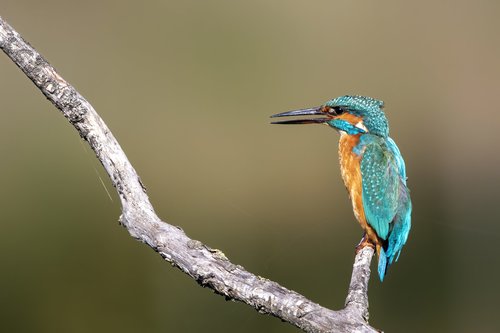
Common Kingfisher (Alcedo atthis) Common Kingfisher

European Bee-eater (Merops apiaster) European Bee-eater

Media

Loading…

In short

The most reliable field mark is overall structure and coloration: Common Kingfisher is a compact, short-tailed, large-headed bird with electric blue upperparts and orange underparts, while European Bee-eater is a slender, long-tailed bird with a multicolored plumage including green wings, brown and yellow upperparts, and a black beak. Juvenile Common Kingfishers are duller and greener above, but still show the kingfisher’s distinctive shape and rufous underparts, while juvenile Bee-eaters are duller blue-green above and lack the adult’s elongated tail feathers. In flight, Kingfisher shows rapid, whirring wingbeats low over water, whereas Bee-eater is more graceful and buoyant, often seen sallying for insects. Size is also a strong separator: Bee-eater is nearly twice as long and heavier.

Identification tips

  1. Size and shape: Bee-eater is nearly twice as long as Kingfisher, with a slender, elongated body and long, pointed wings and tail (especially in adults). Kingfisher is compact, short-tailed, and large-headed, with a dumpy profile. Size alone is often diagnostic.
  2. Bill shape: Kingfisher has a long, straight, dagger-like bill (black, with some red at the base in males; orange-red lower mandible in females). Bee-eater’s bill is long, slender, and gently decurved, always black.
  3. Tail: Bee-eater adults have two long, central tail feathers forming streamers; these are absent in Kingfisher and in juvenile/non-breeding Bee-eaters. Kingfisher’s tail is very short and barely projects beyond the wings.
  4. Plumage (adults): Kingfisher is bright blue-green above, orange below, with white throat and neck blaze, and rufous ear patch. Bee-eater is multicolored: brown/yellow upperparts, green wings, blue underparts, and a black line through the eye.
  5. Plumage (juveniles/non-breeding): Juvenile Kingfisher is duller, greener above, and paler below, but still has the compact, short-tailed shape and rufous ear patch. Juvenile Bee-eater is duller blue-green above, lacks tail streamers, and never shows orange underparts or rufous ear patch.
  6. Leg color: Kingfisher adults have bright red legs; juveniles start with black legs. Bee-eater’s legs are dark and not striking in the field.
  7. Flight style: Kingfisher flies fast and direct, low over water, with rapid, whirring wingbeats and a blue flash down the back. Bee-eater has a more buoyant, graceful flight, often gliding or sallying high above the ground.
  8. Perching behavior: Kingfisher perches low and close to water, often on reeds or branches just above the surface. Bee-eater perches higher, often on wires or exposed branches, sometimes in groups.
  9. Habitat: Kingfisher is almost always near freshwater; Bee-eater is found in open country, farmland, and dry river valleys, often away from water.
  10. Voice: Kingfisher’s call is a sharp, single or double whistle; Bee-eater gives a rolling, musical 'prruup' or trill, often from flocks.
  11. Sex differences: Kingfisher female has orange-red lower mandible with black tip; male’s bill is all black with some red at base. Bee-eater sexes are very similar; females may have greener shoulders but this is subtle.
  12. Group size: Kingfisher is solitary or in pairs; Bee-eater is often in groups or flocks, especially during migration.
  13. Context: If seen hovering or diving into water, likely Kingfisher; if seen catching insects in the air, especially in groups, likely Bee-eater.
  14. Facial pattern: Kingfisher has a rufous ear patch and white throat; Bee-eater has a black eye-stripe and yellow throat, lacking the rufous patch.
  15. Pitfalls: Duller juvenile Kingfishers may appear less blue, but never show the Bee-eater’s multicolored plumage or long tail. Juvenile Bee-eaters lack tail streamers but are still longer and more slender than Kingfisher, and never show orange underparts.

Size

Common Kingfisher is much smaller, about 16 cm long with a 25 cm wingspan and weighing 34–46 g [wikipedia]. European Bee-eater is substantially larger, 27–29 cm long (including elongated tail feathers), with a mass of 44–78 g (average 52 g) [wikipedia]. Even without the tail streamers, Bee-eater is noticeably longer and bulkier in the field.

Plumage

Juvenile Common Kingfisher is duller and greener above and paler below than adults, with a black bill and black legs; adults are bright blue-green above, orange below, with a white throat and neck blaze, and bright red legs. In all ages, Kingfisher has a compact, blue-and-orange appearance with a rufous ear patch and a long, straight bill. European Bee-eater adults are strikingly multicolored: brown and yellow upperparts, green wings, blue underparts, and a black beak; both sexes look similar, but females may have greener shoulders. Juveniles and non-breeding adults are much duller, with a blue-green back and lacking the long central tail feathers. The Bee-eater’s face pattern is more complex, but never shows the Kingfisher’s rufous ear patch or orange underparts. In flight, Kingfisher shows a short, rounded wing and a blue flash down the back, while Bee-eater’s wings are longer and more pointed, and the tail is longer, especially in adults.

Behaviour

Common Kingfisher typically perches low over water, diving for fish, and flies fast and direct just above the surface with rapid, whirring wingbeats. European Bee-eater is more aerial, often seen sallying for insects in open air, with a graceful, buoyant flight and frequent glides. Bee-eaters perch on wires or exposed branches, often in groups, while Kingfisher is more solitary and secretive, usually close to water.

Habitat

Common Kingfisher is almost always found near freshwater (rivers, streams, lakes), rarely far from water, and prefers perches close to the water’s edge. European Bee-eater prefers open country, farmland, and river valleys, but is not tied to water and is often seen in drier habitats, especially during migration. Bee-eaters are more likely to be seen in groups or flocks, while Kingfishers are typically alone or in pairs.

Voice

Common Kingfisher has no song; its call is a short, sharp whistle ('chee') repeated two or three times, and anxious birds give a harsh 'shrit-it-it'. European Bee-eater is much more vocal, with a pleasant, rolling 'prruup' or 'trill', often heard from flocks in flight. The Kingfisher’s call is sharper and less musical, and usually given singly or in pairs, not in flocks.

Submit a better description

Use the same sections as the comparison. Your text is published immediately.

The most reliable field mark is overall structure and coloration: Common Kingfisher is a compact, short-tailed, large-headed bird with electric blue upperparts and orange underparts, while European Bee-eater is a slender, long-tailed bird with a multicolored plumage including green wings, brown and yellow upperparts, and a black beak. Juvenile Common Kingfishers are duller and greener above, but still show the kingfisher’s distinctive shape and rufous underparts, while juvenile Bee-eaters are duller blue-green above and lack the adult’s elongated tail feathers. In flight, Kingfisher shows rapid, whirring wingbeats low over water, whereas Bee-eater is more graceful and buoyant, often seen sallying for insects. Size is also a strong separator: Bee-eater is nearly twice as long and heavier.

  1. Size and shape: Bee-eater is nearly twice as long as Kingfisher, with a slender, elongated body and long, pointed wings and tail (especially in adults). Kingfisher is compact, short-tailed, and large-headed, with a dumpy profile. Size alone is often diagnostic.
  2. Bill shape: Kingfisher has a long, straight, dagger-like bill (black, with some red at the base in males; orange-red lower mandible in females). Bee-eater’s bill is long, slender, and gently decurved, always black.
  3. Tail: Bee-eater adults have two long, central tail feathers forming streamers; these are absent in Kingfisher and in juvenile/non-breeding Bee-eaters. Kingfisher’s tail is very short and barely projects beyond the wings.
  4. Plumage (adults): Kingfisher is bright blue-green above, orange below, with white throat and neck blaze, and rufous ear patch. Bee-eater is multicolored: brown/yellow upperparts, green wings, blue underparts, and a black line through the eye.
  5. Plumage (juveniles/non-breeding): Juvenile Kingfisher is duller, greener above, and paler below, but still has the compact, short-tailed shape and rufous ear patch. Juvenile Bee-eater is duller blue-green above, lacks tail streamers, and never shows orange underparts or rufous ear patch.
  6. Leg color: Kingfisher adults have bright red legs; juveniles start with black legs. Bee-eater’s legs are dark and not striking in the field.
  7. Flight style: Kingfisher flies fast and direct, low over water, with rapid, whirring wingbeats and a blue flash down the back. Bee-eater has a more buoyant, graceful flight, often gliding or sallying high above the ground.
  8. Perching behavior: Kingfisher perches low and close to water, often on reeds or branches just above the surface. Bee-eater perches higher, often on wires or exposed branches, sometimes in groups.
  9. Habitat: Kingfisher is almost always near freshwater; Bee-eater is found in open country, farmland, and dry river valleys, often away from water.
  10. Voice: Kingfisher’s call is a sharp, single or double whistle; Bee-eater gives a rolling, musical 'prruup' or trill, often from flocks.
  11. Sex differences: Kingfisher female has orange-red lower mandible with black tip; male’s bill is all black with some red at base. Bee-eater sexes are very similar; females may have greener shoulders but this is subtle.
  12. Group size: Kingfisher is solitary or in pairs; Bee-eater is often in groups or flocks, especially during migration.
  13. Context: If seen hovering or diving into water, likely Kingfisher; if seen catching insects in the air, especially in groups, likely Bee-eater.
  14. Facial pattern: Kingfisher has a rufous ear patch and white throat; Bee-eater has a black eye-stripe and yellow throat, lacking the rufous patch.
  15. Pitfalls: Duller juvenile Kingfishers may appear less blue, but never show the Bee-eater’s multicolored plumage or long tail. Juvenile Bee-eaters lack tail streamers but are still longer and more slender than Kingfisher, and never show orange underparts.

Common Kingfisher is much smaller, about 16 cm long with a 25 cm wingspan and weighing 34–46 g [wikipedia]. European Bee-eater is substantially larger, 27–29 cm long (including elongated tail feathers), with a mass of 44–78 g (average 52 g) [wikipedia]. Even without the tail streamers, Bee-eater is noticeably longer and bulkier in the field.

Juvenile Common Kingfisher is duller and greener above and paler below than adults, with a black bill and black legs; adults are bright blue-green above, orange below, with a white throat and neck blaze, and bright red legs. In all ages, Kingfisher has a compact, blue-and-orange appearance with a rufous ear patch and a long, straight bill. European Bee-eater adults are strikingly multicolored: brown and yellow upperparts, green wings, blue underparts, and a black beak; both sexes look similar, but females may have greener shoulders. Juveniles and non-breeding adults are much duller, with a blue-green back and lacking the long central tail feathers. The Bee-eater’s face pattern is more complex, but never shows the Kingfisher’s rufous ear patch or orange underparts. In flight, Kingfisher shows a short, rounded wing and a blue flash down the back, while Bee-eater’s wings are longer and more pointed, and the tail is longer, especially in adults.

Common Kingfisher typically perches low over water, diving for fish, and flies fast and direct just above the surface with rapid, whirring wingbeats. European Bee-eater is more aerial, often seen sallying for insects in open air, with a graceful, buoyant flight and frequent glides. Bee-eaters perch on wires or exposed branches, often in groups, while Kingfisher is more solitary and secretive, usually close to water.

Common Kingfisher is almost always found near freshwater (rivers, streams, lakes), rarely far from water, and prefers perches close to the water’s edge. European Bee-eater prefers open country, farmland, and river valleys, but is not tied to water and is often seen in drier habitats, especially during migration. Bee-eaters are more likely to be seen in groups or flocks, while Kingfishers are typically alone or in pairs.

Common Kingfisher has no song; its call is a short, sharp whistle ('chee') repeated two or three times, and anxious birds give a harsh 'shrit-it-it'. European Bee-eater is much more vocal, with a pleasant, rolling 'prruup' or 'trill', often heard from flocks in flight. The Kingfisher’s call is sharper and less musical, and usually given singly or in pairs, not in flocks.

Discard your changes?

You have unsaved edits. If you leave now, those changes will be lost.

Common Kingfisher · European Bee-eater · My Tricky Birds