
Motmot

Common Gull vs Caspian Gull

Larus canus versus Larus cachinnans

Play a quiz with Common Gull and Caspian Gull
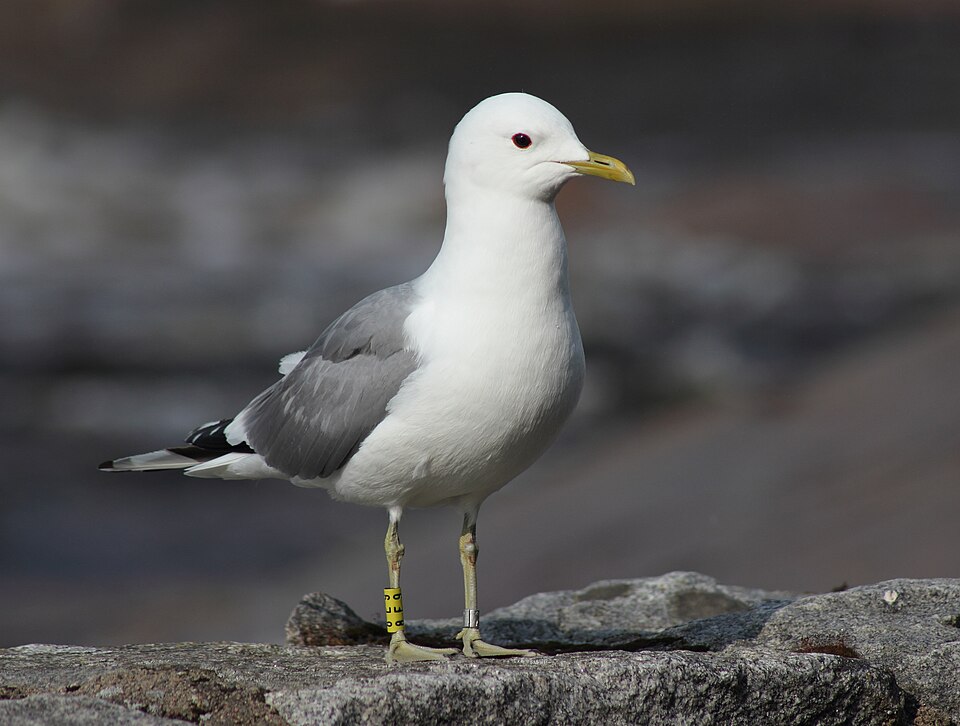
Common Gull (Larus canus) Common Gull
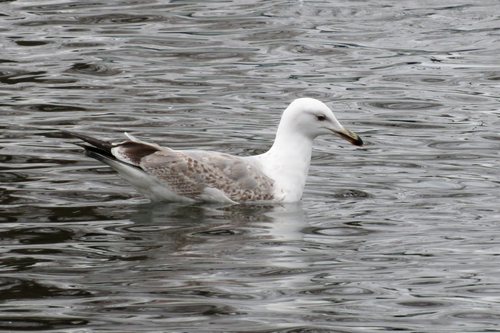
Caspian Gull (Larus cachinnans) Caspian Gull

Media

Loading…

In short

The most reliable way to separate Common Gull from Caspian Gull is by size and structure: Caspian Gull is much larger and bulkier, with a longer, more slender bill and proportionally longer legs, wings, and neck. For immature birds, focus on wing and head pattern: first-winter Caspian Gulls show pale heads with dark nape streaking and two pale lines across the wing, while Common Gulls have a neater, scaly upperwing and less contrast. Adults are also easily told apart by size and bill shape, but beware that Common Gull can show a dark bill band in winter, which may cause confusion. Always consider context and relative size when both species are possible.

Identification tips

  1. Size is the quickest check: Caspian Gull is much larger and bulkier than Common Gull—look for a bird that stands out in mixed flocks.
  2. Bill structure: Caspian's bill is long, slender, and often slightly drooping, while Common Gull's is shorter, more tapered, and greenish-yellow in breeding adults.
  3. Legs and neck: Caspian has longer, paler legs (pink to pale yellowish) and a longer neck, often held upright; Common Gull's legs are yellow in breeding season, duller in winter, and proportionally shorter.
  4. Head and eye: Caspian Gull has a small, often dark eye and a sloping forehead, giving a distinctive profile; Common Gull's head is rounder, with a gentler expression.
  5. First-winter/juvenile wing pattern: Caspian shows two pale lines across the wing (whitish tips to greater and median coverts) and a pale head with dark nape streaking; Common Gull has a more uniform, scaly upperwing and a neater, less contrasting pattern.
  6. Adult wing pattern: Both have black wingtips with white mirrors, but Caspian's outermost primary has a large white tip and a white tongue on the inner web; Common Gull's white mirrors are large but not as extensive as in Caspian.
  7. Winter bill marks: Common Gull can show a faint blackish bill band in winter, which may recall some large gulls, but overall bill shape and size remain diagnostic.
  8. Plumage tone: Caspian Gull is a slightly darker grey above than Common Gull, but this is subtle and best used in direct comparison.
  9. Flight jizz: Caspian appears longer-winged and more attenuated in flight, with deeper, more elastic wingbeats; Common Gull is more compact and agile.
  10. Head streaking: In winter, Common Gull's head is streaked grey all over, while first-winter Caspian has a pale head with streaking mainly on the nape.
  11. Leg color by age: Juvenile/first-winter Common Gulls have pink legs, turning greyish in the second year before becoming yellow; Caspian's legs are pale pink to yellowish at all ages.
  12. Habitat context: If seen inland on large lakes or rivers in eastern Europe or Central Asia, Caspian is more likely; in northern/western Europe, Common Gull is usually more numerous.
  13. Voice: If heard, Common Gull gives a high-pitched 'laughing' call; Caspian's call is deeper and less shrill.
  14. Relative abundance: In most of Europe, Common Gull is much more numerous, but Caspian is increasing and can be locally common, especially in the east.
  15. Beware confusion with other large gulls: Caspian can be confused with Herring or Yellow-legged Gulls, but Common Gull is always smaller and daintier.

Size

Caspian Gull is dramatically larger than Common Gull: adult Caspian averages over 1150g, nearly three times the mass of Common Gull at 386g [wikidata]. Caspian Gull is 56–68 cm long with a 137–155 cm wingspan, compared to Common Gull's 40–46 cm length and 100–115 cm wingspan [wikipedia]. In the field, Caspian will appear much bulkier, longer-winged, and longer-legged, often standing head and shoulders above Common Gulls in mixed flocks. Bill length and thickness are also much greater in Caspian.

Plumage

Juvenile and first-winter birds are best separated by wing and head pattern. First-winter Caspian Gull has a pale head with dark streaking on the nape, pale underparts, and a greyish back. Its greater and median coverts have whitish tips, forming two pale lines across the wing—these are often visible in flight and at rest. By contrast, first-winter Common Gull shows a neater, scaly black-brown upperwing, with less contrast and no pale wing lines; the head and belly are white with fine streaks, and greyish feathers appear on the saddle. Adult Common Gulls are medium grey above with black wingtips and large white mirrors on p9/p10 (smaller than in Short-billed Gull), yellow legs in breeding season, and a greenish-yellow, unmarked bill. In winter, Common Gull's head is streaked grey and the bill may show a faint blackish band. Caspian adults are a slightly darker grey above than Common Gull, with a long, slender bill, small dark eye, and pale pink to yellowish legs. The outermost primary has a large white tip and a white tongue on the inner web. Both species have white underparts and black wingtips, but Caspian's wing pattern is more extensive and the bird appears longer-winged and more attenuated.

Behaviour

Caspian Gull's long legs, neck, and bill give it a more upright, elegant stance when perched, and a distinctive, languid flight style with deep, elastic wingbeats. Common Gull is more compact and less elongated, with a more buoyant, agile flight. Caspian often appears more purposeful and less 'dainty' than Common Gull, which can seem more delicate and gentle in both posture and movement.

Habitat

Both species can overlap in winter, especially around large lakes, rivers, and coastal regions in Eurasia. Common Gull breeds in cool temperate regions from Iceland to Kamchatka and winters south to the Mediterranean, Caspian Sea, and East Asia. Caspian Gull is more typical of steppe lakes, large rivers, and open coasts, especially in eastern Europe and Central Asia, but is increasingly found in western Europe. In mixed flocks, Common Gull is usually more numerous in northern and western Europe, while Caspian is more localized but increasing.

Voice

Both species have 'laughing' cries, but Common Gull's call is a high-pitched, laughing yelp. Caspian Gull's voice is not described in detail here, but is generally deeper and more resonant than Common Gull. Voice is not the most reliable field mark unless birds are calling frequently and at close range.

Submit a better description

Use the same sections as the comparison. Your text is published immediately.

The most reliable way to separate Common Gull from Caspian Gull is by size and structure: Caspian Gull is much larger and bulkier, with a longer, more slender bill and proportionally longer legs, wings, and neck. For immature birds, focus on wing and head pattern: first-winter Caspian Gulls show pale heads with dark nape streaking and two pale lines across the wing, while Common Gulls have a neater, scaly upperwing and less contrast. Adults are also easily told apart by size and bill shape, but beware that Common Gull can show a dark bill band in winter, which may cause confusion. Always consider context and relative size when both species are possible.

  1. Size is the quickest check: Caspian Gull is much larger and bulkier than Common Gull—look for a bird that stands out in mixed flocks.
  2. Bill structure: Caspian's bill is long, slender, and often slightly drooping, while Common Gull's is shorter, more tapered, and greenish-yellow in breeding adults.
  3. Legs and neck: Caspian has longer, paler legs (pink to pale yellowish) and a longer neck, often held upright; Common Gull's legs are yellow in breeding season, duller in winter, and proportionally shorter.
  4. Head and eye: Caspian Gull has a small, often dark eye and a sloping forehead, giving a distinctive profile; Common Gull's head is rounder, with a gentler expression.
  5. First-winter/juvenile wing pattern: Caspian shows two pale lines across the wing (whitish tips to greater and median coverts) and a pale head with dark nape streaking; Common Gull has a more uniform, scaly upperwing and a neater, less contrasting pattern.
  6. Adult wing pattern: Both have black wingtips with white mirrors, but Caspian's outermost primary has a large white tip and a white tongue on the inner web; Common Gull's white mirrors are large but not as extensive as in Caspian.
  7. Winter bill marks: Common Gull can show a faint blackish bill band in winter, which may recall some large gulls, but overall bill shape and size remain diagnostic.
  8. Plumage tone: Caspian Gull is a slightly darker grey above than Common Gull, but this is subtle and best used in direct comparison.
  9. Flight jizz: Caspian appears longer-winged and more attenuated in flight, with deeper, more elastic wingbeats; Common Gull is more compact and agile.
  10. Head streaking: In winter, Common Gull's head is streaked grey all over, while first-winter Caspian has a pale head with streaking mainly on the nape.
  11. Leg color by age: Juvenile/first-winter Common Gulls have pink legs, turning greyish in the second year before becoming yellow; Caspian's legs are pale pink to yellowish at all ages.
  12. Habitat context: If seen inland on large lakes or rivers in eastern Europe or Central Asia, Caspian is more likely; in northern/western Europe, Common Gull is usually more numerous.
  13. Voice: If heard, Common Gull gives a high-pitched 'laughing' call; Caspian's call is deeper and less shrill.
  14. Relative abundance: In most of Europe, Common Gull is much more numerous, but Caspian is increasing and can be locally common, especially in the east.
  15. Beware confusion with other large gulls: Caspian can be confused with Herring or Yellow-legged Gulls, but Common Gull is always smaller and daintier.

Caspian Gull is dramatically larger than Common Gull: adult Caspian averages over 1150g, nearly three times the mass of Common Gull at 386g [wikidata]. Caspian Gull is 56–68 cm long with a 137–155 cm wingspan, compared to Common Gull's 40–46 cm length and 100–115 cm wingspan [wikipedia]. In the field, Caspian will appear much bulkier, longer-winged, and longer-legged, often standing head and shoulders above Common Gulls in mixed flocks. Bill length and thickness are also much greater in Caspian.

Juvenile and first-winter birds are best separated by wing and head pattern. First-winter Caspian Gull has a pale head with dark streaking on the nape, pale underparts, and a greyish back. Its greater and median coverts have whitish tips, forming two pale lines across the wing—these are often visible in flight and at rest. By contrast, first-winter Common Gull shows a neater, scaly black-brown upperwing, with less contrast and no pale wing lines; the head and belly are white with fine streaks, and greyish feathers appear on the saddle. Adult Common Gulls are medium grey above with black wingtips and large white mirrors on p9/p10 (smaller than in Short-billed Gull), yellow legs in breeding season, and a greenish-yellow, unmarked bill. In winter, Common Gull's head is streaked grey and the bill may show a faint blackish band. Caspian adults are a slightly darker grey above than Common Gull, with a long, slender bill, small dark eye, and pale pink to yellowish legs. The outermost primary has a large white tip and a white tongue on the inner web. Both species have white underparts and black wingtips, but Caspian's wing pattern is more extensive and the bird appears longer-winged and more attenuated.

Caspian Gull's long legs, neck, and bill give it a more upright, elegant stance when perched, and a distinctive, languid flight style with deep, elastic wingbeats. Common Gull is more compact and less elongated, with a more buoyant, agile flight. Caspian often appears more purposeful and less 'dainty' than Common Gull, which can seem more delicate and gentle in both posture and movement.

Both species can overlap in winter, especially around large lakes, rivers, and coastal regions in Eurasia. Common Gull breeds in cool temperate regions from Iceland to Kamchatka and winters south to the Mediterranean, Caspian Sea, and East Asia. Caspian Gull is more typical of steppe lakes, large rivers, and open coasts, especially in eastern Europe and Central Asia, but is increasingly found in western Europe. In mixed flocks, Common Gull is usually more numerous in northern and western Europe, while Caspian is more localized but increasing.

Both species have 'laughing' cries, but Common Gull's call is a high-pitched, laughing yelp. Caspian Gull's voice is not described in detail here, but is generally deeper and more resonant than Common Gull. Voice is not the most reliable field mark unless birds are calling frequently and at close range.

Discard your changes?

You have unsaved edits. If you leave now, those changes will be lost.

Common Gull · Caspian Gull · My Tricky Birds