
Motmot

Common Eider vs Common Goldeneye

Somateria mollissima versus Bucephala clangula

Play a quiz with Common Eider and Common Goldeneye
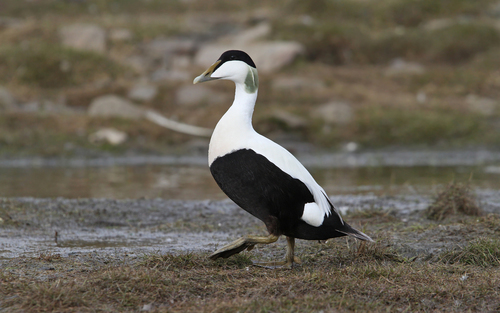
Common Eider (Somateria mollissima) Common Eider

Common Goldeneye (Bucephala clangula) Common Goldeneye

Media

Loading…

In short

The most reliable field mark to separate Common Eider from Common Goldeneye is overall size and structure: Common Eider is a much larger, bulkier duck with a long, wedge-shaped bill, while Common Goldeneye is distinctly smaller and more compact, with a short, triangular bill and a characteristic round-headed look. In flight or at rest, eiders appear massive and heavy, especially compared to the more agile, buoyant goldeneye. Adult male plumage is also diagnostic: eider males are boldly black-and-white with a green nape, while goldeneye males are mostly white with a dark iridescent head and a distinctive round white cheek spot. Females of both species are brown, but eider females are much larger and have a longer, sloping profile. Age-specific wing patterns are not described in the notes, so rely on size, structure, and head/bill shape for all ages.

Identification tips

  1. Size is the most immediate clue: Common Eider is massive, more than twice the weight of Common Goldeneye. If the bird looks large and heavy among other ducks, eider is likely.
  2. Head and bill shape: Eider has a long, wedge-shaped bill that slopes smoothly into the forehead, giving a long-faced look. Goldeneye has a short, triangular bill and a round, 'bull-headed' profile. This is reliable for all ages and sexes.
  3. Male plumage: Adult male eider is boldly black-and-white with a green nape; goldeneye male is mostly white with a dark, iridescent greenish head and a round white cheek spot. The cheek spot is unique to goldeneye.
  4. Female plumage: Female eider is large, brown, and heavy-billed; female goldeneye is smaller, with a brown head, greyish body, and orange-yellow legs/feet. At distance, focus on size and bill shape.
  5. Eye color: Goldeneye of both sexes have a bright golden-yellow eye, visible at close range. Eider's eye is dark.
  6. Flock structure: Eiders often form dense, large flocks on the sea; goldeneyes are usually in small groups or scattered individuals.
  7. Habitat: Eider is almost always on saltwater coasts; goldeneye is common on both inland lakes/rivers and coastal waters. Inland birds are almost never eiders.
  8. Posture and jizz: Eider sits low and heavy in the water, with a long, sloping profile. Goldeneye sits higher, looks compact, and is more buoyant.
  9. Flight: Eider appears heavy and slow in flight, with broad wings; goldeneye is faster and more agile, with rapid wingbeats.
  10. Vocalization: If heard, the eider's 'ah-ooo' is distinctive; goldeneye is generally quieter or gives different calls (not described here).
  11. Bill color: Not described for eider in these notes, but goldeneye's bill is dark and short; eider's is longer and paler in some forms.
  12. Leg color: Goldeneye has orange-yellow legs and feet; eider's are not described but are less bright.
  13. Juvenile/immature separation: No distinctive wing patterns are described for either species in these notes; rely on structure and size at all ages.
  14. Pitfalls: Female eider can be confused with female goldeneye at a distance, but the eider's much larger size and long bill are decisive. In mixed flocks, compare directly if possible.
  15. Season/context: Eiders are more likely in large coastal flocks in winter; goldeneyes are widespread and common on inland waters in winter.

Size

Common Eider is by far the larger species, averaging about 2066.5 g in mass and measuring 50–71 cm in length with an 80–110 cm wingspan. Common Goldeneye is less than half the mass (about 900 g), with males 45–51 cm long (females 40–50 cm) and a wingspan of 77–83 cm. In the field, eiders look massive and heavy, especially next to goldeneyes, which are compact and often appear buoyant on the water. Even at a distance, the eider's bulk and long, sloping bill stand out, while goldeneye is mid-sized, with a shorter, rounder head and bill.

Plumage

No age-specific upperwing or flight pattern marks are described for either species in the provided notes, so focus on body and head plumage. Adult male Common Eider is strikingly black-and-white with a green nape and a long, sloping wedge-shaped bill. Female eiders are uniformly brown, but their large size and heavy build are distinctive. Common Goldeneye adult males have a dark, iridescent greenish head with a round white patch below the eye, a white neck and belly, and a dark back. Females have a brown head and mostly grey body, with orange-yellow legs and feet. Both sexes of goldeneye have a more compact, round-headed look. The goldeneye's namesake golden-yellow eye is visible at close range. Female eiders can be confused with female goldeneyes at a distance, but the eider's size and bill shape are key. No distinctive juvenile or immature wing patterns are noted for either species.

Behaviour

Both species are diving ducks, but Common Eider is typically seen in larger, denser flocks on coastal waters, especially in winter. Eiders often feed by diving for mollusks and crustaceans, sometimes forming tight rafts. Common Goldeneye is more likely to be seen singly or in small groups, diving actively and often bobbing up quickly. Eiders appear heavy and slow in flight and on the water, while goldeneyes are more agile and buoyant. Eiders are less likely to be seen inland, except in rare cases where they exploit freshwater mussels, while goldeneyes regularly use both coastal and inland waters.

Habitat

Common Eider is a strictly marine duck, breeding along northern coasts and wintering in large flocks on temperate coastal waters. It is rarely found inland, with only a few exceptional populations on large lakes. Common Goldeneye is more versatile, breeding on forest lakes and rivers and wintering on both inland and coastal waters. If the bird is seen far from the sea, it is almost certainly a goldeneye rather than an eider. On saltwater, both can occur, but eiders dominate in large, dense flocks, while goldeneyes are scattered or in small groups.

Voice

Male Common Eider gives a strange, almost human-like 'ah-ooo' call, while the female utters hoarse quacks. Common Goldeneye's vocalizations are not described in the provided notes, but the eider's distinctive call can be a useful clue if heard.

Submit a better description

Use the same sections as the comparison. Your text is published immediately.

The most reliable field mark to separate Common Eider from Common Goldeneye is overall size and structure: Common Eider is a much larger, bulkier duck with a long, wedge-shaped bill, while Common Goldeneye is distinctly smaller and more compact, with a short, triangular bill and a characteristic round-headed look. In flight or at rest, eiders appear massive and heavy, especially compared to the more agile, buoyant goldeneye. Adult male plumage is also diagnostic: eider males are boldly black-and-white with a green nape, while goldeneye males are mostly white with a dark iridescent head and a distinctive round white cheek spot. Females of both species are brown, but eider females are much larger and have a longer, sloping profile. Age-specific wing patterns are not described in the notes, so rely on size, structure, and head/bill shape for all ages.

  1. Size is the most immediate clue: Common Eider is massive, more than twice the weight of Common Goldeneye. If the bird looks large and heavy among other ducks, eider is likely.
  2. Head and bill shape: Eider has a long, wedge-shaped bill that slopes smoothly into the forehead, giving a long-faced look. Goldeneye has a short, triangular bill and a round, 'bull-headed' profile. This is reliable for all ages and sexes.
  3. Male plumage: Adult male eider is boldly black-and-white with a green nape; goldeneye male is mostly white with a dark, iridescent greenish head and a round white cheek spot. The cheek spot is unique to goldeneye.
  4. Female plumage: Female eider is large, brown, and heavy-billed; female goldeneye is smaller, with a brown head, greyish body, and orange-yellow legs/feet. At distance, focus on size and bill shape.
  5. Eye color: Goldeneye of both sexes have a bright golden-yellow eye, visible at close range. Eider's eye is dark.
  6. Flock structure: Eiders often form dense, large flocks on the sea; goldeneyes are usually in small groups or scattered individuals.
  7. Habitat: Eider is almost always on saltwater coasts; goldeneye is common on both inland lakes/rivers and coastal waters. Inland birds are almost never eiders.
  8. Posture and jizz: Eider sits low and heavy in the water, with a long, sloping profile. Goldeneye sits higher, looks compact, and is more buoyant.
  9. Flight: Eider appears heavy and slow in flight, with broad wings; goldeneye is faster and more agile, with rapid wingbeats.
  10. Vocalization: If heard, the eider's 'ah-ooo' is distinctive; goldeneye is generally quieter or gives different calls (not described here).
  11. Bill color: Not described for eider in these notes, but goldeneye's bill is dark and short; eider's is longer and paler in some forms.
  12. Leg color: Goldeneye has orange-yellow legs and feet; eider's are not described but are less bright.
  13. Juvenile/immature separation: No distinctive wing patterns are described for either species in these notes; rely on structure and size at all ages.
  14. Pitfalls: Female eider can be confused with female goldeneye at a distance, but the eider's much larger size and long bill are decisive. In mixed flocks, compare directly if possible.
  15. Season/context: Eiders are more likely in large coastal flocks in winter; goldeneyes are widespread and common on inland waters in winter.

Common Eider is by far the larger species, averaging about 2066.5 g in mass and measuring 50–71 cm in length with an 80–110 cm wingspan. Common Goldeneye is less than half the mass (about 900 g), with males 45–51 cm long (females 40–50 cm) and a wingspan of 77–83 cm. In the field, eiders look massive and heavy, especially next to goldeneyes, which are compact and often appear buoyant on the water. Even at a distance, the eider's bulk and long, sloping bill stand out, while goldeneye is mid-sized, with a shorter, rounder head and bill.

No age-specific upperwing or flight pattern marks are described for either species in the provided notes, so focus on body and head plumage. Adult male Common Eider is strikingly black-and-white with a green nape and a long, sloping wedge-shaped bill. Female eiders are uniformly brown, but their large size and heavy build are distinctive. Common Goldeneye adult males have a dark, iridescent greenish head with a round white patch below the eye, a white neck and belly, and a dark back. Females have a brown head and mostly grey body, with orange-yellow legs and feet. Both sexes of goldeneye have a more compact, round-headed look. The goldeneye's namesake golden-yellow eye is visible at close range. Female eiders can be confused with female goldeneyes at a distance, but the eider's size and bill shape are key. No distinctive juvenile or immature wing patterns are noted for either species.

Both species are diving ducks, but Common Eider is typically seen in larger, denser flocks on coastal waters, especially in winter. Eiders often feed by diving for mollusks and crustaceans, sometimes forming tight rafts. Common Goldeneye is more likely to be seen singly or in small groups, diving actively and often bobbing up quickly. Eiders appear heavy and slow in flight and on the water, while goldeneyes are more agile and buoyant. Eiders are less likely to be seen inland, except in rare cases where they exploit freshwater mussels, while goldeneyes regularly use both coastal and inland waters.

Common Eider is a strictly marine duck, breeding along northern coasts and wintering in large flocks on temperate coastal waters. It is rarely found inland, with only a few exceptional populations on large lakes. Common Goldeneye is more versatile, breeding on forest lakes and rivers and wintering on both inland and coastal waters. If the bird is seen far from the sea, it is almost certainly a goldeneye rather than an eider. On saltwater, both can occur, but eiders dominate in large, dense flocks, while goldeneyes are scattered or in small groups.

Male Common Eider gives a strange, almost human-like 'ah-ooo' call, while the female utters hoarse quacks. Common Goldeneye's vocalizations are not described in the provided notes, but the eider's distinctive call can be a useful clue if heard.

Discard your changes?

You have unsaved edits. If you leave now, those changes will be lost.

Common Eider · Common Goldeneye · My Tricky Birds