

Motmot

Common Cuckoo vs Pacific Swallow

Cuculus canorus versus Hirundo javanica

Play a quiz with Common Cuckoo and Pacific Swallow
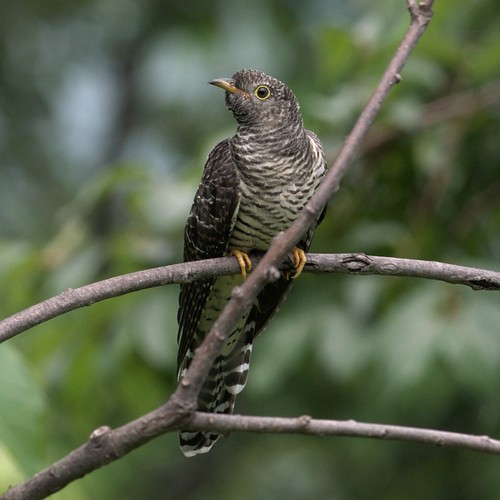
Common Cuckoo (Cuculus canorus) Common Cuckoo
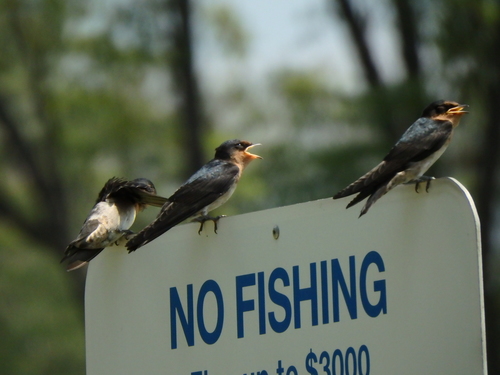
Pacific Swallow (Hirundo javanica) Pacific Swallow

Media

Loading…

In short

The most reliable field mark to separate Common Cuckoo from Pacific Swallow is overall structure and size: the cuckoo is a large, slender, long-tailed bird with a hawk-like jizz, while the swallow is much smaller, compact, and agile with a shorter, less forked tail. Juvenile cuckoos can show a white nape patch and white feather fringes, which are never seen on Pacific Swallow. In flight, the cuckoo's long, pointed wings and slow, regular wingbeats contrast sharply with the swallow's rapid, fluttery flight. Plumage differences are also strong: cuckoos are mostly grey or rufous-barred above with barred underparts, while Pacific Swallow has a blue-black back, red face and throat, and dusky underparts. Context and behavior—perching style, flight action, and habitat—further reinforce the identification.

Identification tips

  1. Size and structure: Common Cuckoo is much larger and heavier than Pacific Swallow, with a long, graduated tail and long, pointed wings. Swallow is tiny, compact, and has a short, less forked tail. This is the quickest separation at a distance.
  2. Juvenile plumage: Juvenile cuckoos show a white nape patch and white feather fringes, plus barred or rufous upperparts—never seen in Pacific Swallow. If you see a small bird with a red face, it's not a cuckoo.
  3. Adult plumage: Adult cuckoos are slate-grey above with a sharply defined grey throat and barred underparts. Females may be rufous morph, but still have barring. Pacific Swallow is blue-black above, red-faced, and dusky below, with no barring or morphs.
  4. Tail shape: Cuckoo's tail is long, rounded, and often shows white spots. Swallow's tail is short, square or slightly forked, never as long or patterned as the cuckoo's.
  5. Flight style: Cuckoo flies with slow, deep wingbeats, gliding like a small hawk. Swallow is fast, fluttery, and highly maneuverable, constantly changing direction.
  6. Perching behavior: Cuckoo perches openly, often with drooped wings and raised tail. Swallow perches briefly on wires or ledges, usually upright and alert.
  7. Bill: Cuckoo has a longer, slightly downcurved bill; swallow's bill is short and wide at the base, typical of aerial insectivores.
  8. Facial color: Swallow has a distinctive red face and throat, never present in cuckoo. Cuckoo's face is grey or rufous, depending on morph.
  9. Underparts: Cuckoo always shows barring on the underparts (except some juveniles), while swallow is plain dusky below.
  10. Eye and feet: Cuckoo has a yellow iris and orbital ring; these are not visible in swallow.
  11. Voice: Cuckoo's 'goo-ko' song is unique and diagnostic if heard. Swallow gives only twittering calls.
  12. Habitat: Swallow is often around human structures and open airspace; cuckoo is more likely in rural, wooded, or scrubby areas.
  13. Season and range: Cuckoo is a migrant in Europe/Asia (summer), swallow is resident in tropical Asia and the Pacific. Out of range, identification should be reconsidered.
  14. Behavior: Swallow catches insects in flight; cuckoo does not. If you see a bird hawking insects, it's not a cuckoo.
  15. Pitfalls: Rufous morph female or juvenile cuckoo may look reddish above, but always check for barring, size, and structure. Swallow never shows barring or white nape patch.

Size

Common Cuckoo is dramatically larger and heavier (body mass ~111.5g, length 32–34 cm, wingspan 55–60 cm) compared to the Pacific Swallow, which is only about 13 cm long and much lighter (no mass given, but typical swallows are 15–20g). The cuckoo's long tail and wings give it a stretched, hawk-like silhouette, while the swallow is compact, with a relatively short, less forked tail and proportionally shorter wings. Even at a distance, the size gap is obvious if both are seen together or compared to familiar birds.

Plumage

Juvenile Common Cuckoo is distinctive with a white nape patch and white feather fringes, plus variable upperparts that may be strongly barred chestnut-brown or plain grey, and barred underparts. These features are never present in Pacific Swallow of any age. Adult cuckoos are slate-grey above with a sharply demarcated grey throat and barred underparts, yellow eye-ring, and long tail with white spots. Adult females can be grey or rufous morph, the latter with reddish-brown upperparts and dark bars. In contrast, Pacific Swallow of all ages shows a blue-black back and crown, browner wings and tail, a red face and throat, and dusky underparts, with no barring or morph variation. The swallow's tail is shorter and less forked than other swallows, but never approaches the length or shape of the cuckoo's tail. No Pacific Swallow plumage stage can be confused with the barred or rufous morphs of cuckoo.

Behaviour

Common Cuckoo often perches openly with drooped wings and raised tail, sometimes wagging or pivoting its body, especially when calling. Its flight is direct, with slow, regular wingbeats reminiscent of a sparrowhawk. It is not agile or acrobatic in the air. Pacific Swallow, in contrast, is almost always seen in fast, agile flight, catching insects on the wing, or perched briefly on wires or ledges. Its flight is rapid, fluttery, and highly maneuverable, typical of swallows. The swallow builds mud nests on cliffs or human structures, while cuckoo does not build a nest and is a brood parasite.

Habitat

Common Cuckoo is a summer migrant to Europe and Asia, often found in open countryside, woodland edges, and areas with abundant host species. It is rarely seen in urban or coastal settings. Pacific Swallow is resident in tropical southern Asia and the south Pacific, often near water, open country, and especially around man-made structures like bridges and buildings. The swallow's strong association with human structures and open airspace is a good context clue, while cuckoo is more likely in rural, wooded, or scrubby habitats.

Voice

The male Common Cuckoo gives a distinctive 'goo-ko' song from an open perch, with a two-note phrase repeated in groups. The female has a loud bubbling call. These vocalizations are unique and not at all like swallow calls. Pacific Swallow does not have a song described in the notes, but like other swallows, it gives short, twittering calls in flight. Hearing the cuckoo's song is a clincher for identification, while the swallow's calls are much less distinctive.

Submit a better description

Use the same sections as the comparison. Your text is published immediately.

The most reliable field mark to separate Common Cuckoo from Pacific Swallow is overall structure and size: the cuckoo is a large, slender, long-tailed bird with a hawk-like jizz, while the swallow is much smaller, compact, and agile with a shorter, less forked tail. Juvenile cuckoos can show a white nape patch and white feather fringes, which are never seen on Pacific Swallow. In flight, the cuckoo's long, pointed wings and slow, regular wingbeats contrast sharply with the swallow's rapid, fluttery flight. Plumage differences are also strong: cuckoos are mostly grey or rufous-barred above with barred underparts, while Pacific Swallow has a blue-black back, red face and throat, and dusky underparts. Context and behavior—perching style, flight action, and habitat—further reinforce the identification.

  1. Size and structure: Common Cuckoo is much larger and heavier than Pacific Swallow, with a long, graduated tail and long, pointed wings. Swallow is tiny, compact, and has a short, less forked tail. This is the quickest separation at a distance.
  2. Juvenile plumage: Juvenile cuckoos show a white nape patch and white feather fringes, plus barred or rufous upperparts—never seen in Pacific Swallow. If you see a small bird with a red face, it's not a cuckoo.
  3. Adult plumage: Adult cuckoos are slate-grey above with a sharply defined grey throat and barred underparts. Females may be rufous morph, but still have barring. Pacific Swallow is blue-black above, red-faced, and dusky below, with no barring or morphs.
  4. Tail shape: Cuckoo's tail is long, rounded, and often shows white spots. Swallow's tail is short, square or slightly forked, never as long or patterned as the cuckoo's.
  5. Flight style: Cuckoo flies with slow, deep wingbeats, gliding like a small hawk. Swallow is fast, fluttery, and highly maneuverable, constantly changing direction.
  6. Perching behavior: Cuckoo perches openly, often with drooped wings and raised tail. Swallow perches briefly on wires or ledges, usually upright and alert.
  7. Bill: Cuckoo has a longer, slightly downcurved bill; swallow's bill is short and wide at the base, typical of aerial insectivores.
  8. Facial color: Swallow has a distinctive red face and throat, never present in cuckoo. Cuckoo's face is grey or rufous, depending on morph.
  9. Underparts: Cuckoo always shows barring on the underparts (except some juveniles), while swallow is plain dusky below.
  10. Eye and feet: Cuckoo has a yellow iris and orbital ring; these are not visible in swallow.
  11. Voice: Cuckoo's 'goo-ko' song is unique and diagnostic if heard. Swallow gives only twittering calls.
  12. Habitat: Swallow is often around human structures and open airspace; cuckoo is more likely in rural, wooded, or scrubby areas.
  13. Season and range: Cuckoo is a migrant in Europe/Asia (summer), swallow is resident in tropical Asia and the Pacific. Out of range, identification should be reconsidered.
  14. Behavior: Swallow catches insects in flight; cuckoo does not. If you see a bird hawking insects, it's not a cuckoo.
  15. Pitfalls: Rufous morph female or juvenile cuckoo may look reddish above, but always check for barring, size, and structure. Swallow never shows barring or white nape patch.

Common Cuckoo is dramatically larger and heavier (body mass ~111.5g, length 32–34 cm, wingspan 55–60 cm) compared to the Pacific Swallow, which is only about 13 cm long and much lighter (no mass given, but typical swallows are 15–20g). The cuckoo's long tail and wings give it a stretched, hawk-like silhouette, while the swallow is compact, with a relatively short, less forked tail and proportionally shorter wings. Even at a distance, the size gap is obvious if both are seen together or compared to familiar birds.

Juvenile Common Cuckoo is distinctive with a white nape patch and white feather fringes, plus variable upperparts that may be strongly barred chestnut-brown or plain grey, and barred underparts. These features are never present in Pacific Swallow of any age. Adult cuckoos are slate-grey above with a sharply demarcated grey throat and barred underparts, yellow eye-ring, and long tail with white spots. Adult females can be grey or rufous morph, the latter with reddish-brown upperparts and dark bars. In contrast, Pacific Swallow of all ages shows a blue-black back and crown, browner wings and tail, a red face and throat, and dusky underparts, with no barring or morph variation. The swallow's tail is shorter and less forked than other swallows, but never approaches the length or shape of the cuckoo's tail. No Pacific Swallow plumage stage can be confused with the barred or rufous morphs of cuckoo.

Common Cuckoo often perches openly with drooped wings and raised tail, sometimes wagging or pivoting its body, especially when calling. Its flight is direct, with slow, regular wingbeats reminiscent of a sparrowhawk. It is not agile or acrobatic in the air. Pacific Swallow, in contrast, is almost always seen in fast, agile flight, catching insects on the wing, or perched briefly on wires or ledges. Its flight is rapid, fluttery, and highly maneuverable, typical of swallows. The swallow builds mud nests on cliffs or human structures, while cuckoo does not build a nest and is a brood parasite.

Common Cuckoo is a summer migrant to Europe and Asia, often found in open countryside, woodland edges, and areas with abundant host species. It is rarely seen in urban or coastal settings. Pacific Swallow is resident in tropical southern Asia and the south Pacific, often near water, open country, and especially around man-made structures like bridges and buildings. The swallow's strong association with human structures and open airspace is a good context clue, while cuckoo is more likely in rural, wooded, or scrubby habitats.

The male Common Cuckoo gives a distinctive 'goo-ko' song from an open perch, with a two-note phrase repeated in groups. The female has a loud bubbling call. These vocalizations are unique and not at all like swallow calls. Pacific Swallow does not have a song described in the notes, but like other swallows, it gives short, twittering calls in flight. Hearing the cuckoo's song is a clincher for identification, while the swallow's calls are much less distinctive.

Discard your changes?

You have unsaved edits. If you leave now, those changes will be lost.

Common Cuckoo · Pacific Swallow · My Tricky Birds