

Collared Pratincole vs African Grey Hornbill
Glareola pratincola versus Lophoceros nasutus
Play a quiz with Collared Pratincole and African Grey Hornbill
 Collared Pratincole
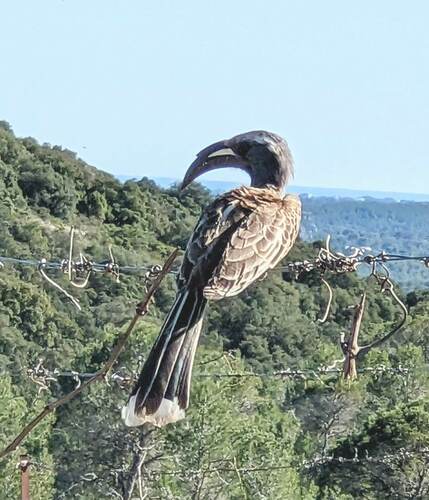 African Grey Hornbill
In short
The most reliable field mark to separate Collared Pratincole from African Grey Hornbill is overall structure: pratincoles are slim, long-winged, swallow-like birds with pointed wings and a long forked tail, while hornbills are much larger, heavy-bodied, and have a long, decurved bill with a casque. In flight, Collared Pratincole shows chestnut underwings (appearing dark from below) and a white belly, while African Grey Hornbill has broad wings, a long tail, and a distinctive flight profile with undulating wingbeats. The pratincole's short bill and aerial feeding behavior are unlike the hornbill's slow, undulating flight and tree-perching habits. Even at a distance, the hornbill's massive bill and head profile are unmistakable compared to the pratincole's delicate, tern-like jizz.
Identification tips
- Bill shape and size: Collared Pratincole has a short, fine, straight bill adapted for catching insects in flight; African Grey Hornbill has a massive, long, decurved bill with a casque (more prominent in males). This is the single most obvious difference at any distance.
- Head and facial profile: The hornbill's head is large and heavy with a prominent casque and long bill, while the pratincole's head is small and streamlined, blending smoothly into the body.
- Tail shape: Pratincole has a long, deeply forked tail, especially obvious in flight. Hornbill's tail is long but straight and not forked.
- Wing shape: Pratincole's wings are long, narrow, and pointed, giving a swift, tern- or swallow-like silhouette. Hornbill's wings are broad and rounded, suited for slower, undulating flight.
- Underwing color: Adult Collared Pratincole shows chestnut underwings (appearing dark from below in flight), contrasting with white belly. Hornbill's underwings are not chestnut and lack this contrast.
- Plumage contrast: Pratincole has a crisp white belly and chestnut underwing, while hornbill is generally grey-brown with a white line on the crown and back (the latter only visible in flight).
- Bill color (sex/age): Male hornbills have a dark upper mandible with a creamy-yellow stripe; females have a tricolored, red-tipped bill; juveniles have a uniformly blackish bill. Pratincole's bill is always short and dark.
- Perching behavior: Hornbills are often seen perched upright in trees, using their bills to forage. Pratincoles are rarely in trees, usually on the ground or flying.
- Flight style: Pratincole flies swiftly and gracefully, often gliding and catching insects on the wing. Hornbill's flight is heavy and undulating, with slow wingbeats and glides.
- Habitat context: Pratincole is usually found over open ground or water; hornbill is almost always near or in trees in woodland or savannah.
- Vocalizations: Hornbill is loud and easily detected by its piping call; pratincole is much quieter and less likely to be heard at a distance.
- Relative size: Hornbill is nearly twice as long and much bulkier than pratincole; even at a distance, the difference is obvious.
- Juvenile confusion: Juvenile hornbills lack the bill color of adults but still have the massive bill and heavy structure; pratincole juveniles resemble adults in structure and flight.
- Wing pattern pitfalls: No age-specific upperwing marks are described for either species that would cause confusion, but always check for the pratincole's chestnut underwing and white belly in flight.
- Common pitfalls: At great distance, a hornbill in direct flight might look long-tailed and long-winged, but the heavy bill and undulating flight are diagnostic. Pratincole never shows a heavy bill or upright tree-perching behavior.
Size
Collared Pratincole is a small, slender bird (body mass ~77g, length 24–28 cm) with a wingspan of 60–70 cm, giving it a very lightweight, agile appearance. In contrast, African Grey Hornbill is much larger (length 45–51 cm) and bulkier, with a heavy head and bill. The hornbill's body is nearly twice as long as the pratincole's, and its overall mass is much greater (though exact mass not provided). Even at a distance, the hornbill's size and proportions are strikingly different from the dainty pratincole.
Plumage
- Juvenile/immature plumage: No age-specific upperwing or flight pattern marks are described for either species that would cause confusion; both juveniles are similar to adults in overall pattern.
- Adult Collared Pratincole: Shows brown back and head, white belly, and chestnut underwings (which look dark in flight). The wings are long and pointed, and the tail is long and deeply forked. The bill is short and dark. The chestnut underwing is a key mark, but can be confused with other pratincoles, not hornbills.
- Adult African Grey Hornbill: Has grey and brown plumage, with darker head, flight feathers, and long tail. A white line runs down each side of the crown and another down the back (the latter visible in flight). The bill is long, decurved, with a casque; males have a dark upper mandible with a creamy-yellow stripe, females have a tricolored, red-tipped bill. Juveniles have a uniformly dark bill. The hornbill's plumage is much less crisp and lacks the sharp contrast of the pratincole's white belly and chestnut underwing.
Behaviour
Collared Pratincole is an aerial insectivore, often seen hunting on the wing like a swallow, with fast, agile flight and frequent gliding. It may also feed on the ground but is rarely seen perched in trees. African Grey Hornbill, in contrast, is omnivorous, feeding mainly in trees on insects, fruit, and small reptiles. Its flight is undulating and less agile, and it is often seen perched upright in trees, using its massive bill to forage. The hornbill's behavior is slow and deliberate compared to the pratincole's swift, buoyant movements.
Habitat
Collared Pratincole prefers open habitats such as wetlands, grasslands, and riverbanks, where it can hunt insects in flight over open ground or water. African Grey Hornbill is found in open woodland and savannah, usually in or near trees, and is rarely seen far from wooded areas. The hornbill is much more likely to be encountered perched in a tree or flying between trees, while the pratincole is typically seen over open country or near water.
Voice
African Grey Hornbill is conspicuous by its loud, piping 'pee-o pee-o pee-o' call, which is often heard before the bird is seen. Collared Pratincole is generally quieter and does not have a similarly distinctive or loud call described in the available notes.
Collared Pratincole · African Grey Hornbill · My Tricky Birds