
Coal Tit vs Marsh Tit
Periparus ater versus Poecile palustris
Play a quiz with Coal Tit and Marsh Tit
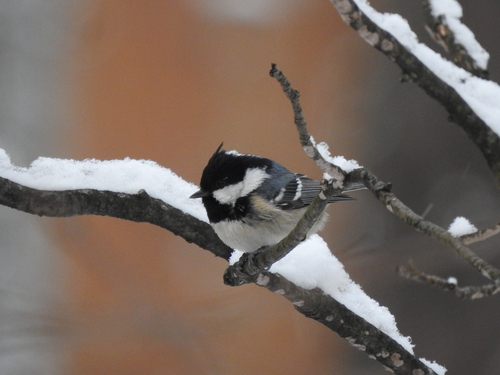 Coal Tit
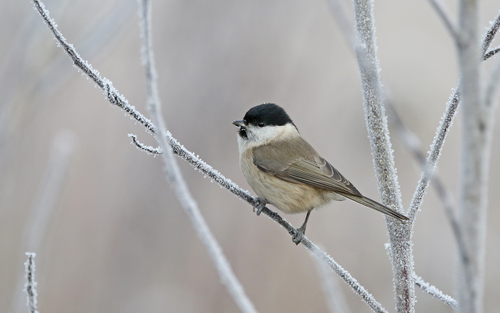 Marsh Tit
In short
The most reliable field mark to separate Coal Tit from Marsh Tit is the Coal Tit’s prominent white nape spot, which is always absent in Marsh Tit. Coal Tit also shows two clear white wingbars formed by pale tips to the wing coverts, a feature Marsh Tit lacks. Juvenile Coal Tits are duller but still show a pale nape, while Marsh Tit juveniles are very similar to adults and never have a nape spot. Marsh Tit has a glossy black cap and a small black bib, with no wingbars and a plain brownish wing. Both are small, active tits, but Coal Tit often appears more contrasting and slightly smaller. Voice and subtle structural differences can help, but plumage is the key in most field views.
Identification tips
- White nape spot (Coal Tit only): Look for a clear white patch on the back of the head; visible in all Coal Tit ages, never present in Marsh Tit.
- Wingbars (Coal Tit only): Coal Tit always shows two white wingbars on the wing (from pale-tipped coverts); Marsh Tit’s wing is plain brownish-grey with no bars in all plumages.
- Glossy black cap (Marsh Tit): Marsh Tit has a shiny black cap and nape, especially in adults, with a small black bib; Coal Tit’s head is black but less glossy and with a larger bib.
- Cheek pattern: Coal Tit has off-white cheeks, sometimes tinged grey or yellow (especially in juveniles), while Marsh Tit’s cheeks are white but fade to dusky brown on the ear coverts.
- Bib size: Marsh Tit’s black bib is small and neat; Coal Tit’s bib is larger and more diffuse.
- Juvenile differences: Juvenile Coal Tit is duller than adult but still shows nape spot and wingbars; juvenile Marsh Tit is very similar to adult, just duller, and never shows nape spot or clear wingbars.
- Bill structure: Marsh Tit may show a pale cutting edge to the bill (best seen in hand or close photos), but this is not usually visible in the field.
- Head shape: Marsh Tit’s head is proportionate and neat; Coal Tit can look smaller-headed and more delicate.
- Overall contrast: Coal Tit appears more contrasting, with sharper black and white areas; Marsh Tit is more uniform and subdued.
- Habitat context: In pure conifer stands, Coal Tit is much more likely; in damp, dense deciduous woods, Marsh Tit is favored.
- Behavior: Coal Tit is more acrobatic and restless, often flicking wings and tail; Marsh Tit is steadier and less likely to hang upside down.
- Voice: Coal Tit’s calls are high, thin, and rapid; Marsh Tit’s are explosive and sharp. Use with caution, as calls can overlap with other tit species.
- Seasonal context: Both species are resident and do not show strong seasonal plumage change, but Coal Tit juveniles in summer are duller and yellower, still with nape spot.
- Pitfalls: Beware that Marsh Tit juveniles can show a faint pale wing panel, but never the crisp wingbars or nape spot of Coal Tit. Lighting can obscure the nape spot on Coal Tit, so check multiple angles.
- When in doubt: Focus on the combination of nape spot and wingbars for Coal Tit, and the absence of both for Marsh Tit; use habitat and voice as supporting clues.
Size
Both species are very similar in size, but Coal Tit is slightly smaller (10–11.5 cm) compared to Marsh Tit (11.5–12 cm) [wikipedia]. Marsh Tit averages around 11.9 g in mass [wikidata], while Coal Tit’s weight is not specified here but is generally a touch lighter. In the field, this size difference is subtle and not usually diagnostic unless birds are side by side. Both are small, compact tits, but Marsh Tit can appear a bit more robust and round-headed, while Coal Tit is slightly daintier.
Plumage
Juvenile and adult Coal Tits of all ages show a distinctive white nape spot on the back of the head, which is absent in Marsh Tit at all ages. Coal Tit also displays two white wingbars (from pale tips to the wing coverts), visible in both perched and flying birds, and a generally more contrasting pattern: black crown, white cheeks, and off-white underparts with buff to rufous flanks. Juvenile Coal Tits are duller, with yellowish-tinged cheeks and nape, but still show the nape spot and wingbars. Marsh Tit, both adult and juvenile, has a glossy black cap (less glossy in juveniles), small black bib, white cheeks fading to dusky brown on the ear coverts, and plain greyish-brown wings and tail with no wingbars or nape spot. Juvenile Marsh Tits are very similar to adults, just duller, and may rarely show a pale wing panel, but never the crisp wingbars or nape spot of Coal Tit. The Marsh Tit’s plumage is overall more subdued and uniform, especially on the wing.
Behaviour
Both species are active, agile foragers, often seen in mixed flocks in winter. Coal Tit tends to be more restless, frequently flicking wings and tail, and is more likely to feed high in conifers or hang upside down. Marsh Tit is a bit more methodical and less acrobatic, often foraging lower in deciduous woodland and showing less wing-flicking. In flight, Coal Tit may appear slightly more fluttery and less direct than Marsh Tit, but these differences are subtle.
Habitat
Coal Tit is most often found in coniferous or mixed woodland, especially favoring pine, spruce, and fir, but can also occur in gardens and parks with suitable trees. Marsh Tit prefers damp, mature deciduous woodland, especially with dense undergrowth, and is less likely in pure conifer stands. While there is some overlap, Coal Tit is more associated with conifers, Marsh Tit with broadleaf woods and thickets.
Voice
Coal Tit gives a high-pitched, rapid 'dee' or 'see-see' call, often repeated incessantly, and a fast, high 'if-he, if-he' song reminiscent of Great Tit but higher and quicker. Marsh Tit’s most typical call is an explosive 'pitchou', sometimes extended to 'pitchou-bee-bee-bee', and its song is more varied, including 'schip-schip-schip' and 'tu-tu-tu-tu'. Marsh Tit’s calls are sharper and more explosive; Coal Tit’s are thinner and higher-pitched. Voice can be helpful, but beware confusion with other tit species and local variation.