

Cirl Bunting vs Pine Bunting
Emberiza cirlus versus Emberiza leucocephalos
Play a quiz with Cirl Bunting and Pine Bunting
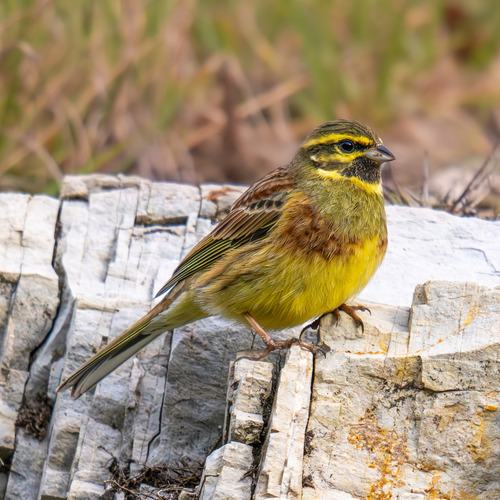 Cirl Bunting
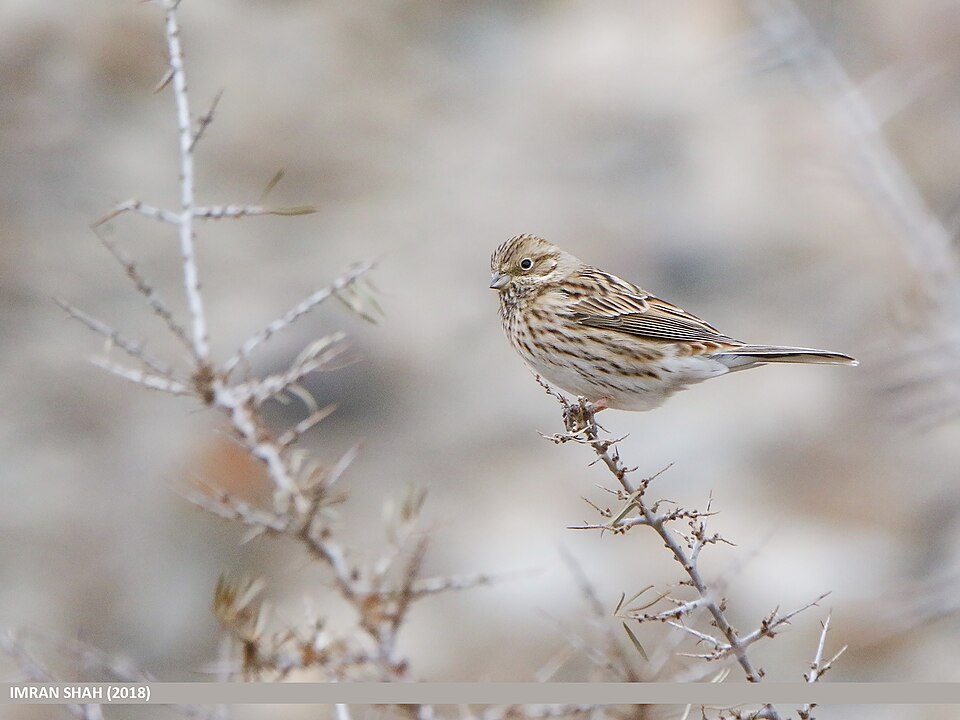 Pine Bunting
In short
The most reliable field mark between Cirl Bunting and Pine Bunting is the color and pattern of the male's head: male Cirl Buntings show a bright yellow head with black crown, eyestripe, and throat, while male Pine Buntings have a white crown and cheeks with a chestnut forehead and throat. Females and non-breeding birds are trickier, as both can resemble Yellowhammer, but Cirl Bunting females have a streaked grey-brown rump and chestnut shoulders, while Pine Bunting females are duller and more streaked below, with yellow replaced by white in non-breeding plumage. Both are robust, thick-billed buntings, but Cirl Bunting is slightly smaller. In flight, neither species shows a unique upperwing pattern that is diagnostic in all plumages, so focus on head and underpart coloration, especially in perched views.
Identification tips
- Male head pattern: In breeding plumage, male Cirl Bunting has a bright yellow head with black crown, eyestripe, and throat—distinct from Pine Bunting's white crown and cheeks with chestnut forehead and throat. This is the single most reliable mark in adult males.
- Female and non-breeding birds: Female Cirl Bunting is more yellowhammer-like but has a streaked grey-brown rump and chestnut shoulders; female Pine Bunting is duller, more streaked below, and lacks yellow tones, especially in non-breeding plumage, where yellow is replaced by white.
- Breast band: Male Cirl Bunting shows a greenish breast band across otherwise yellow underparts; Pine Bunting lacks this, with underparts more white or buff and less sharply marked.
- Back and rump: Both have heavily streaked brown backs, but Cirl Bunting females have a streaked grey-brown rump, which can be useful if seen well.
- Bill structure: Both have thick seed-eater bills; not a strong separator.
- Size: Cirl Bunting is slightly smaller and less robust than Pine Bunting, but this is subtle and rarely diagnostic in the field.
- Upperwing pattern: No distinctive upperwing or flight pattern differences are noted for any age; do not rely on wing panels or trailing edge for separation.
- Song: Cirl Bunting's song is a rattling trill; Pine Bunting's is more like Yellowhammer's musical song. If you hear a rattle, favor Cirl; if more musical, favor Pine, but beware overlap and mimicry.
- Habitat and range: Cirl Bunting is southern European and non-migratory; Pine Bunting is a bird of Eurosiberia. Out-of-range birds should be scrutinized for hybrids, especially with Yellowhammer.
- Hybrid caution: Pine Bunting can hybridize with Yellowhammer, producing birds with mixed features (e.g., yellow primary fringes). If you see a Pine Bunting-type bird with yellow in the wings, consider hybrid origin, but recent standards accept some yellow as within Pine Bunting variation if other marks fit.
- Perched vs. flight views: Both are best identified when perched, as flight views do not reveal strong diagnostic marks between these two.
- Shoulder color: Female Cirl Bunting's chestnut shoulders can be a subtle but useful field mark, especially in comparison to the duller Pine Bunting female.
- Underpart color: Cirl Bunting males are distinctly yellow below, Pine Bunting males are more white or buff, especially outside the breeding season.
- Season: In winter, both species become duller, but Pine Bunting loses all yellow, replaced by white, while Cirl Bunting retains some yellow tones, especially in males.
- Context: If you are in southern Europe in farmland, Cirl Bunting is far more likely; in open woodland or scrub in Siberia, Pine Bunting is expected. Out-of-range records should be checked carefully for hybrids and vagrants.
Size
Cirl Bunting is slightly smaller, measuring about 15.5 cm in length with a wingspan of 22–25.5 cm. Pine Bunting is more robust, at 16–17.5 cm in length (wingspan not specified, but likely slightly larger). Both have thick seed-eater bills and similar overall bunting proportions, so size alone is rarely diagnostic unless seen side-by-side.
Plumage
Juvenile and first-winter birds of both species can be confusing, especially as both resemble Yellowhammer at these ages. There are no distinctive upperwing patterns (such as black triangles or white panels) mentioned for either species in these plumages. For adults, male Cirl Buntings have a bright yellow head with black markings (crown, eyestripe, throat) and a greenish breast band across yellow underparts; their back is heavily streaked brown. Male Pine Buntings have a white crown and cheeks, chestnut forehead and throat, and a heavily streaked brown back. Female Cirl Buntings are more like Yellowhammer but with a streaked grey-brown rump and chestnut shoulders, while female Pine Buntings are duller, more streaked below, and lack yellow tones, especially in non-breeding plumage where yellow is replaced by white. Hybrids with Yellowhammer can show intermediate features, especially in Pine Bunting, complicating identification.
Behaviour
Both species are typical buntings in behavior, feeding on seeds and insects, and are often seen foraging on the ground or in low vegetation. No major behavioral differences are noted that reliably separate them in the field.
Habitat
Cirl Bunting is a resident of southern Europe, Mediterranean islands, and North Africa, favoring farmland with hedgerows, rough grassland, and field margins. It does not migrate in winter. Pine Bunting is found in Eurosiberia east of the Urals, preferring open woodland and scrub. Their ranges do not typically overlap, but vagrants and hybrids can occur, especially in areas where Yellowhammer is present.
Voice
Cirl Bunting males sing a monotonous rattling trill, similar to the terminal rattle of Lesser Whitethroat or Arctic Warbler. Pine Bunting's song and calls are like those of Yellowhammer—more musical and less rattling. Voice can help, but there is overlap and both can be confused with Yellowhammer.