

Motmot

Chihuahuan Raven vs Common Raven

Corvus cryptoleucus versus Corvus corax

Play a quiz with Chihuahuan Raven and Common Raven
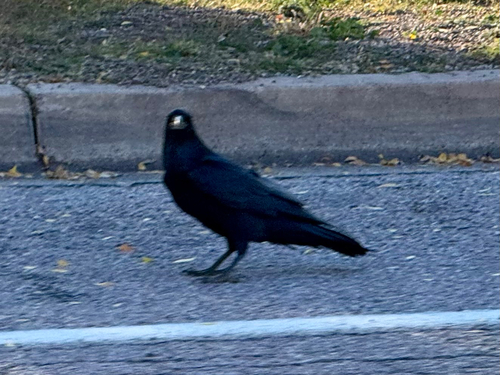
Chihuahuan Raven (Corvus cryptoleucus) Chihuahuan Raven
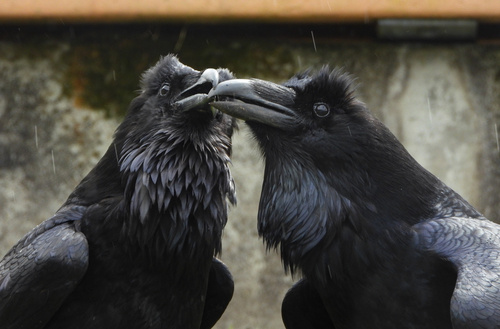
Common Raven (Corvus corax) Common Raven

Media

Loading…

In short

The most reliable field mark between Chihuahuan Raven and Common Raven is overall size and structure: Common Raven is distinctly larger and bulkier, with a heavier bill, longer and more wedge-shaped tail, and a shaggier throat. Chihuahuan Raven is about the size of a large crow, with a proportionally smaller bill and body, and a relatively longer tail. Both species are all-black with a glossy sheen, but subtle differences in feather bases and nasal bristle length can help in close views. In flight, Common Raven shows a more massive, powerful build and deeper, more sonorous croaks, while Chihuahuan Raven is slightly daintier and higher-pitched. Separation is most challenging with small southwestern Common Ravens and large Chihuahuan Ravens, so careful attention to structure and vocal quality is key.

Identification tips

  1. Size and Bulk: Common Raven is much larger and heavier than Chihuahuan Raven. Use this mark when birds are side-by-side or with known species for scale. Be cautious with lone birds, as size can be hard to judge at a distance.
  2. Bill Structure: Common Raven has a massive, thick, and slightly curved bill, while Chihuahuan Raven’s bill is heavy but noticeably smaller and less deep. Look for this especially in profile views.
  3. Tail Shape in Flight: Common Raven’s tail is long and wedge-shaped, often fanned out in flight. Chihuahuan Raven’s tail is also long relative to its body but less obviously wedge-shaped. Watch for tail shape when birds are soaring or gliding.
  4. Throat Feathers (Beard): Common Raven has prominent, shaggy throat feathers, especially when calling or displaying. Chihuahuan Raven’s throat is less shaggy. This is best seen when the bird is vocalizing or in good light.
  5. Nasal Bristles: Chihuahuan Raven’s nasal bristles extend about two-thirds down the bill, further than in any other Corvus species. This is a subtle mark, best seen at close range or in photos.
  6. Feather Bases: If the neck feathers are ruffled (wind or preening), Chihuahuan Raven may show whitish feather bases, while Common Raven’s are pale brownish-grey. This is rarely visible but diagnostic when seen.
  7. Plumage Gloss: Chihuahuan Raven can show a rich purple-blue gloss in good light, while Common Raven is more generally iridescent black. Use with caution, as lighting and wear affect gloss.
  8. Iris Color (Juveniles): Juvenile Common Ravens have a blue-grey iris and a pinkish gape, while adults of both species have dark brown irises. This is only useful for very fresh juveniles at close range.
  9. Vocal Quality: Listen for the call: Common Raven gives a deep, resonant croak; Chihuahuan Raven’s calls are higher-pitched and less full-bodied. Use this when birds are calling out of sight or in flight.
  10. Flight Style: Common Raven soars more steadily and with less wing flapping than Chihuahuan Raven, appearing more powerful and stable in the air. Chihuahuan Raven may appear lighter and more buoyant.
  11. Habitat Context: In arid grasslands, especially in the southwestern US and northern Mexico, Chihuahuan Raven is more likely. In forests, mountains, or a wide range of habitats, Common Raven dominates.
  12. Geographic Range: If outside the core range of Chihuahuan Raven (southwestern US/northern Mexico), default to Common Raven. In overlap zones, use structure and voice.
  13. Perched Posture: Common Raven often looks bulkier and more imposing when perched, with a thicker neck and heavier bill. Chihuahuan Raven is slimmer and more crow-like.
  14. Association with Humans: Chihuahuan Raven may nest in old buildings or agricultural areas, while Common Raven is less tied to human structures in the Southwest.
  15. Beware of Overlap: Small southwestern Common Ravens can approach Chihuahuan Raven in size, and large Chihuahuan Ravens can appear massive. Always use a combination of marks—structure, voice, and context—for confident identification.

Size

Common Raven is significantly larger, averaging about 66 cm in length and nearly 950 g in mass ([wikidata]), making it one of the largest passerines. Chihuahuan Raven is much closer in size to a carrion crow or slightly larger than an American Crow, at 44–51 cm in length ([wikipedia]), with no mass provided but clearly smaller than Common Raven. In direct comparison, Common Raven appears bulkier, with a heavier bill and more robust legs and feet. Size overlap is possible with the smallest Common Ravens and largest Chihuahuan Ravens, but in most cases, Common Raven is obviously bigger.

Plumage

Both species are all-black with iridescent gloss, but Chihuahuan Raven often shows a rich purple-blue sheen in good light, while Common Raven is more generally iridescent black. The bases of the neck feathers in Chihuahuan Raven are whitish, visible only when ruffled, whereas Common Raven has pale brownish-grey feather bases. Nasal bristles extend further down the bill in Chihuahuan Raven (about two-thirds the length), while in Common Raven they are shorter. Both have dark brown irises as adults. Juvenile Common Ravens have a duller plumage, blue-grey iris, and a pinkish gape at first. Throat feathers are shaggier and more prominent in Common Raven, especially when the bird is calling or displaying. In flight, tail shape is a key difference: Common Raven’s tail is longer and more wedge-shaped, while Chihuahuan Raven’s tail is relatively longer for its body but less wedge-shaped. No distinctive juvenile upperwing patterns are described for either species in the provided notes.

Behaviour

Common Ravens are powerful, agile flyers with a stable soaring style and less wing flapping compared to crows or Chihuahuan Ravens. Their flight often produces a creaking, silk-like sound. Chihuahuan Ravens are also strong fliers but appear slightly lighter and less massive in the air. Both species can be seen alone or in pairs, but subadult Common Ravens may roost communally. Both are omnivorous and opportunistic, but Chihuahuan Ravens are more tied to arid, open country and may nest in trees, shrubs, or old buildings. Common Ravens are more versatile in habitat and behavior.

Habitat

Chihuahuan Raven is restricted to the Southwestern and Midwestern US and northern Mexico, favoring arid grasslands, open country, and agricultural areas. Common Raven is much more widespread, found across the Northern Hemisphere in a wide range of habitats, including forests, mountains, tundra, and deserts. In the American Southwest, their ranges can overlap, but Chihuahuan Raven is more likely in open, dry landscapes, while Common Raven can be found in a broader variety of settings.

Voice

Common Raven’s call is a deep, resonant croak, much more sonorous than a crow’s call. Chihuahuan Raven’s voice is similar but higher-pitched, with 'pruk-pruk' and other croaks that lack the depth of Common Raven. Both species can mimic sounds, but this is rarely observed in the wild. In the field, the deeper, fuller croak of Common Raven is a useful clue, especially when birds are not seen well.

Submit a better description

Use the same sections as the comparison. Your text is published immediately.

The most reliable field mark between Chihuahuan Raven and Common Raven is overall size and structure: Common Raven is distinctly larger and bulkier, with a heavier bill, longer and more wedge-shaped tail, and a shaggier throat. Chihuahuan Raven is about the size of a large crow, with a proportionally smaller bill and body, and a relatively longer tail. Both species are all-black with a glossy sheen, but subtle differences in feather bases and nasal bristle length can help in close views. In flight, Common Raven shows a more massive, powerful build and deeper, more sonorous croaks, while Chihuahuan Raven is slightly daintier and higher-pitched. Separation is most challenging with small southwestern Common Ravens and large Chihuahuan Ravens, so careful attention to structure and vocal quality is key.

  1. Size and Bulk: Common Raven is much larger and heavier than Chihuahuan Raven. Use this mark when birds are side-by-side or with known species for scale. Be cautious with lone birds, as size can be hard to judge at a distance.
  2. Bill Structure: Common Raven has a massive, thick, and slightly curved bill, while Chihuahuan Raven’s bill is heavy but noticeably smaller and less deep. Look for this especially in profile views.
  3. Tail Shape in Flight: Common Raven’s tail is long and wedge-shaped, often fanned out in flight. Chihuahuan Raven’s tail is also long relative to its body but less obviously wedge-shaped. Watch for tail shape when birds are soaring or gliding.
  4. Throat Feathers (Beard): Common Raven has prominent, shaggy throat feathers, especially when calling or displaying. Chihuahuan Raven’s throat is less shaggy. This is best seen when the bird is vocalizing or in good light.
  5. Nasal Bristles: Chihuahuan Raven’s nasal bristles extend about two-thirds down the bill, further than in any other Corvus species. This is a subtle mark, best seen at close range or in photos.
  6. Feather Bases: If the neck feathers are ruffled (wind or preening), Chihuahuan Raven may show whitish feather bases, while Common Raven’s are pale brownish-grey. This is rarely visible but diagnostic when seen.
  7. Plumage Gloss: Chihuahuan Raven can show a rich purple-blue gloss in good light, while Common Raven is more generally iridescent black. Use with caution, as lighting and wear affect gloss.
  8. Iris Color (Juveniles): Juvenile Common Ravens have a blue-grey iris and a pinkish gape, while adults of both species have dark brown irises. This is only useful for very fresh juveniles at close range.
  9. Vocal Quality: Listen for the call: Common Raven gives a deep, resonant croak; Chihuahuan Raven’s calls are higher-pitched and less full-bodied. Use this when birds are calling out of sight or in flight.
  10. Flight Style: Common Raven soars more steadily and with less wing flapping than Chihuahuan Raven, appearing more powerful and stable in the air. Chihuahuan Raven may appear lighter and more buoyant.
  11. Habitat Context: In arid grasslands, especially in the southwestern US and northern Mexico, Chihuahuan Raven is more likely. In forests, mountains, or a wide range of habitats, Common Raven dominates.
  12. Geographic Range: If outside the core range of Chihuahuan Raven (southwestern US/northern Mexico), default to Common Raven. In overlap zones, use structure and voice.
  13. Perched Posture: Common Raven often looks bulkier and more imposing when perched, with a thicker neck and heavier bill. Chihuahuan Raven is slimmer and more crow-like.
  14. Association with Humans: Chihuahuan Raven may nest in old buildings or agricultural areas, while Common Raven is less tied to human structures in the Southwest.
  15. Beware of Overlap: Small southwestern Common Ravens can approach Chihuahuan Raven in size, and large Chihuahuan Ravens can appear massive. Always use a combination of marks—structure, voice, and context—for confident identification.

Common Raven is significantly larger, averaging about 66 cm in length and nearly 950 g in mass ([wikidata]), making it one of the largest passerines. Chihuahuan Raven is much closer in size to a carrion crow or slightly larger than an American Crow, at 44–51 cm in length ([wikipedia]), with no mass provided but clearly smaller than Common Raven. In direct comparison, Common Raven appears bulkier, with a heavier bill and more robust legs and feet. Size overlap is possible with the smallest Common Ravens and largest Chihuahuan Ravens, but in most cases, Common Raven is obviously bigger.

Both species are all-black with iridescent gloss, but Chihuahuan Raven often shows a rich purple-blue sheen in good light, while Common Raven is more generally iridescent black. The bases of the neck feathers in Chihuahuan Raven are whitish, visible only when ruffled, whereas Common Raven has pale brownish-grey feather bases. Nasal bristles extend further down the bill in Chihuahuan Raven (about two-thirds the length), while in Common Raven they are shorter. Both have dark brown irises as adults. Juvenile Common Ravens have a duller plumage, blue-grey iris, and a pinkish gape at first. Throat feathers are shaggier and more prominent in Common Raven, especially when the bird is calling or displaying. In flight, tail shape is a key difference: Common Raven’s tail is longer and more wedge-shaped, while Chihuahuan Raven’s tail is relatively longer for its body but less wedge-shaped. No distinctive juvenile upperwing patterns are described for either species in the provided notes.

Common Ravens are powerful, agile flyers with a stable soaring style and less wing flapping compared to crows or Chihuahuan Ravens. Their flight often produces a creaking, silk-like sound. Chihuahuan Ravens are also strong fliers but appear slightly lighter and less massive in the air. Both species can be seen alone or in pairs, but subadult Common Ravens may roost communally. Both are omnivorous and opportunistic, but Chihuahuan Ravens are more tied to arid, open country and may nest in trees, shrubs, or old buildings. Common Ravens are more versatile in habitat and behavior.

Chihuahuan Raven is restricted to the Southwestern and Midwestern US and northern Mexico, favoring arid grasslands, open country, and agricultural areas. Common Raven is much more widespread, found across the Northern Hemisphere in a wide range of habitats, including forests, mountains, tundra, and deserts. In the American Southwest, their ranges can overlap, but Chihuahuan Raven is more likely in open, dry landscapes, while Common Raven can be found in a broader variety of settings.

Common Raven’s call is a deep, resonant croak, much more sonorous than a crow’s call. Chihuahuan Raven’s voice is similar but higher-pitched, with 'pruk-pruk' and other croaks that lack the depth of Common Raven. Both species can mimic sounds, but this is rarely observed in the wild. In the field, the deeper, fuller croak of Common Raven is a useful clue, especially when birds are not seen well.

Discard your changes?

You have unsaved edits. If you leave now, those changes will be lost.

Chihuahuan Raven · Common Raven · My Tricky Birds