

Motmot

Chestnut-winged Cuckoo vs Plain Prinia

Clamator coromandus versus Prinia inornata

Play a quiz with Chestnut-winged Cuckoo and Plain Prinia
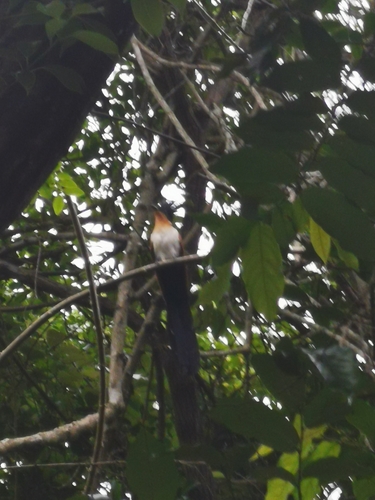
Chestnut-winged Cuckoo (Clamator coromandus) Chestnut-winged Cuckoo
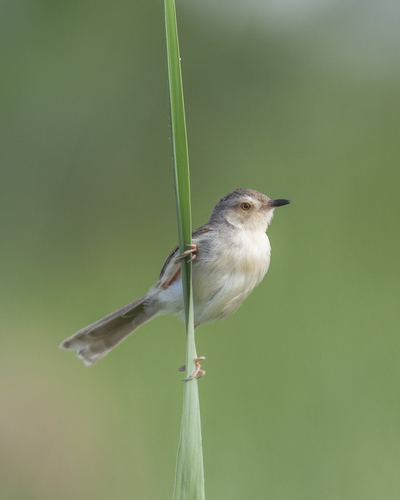
Plain Prinia (Prinia inornata) Plain Prinia

Media

Loading…

In short

The most reliable way to separate Chestnut-winged Cuckoo from Plain Prinia is by overall size and structure: the cuckoo is a large, long-tailed, crested bird with striking chestnut wings, while the prinia is a tiny, slim warbler with a short rounded wing and a longish but not graduated tail. Juvenile Chestnut-winged Cuckoos show a dusky, scaly wing pattern, unlike any prinia. In all ages, the cuckoo’s bold crest, white nuchal collar, and glossy black tail with subtle white tips are distinctive. Plain Prinia is much smaller, lacks a crest, and shows a plain face with a short white supercilium and rufous wing fringes in breeding plumage. These two species are extremely unlikely to be confused by size alone, but distant or backlit views can make structure harder to judge, so focus on the combination of wing color, tail shape, and head pattern.

Identification tips

  1. Size is the most immediate clue: Chestnut-winged Cuckoo is massive compared to Plain Prinia. If the bird appears anywhere near the size of a myna or crow, it cannot be a prinia.
  2. Tail shape and length: The cuckoo’s tail is extremely long, graduated (central feathers longest, outer feathers shorter in steps), and glossy black with subtle white tips. Prinia’s tail is longish but not graduated and lacks gloss or white tips.
  3. Crest presence: Chestnut-winged Cuckoo has a prominent, glossy black crest—never shown by Plain Prinia, which always has a smooth crown.
  4. Head pattern: The cuckoo shows a narrow white nuchal collar (half-collar on the sides and back of neck), separating the black cap from the back. Prinia has a short white supercilium but no collar or cap.
  5. Wing color: Adult cuckoo’s wings are rich chestnut, contrasting with the black upperparts. Prinia has plain brown wings with rufous fringes in breeding plumage, but never solid chestnut.
  6. Juvenile plumage: Young cuckoos are dusky with a scaly pattern on the wings—never matched by any prinia. Juvenile prinias look like duller adults, with no scaly effect.
  7. Underparts: Cuckoo has a rufous throat and dusky-grey belly, while prinia is whitish-buff below (breeding) or buffier (non-breeding), never rufous or dark grey.
  8. Bill structure: Cuckoo has a strong, slightly decurved bill; prinia’s bill is short, fine, and straight—typical of insectivorous warblers.
  9. Behavior: Cuckoo perches high and moves deliberately, sometimes joining mixed flocks. Prinia is restless, flicks its tail, and stays low in grass or bushes.
  10. Flight style: Cuckoo flies strongly and directly; prinia’s flight is weak, fluttery, and low.
  11. Voice: Cuckoo’s fluty, mellow twin-notes are unlike the prinia’s sharp, repetitive "chip-chip-chip" song. If heard, this is diagnostic.
  12. Habitat context: In open grassland or scrub, expect prinia; in wooded edges or during migration, especially if perched high, check for cuckoo.
  13. Seasonal changes: Prinia’s tail is shorter in breeding season and longer in winter, but never approaches the length or graduation of the cuckoo’s tail.
  14. Sexes and ages: Both species are similar between sexes, but only the cuckoo shows strong age-related differences (scaly juveniles). Prinia is consistent across ages except for subtle seasonal tone shifts.
  15. Pitfalls: Distant or backlit views can obscure size and color, but the combination of crest, tail shape, and white collar on the cuckoo is never matched by prinia. If in doubt, try to see the tail graduation and head pattern.

Size

Chestnut-winged Cuckoo is dramatically larger and heavier (body mass ~76g) than Plain Prinia (not measured here, but prinias typically weigh under 10g) [wikidata, avonet]. The cuckoo reaches about 47 cm in length, mostly due to its very long, graduated tail, while Plain Prinia is only 13–14 cm long. In the field, the cuckoo appears crow-sized or larger than a myna, with a robust build, whereas the prinia is a tiny, delicate warbler, barely larger than a leaf warbler. Even at a distance, the size gap is striking if both are seen well.

Plumage

Juvenile Chestnut-winged Cuckoos are dusky overall with a scaly appearance to the wing feathers—this scaly pattern is unique to young cuckoos and never shown by Plain Prinia of any age. Adult cuckoos have glossy black upperparts, a bold black crest, chestnut wings, a rufous throat, and a narrow white nuchal collar; their long, graduated tail is glossy black with subtle white tips. Plain Prinia in breeding plumage is grey-brown above with a short white supercilium, rufous fringes on the closed wings, and whitish-buff underparts; in winter, it is warmer brown above and buffier below, and the tail grows longer. The prinia’s tail is longish but not graduated, and the face is plain except for the short supercilium. The cuckoo’s strong color contrasts and structural features (crest, collar, tail shape) are never matched by the prinia. No age or season of prinia shows chestnut wings, a crest, or a white nuchal collar.

Behaviour

Chestnut-winged Cuckoo is usually seen singly, sometimes joining mixed-species flocks, and often perches conspicuously on open branches. Its flight is strong and direct, befitting its size. Plain Prinia is highly active, often seen in pairs or small groups, flitting low in grass or bushes, and frequently flicking its tail. Prinia flight is weak and fluttery, with short, low flights between cover. The cuckoo’s slow, deliberate movements and tendency to perch in the open contrast with the prinia’s restless, skulking behavior.

Habitat

Both species occur in Southeast Asia and South Asia, but their preferred habitats differ. Chestnut-winged Cuckoo is found in forest edges, wooded areas, and sometimes in gardens or near homes during migration. It breeds in the Himalayas and migrates to southern India and Southeast Asia. Plain Prinia is a resident breeder in open grasslands, scrub, and agricultural land, rarely entering dense forest. Overlap is possible in edge habitats, but the prinia is far more likely in open, grassy areas, while the cuckoo prefers wooded or edge habitats, especially during migration.

Voice

Chestnut-winged Cuckoo gives fluty twin-notes, repeated with short intervals—a mellow, whistled call. Plain Prinia produces a rapid, repetitive "chip-chip-chip" or "prit-pret" song, much higher-pitched and more insect-like. The cuckoo’s call is richer and more melodious, while the prinia’s is sharp and mechanical. If heard, the difference is obvious.

Submit a better description

Use the same sections as the comparison. Your text is published immediately.

The most reliable way to separate Chestnut-winged Cuckoo from Plain Prinia is by overall size and structure: the cuckoo is a large, long-tailed, crested bird with striking chestnut wings, while the prinia is a tiny, slim warbler with a short rounded wing and a longish but not graduated tail. Juvenile Chestnut-winged Cuckoos show a dusky, scaly wing pattern, unlike any prinia. In all ages, the cuckoo’s bold crest, white nuchal collar, and glossy black tail with subtle white tips are distinctive. Plain Prinia is much smaller, lacks a crest, and shows a plain face with a short white supercilium and rufous wing fringes in breeding plumage. These two species are extremely unlikely to be confused by size alone, but distant or backlit views can make structure harder to judge, so focus on the combination of wing color, tail shape, and head pattern.

  1. Size is the most immediate clue: Chestnut-winged Cuckoo is massive compared to Plain Prinia. If the bird appears anywhere near the size of a myna or crow, it cannot be a prinia.
  2. Tail shape and length: The cuckoo’s tail is extremely long, graduated (central feathers longest, outer feathers shorter in steps), and glossy black with subtle white tips. Prinia’s tail is longish but not graduated and lacks gloss or white tips.
  3. Crest presence: Chestnut-winged Cuckoo has a prominent, glossy black crest—never shown by Plain Prinia, which always has a smooth crown.
  4. Head pattern: The cuckoo shows a narrow white nuchal collar (half-collar on the sides and back of neck), separating the black cap from the back. Prinia has a short white supercilium but no collar or cap.
  5. Wing color: Adult cuckoo’s wings are rich chestnut, contrasting with the black upperparts. Prinia has plain brown wings with rufous fringes in breeding plumage, but never solid chestnut.
  6. Juvenile plumage: Young cuckoos are dusky with a scaly pattern on the wings—never matched by any prinia. Juvenile prinias look like duller adults, with no scaly effect.
  7. Underparts: Cuckoo has a rufous throat and dusky-grey belly, while prinia is whitish-buff below (breeding) or buffier (non-breeding), never rufous or dark grey.
  8. Bill structure: Cuckoo has a strong, slightly decurved bill; prinia’s bill is short, fine, and straight—typical of insectivorous warblers.
  9. Behavior: Cuckoo perches high and moves deliberately, sometimes joining mixed flocks. Prinia is restless, flicks its tail, and stays low in grass or bushes.
  10. Flight style: Cuckoo flies strongly and directly; prinia’s flight is weak, fluttery, and low.
  11. Voice: Cuckoo’s fluty, mellow twin-notes are unlike the prinia’s sharp, repetitive "chip-chip-chip" song. If heard, this is diagnostic.
  12. Habitat context: In open grassland or scrub, expect prinia; in wooded edges or during migration, especially if perched high, check for cuckoo.
  13. Seasonal changes: Prinia’s tail is shorter in breeding season and longer in winter, but never approaches the length or graduation of the cuckoo’s tail.
  14. Sexes and ages: Both species are similar between sexes, but only the cuckoo shows strong age-related differences (scaly juveniles). Prinia is consistent across ages except for subtle seasonal tone shifts.
  15. Pitfalls: Distant or backlit views can obscure size and color, but the combination of crest, tail shape, and white collar on the cuckoo is never matched by prinia. If in doubt, try to see the tail graduation and head pattern.

Chestnut-winged Cuckoo is dramatically larger and heavier (body mass ~76g) than Plain Prinia (not measured here, but prinias typically weigh under 10g) [wikidata, avonet]. The cuckoo reaches about 47 cm in length, mostly due to its very long, graduated tail, while Plain Prinia is only 13–14 cm long. In the field, the cuckoo appears crow-sized or larger than a myna, with a robust build, whereas the prinia is a tiny, delicate warbler, barely larger than a leaf warbler. Even at a distance, the size gap is striking if both are seen well.

Juvenile Chestnut-winged Cuckoos are dusky overall with a scaly appearance to the wing feathers—this scaly pattern is unique to young cuckoos and never shown by Plain Prinia of any age. Adult cuckoos have glossy black upperparts, a bold black crest, chestnut wings, a rufous throat, and a narrow white nuchal collar; their long, graduated tail is glossy black with subtle white tips. Plain Prinia in breeding plumage is grey-brown above with a short white supercilium, rufous fringes on the closed wings, and whitish-buff underparts; in winter, it is warmer brown above and buffier below, and the tail grows longer. The prinia’s tail is longish but not graduated, and the face is plain except for the short supercilium. The cuckoo’s strong color contrasts and structural features (crest, collar, tail shape) are never matched by the prinia. No age or season of prinia shows chestnut wings, a crest, or a white nuchal collar.

Chestnut-winged Cuckoo is usually seen singly, sometimes joining mixed-species flocks, and often perches conspicuously on open branches. Its flight is strong and direct, befitting its size. Plain Prinia is highly active, often seen in pairs or small groups, flitting low in grass or bushes, and frequently flicking its tail. Prinia flight is weak and fluttery, with short, low flights between cover. The cuckoo’s slow, deliberate movements and tendency to perch in the open contrast with the prinia’s restless, skulking behavior.

Both species occur in Southeast Asia and South Asia, but their preferred habitats differ. Chestnut-winged Cuckoo is found in forest edges, wooded areas, and sometimes in gardens or near homes during migration. It breeds in the Himalayas and migrates to southern India and Southeast Asia. Plain Prinia is a resident breeder in open grasslands, scrub, and agricultural land, rarely entering dense forest. Overlap is possible in edge habitats, but the prinia is far more likely in open, grassy areas, while the cuckoo prefers wooded or edge habitats, especially during migration.

Chestnut-winged Cuckoo gives fluty twin-notes, repeated with short intervals—a mellow, whistled call. Plain Prinia produces a rapid, repetitive "chip-chip-chip" or "prit-pret" song, much higher-pitched and more insect-like. The cuckoo’s call is richer and more melodious, while the prinia’s is sharp and mechanical. If heard, the difference is obvious.

Discard your changes?

You have unsaved edits. If you leave now, those changes will be lost.

Chestnut-winged Cuckoo · Plain Prinia · My Tricky Birds