

Motmot

Cetti's Warbler vs Sardinian Warbler

Cettia cetti versus Curruca melanocephala

Play a quiz with Cetti's Warbler and Sardinian Warbler

Cetti's Warbler (Cettia cetti) Cetti's Warbler
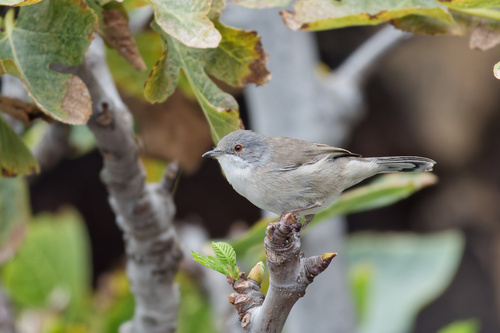
Sardinian Warbler (Curruca melanocephala) Sardinian Warbler

Media

Loading…

In short

The most reliable field mark to separate Cetti's Warbler from Sardinian Warbler is the head pattern: Cetti's Warbler always shows a plain, rounded brown head with a subtle pale supercilium, while adult male Sardinian Warbler displays a striking black cap and white throat with a red eye-ring. Juvenile Sardinian Warblers are sandy and lack the black cap, but still appear paler and less uniformly brown than Cetti's. In flight, Cetti's Warbler has short, rounded wings and a broad, rounded tail, contrasting with the Sardinian's longer, more pointed wings and tail. Both species can be skulking, but Cetti's is more strictly tied to dense, damp vegetation, and its explosive song is distinctive.

Identification tips

  1. Head pattern is key: Adult male Sardinian Warbler always shows a black cap and white throat with a red eye-ring; Cetti's Warbler never has a black cap or red eye-ring, and its head is plain brown with a subtle pale supercilium. This is the fastest field check for adults.
  2. Juvenile confusion: Juvenile Sardinian Warbler is sandy and pale, lacking the black cap, but still shows more contrast and paler underparts than the uniformly brown juvenile Cetti's. Look for overall color and lack of strong facial markings in Cetti's.
  3. Wing and tail shape: Cetti's Warbler has short, rounded wings and a broad, rounded tail (with only 10 tail feathers, but this is not visible in the field). Sardinian Warbler has longer, more pointed wings and a tail that is more pointed or square-tipped, especially in the valverdei subspecies.
  4. Upperpart color: Cetti's is rich chestnut or dark reddish-brown above, never grey or olive. Sardinian Warbler (male) is grey-backed; females are olive-brown or greyish-olive, but never as rufous as Cetti's.
  5. Underparts: Cetti's is pale grey-brown below, blending with the upperparts. Sardinian Warbler males have clean white underparts; females are paler below but with more contrast than Cetti's.
  6. Supercilium: Cetti's has a narrow, pale grey supercilium; Sardinian Warbler lacks a strong supercilium, but the white throat and malar area in males can give a contrasting facial look.
  7. Eye color: Sardinian Warbler has a conspicuous red eye-ring in all ages; Cetti's has dark eyes with no obvious eye-ring.
  8. Tail behavior: Cetti's often cocks and fans its broad tail when agitated; Sardinian Warbler may flick its tail but less dramatically.
  9. Flight style: Cetti's makes short, low, bouncing flights, diving quickly into cover. Sardinian Warbler can make longer, more direct flights between bushes.
  10. Habitat: Cetti's is almost always in dense, damp vegetation near water; Sardinian Warbler prefers dry scrub or open woodland and is less tied to water.
  11. Song: Cetti's song is a loud, explosive burst, often from deep cover. Sardinian Warbler's song is a rattling warble, and its call is a scolding 'tchack'.
  12. Sexual dimorphism: Cetti's sexes are alike; Sardinian Warbler males and females differ, with only males showing the black cap.
  13. Seasonal variation: Sardinian Warbler shows some seasonal movement and local variation in plumage, but the black cap in males is always present in adults. Cetti's does not show strong seasonal plumage changes.
  14. Bill shape: Not strongly diagnostic between these two, but Sardinian Warbler (especially in some subspecies) may show a slightly larger bill.
  15. When in doubt: If you see a small, plain, uniformly brown warbler in dense, wet thickets, it's almost certainly Cetti's. If the bird is in dry scrub, shows any black on the head, or has a red eye-ring, it's Sardinian Warbler.

Size

Cetti's Warbler is slightly larger and heavier than Sardinian Warbler, with a length of 13–14 cm and males weighing up to 15 g, while Sardinian Warbler is generally more slender. Cetti's also has a broader, longer tail relative to its body, and its wings are notably short and rounded. Sardinian Warbler, especially in the nominate form, has longer wings and a more pointed tail tip, giving it a different overall shape and jizz, especially in flight.

Plumage

Juvenile Cetti's Warbler resembles the adult but can be aged by fresh plumage and two dark spots on the tongue (not visible in the field). It is uniformly rich chestnut-brown above and pale grey-brown below, with a narrow pale supercilium and no strong facial contrast. Sardinian Warbler plumage is much more contrasting: adult males have a black cap, white throat, grey back, and red eye-ring. Females are duller, with olive-brown or greyish-olive upperparts and lack the black cap, but still show more contrast between throat and upperparts than Cetti's. Juvenile Sardinian Warblers are sandy, paler below, and lack the uniform rufous tones of Cetti's. In all ages, Cetti's is more uniformly brown, while Sardinian Warbler shows more contrast and paler underparts. In flight, Cetti's shows short, rounded wings and a broad, rounded tail, while Sardinian Warbler's wings and tail are longer and more pointed.

Behaviour

Cetti's Warbler is highly skulking, rarely leaving dense, damp thickets near water, and is most often detected by its loud, explosive song. It tends to make short, low flights with a rounded, bouncing motion, often diving straight back into cover. Sardinian Warbler is also skulking but is more likely to be seen in more open scrub or woodland edge, sometimes making longer, more direct flights between bushes. Sardinian Warbler may perch higher and show itself more readily, especially males.

Habitat

Cetti's Warbler is almost always found in dense, damp vegetation close to water—such as reedbeds, willow thickets, or riverside scrub. Sardinian Warbler prefers drier, Mediterranean-type habitats: maquis, garrigue, open woodland, and scrub, and is less tied to water. If you find a small brown warbler deep in a wet thicket, Cetti's is much more likely; in dry, open scrub, Sardinian is the default.

Voice

Cetti's Warbler has a loud, explosive song delivered in short bursts, often from deep cover. The song is unique among European warblers and is a key identification clue. Sardinian Warbler's song is a fast, rattling warble, less explosive and more continuous, and its call is a distinctive scolding 'tchack'. If you hear a sudden, sharp outburst from a hidden bird, think Cetti's; a rattling, scolding warble is more likely Sardinian.

Submit a better description

Use the same sections as the comparison. Your text is published immediately.

The most reliable field mark to separate Cetti's Warbler from Sardinian Warbler is the head pattern: Cetti's Warbler always shows a plain, rounded brown head with a subtle pale supercilium, while adult male Sardinian Warbler displays a striking black cap and white throat with a red eye-ring. Juvenile Sardinian Warblers are sandy and lack the black cap, but still appear paler and less uniformly brown than Cetti's. In flight, Cetti's Warbler has short, rounded wings and a broad, rounded tail, contrasting with the Sardinian's longer, more pointed wings and tail. Both species can be skulking, but Cetti's is more strictly tied to dense, damp vegetation, and its explosive song is distinctive.

  1. Head pattern is key: Adult male Sardinian Warbler always shows a black cap and white throat with a red eye-ring; Cetti's Warbler never has a black cap or red eye-ring, and its head is plain brown with a subtle pale supercilium. This is the fastest field check for adults.
  2. Juvenile confusion: Juvenile Sardinian Warbler is sandy and pale, lacking the black cap, but still shows more contrast and paler underparts than the uniformly brown juvenile Cetti's. Look for overall color and lack of strong facial markings in Cetti's.
  3. Wing and tail shape: Cetti's Warbler has short, rounded wings and a broad, rounded tail (with only 10 tail feathers, but this is not visible in the field). Sardinian Warbler has longer, more pointed wings and a tail that is more pointed or square-tipped, especially in the valverdei subspecies.
  4. Upperpart color: Cetti's is rich chestnut or dark reddish-brown above, never grey or olive. Sardinian Warbler (male) is grey-backed; females are olive-brown or greyish-olive, but never as rufous as Cetti's.
  5. Underparts: Cetti's is pale grey-brown below, blending with the upperparts. Sardinian Warbler males have clean white underparts; females are paler below but with more contrast than Cetti's.
  6. Supercilium: Cetti's has a narrow, pale grey supercilium; Sardinian Warbler lacks a strong supercilium, but the white throat and malar area in males can give a contrasting facial look.
  7. Eye color: Sardinian Warbler has a conspicuous red eye-ring in all ages; Cetti's has dark eyes with no obvious eye-ring.
  8. Tail behavior: Cetti's often cocks and fans its broad tail when agitated; Sardinian Warbler may flick its tail but less dramatically.
  9. Flight style: Cetti's makes short, low, bouncing flights, diving quickly into cover. Sardinian Warbler can make longer, more direct flights between bushes.
  10. Habitat: Cetti's is almost always in dense, damp vegetation near water; Sardinian Warbler prefers dry scrub or open woodland and is less tied to water.
  11. Song: Cetti's song is a loud, explosive burst, often from deep cover. Sardinian Warbler's song is a rattling warble, and its call is a scolding 'tchack'.
  12. Sexual dimorphism: Cetti's sexes are alike; Sardinian Warbler males and females differ, with only males showing the black cap.
  13. Seasonal variation: Sardinian Warbler shows some seasonal movement and local variation in plumage, but the black cap in males is always present in adults. Cetti's does not show strong seasonal plumage changes.
  14. Bill shape: Not strongly diagnostic between these two, but Sardinian Warbler (especially in some subspecies) may show a slightly larger bill.
  15. When in doubt: If you see a small, plain, uniformly brown warbler in dense, wet thickets, it's almost certainly Cetti's. If the bird is in dry scrub, shows any black on the head, or has a red eye-ring, it's Sardinian Warbler.

Cetti's Warbler is slightly larger and heavier than Sardinian Warbler, with a length of 13–14 cm and males weighing up to 15 g, while Sardinian Warbler is generally more slender. Cetti's also has a broader, longer tail relative to its body, and its wings are notably short and rounded. Sardinian Warbler, especially in the nominate form, has longer wings and a more pointed tail tip, giving it a different overall shape and jizz, especially in flight.

Juvenile Cetti's Warbler resembles the adult but can be aged by fresh plumage and two dark spots on the tongue (not visible in the field). It is uniformly rich chestnut-brown above and pale grey-brown below, with a narrow pale supercilium and no strong facial contrast. Sardinian Warbler plumage is much more contrasting: adult males have a black cap, white throat, grey back, and red eye-ring. Females are duller, with olive-brown or greyish-olive upperparts and lack the black cap, but still show more contrast between throat and upperparts than Cetti's. Juvenile Sardinian Warblers are sandy, paler below, and lack the uniform rufous tones of Cetti's. In all ages, Cetti's is more uniformly brown, while Sardinian Warbler shows more contrast and paler underparts. In flight, Cetti's shows short, rounded wings and a broad, rounded tail, while Sardinian Warbler's wings and tail are longer and more pointed.

Cetti's Warbler is highly skulking, rarely leaving dense, damp thickets near water, and is most often detected by its loud, explosive song. It tends to make short, low flights with a rounded, bouncing motion, often diving straight back into cover. Sardinian Warbler is also skulking but is more likely to be seen in more open scrub or woodland edge, sometimes making longer, more direct flights between bushes. Sardinian Warbler may perch higher and show itself more readily, especially males.

Cetti's Warbler is almost always found in dense, damp vegetation close to water—such as reedbeds, willow thickets, or riverside scrub. Sardinian Warbler prefers drier, Mediterranean-type habitats: maquis, garrigue, open woodland, and scrub, and is less tied to water. If you find a small brown warbler deep in a wet thicket, Cetti's is much more likely; in dry, open scrub, Sardinian is the default.

Cetti's Warbler has a loud, explosive song delivered in short bursts, often from deep cover. The song is unique among European warblers and is a key identification clue. Sardinian Warbler's song is a fast, rattling warble, less explosive and more continuous, and its call is a distinctive scolding 'tchack'. If you hear a sudden, sharp outburst from a hidden bird, think Cetti's; a rattling, scolding warble is more likely Sardinian.

Discard your changes?

You have unsaved edits. If you leave now, those changes will be lost.

Cetti's Warbler · Sardinian Warbler · My Tricky Birds