

Motmot

Caspian Plover vs Tibetan Sand Plover

Anarhynchus asiaticus versus Anarhynchus atrifrons

Play a quiz with Caspian Plover and Tibetan Sand Plover
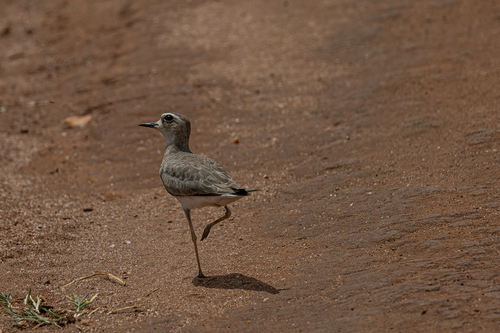
Caspian Plover (Anarhynchus asiaticus) Caspian Plover
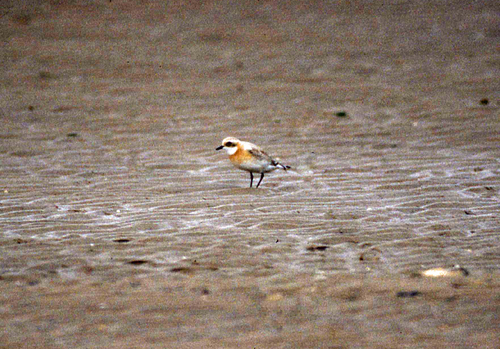
Tibetan Sand Plover (Anarhynchus atrifrons) Tibetan Sand Plover

Media

Loading…

In short

The most reliable field mark between Caspian Plover and Tibetan Sand Plover is the Caspian’s strong white supercilium and its lack of a white tail edge or prominent wing bar, compared to the Tibetan Sand Plover’s less distinct facial pattern and more typical sand plover structure. In breeding plumage, Caspian males show a striking chestnut breast bordered below by black, while Tibetan Sand Plovers have a black mask and a pale orange chest. Non-breeding and immature birds are trickier, but Caspian remains longer-legged and slimmer, with a thinner, longer bill and a more upright stance. Both species can occur together on African wintering grounds, so careful attention to structure and subtle plumage differences is essential.

Identification tips

  1. Supercilium strength: Caspian Plover always shows a strong, well-defined white supercilium, especially obvious in non-breeding and juvenile plumages; Tibetan Sand Plover’s facial pattern is less distinct, with no strong supercilium.
  2. Bill shape: Caspian has a noticeably longer and thinner bill than Tibetan Sand Plover, which has a shorter, stubbier bill typical of sand plovers. This is visible at close range or in good profile views.
  3. Leg length and stance: Caspian Plover is longer-legged and stands more upright, often appearing taller and slimmer than the more compact, crouched Tibetan Sand Plover.
  4. Breast pattern (breeding males): In spring and summer, male Caspian Plover shows a rich chestnut breast bordered below by black, with a white face and belly; Tibetan Sand Plover males have a black mask and a pale orange chest and neck, with the mask being the key difference.
  5. Breast band (non-breeding/immature): Caspian Plover in non-breeding and immature plumage has a grey-brown breast band, sometimes with a hint of chestnut in females; Tibetan Sand Plover is paler, with less defined breast markings and no chestnut tones.
  6. Upperwing and tail in flight: Caspian Plover lacks a strong white wing bar and does not show white tail sides; Tibetan Sand Plover may show more contrast in the upperwing, but the notes do not specify a diagnostic wing pattern, so this is mainly useful for ruling out Caspian.
  7. Face pattern (all ages): Caspian’s white face and supercilium stand out in all plumages, while Tibetan Sand Plover’s face is plainer except for the black mask in breeding adults.
  8. Body shape and jizz: Caspian’s slim, elongated shape and long legs give it a distinctive, upright jizz, especially when foraging; Tibetan Sand Plover is more compact and typically sand plover-like in movement and posture.
  9. Habitat context: If seen on dry, open grassland or steppe, especially away from wetlands, Caspian is more likely; Tibetan Sand Plover is more often found in coastal or wetland habitats but can overlap in Africa.
  10. Vocalization: If a sharp 'chip' call is heard, this supports Caspian Plover; Tibetan Sand Plover’s call is not described here.
  11. Sex and seasonal variation: Female and non-breeding Caspian Plovers may show only a faint hint of chestnut, so do not rely solely on breast color outside peak breeding season.
  12. Juvenile confusion: Juvenile Tibetan Sand Plovers are pale brown above and white below, lacking the strong supercilium of Caspian; this is a key point for autumn and winter birds.
  13. Comparison with other plovers: Caspian is larger and slimmer than most sand plovers, while Tibetan Sand Plover fits the typical sand plover size and shape.
  14. Pitfalls: Beware of distant or heat-haze views, where leg length and bill shape can be hard to judge; always look for the combination of supercilium, breast pattern, and structure.
  15. Mixed flocks: When both species are present, scan for the tallest, most upright birds with a strong supercilium for Caspian, and look for black-masked, orange-chested birds for breeding Tibetan Sand Plovers.

Size

Caspian Plover is slightly larger and distinctly longer-legged than Tibetan Sand Plover, with a slimmer, more upright build. The bill of Caspian is longer and thinner, giving a more delicate appearance, while Tibetan Sand Plover is more compact and proportioned like other sand plovers. These differences are subtle but become apparent when both species are seen side by side or with other plovers for scale. [wikipedia]

Plumage

Juvenile and non-breeding Caspian Plovers lack a strong wing bar and do not show white tail sides in flight, making their upperwing and tail pattern plainer than Tibetan Sand Plover, which typically shows more contrast in the face and a more typical sand plover pattern. In breeding plumage, Caspian males have a bold chestnut breast with a black lower border, white face, and belly, while Tibetan Sand Plover adults show a black mask and a paler orange chest and neck. Females and non-breeding birds of both species are duller, but Caspian retains a stronger supercilium and a more upright, long-legged look. Juvenile Tibetan Sand Plovers are pale brown above and white below, with variable white on forehead and back, lacking the strong supercilium of Caspian. [wikipedia]

Behaviour

Both species forage in similar ways, picking insects and small prey from the ground, but Caspian Plover often appears more upright and moves with longer strides due to its longer legs. Tibetan Sand Plover tends to look more compact and scurries in a typical sand plover fashion. Both are usually found in open habitats and may mix with other waders, but Caspian’s jizz is more reminiscent of a small courser or a very slim sand plover.

Habitat

Caspian Plover breeds on open grasslands, steppes, and desert verges in western and central Asia, and winters in dry grasslands, saltmarshes, and floodplains in eastern and southern Africa. Tibetan Sand Plover breeds at high altitudes in the Pamirs, Tian Shan, Tibetan Plateau, and south Mongolia, and winters in a broader range across east and south Africa, south, east, and southeast Asia. Both can overlap on African wintering grounds, but Caspian is more likely in drier, open habitats, while Tibetan Sand Plover may be found in a wider range of coastal and inland wetlands. [wikipedia]

Voice

Caspian Plover gives a sharp 'chip' call. There is no specific vocalization described for Tibetan Sand Plover in the available notes, so voice is not a reliable separator unless Caspian’s sharp call is heard. [wikipedia]

Submit a better description

Use the same sections as the comparison. Your text is published immediately.

The most reliable field mark between Caspian Plover and Tibetan Sand Plover is the Caspian’s strong white supercilium and its lack of a white tail edge or prominent wing bar, compared to the Tibetan Sand Plover’s less distinct facial pattern and more typical sand plover structure. In breeding plumage, Caspian males show a striking chestnut breast bordered below by black, while Tibetan Sand Plovers have a black mask and a pale orange chest. Non-breeding and immature birds are trickier, but Caspian remains longer-legged and slimmer, with a thinner, longer bill and a more upright stance. Both species can occur together on African wintering grounds, so careful attention to structure and subtle plumage differences is essential.

  1. Supercilium strength: Caspian Plover always shows a strong, well-defined white supercilium, especially obvious in non-breeding and juvenile plumages; Tibetan Sand Plover’s facial pattern is less distinct, with no strong supercilium.
  2. Bill shape: Caspian has a noticeably longer and thinner bill than Tibetan Sand Plover, which has a shorter, stubbier bill typical of sand plovers. This is visible at close range or in good profile views.
  3. Leg length and stance: Caspian Plover is longer-legged and stands more upright, often appearing taller and slimmer than the more compact, crouched Tibetan Sand Plover.
  4. Breast pattern (breeding males): In spring and summer, male Caspian Plover shows a rich chestnut breast bordered below by black, with a white face and belly; Tibetan Sand Plover males have a black mask and a pale orange chest and neck, with the mask being the key difference.
  5. Breast band (non-breeding/immature): Caspian Plover in non-breeding and immature plumage has a grey-brown breast band, sometimes with a hint of chestnut in females; Tibetan Sand Plover is paler, with less defined breast markings and no chestnut tones.
  6. Upperwing and tail in flight: Caspian Plover lacks a strong white wing bar and does not show white tail sides; Tibetan Sand Plover may show more contrast in the upperwing, but the notes do not specify a diagnostic wing pattern, so this is mainly useful for ruling out Caspian.
  7. Face pattern (all ages): Caspian’s white face and supercilium stand out in all plumages, while Tibetan Sand Plover’s face is plainer except for the black mask in breeding adults.
  8. Body shape and jizz: Caspian’s slim, elongated shape and long legs give it a distinctive, upright jizz, especially when foraging; Tibetan Sand Plover is more compact and typically sand plover-like in movement and posture.
  9. Habitat context: If seen on dry, open grassland or steppe, especially away from wetlands, Caspian is more likely; Tibetan Sand Plover is more often found in coastal or wetland habitats but can overlap in Africa.
  10. Vocalization: If a sharp 'chip' call is heard, this supports Caspian Plover; Tibetan Sand Plover’s call is not described here.
  11. Sex and seasonal variation: Female and non-breeding Caspian Plovers may show only a faint hint of chestnut, so do not rely solely on breast color outside peak breeding season.
  12. Juvenile confusion: Juvenile Tibetan Sand Plovers are pale brown above and white below, lacking the strong supercilium of Caspian; this is a key point for autumn and winter birds.
  13. Comparison with other plovers: Caspian is larger and slimmer than most sand plovers, while Tibetan Sand Plover fits the typical sand plover size and shape.
  14. Pitfalls: Beware of distant or heat-haze views, where leg length and bill shape can be hard to judge; always look for the combination of supercilium, breast pattern, and structure.
  15. Mixed flocks: When both species are present, scan for the tallest, most upright birds with a strong supercilium for Caspian, and look for black-masked, orange-chested birds for breeding Tibetan Sand Plovers.

Caspian Plover is slightly larger and distinctly longer-legged than Tibetan Sand Plover, with a slimmer, more upright build. The bill of Caspian is longer and thinner, giving a more delicate appearance, while Tibetan Sand Plover is more compact and proportioned like other sand plovers. These differences are subtle but become apparent when both species are seen side by side or with other plovers for scale. [wikipedia]

Juvenile and non-breeding Caspian Plovers lack a strong wing bar and do not show white tail sides in flight, making their upperwing and tail pattern plainer than Tibetan Sand Plover, which typically shows more contrast in the face and a more typical sand plover pattern. In breeding plumage, Caspian males have a bold chestnut breast with a black lower border, white face, and belly, while Tibetan Sand Plover adults show a black mask and a paler orange chest and neck. Females and non-breeding birds of both species are duller, but Caspian retains a stronger supercilium and a more upright, long-legged look. Juvenile Tibetan Sand Plovers are pale brown above and white below, with variable white on forehead and back, lacking the strong supercilium of Caspian. [wikipedia]

Both species forage in similar ways, picking insects and small prey from the ground, but Caspian Plover often appears more upright and moves with longer strides due to its longer legs. Tibetan Sand Plover tends to look more compact and scurries in a typical sand plover fashion. Both are usually found in open habitats and may mix with other waders, but Caspian’s jizz is more reminiscent of a small courser or a very slim sand plover.

Caspian Plover breeds on open grasslands, steppes, and desert verges in western and central Asia, and winters in dry grasslands, saltmarshes, and floodplains in eastern and southern Africa. Tibetan Sand Plover breeds at high altitudes in the Pamirs, Tian Shan, Tibetan Plateau, and south Mongolia, and winters in a broader range across east and south Africa, south, east, and southeast Asia. Both can overlap on African wintering grounds, but Caspian is more likely in drier, open habitats, while Tibetan Sand Plover may be found in a wider range of coastal and inland wetlands. [wikipedia]

Caspian Plover gives a sharp 'chip' call. There is no specific vocalization described for Tibetan Sand Plover in the available notes, so voice is not a reliable separator unless Caspian’s sharp call is heard. [wikipedia]

Discard your changes?

You have unsaved edits. If you leave now, those changes will be lost.

Caspian Plover · Tibetan Sand Plover · My Tricky Birds