

Motmot

Cape Teal vs Namaqua Warbler

Anas capensis versus Phragmacia substriata

Play a quiz with Cape Teal and Namaqua Warbler
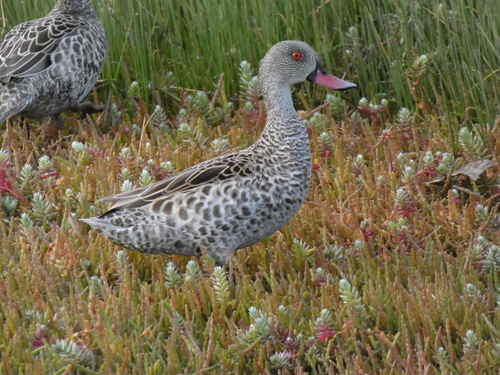
Cape Teal (Anas capensis) Cape Teal
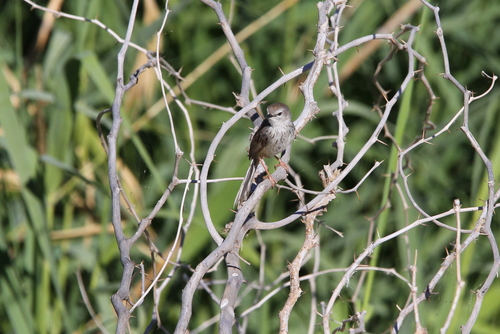
Namaqua Warbler (Phragmacia substriata) Namaqua Warbler

Media

Loading…

In short

The most reliable way to separate Cape Teal from Namaqua Warbler is by overall structure and context: Cape Teal is a pale, medium-sized duck with a pinkish bill (adults), usually seen swimming or dabbling in open wetlands, while Namaqua Warbler is a tiny, long-tailed, russet-brown songbird, typically flitting low in dense scrub with its tail cocked. Even at a distance, the Cape Teal’s pale grey body and aquatic habits contrast sharply with the warbler’s rich brown upperparts, white underparts, and terrestrial, skulking behavior. Juvenile Cape Teal lack the adult’s pink bill but are still much larger and paler than any warbler. Confusion is unlikely except in very poor viewing conditions or if only a fleeting glimpse is obtained, but structure and habitat will almost always resolve the ID.

Identification tips

  1. Size: Cape Teal is much larger (44–46 cm) than Namaqua Warbler (12–13 cm). If the bird is even close to duck-sized, it cannot be a warbler.
  2. Structure: Cape Teal has a broad body, short neck, and flat bill (pink in adults), while Namaqua Warbler is slender, with a long, narrow tail (often cocked), strong legs, and a short, straight black bill.
  3. Bill color: Adult Cape Teal has a distinctive pink on the bill; juveniles have a duller bill but still show a broad, flat duck bill. Namaqua Warbler always has a short, straight, black bill.
  4. Plumage (upperparts): Cape Teal is pale grey with a slightly browner back; Namaqua Warbler is rich russet brown above, with a strong whitish eyebrow and white throat.
  5. Plumage (underparts): Cape Teal is pale grey below; Namaqua Warbler has a white throat and breast (with faint streaking), and buff flanks.
  6. Facial pattern: Namaqua Warbler shows a clear whitish eyebrow and white lower face; Cape Teal lacks any strong facial markings.
  7. Tail: Namaqua Warbler has a long, brown tail, usually held cocked at an angle; Cape Teal has a short, flat tail typical of ducks.
  8. Wing pattern (all ages): No distinctive upperwing pattern is described for either species, but the overall wing shape is diagnostic: broad, rounded wings in Cape Teal versus short, rounded wings in the warbler.
  9. Flight style: Cape Teal flies with steady, shallow wingbeats over water; Namaqua Warbler rarely flies far, usually making short, weak flights low over scrub.
  10. Habitat: Cape Teal is always associated with open water; Namaqua Warbler is found in dense scrub or reeds, never on open water.
  11. Behavior: Cape Teal is often seen swimming or dabbling; Namaqua Warbler is restless, foraging low in vegetation with its tail cocked.
  12. Voice: Cape Teal is mostly silent, but may give a weak quack or whistle; Namaqua Warbler has a high-pitched, trilling call.
  13. Group size: Cape Teal may be seen alone, in pairs, or in large flocks on water; Namaqua Warbler is usually in pairs or small groups in scrub.
  14. Juvenile confusion: Juvenile Cape Teal lack the pink bill but remain pale and duck-shaped; juvenile Namaqua Warbler is duller but still brown above and pale below, with a warbler structure.
  15. Pitfalls: In very poor light or at great distance, a perched Cape Teal on land might seem long-tailed and slim, but the size and pale color should still separate it from any warbler. Always consider structure, habitat, and context first.

Size

Cape Teal is a medium-sized duck, measuring 44–46 cm in length, making it over three times the length of the Namaqua Warbler, which is only 12–13 cm long. The teal is also much bulkier, with a broad body and relatively short neck, while the warbler is slender, with a long, narrow tail and small, delicate frame. Even a lone Cape Teal on land dwarfs any warbler, and in flight, the size difference is unmistakable.

Plumage

Plumage differences are stark at all ages. Cape Teal of all ages are very pale grey overall, with a browner back, and adults have a distinctive pink on the bill (juveniles lack this pink). The warbler, by contrast, is rich russet brown above with a white throat and breast (with faint streaking), a whitish eyebrow, buff flanks, and a long brown tail. Juvenile Namaqua Warblers are duller but still brown above and pale below, never approaching the uniform pale grey of the teal. No age or season of Cape Teal shows the warbler’s strong facial pattern or brown upperparts, and no Namaqua Warbler ever shows a pale grey body or pink bill.

Behaviour

Cape Teal is almost always seen on or near open water, swimming, dabbling, or occasionally flying in loose flocks. It is generally quiet and unobtrusive unless disturbed. Namaqua Warbler, in contrast, is strictly terrestrial, usually seen in pairs or small groups, actively foraging low in dense scrub or reeds, often with its long tail cocked up. The warbler is agile and restless, rarely venturing into open water or even open ground, and is much more likely to be heard before seen.

Habitat

Cape Teal is found on open wetlands, lakes, and ponds, typically in sub-Saharan Africa, and is rarely far from water. Namaqua Warbler is restricted to dense scrub, reedbeds, or bushy habitats, often in drier areas, and avoids open water entirely. If you see a bird in the middle of a pond or lake, it is almost certainly not a Namaqua Warbler; conversely, a bird flitting through dry reeds or scrub is not a Cape Teal.

Voice

Cape Teal is generally quiet, but breeding males may give a clear whistle, and females a weak quack. Namaqua Warbler, on the other hand, has a distinctive high-pitched 'treeep-treep-trrrrrr' call, which is quite different from any duck vocalization. If you hear a high, insect-like trill from dense scrub, it is likely the warbler; any quacking or whistling from open water suggests the teal.

Submit a better description

Use the same sections as the comparison. Your text is published immediately.

The most reliable way to separate Cape Teal from Namaqua Warbler is by overall structure and context: Cape Teal is a pale, medium-sized duck with a pinkish bill (adults), usually seen swimming or dabbling in open wetlands, while Namaqua Warbler is a tiny, long-tailed, russet-brown songbird, typically flitting low in dense scrub with its tail cocked. Even at a distance, the Cape Teal’s pale grey body and aquatic habits contrast sharply with the warbler’s rich brown upperparts, white underparts, and terrestrial, skulking behavior. Juvenile Cape Teal lack the adult’s pink bill but are still much larger and paler than any warbler. Confusion is unlikely except in very poor viewing conditions or if only a fleeting glimpse is obtained, but structure and habitat will almost always resolve the ID.

  1. Size: Cape Teal is much larger (44–46 cm) than Namaqua Warbler (12–13 cm). If the bird is even close to duck-sized, it cannot be a warbler.
  2. Structure: Cape Teal has a broad body, short neck, and flat bill (pink in adults), while Namaqua Warbler is slender, with a long, narrow tail (often cocked), strong legs, and a short, straight black bill.
  3. Bill color: Adult Cape Teal has a distinctive pink on the bill; juveniles have a duller bill but still show a broad, flat duck bill. Namaqua Warbler always has a short, straight, black bill.
  4. Plumage (upperparts): Cape Teal is pale grey with a slightly browner back; Namaqua Warbler is rich russet brown above, with a strong whitish eyebrow and white throat.
  5. Plumage (underparts): Cape Teal is pale grey below; Namaqua Warbler has a white throat and breast (with faint streaking), and buff flanks.
  6. Facial pattern: Namaqua Warbler shows a clear whitish eyebrow and white lower face; Cape Teal lacks any strong facial markings.
  7. Tail: Namaqua Warbler has a long, brown tail, usually held cocked at an angle; Cape Teal has a short, flat tail typical of ducks.
  8. Wing pattern (all ages): No distinctive upperwing pattern is described for either species, but the overall wing shape is diagnostic: broad, rounded wings in Cape Teal versus short, rounded wings in the warbler.
  9. Flight style: Cape Teal flies with steady, shallow wingbeats over water; Namaqua Warbler rarely flies far, usually making short, weak flights low over scrub.
  10. Habitat: Cape Teal is always associated with open water; Namaqua Warbler is found in dense scrub or reeds, never on open water.
  11. Behavior: Cape Teal is often seen swimming or dabbling; Namaqua Warbler is restless, foraging low in vegetation with its tail cocked.
  12. Voice: Cape Teal is mostly silent, but may give a weak quack or whistle; Namaqua Warbler has a high-pitched, trilling call.
  13. Group size: Cape Teal may be seen alone, in pairs, or in large flocks on water; Namaqua Warbler is usually in pairs or small groups in scrub.
  14. Juvenile confusion: Juvenile Cape Teal lack the pink bill but remain pale and duck-shaped; juvenile Namaqua Warbler is duller but still brown above and pale below, with a warbler structure.
  15. Pitfalls: In very poor light or at great distance, a perched Cape Teal on land might seem long-tailed and slim, but the size and pale color should still separate it from any warbler. Always consider structure, habitat, and context first.

Cape Teal is a medium-sized duck, measuring 44–46 cm in length, making it over three times the length of the Namaqua Warbler, which is only 12–13 cm long. The teal is also much bulkier, with a broad body and relatively short neck, while the warbler is slender, with a long, narrow tail and small, delicate frame. Even a lone Cape Teal on land dwarfs any warbler, and in flight, the size difference is unmistakable.

Plumage differences are stark at all ages. Cape Teal of all ages are very pale grey overall, with a browner back, and adults have a distinctive pink on the bill (juveniles lack this pink). The warbler, by contrast, is rich russet brown above with a white throat and breast (with faint streaking), a whitish eyebrow, buff flanks, and a long brown tail. Juvenile Namaqua Warblers are duller but still brown above and pale below, never approaching the uniform pale grey of the teal. No age or season of Cape Teal shows the warbler’s strong facial pattern or brown upperparts, and no Namaqua Warbler ever shows a pale grey body or pink bill.

Cape Teal is almost always seen on or near open water, swimming, dabbling, or occasionally flying in loose flocks. It is generally quiet and unobtrusive unless disturbed. Namaqua Warbler, in contrast, is strictly terrestrial, usually seen in pairs or small groups, actively foraging low in dense scrub or reeds, often with its long tail cocked up. The warbler is agile and restless, rarely venturing into open water or even open ground, and is much more likely to be heard before seen.

Cape Teal is found on open wetlands, lakes, and ponds, typically in sub-Saharan Africa, and is rarely far from water. Namaqua Warbler is restricted to dense scrub, reedbeds, or bushy habitats, often in drier areas, and avoids open water entirely. If you see a bird in the middle of a pond or lake, it is almost certainly not a Namaqua Warbler; conversely, a bird flitting through dry reeds or scrub is not a Cape Teal.

Cape Teal is generally quiet, but breeding males may give a clear whistle, and females a weak quack. Namaqua Warbler, on the other hand, has a distinctive high-pitched 'treeep-treep-trrrrrr' call, which is quite different from any duck vocalization. If you hear a high, insect-like trill from dense scrub, it is likely the warbler; any quacking or whistling from open water suggests the teal.

Discard your changes?

You have unsaved edits. If you leave now, those changes will be lost.

Cape Teal · Namaqua Warbler · My Tricky Birds