

Canvasback vs Common Pochard
Aythya valisineria versus Aythya ferina
Play a quiz with Canvasback and Common Pochard
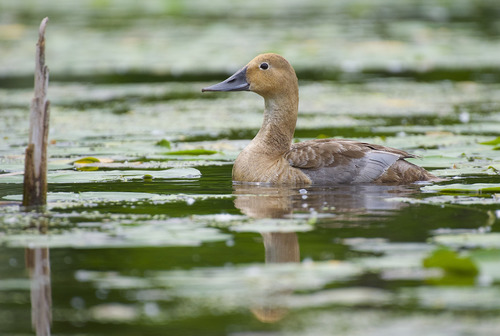 Canvasback
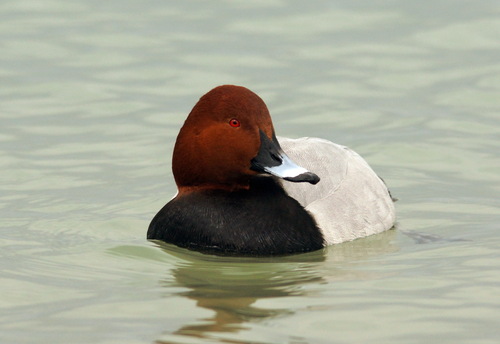 Common Pochard
In short
The most reliable field mark to separate Canvasback from Common Pochard is the bill: Canvasback shows an all-black, long, sloping bill merging smoothly with a wedge-shaped head, while male Common Pochard has a dark bill with a distinct blue-grey band across the middle and a less steep forehead. Canvasback is noticeably larger and bulkier, with a longer neck and heavier build. Both males have chestnut heads and black breasts, but Canvasback's head is richer red and its body is brighter white, whereas Common Pochard's body is pale grey. Females of both species are brownish, but Canvasback females are larger and show a more sloping profile. In flight or at rest, focus on head shape and bill pattern for a confident identification.
Identification tips
- Bill pattern: Canvasback has an all-black, long, sloping bill that merges smoothly with the forehead, giving a wedge-shaped profile. Male Common Pochard has a dark bill with a wide blue-grey band across the middle; this is often visible even at a distance. This is the single most reliable field mark for males.
- Head shape: Canvasback's head is long and wedge-shaped with a steeply sloping forehead and long neck, creating a distinctive profile. Common Pochard has a rounder, more domed head and a shorter, less steep forehead.
- Size and structure: Canvasback is noticeably larger, heavier, and longer-necked than Common Pochard. If both are present, the size difference is striking, but even singly, Canvasback looks bigger and more elongated.
- Male head and body color: Both males have chestnut heads and black breasts, but Canvasback's head is richer red and its body is bright white with fine vermiculations. Common Pochard's body is pale grey, not white, and the chestnut head is slightly duller.
- Female plumage: Female Canvasbacks are larger, with a light brown head and neck, darker brown chest, and greyish-brown flanks. Female Common Pochards are brown overall, with a less sloping forehead and smaller size.
- Iris color: Canvasback males have bright red irises in spring and duller in winter; Common Pochard males have yellow-orange to red irises (brighter in breeding season), while females have brown or yellow-brown eyes. This can be useful at close range.
- Tail and legs: Both species have dark tails and greyish legs, not a useful separator.
- Jizz in flight: Canvasback appears longer-necked and heavier in flight, with a more pointed head profile. Common Pochard is more compact and rounded.
- Habitat and range: Canvasback is only found in North America, while Common Pochard is Palearctic. If you are in Europe or Asia, it is almost certainly Common Pochard; in North America, Canvasback.
- Mixed flocks: Both species may occur with other Aythya ducks (e.g., Redhead, Tufted Duck), so always check bill and head shape carefully.
- Juvenile/immature birds: No distinctive upperwing pattern is described for either species, so rely on structure and bill pattern for young birds.
- Seasonal variation: Canvasback male's iris is brightest in spring; Common Pochard male's iris also brightens in breeding season. Body and head color may appear duller in non-breeding plumage but structural differences persist.
- Feeding behavior: Both are diving ducks, but Canvasback may be seen digging for tubers more often. Not a strong field mark.
- Bill color in females: Female Canvasback has a blackish bill; female Common Pochard's bill is dark with a less distinct blue-grey band, but this is less reliable than head shape and size.
- Voice: No diagnostic vocal differences are described in the sources; do not rely on voice for separation.
Size
Canvasback is the largest North American diving duck, measuring 48–56 cm in length with a wingspan of 79–89 cm and males averaging about 1,250 g. Common Pochard is smaller and more compact, at 42–49 cm long, wingspan 72–82 cm, and males averaging less than 1,000 g in winter. Canvasback is similar in size to a Mallard but heavier and more robust, while Common Pochard is distinctly medium-sized and stockier. Size difference is most apparent when both species are seen together, but Canvasback's longer neck and larger body are often noticeable even singly.
Plumage
No distinctive juvenile or first-winter upperwing pattern is described for either species, so field separation relies on body and head plumage and structure. Adult males of both species have a chestnut head and neck, black breast, and pale body, but Canvasback males are brighter white on the back and flanks with fine vermiculations, while Common Pochard males are pale grey with similar fine markings. The Canvasback's head is a richer chestnut and the bill is all black, whereas Common Pochard males have a blue-grey band on the bill. Female Canvasbacks are larger, with a light brown head and neck, darker brown chest, and greyish-brown flanks, while female Common Pochards are brown overall with a less sloping forehead. Both species have dark tails and greyish legs/feet. Iris color differs: Canvasback males have bright red irises in spring (duller in winter), while Common Pochard males have yellow-orange to red irises (brighter in breeding), and females have brown or yellow-brown eyes.
Behaviour
Both species are diving ducks and often feed by diving for plant material and invertebrates. Canvasbacks are more likely to be seen in North America, especially on larger bodies of water, and are known for their preference for tubers like wild celery and sago pondweed. Both species may dabble occasionally but are primarily divers. Canvasback's larger size and longer neck may be apparent when swimming or feeding. Both are gregarious in winter, often forming mixed flocks with other Aythya ducks.
Habitat
Canvasback breeds in North American prairie potholes and marshes, preferring large, permanent wetlands with emergent vegetation. Common Pochard breeds across the Palearctic, especially in Scandinavia and Siberian steppe lakes, and winters farther south and west. Both species favor open water and marshes for feeding and nesting, but Canvasback is strictly New World, while Common Pochard is Old World. In winter, both may be found on lakes, reservoirs, and coastal bays, but their ranges do not overlap naturally.