

Motmot

California Quail vs Spruce Grouse

Callipepla californica versus Canachites canadensis

Play a quiz with California Quail and Spruce Grouse
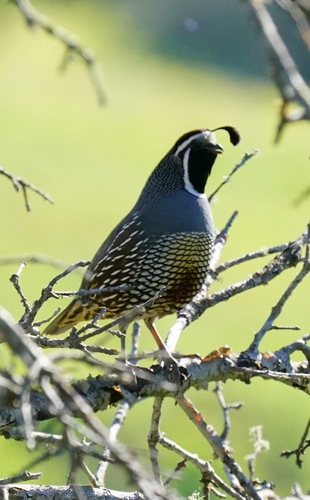
California Quail (Callipepla californica) California Quail
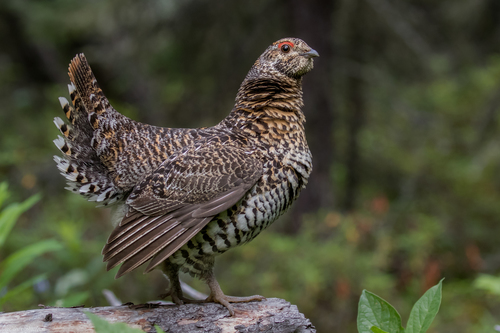
Spruce Grouse (Canachites canadensis) Spruce Grouse

Media

Loading…

In short

The most reliable field mark to separate California Quail from Spruce Grouse is the presence of a prominent, forward-curving black topknot (plume) on the quail, especially obvious in males, versus the Spruce Grouse’s lack of any such crest and, in adult males, a distinctive red eyebrow comb. In flight or when flushed, California Quail are smaller, more compact, and explode into short, rapid bursts, while Spruce Grouse are much larger and heavier, often flying only reluctantly and with a slower, more labored wingbeat. Females of both species are brown and could be confused, but the quail’s uniform, scaled pattern and smaller size contrast with the grouse’s heavier barring and bulkier build. Habitat is also a strong clue: California Quail are found in open, brushy, or suburban areas, while Spruce Grouse are strictly birds of dense northern coniferous forests.

Identification tips

  1. Topknot/Plume: California Quail of all ages and sexes show a forward-curving black topknot (longest in adult males, shorter in females and juveniles); Spruce Grouse never have a topknot.
  2. Red Eyebrow Comb: Adult male Spruce Grouse have a prominent red eyebrow comb, especially visible when displaying; California Quail never show this feature.
  3. Facial Pattern: Adult male California Quail have a bold black face with white stripes; females are plainer but still show the topknot. Spruce Grouse males have a plain gray face with the red comb; females are mottled with no strong facial markings.
  4. Underparts Pattern: California Quail show a scaled pattern on the belly and breast (all ages/sexes); Spruce Grouse have barred underparts (females/juveniles) or black with white spots (adult males).
  5. Tail Pattern: Spruce Grouse have a dark tail with a pale terminal band (all ages/sexes), visible when perched or in flight; California Quail have a short, rounded tail without a pale band.
  6. Body Size: Spruce Grouse are much larger and heavier than California Quail; this is especially obvious when both are seen on the ground or flushed.
  7. Flight Style: California Quail flush explosively in short, rapid bursts and quickly drop back to cover; Spruce Grouse fly reluctantly, with a slower, heavier wingbeat, often perching in trees.
  8. Social Behavior: California Quail are usually in coveys (groups), especially outside the breeding season; Spruce Grouse are solitary or in small family groups.
  9. Habitat: California Quail are found in open, brushy, or suburban areas; Spruce Grouse are restricted to dense coniferous forests.
  10. Vocalization: California Quail are frequently vocal, especially in groups; Spruce Grouse are mostly silent, with males occasionally making wing-clap or drumming sounds.
  11. Foraging Behavior: California Quail scratch at the ground and dust-bathe in open, sunny spots; Spruce Grouse forage quietly on the ground or in trees and rarely dust-bathe in the open.
  12. Juvenile Confusion: Juvenile/female California Quail can resemble small, plain brown birds but always show the small topknot and scaled underparts; juvenile/female Spruce Grouse are larger, heavily barred, and lack any crest.
  13. Tail Shape: California Quail have a short, rounded tail; Spruce Grouse have a longer, more squared-off tail with a pale tip.
  14. Location: If seen in a city park, roadside, or open brush, it is almost certainly a California Quail; if deep in a northern coniferous forest, it is a Spruce Grouse.
  15. Display Behavior: Only Spruce Grouse males perform wing-clap displays; California Quail do not display in this manner.

Size

Spruce Grouse are significantly larger and heavier than California Quail. Adult Spruce Grouse measure 38–43 cm (15–17 in) in length, with a wingspan of 55–57 cm (21.5–22.6 in), and males weigh 550–650 g (19–23 oz). California Quail are much smaller: 24–27 cm (9.4–10.6 in) long, wingspan 32–37 cm (13–15 in), and weigh only 140–230 g (4.9–8.1 oz). The size difference is obvious in the field, especially when seen on the ground or in flight.

Plumage

Juvenile and female California Quail are plain brown with a scaled appearance on the underparts and lack strong facial markings, but always show the small, comma-shaped topknot (though less pronounced than in adult males). Spruce Grouse females and juveniles are mottled brown or grey with heavy barring and lack any crest or topknot; their underparts are barred rather than scaled. Adult male California Quail have a striking black face with bold white stripes and a long black topknot, while male Spruce Grouse are mostly gray above, black below with white spots along the sides, and have a red eyebrow comb but no crest. The tail of Spruce Grouse is dark with a pale terminal band, visible in perched birds and sometimes in flight, while California Quail have a shorter, more rounded tail without such a band. In all ages and sexes, the presence or absence of the topknot and the overall patterning (scaled vs. barred) are key.

Behaviour

California Quail are highly social, often seen in coveys, and spend most of their time on the ground, foraging and dust-bathing in open, sunny spots. They flush explosively but prefer to run when threatened. Spruce Grouse are more solitary or found in small family groups, and are notably tame and slow to flush, often relying on camouflage. They are adapted to moving about in trees as well as on the ground, and males may perform wing-clap displays. Spruce Grouse rarely form large flocks and are much less likely to be seen in open or suburban settings.

Habitat

California Quail inhabit open woodlands, chaparral, brushy fields, and suburban edges, often near human habitation and in disturbed areas. They are year-round residents in western North America and have been introduced to various other regions. Spruce Grouse are strictly birds of dense coniferous (boreal) forests, especially spruce and pine, and are never found in open, urban, or brushy habitats. If you see a quail-like bird in a dense northern forest, it is almost certainly a Spruce Grouse; in open, brushy, or suburban areas, it is a California Quail.

Voice

Spruce Grouse are among the most silent of grouse, with only a few calls and non-vocal sounds like wing-claps and soft drumming by males. California Quail are much more vocal, with a variety of calls and the familiar 'chi-ca-go' call, especially from coveys. In the field, hearing frequent, social calls points to California Quail, while silence (or wing-claps in spring) suggests Spruce Grouse.

Submit a better description

Use the same sections as the comparison. Your text is published immediately.

The most reliable field mark to separate California Quail from Spruce Grouse is the presence of a prominent, forward-curving black topknot (plume) on the quail, especially obvious in males, versus the Spruce Grouse’s lack of any such crest and, in adult males, a distinctive red eyebrow comb. In flight or when flushed, California Quail are smaller, more compact, and explode into short, rapid bursts, while Spruce Grouse are much larger and heavier, often flying only reluctantly and with a slower, more labored wingbeat. Females of both species are brown and could be confused, but the quail’s uniform, scaled pattern and smaller size contrast with the grouse’s heavier barring and bulkier build. Habitat is also a strong clue: California Quail are found in open, brushy, or suburban areas, while Spruce Grouse are strictly birds of dense northern coniferous forests.

  1. Topknot/Plume: California Quail of all ages and sexes show a forward-curving black topknot (longest in adult males, shorter in females and juveniles); Spruce Grouse never have a topknot.
  2. Red Eyebrow Comb: Adult male Spruce Grouse have a prominent red eyebrow comb, especially visible when displaying; California Quail never show this feature.
  3. Facial Pattern: Adult male California Quail have a bold black face with white stripes; females are plainer but still show the topknot. Spruce Grouse males have a plain gray face with the red comb; females are mottled with no strong facial markings.
  4. Underparts Pattern: California Quail show a scaled pattern on the belly and breast (all ages/sexes); Spruce Grouse have barred underparts (females/juveniles) or black with white spots (adult males).
  5. Tail Pattern: Spruce Grouse have a dark tail with a pale terminal band (all ages/sexes), visible when perched or in flight; California Quail have a short, rounded tail without a pale band.
  6. Body Size: Spruce Grouse are much larger and heavier than California Quail; this is especially obvious when both are seen on the ground or flushed.
  7. Flight Style: California Quail flush explosively in short, rapid bursts and quickly drop back to cover; Spruce Grouse fly reluctantly, with a slower, heavier wingbeat, often perching in trees.
  8. Social Behavior: California Quail are usually in coveys (groups), especially outside the breeding season; Spruce Grouse are solitary or in small family groups.
  9. Habitat: California Quail are found in open, brushy, or suburban areas; Spruce Grouse are restricted to dense coniferous forests.
  10. Vocalization: California Quail are frequently vocal, especially in groups; Spruce Grouse are mostly silent, with males occasionally making wing-clap or drumming sounds.
  11. Foraging Behavior: California Quail scratch at the ground and dust-bathe in open, sunny spots; Spruce Grouse forage quietly on the ground or in trees and rarely dust-bathe in the open.
  12. Juvenile Confusion: Juvenile/female California Quail can resemble small, plain brown birds but always show the small topknot and scaled underparts; juvenile/female Spruce Grouse are larger, heavily barred, and lack any crest.
  13. Tail Shape: California Quail have a short, rounded tail; Spruce Grouse have a longer, more squared-off tail with a pale tip.
  14. Location: If seen in a city park, roadside, or open brush, it is almost certainly a California Quail; if deep in a northern coniferous forest, it is a Spruce Grouse.
  15. Display Behavior: Only Spruce Grouse males perform wing-clap displays; California Quail do not display in this manner.

Spruce Grouse are significantly larger and heavier than California Quail. Adult Spruce Grouse measure 38–43 cm (15–17 in) in length, with a wingspan of 55–57 cm (21.5–22.6 in), and males weigh 550–650 g (19–23 oz). California Quail are much smaller: 24–27 cm (9.4–10.6 in) long, wingspan 32–37 cm (13–15 in), and weigh only 140–230 g (4.9–8.1 oz). The size difference is obvious in the field, especially when seen on the ground or in flight.

Juvenile and female California Quail are plain brown with a scaled appearance on the underparts and lack strong facial markings, but always show the small, comma-shaped topknot (though less pronounced than in adult males). Spruce Grouse females and juveniles are mottled brown or grey with heavy barring and lack any crest or topknot; their underparts are barred rather than scaled. Adult male California Quail have a striking black face with bold white stripes and a long black topknot, while male Spruce Grouse are mostly gray above, black below with white spots along the sides, and have a red eyebrow comb but no crest. The tail of Spruce Grouse is dark with a pale terminal band, visible in perched birds and sometimes in flight, while California Quail have a shorter, more rounded tail without such a band. In all ages and sexes, the presence or absence of the topknot and the overall patterning (scaled vs. barred) are key.

California Quail are highly social, often seen in coveys, and spend most of their time on the ground, foraging and dust-bathing in open, sunny spots. They flush explosively but prefer to run when threatened. Spruce Grouse are more solitary or found in small family groups, and are notably tame and slow to flush, often relying on camouflage. They are adapted to moving about in trees as well as on the ground, and males may perform wing-clap displays. Spruce Grouse rarely form large flocks and are much less likely to be seen in open or suburban settings.

California Quail inhabit open woodlands, chaparral, brushy fields, and suburban edges, often near human habitation and in disturbed areas. They are year-round residents in western North America and have been introduced to various other regions. Spruce Grouse are strictly birds of dense coniferous (boreal) forests, especially spruce and pine, and are never found in open, urban, or brushy habitats. If you see a quail-like bird in a dense northern forest, it is almost certainly a Spruce Grouse; in open, brushy, or suburban areas, it is a California Quail.

Spruce Grouse are among the most silent of grouse, with only a few calls and non-vocal sounds like wing-claps and soft drumming by males. California Quail are much more vocal, with a variety of calls and the familiar 'chi-ca-go' call, especially from coveys. In the field, hearing frequent, social calls points to California Quail, while silence (or wing-claps in spring) suggests Spruce Grouse.

Discard your changes?

You have unsaved edits. If you leave now, those changes will be lost.

California Quail · Spruce Grouse · My Tricky Birds