

Motmot

Calandra Lark vs Woodlark

Melanocorypha calandra versus Lullula arborea

Play a quiz with Calandra Lark and Woodlark
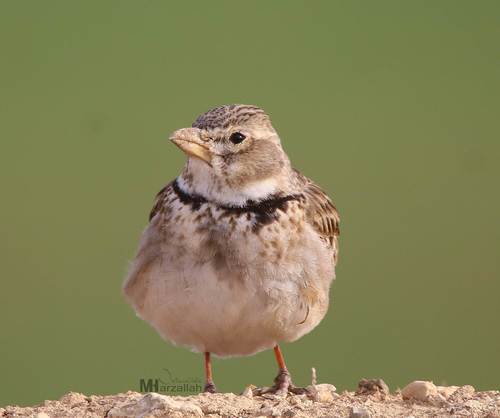
Calandra Lark (Melanocorypha calandra) Calandra Lark
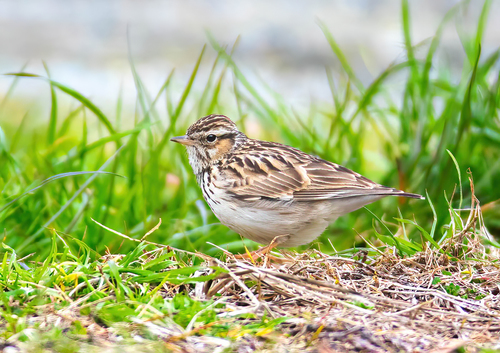
Woodlark (Lullula arborea) Woodlark

Media

Loading…

In short

The most reliable field mark between Calandra Lark and Woodlark is the wing and tail pattern visible in flight: Calandra Lark shows dark underwings and a short, white-edged tail, while Woodlark lacks strong white on the tail sides and has no white rear edge to the wings. Structurally, Calandra Lark is much heavier and bulkier, with broader wings and a stubbier tail, compared to the more delicate, shorter Woodlark. Perched, Woodlark's white supercilium meeting at the nape is distinctive, while Calandra Lark lacks this feature. Both species can be found in open habitats, but Woodlark is more closely associated with heathland and open woodland, whereas Calandra Lark prefers open country around the Mediterranean and eastwards. Vocalizations are also quite different, with Woodlark's melodious, repeated 'lu-lu-lu' song contrasting with Calandra Lark's less described voice.

Identification tips

  1. In flight, look for dark underwings and a short, white-edged tail on Calandra Lark; Woodlark lacks dark underwings and has only a white tip to the tail, with no white on the tail sides or rear wing edge. This is diagnostic for all ages.
  2. Size and bulk: Calandra Lark is much heavier and bulkier (59g) than Woodlark, which is small and delicate. If you see a large, thickset lark, favor Calandra.
  3. Wing shape: Both have short, broad wings, but Calandra's are proportionally broader and the bird appears more powerful in flight; Woodlark is more fluttery and agile.
  4. Tail shape and pattern: Calandra Lark's tail is short with white edges; Woodlark's tail is also short but only tipped with white, no white on the sides.
  5. Head pattern: Woodlark has a white supercilium meeting at the nape, forming a 'headband'—unique among European larks. Calandra Lark lacks this, with a less marked head.
  6. Crest: Woodlark's crest is small and usually inconspicuous; Calandra Lark's head is not described as crested.
  7. Plumage: Woodlark is brown above, pale below; Calandra Lark's plumage details are less described, but it lacks the Woodlark's strong head pattern.
  8. Song: If you hear a melodious, repeated 'lu-lu-lu' or 'toolooeet', it's Woodlark. Calandra Lark's song is not described here, so use this mark only to confirm Woodlark.
  9. Habitat: In open, treeless steppe or cultivated fields in the Mediterranean/eastern Europe, suspect Calandra Lark. In heathland, open pine clearings, or sandy areas with scattered trees, suspect Woodlark.
  10. Perched birds: Use the supercilium and overall size/bulk to separate them. Woodlark's white nape band is visible even at a distance.
  11. Flight style: Woodlark males perform a fluttering, circling song flight; Calandra Lark's flight is steadier and more powerful.
  12. Season and range: Both can be resident or migratory depending on location, but Woodlark is more widespread in western Europe, Calandra Lark more Mediterranean/eastern.
  13. Common pitfalls: Do not confuse Woodlark's white tail tip for the white tail edges of Calandra Lark; check the location of white on the tail carefully.
  14. Juvenile/immature birds: No specific upperwing or tail marks are described for young birds, so rely on the same field marks as adults.
  15. When in doubt: Prioritize flight views for underwing and tail pattern, and perched views for head pattern and size.

Size

Calandra Lark is significantly larger and heavier, with a body mass of about 59g [wikidata], making it a bulky, robust lark. Woodlark is much smaller, about 13.5–15 cm in length (roughly 20% shorter than a Skylark) [wikipedia], and is noticeably lighter and more delicate in build. In direct comparison, Calandra Lark appears broad-winged and thickset, while Woodlark is compact and slim.

Plumage

In flight, Calandra Lark of all ages shows short, broad wings with dark underwing coverts and a short tail edged with white—this white is most visible at the tail edges, not the sides, and the underwing darkness is a key feature [wikipedia]. Woodlark, by contrast, also has short, broad wings and a short tail, but the tail is only tipped with white, lacking white on the tail sides and rear edge of the wings. The upperparts of Woodlark are brown, and the underparts are pale, but the most distinctive mark is the white supercilium that meets at the nape, forming a striking 'headband' effect, which Calandra Lark lacks. Crest is small and usually inconspicuous in Woodlark, while Calandra Lark's head pattern is less defined. No age-specific upperwing or tail marks are described for either species, so these contrasts apply to all plumages.

Behaviour

Both species can be seen singing from the ground or a perch, but Woodlark males perform a fluttering, spiraling song flight, circling at a steady height, which is reminiscent of Skylark but with more fluttering. Calandra Lark's flight is not described in detail, but its broader wings and heavier build give it a more powerful, less fluttery flight. Both species may sing from exposed perches or the ground.

Habitat

Calandra Lark breeds in open, warm temperate country around the Mediterranean, Turkey, northern Iran, and southern Russia, favoring open, cultivated, or steppe-like habitats [wikipedia]. Woodlark is found across most of Europe, the Middle East, and western Asia, but is especially tied to heathland, open woodland, and clearings in pine forests, often preferring areas with scattered trees or saplings. Woodlark is more likely in sandy heaths and open pine areas, while Calandra Lark is more typical of open, treeless country.

Voice

Woodlark has a distinctive, melodious, warbling song, often described as a repeated 'lu-lu-lu' or 'toolooeet' phrase, delivered both in flight and from perches. Calandra Lark's song is not described in the provided notes, so vocalization is a strong separator only in favor of Woodlark when the song is heard.

Submit a better description

Use the same sections as the comparison. Your text is published immediately.

The most reliable field mark between Calandra Lark and Woodlark is the wing and tail pattern visible in flight: Calandra Lark shows dark underwings and a short, white-edged tail, while Woodlark lacks strong white on the tail sides and has no white rear edge to the wings. Structurally, Calandra Lark is much heavier and bulkier, with broader wings and a stubbier tail, compared to the more delicate, shorter Woodlark. Perched, Woodlark's white supercilium meeting at the nape is distinctive, while Calandra Lark lacks this feature. Both species can be found in open habitats, but Woodlark is more closely associated with heathland and open woodland, whereas Calandra Lark prefers open country around the Mediterranean and eastwards. Vocalizations are also quite different, with Woodlark's melodious, repeated 'lu-lu-lu' song contrasting with Calandra Lark's less described voice.

  1. In flight, look for dark underwings and a short, white-edged tail on Calandra Lark; Woodlark lacks dark underwings and has only a white tip to the tail, with no white on the tail sides or rear wing edge. This is diagnostic for all ages.
  2. Size and bulk: Calandra Lark is much heavier and bulkier (59g) than Woodlark, which is small and delicate. If you see a large, thickset lark, favor Calandra.
  3. Wing shape: Both have short, broad wings, but Calandra's are proportionally broader and the bird appears more powerful in flight; Woodlark is more fluttery and agile.
  4. Tail shape and pattern: Calandra Lark's tail is short with white edges; Woodlark's tail is also short but only tipped with white, no white on the sides.
  5. Head pattern: Woodlark has a white supercilium meeting at the nape, forming a 'headband'—unique among European larks. Calandra Lark lacks this, with a less marked head.
  6. Crest: Woodlark's crest is small and usually inconspicuous; Calandra Lark's head is not described as crested.
  7. Plumage: Woodlark is brown above, pale below; Calandra Lark's plumage details are less described, but it lacks the Woodlark's strong head pattern.
  8. Song: If you hear a melodious, repeated 'lu-lu-lu' or 'toolooeet', it's Woodlark. Calandra Lark's song is not described here, so use this mark only to confirm Woodlark.
  9. Habitat: In open, treeless steppe or cultivated fields in the Mediterranean/eastern Europe, suspect Calandra Lark. In heathland, open pine clearings, or sandy areas with scattered trees, suspect Woodlark.
  10. Perched birds: Use the supercilium and overall size/bulk to separate them. Woodlark's white nape band is visible even at a distance.
  11. Flight style: Woodlark males perform a fluttering, circling song flight; Calandra Lark's flight is steadier and more powerful.
  12. Season and range: Both can be resident or migratory depending on location, but Woodlark is more widespread in western Europe, Calandra Lark more Mediterranean/eastern.
  13. Common pitfalls: Do not confuse Woodlark's white tail tip for the white tail edges of Calandra Lark; check the location of white on the tail carefully.
  14. Juvenile/immature birds: No specific upperwing or tail marks are described for young birds, so rely on the same field marks as adults.
  15. When in doubt: Prioritize flight views for underwing and tail pattern, and perched views for head pattern and size.

Calandra Lark is significantly larger and heavier, with a body mass of about 59g [wikidata], making it a bulky, robust lark. Woodlark is much smaller, about 13.5–15 cm in length (roughly 20% shorter than a Skylark) [wikipedia], and is noticeably lighter and more delicate in build. In direct comparison, Calandra Lark appears broad-winged and thickset, while Woodlark is compact and slim.

In flight, Calandra Lark of all ages shows short, broad wings with dark underwing coverts and a short tail edged with white—this white is most visible at the tail edges, not the sides, and the underwing darkness is a key feature [wikipedia]. Woodlark, by contrast, also has short, broad wings and a short tail, but the tail is only tipped with white, lacking white on the tail sides and rear edge of the wings. The upperparts of Woodlark are brown, and the underparts are pale, but the most distinctive mark is the white supercilium that meets at the nape, forming a striking 'headband' effect, which Calandra Lark lacks. Crest is small and usually inconspicuous in Woodlark, while Calandra Lark's head pattern is less defined. No age-specific upperwing or tail marks are described for either species, so these contrasts apply to all plumages.

Both species can be seen singing from the ground or a perch, but Woodlark males perform a fluttering, spiraling song flight, circling at a steady height, which is reminiscent of Skylark but with more fluttering. Calandra Lark's flight is not described in detail, but its broader wings and heavier build give it a more powerful, less fluttery flight. Both species may sing from exposed perches or the ground.

Calandra Lark breeds in open, warm temperate country around the Mediterranean, Turkey, northern Iran, and southern Russia, favoring open, cultivated, or steppe-like habitats [wikipedia]. Woodlark is found across most of Europe, the Middle East, and western Asia, but is especially tied to heathland, open woodland, and clearings in pine forests, often preferring areas with scattered trees or saplings. Woodlark is more likely in sandy heaths and open pine areas, while Calandra Lark is more typical of open, treeless country.

Woodlark has a distinctive, melodious, warbling song, often described as a repeated 'lu-lu-lu' or 'toolooeet' phrase, delivered both in flight and from perches. Calandra Lark's song is not described in the provided notes, so vocalization is a strong separator only in favor of Woodlark when the song is heard.

Discard your changes?

You have unsaved edits. If you leave now, those changes will be lost.

Calandra Lark · Woodlark · My Tricky Birds