

Motmot

Buff-throated Saltator vs Black-headed Saltator

Saltator maximus versus Saltator atriceps

Play a quiz with Buff-throated Saltator and Black-headed Saltator
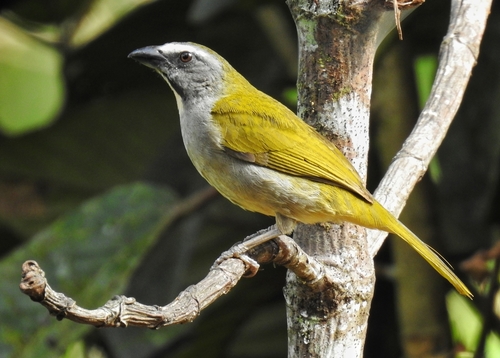
Buff-throated Saltator (Saltator maximus) Buff-throated Saltator
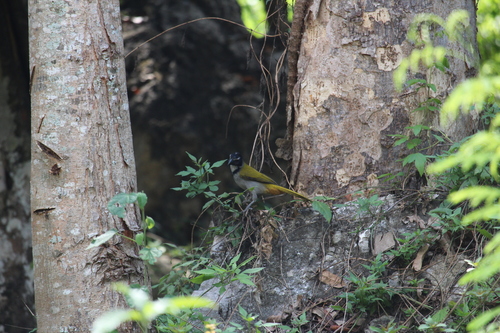
Black-headed Saltator (Saltator atriceps) Black-headed Saltator

Media

Loading…

In short

The most reliable field mark between Buff-throated and Black-headed Saltator is the color and pattern of the head and throat: Buff-throated shows a mostly gray head with a buffy lower throat bordered by black lines, while Black-headed has a strikingly black head with a white throat center surrounded by black. Black-headed Saltator is also much larger and bulkier, with a noticeably longer body and heavier build. Both species share olive-green upperparts, but the head and throat contrast is decisive at all ages. In perched or flight views, focus on the head pattern and overall size for a confident separation.

Identification tips

  1. Head and Throat Pattern (all ages): Buff-throated Saltator has a mostly gray head with a greenish-gray crown, short white supercilium, and a buffy lower throat bordered by black lines; chin and upper throat are white. Black-headed Saltator has a strikingly black head, thin supercilium (gray in front, white behind), and a white throat center surrounded by black. This is the single most reliable field mark.
  2. Size and Structure: Black-headed Saltator is much larger and bulkier (25.5–28 cm, 71–93 g) than Buff-throated (20 cm, 46–49 g). In direct comparison, Black-headed looks heavier with a more robust bill and longer body. When seen alone, judge size cautiously, but a very large saltator is likely Black-headed.
  3. Supercilium: Buff-throated's supercilium is short and white, not extending far behind the eye. Black-headed's supercilium is thin, starting gray in front and turning white behind the eye, reaching just past the eye.
  4. Upperparts: Both species have olive-green upperparts, but Black-headed's are brighter yellowish olive-green, especially on the tail. This is subtle and not always reliable in poor light.
  5. Facial Color Below Eye: Buff-throated has a mostly gray face, while Black-headed shows a gray area below the eye and cheek, but the black crown and face dominate the impression.
  6. Underparts: Buff-throated's breast, belly, and flanks are gray with buffy lower belly and undertail coverts. Black-headed has ash-gray underparts that pale toward the rear, with orange-ochraceous undertail coverts.
  7. Bill Color: Both have thick, blackish bills; bill color is not a useful separator.
  8. Legs and Feet: Both species have dark legs and feet; not a useful field mark.
  9. Sex and Age: Both sexes and all ages share the same plumage within each species; no sexual dimorphism or age-specific marks are described.
  10. Subspecies Variation: Some subspecies of both species show minor differences (e.g., throat patch size, supercilium length), but the main head/throat pattern remains diagnostic.
  11. Habitat and Range: If seen south of Panama, it is Buff-throated Saltator. In Mexico to Panama, both occur; do not use habitat alone for separation.
  12. Vocalizations: If you hear a long, varied caroling or electric chatter, it may indicate Buff-throated Saltator, but absence of song is not diagnostic.
  13. Pitfalls: In poor light, the olive-green upperparts and grayish underparts may look similar. Always focus on the head and throat pattern for a reliable ID.
  14. Flight Views: No distinctive wing or flight pattern differences are described; rely on head and size even in flight.
  15. Context: When in doubt, prioritize the combination of head/throat pattern and overall size for separation, as these are consistent across all ages and seasons.

Size

Black-headed Saltator is substantially larger, measuring 25.5–28 cm in length and weighing 71–93 g, compared to Buff-throated Saltator's 20 cm length and 46–49 g weight. In the field, Black-headed appears bulkier and longer-bodied, with a heavier bill and a more robust presence. Buff-throated is noticeably smaller and more slender. This size difference is usually apparent when both species are seen in the same area, but can be harder to judge in isolation.

Plumage

No age-specific wing or flight pattern differences are described for either species; both have similar olive-green upperparts and lack distinctive juvenile upperwing marks. The key contrast is in the head and throat: Buff-throated Saltator (all ages, sexes) has a mostly gray head with a greenish-gray crown, a short white supercilium, and a buffy lower throat bordered by black lines; the chin and upper throat are white. Black-headed Saltator (all ages, sexes) has a mostly black head with a thin supercilium (gray in front, white behind), a white throat center surrounded by black, and a gray face below the eye. The underparts of Buff-throated are gray with buffy undertail coverts, while Black-headed shows ash-gray underparts paling to the rear and orange-ochraceous undertail coverts. Subspecies variation exists in both, but the head/throat pattern remains the most consistent field mark.

Behaviour

Both species are typically seen perched in mid-level to canopy vegetation, often foraging in pairs or small groups. No strong behavioral differences are described in the available notes. Both can be active and vocal, but Black-headed Saltator may appear more imposing due to its larger size and heavier movements.

Habitat

Buff-throated Saltator has a much wider range, occurring from Mexico through Central America (except El Salvador) and into most of South America (excluding the southernmost countries). Black-headed Saltator is restricted to Mexico through Panama. Both species use similar habitats: forest edges, second growth, thickets, and gardens. In overlap zones (Mexico to Panama), both may be found in similar settings, so habitat alone is not a reliable separator.

Voice

Both species are vocal, but only Buff-throated Saltator's song and calls are described in detail: a varied series of electric chatters, mellow caroling, and high squeaks followed by warbles. No vocal description is provided for Black-headed Saltator in the available notes, so voice is not a reliable separator unless Buff-throated's distinctive song is recognized.

Submit a better description

Use the same sections as the comparison. Your text is published immediately.

The most reliable field mark between Buff-throated and Black-headed Saltator is the color and pattern of the head and throat: Buff-throated shows a mostly gray head with a buffy lower throat bordered by black lines, while Black-headed has a strikingly black head with a white throat center surrounded by black. Black-headed Saltator is also much larger and bulkier, with a noticeably longer body and heavier build. Both species share olive-green upperparts, but the head and throat contrast is decisive at all ages. In perched or flight views, focus on the head pattern and overall size for a confident separation.

  1. Head and Throat Pattern (all ages): Buff-throated Saltator has a mostly gray head with a greenish-gray crown, short white supercilium, and a buffy lower throat bordered by black lines; chin and upper throat are white. Black-headed Saltator has a strikingly black head, thin supercilium (gray in front, white behind), and a white throat center surrounded by black. This is the single most reliable field mark.
  2. Size and Structure: Black-headed Saltator is much larger and bulkier (25.5–28 cm, 71–93 g) than Buff-throated (20 cm, 46–49 g). In direct comparison, Black-headed looks heavier with a more robust bill and longer body. When seen alone, judge size cautiously, but a very large saltator is likely Black-headed.
  3. Supercilium: Buff-throated's supercilium is short and white, not extending far behind the eye. Black-headed's supercilium is thin, starting gray in front and turning white behind the eye, reaching just past the eye.
  4. Upperparts: Both species have olive-green upperparts, but Black-headed's are brighter yellowish olive-green, especially on the tail. This is subtle and not always reliable in poor light.
  5. Facial Color Below Eye: Buff-throated has a mostly gray face, while Black-headed shows a gray area below the eye and cheek, but the black crown and face dominate the impression.
  6. Underparts: Buff-throated's breast, belly, and flanks are gray with buffy lower belly and undertail coverts. Black-headed has ash-gray underparts that pale toward the rear, with orange-ochraceous undertail coverts.
  7. Bill Color: Both have thick, blackish bills; bill color is not a useful separator.
  8. Legs and Feet: Both species have dark legs and feet; not a useful field mark.
  9. Sex and Age: Both sexes and all ages share the same plumage within each species; no sexual dimorphism or age-specific marks are described.
  10. Subspecies Variation: Some subspecies of both species show minor differences (e.g., throat patch size, supercilium length), but the main head/throat pattern remains diagnostic.
  11. Habitat and Range: If seen south of Panama, it is Buff-throated Saltator. In Mexico to Panama, both occur; do not use habitat alone for separation.
  12. Vocalizations: If you hear a long, varied caroling or electric chatter, it may indicate Buff-throated Saltator, but absence of song is not diagnostic.
  13. Pitfalls: In poor light, the olive-green upperparts and grayish underparts may look similar. Always focus on the head and throat pattern for a reliable ID.
  14. Flight Views: No distinctive wing or flight pattern differences are described; rely on head and size even in flight.
  15. Context: When in doubt, prioritize the combination of head/throat pattern and overall size for separation, as these are consistent across all ages and seasons.

Black-headed Saltator is substantially larger, measuring 25.5–28 cm in length and weighing 71–93 g, compared to Buff-throated Saltator's 20 cm length and 46–49 g weight. In the field, Black-headed appears bulkier and longer-bodied, with a heavier bill and a more robust presence. Buff-throated is noticeably smaller and more slender. This size difference is usually apparent when both species are seen in the same area, but can be harder to judge in isolation.

No age-specific wing or flight pattern differences are described for either species; both have similar olive-green upperparts and lack distinctive juvenile upperwing marks. The key contrast is in the head and throat: Buff-throated Saltator (all ages, sexes) has a mostly gray head with a greenish-gray crown, a short white supercilium, and a buffy lower throat bordered by black lines; the chin and upper throat are white. Black-headed Saltator (all ages, sexes) has a mostly black head with a thin supercilium (gray in front, white behind), a white throat center surrounded by black, and a gray face below the eye. The underparts of Buff-throated are gray with buffy undertail coverts, while Black-headed shows ash-gray underparts paling to the rear and orange-ochraceous undertail coverts. Subspecies variation exists in both, but the head/throat pattern remains the most consistent field mark.

Both species are typically seen perched in mid-level to canopy vegetation, often foraging in pairs or small groups. No strong behavioral differences are described in the available notes. Both can be active and vocal, but Black-headed Saltator may appear more imposing due to its larger size and heavier movements.

Buff-throated Saltator has a much wider range, occurring from Mexico through Central America (except El Salvador) and into most of South America (excluding the southernmost countries). Black-headed Saltator is restricted to Mexico through Panama. Both species use similar habitats: forest edges, second growth, thickets, and gardens. In overlap zones (Mexico to Panama), both may be found in similar settings, so habitat alone is not a reliable separator.

Both species are vocal, but only Buff-throated Saltator's song and calls are described in detail: a varied series of electric chatters, mellow caroling, and high squeaks followed by warbles. No vocal description is provided for Black-headed Saltator in the available notes, so voice is not a reliable separator unless Buff-throated's distinctive song is recognized.

Discard your changes?

You have unsaved edits. If you leave now, those changes will be lost.

Buff-throated Saltator · Black-headed Saltator · My Tricky Birds