
Motmot

Brushland Tinamou vs Andean Tinamou

Nothoprocta cinerascens versus Nothoprocta pentlandii

Play a quiz with Brushland Tinamou and Andean Tinamou
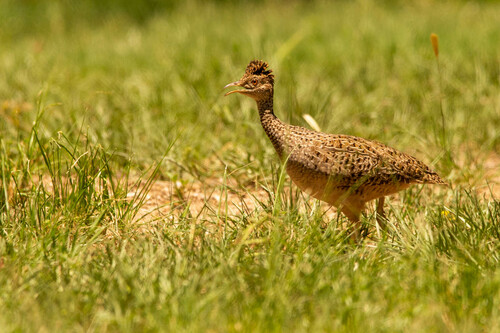
Brushland Tinamou (Nothoprocta cinerascens) Brushland Tinamou
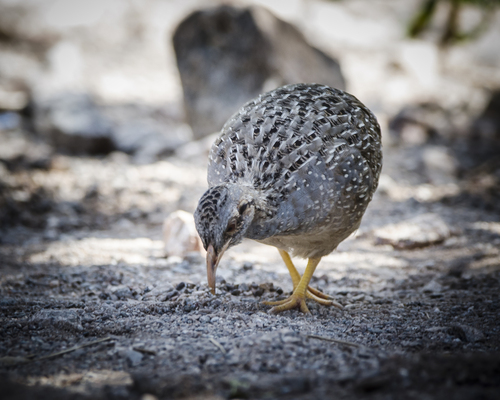
Andean Tinamou (Nothoprocta pentlandii) Andean Tinamou

Media

Loading…

In short

The most reliable field mark between Brushland Tinamou and Andean Tinamou is size: Brushland is substantially heavier and bulkier, while Andean is noticeably smaller and lighter. Plumage differences are subtle but present—Andean Tinamou shows a black crown, grey breast with white/buff spots, and yellow legs, while Brushland Tinamou lacks these strong contrasts. Both species inhabit high-altitude shrubland, but Andean Tinamou ranges higher into the Andes and can be found further north. In the field, focus first on overall bulk and leg color, then look for crown and breast pattern if views allow. Age-specific flight or wing pattern marks are not described for either species, so rely on structure and plumage details for separation.

Identification tips

  1. Size is key: Brushland Tinamou is much heavier and bulkier than Andean Tinamou. If the bird appears notably round and heavy for its length, favor Brushland.
  2. Leg color: Andean Tinamou has yellow legs, which are visible in good views and are not described for Brushland Tinamou. Use this mark when the legs are clearly seen.
  3. Crown coloration: Only Andean Tinamou has a black crown. If you see a distinct dark crown, it's Andean.
  4. Breast pattern: Andean Tinamou shows a grey breast with white or buff spots, while Brushland lacks this strong spotting. Look for this in perched birds or those seen at close range.
  5. Upperparts: Both species have brownish upperparts, but Andean Tinamou's are more olive-brown and barred with black and white. Brushland is more uniformly earth-toned.
  6. Head and throat: Andean Tinamou's sides of head and throat are mottled grey, a subtle but useful mark if the head is clearly visible.
  7. Belly color: Andean Tinamou has a buff or whitish belly, while Brushland's is less distinctly marked.
  8. Habitat context: Both occur in shrubland, but if you are at higher elevations (above 3,000 m) or in the Andes north of central Argentina, Andean is more likely. In southern South America at lower elevations, Brushland is favored.
  9. No age-specific flight marks: Neither species is described as having distinctive juvenile or immature wing or flight patterns, so do not rely on these for separation.
  10. Behavior: Both are secretive and ground-dwelling; behavior is not a reliable separator.
  11. Voice: No diagnostic vocal differences are described in the sources; do not rely on voice for separation.
  12. Direct comparison: If you have both species in the same area (rare but possible in overlap zones), the size and leg color difference should stand out.
  13. Plumage pitfalls: Both species are cryptic and can appear similar at a distance or in poor light. Always try for a clear view of the head and legs to confirm ID.
  14. Sex and season: No sexual dimorphism or seasonal plumage change is described for either species; these marks are reliable year-round and for both sexes.
  15. Summary: In practice, use a combination of size, leg color, crown, and breast pattern for the most reliable field separation.

Size

Brushland Tinamou is much heavier, averaging 526 g, while Andean Tinamou averages only 293 g [wikidata]. This difference is substantial and should be apparent in direct comparison: Brushland appears bulkier and rounder, while Andean is more compact. Both are similar in length (Andean Tinamou about 27 cm), but mass is the clearest size cue. In the field, a tinamou that looks particularly hefty for its length is likely Brushland.

Plumage

No age-specific wing or flight pattern marks are reported for either species, so focus on adult plumage. Andean Tinamou is distinctive for its black crown, greyish-brown to olive-brown upperparts with black and white barring, and a grey breast with white or buff spots. Its belly is buff or whitish, and the sides of the head and throat are mottled grey. The legs are yellow, providing a useful field mark. Brushland Tinamou lacks the black crown and strong breast spotting; its overall coloration is less contrasting, and leg color is not described as yellow. Both species have generally cryptic, earth-toned plumage, but Andean Tinamou's combination of crown, breast, and leg color is unique among these two.

Behaviour

Both species are ground-dwelling and secretive, typical of tinamous, and are most often seen walking or running through shrubland. No unique behavioral differences are noted in the sources. Both can flush suddenly when approached, flying short distances with rapid wingbeats. In flight, size difference may be apparent, but no specific flight style or jizz differences are described.

Habitat

Both species favor high-altitude dry shrubland. Brushland Tinamou is found in subtropical and tropical regions of southern South America, while Andean Tinamou ranges from southern Ecuador to central Chile and into the Sierras de Córdoba in Argentina, at altitudes from 800 to 4,100 m. Andean Tinamou's range is broader in latitude and elevation, especially higher into the Andes. If seen above 3,000 m or in the northern Andes, Andean is more likely; in southern lowland shrubland, Brushland is favored.

Submit a better description

Use the same sections as the comparison. Your text is published immediately.

The most reliable field mark between Brushland Tinamou and Andean Tinamou is size: Brushland is substantially heavier and bulkier, while Andean is noticeably smaller and lighter. Plumage differences are subtle but present—Andean Tinamou shows a black crown, grey breast with white/buff spots, and yellow legs, while Brushland Tinamou lacks these strong contrasts. Both species inhabit high-altitude shrubland, but Andean Tinamou ranges higher into the Andes and can be found further north. In the field, focus first on overall bulk and leg color, then look for crown and breast pattern if views allow. Age-specific flight or wing pattern marks are not described for either species, so rely on structure and plumage details for separation.

  1. Size is key: Brushland Tinamou is much heavier and bulkier than Andean Tinamou. If the bird appears notably round and heavy for its length, favor Brushland.
  2. Leg color: Andean Tinamou has yellow legs, which are visible in good views and are not described for Brushland Tinamou. Use this mark when the legs are clearly seen.
  3. Crown coloration: Only Andean Tinamou has a black crown. If you see a distinct dark crown, it's Andean.
  4. Breast pattern: Andean Tinamou shows a grey breast with white or buff spots, while Brushland lacks this strong spotting. Look for this in perched birds or those seen at close range.
  5. Upperparts: Both species have brownish upperparts, but Andean Tinamou's are more olive-brown and barred with black and white. Brushland is more uniformly earth-toned.
  6. Head and throat: Andean Tinamou's sides of head and throat are mottled grey, a subtle but useful mark if the head is clearly visible.
  7. Belly color: Andean Tinamou has a buff or whitish belly, while Brushland's is less distinctly marked.
  8. Habitat context: Both occur in shrubland, but if you are at higher elevations (above 3,000 m) or in the Andes north of central Argentina, Andean is more likely. In southern South America at lower elevations, Brushland is favored.
  9. No age-specific flight marks: Neither species is described as having distinctive juvenile or immature wing or flight patterns, so do not rely on these for separation.
  10. Behavior: Both are secretive and ground-dwelling; behavior is not a reliable separator.
  11. Voice: No diagnostic vocal differences are described in the sources; do not rely on voice for separation.
  12. Direct comparison: If you have both species in the same area (rare but possible in overlap zones), the size and leg color difference should stand out.
  13. Plumage pitfalls: Both species are cryptic and can appear similar at a distance or in poor light. Always try for a clear view of the head and legs to confirm ID.
  14. Sex and season: No sexual dimorphism or seasonal plumage change is described for either species; these marks are reliable year-round and for both sexes.
  15. Summary: In practice, use a combination of size, leg color, crown, and breast pattern for the most reliable field separation.

Brushland Tinamou is much heavier, averaging 526 g, while Andean Tinamou averages only 293 g [wikidata]. This difference is substantial and should be apparent in direct comparison: Brushland appears bulkier and rounder, while Andean is more compact. Both are similar in length (Andean Tinamou about 27 cm), but mass is the clearest size cue. In the field, a tinamou that looks particularly hefty for its length is likely Brushland.

No age-specific wing or flight pattern marks are reported for either species, so focus on adult plumage. Andean Tinamou is distinctive for its black crown, greyish-brown to olive-brown upperparts with black and white barring, and a grey breast with white or buff spots. Its belly is buff or whitish, and the sides of the head and throat are mottled grey. The legs are yellow, providing a useful field mark. Brushland Tinamou lacks the black crown and strong breast spotting; its overall coloration is less contrasting, and leg color is not described as yellow. Both species have generally cryptic, earth-toned plumage, but Andean Tinamou's combination of crown, breast, and leg color is unique among these two.

Both species are ground-dwelling and secretive, typical of tinamous, and are most often seen walking or running through shrubland. No unique behavioral differences are noted in the sources. Both can flush suddenly when approached, flying short distances with rapid wingbeats. In flight, size difference may be apparent, but no specific flight style or jizz differences are described.

Both species favor high-altitude dry shrubland. Brushland Tinamou is found in subtropical and tropical regions of southern South America, while Andean Tinamou ranges from southern Ecuador to central Chile and into the Sierras de Córdoba in Argentina, at altitudes from 800 to 4,100 m. Andean Tinamou's range is broader in latitude and elevation, especially higher into the Andes. If seen above 3,000 m or in the northern Andes, Andean is more likely; in southern lowland shrubland, Brushland is favored.

Discard your changes?

You have unsaved edits. If you leave now, those changes will be lost.

Brushland Tinamou · Andean Tinamou · My Tricky Birds