

Motmot

Brown-necked Raven vs Common Raven

Corvus ruficollis versus Corvus corax

Play a quiz with Brown-necked Raven and Common Raven
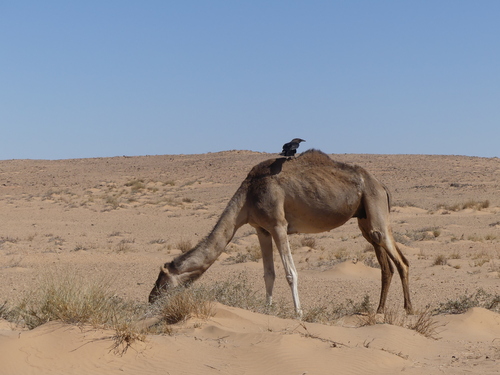
Brown-necked Raven (Corvus ruficollis) Brown-necked Raven
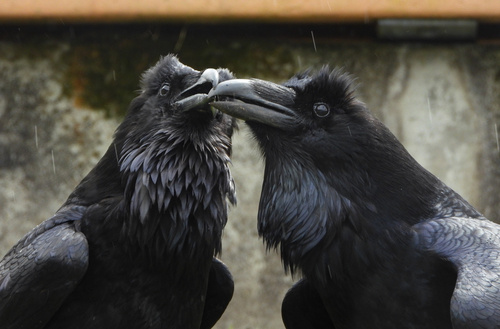
Common Raven (Corvus corax) Common Raven

Media

Loading…

In short

The most reliable field mark between Brown-necked Raven and Common Raven is the combination of bill size and throat feathering: Common Raven has a distinctly larger, heavier bill and much shaggier throat feathers, while Brown-necked Raven's bill is slimmer and its throat less shaggy. Brown-necked Raven shows a brownish-black head and throat (often appearing browner as feathers fade), while Common Raven is all-black with a glossier, iridescent sheen. In flight, Common Raven's tail is longer and more wedge-shaped, and its wings are broader and less pointed than Brown-necked Raven's. Both species can be very similar in size and general jizz, but careful attention to these structural and plumage details will usually allow separation, especially at close range or in good light.

Identification tips

  1. Bill size and shape: Common Raven has a much larger, deeper, and heavier bill than Brown-necked Raven. If the bill looks massive and strongly curved, suspect Common Raven; if slimmer and less deep, Brown-necked Raven is more likely. This is reliable in adults and most immatures.
  2. Throat feathering ('beard'): Common Raven has very shaggy, elongated throat feathers, especially obvious when calling or in side profile. Brown-necked Raven's throat is less shaggy and appears smoother. This is a strong field mark at all ages.
  3. Head and throat color: Brown-necked Raven shows a brownish-black head and throat, often appearing distinctly brownish as feathers fade. Common Raven's head and throat are always black and never contrast with the body.
  4. Overall plumage gloss: Both species are glossy, but Common Raven is more consistently iridescent black (purple, blue, or greenish), while Brown-necked Raven can look browner overall, especially when worn.
  5. Tail shape in flight: Common Raven's tail is long and wedge-shaped, especially obvious when fanned in flight or soaring. Brown-necked Raven's tail is shorter and less wedge-shaped. This is best seen in flight or when the bird is displaying.
  6. Wing shape: Brown-necked Raven has slightly more pointed wings compared to the broader, more rounded wings of Common Raven. This can be subtle, but in direct comparison or with experience, it helps.
  7. Size and bulk: Common Raven is larger and heavier, with a more robust build. Brown-necked Raven is still large but slimmer and less bulky. Use this only with experience or when birds are side-by-side.
  8. Juvenile features: Juvenile Common Ravens are duller, with a blue-grey iris and pinkish gape, but otherwise similar to adults. No distinctive juvenile marks are described for Brown-necked Raven, so age is less useful for separation.
  9. Voice: Listen for the deeper, more resonant croak of Common Raven versus the higher-pitched, harsher 'karr-karr-karr' of Brown-necked Raven. Calls can overlap, so use with caution, especially in areas of range overlap.
  10. Plumage wear: Brown-necked Raven often looks browner as feathers fade, especially on the head and throat, while Common Raven remains blacker overall.
  11. Legs and feet: Both species have black legs and feet; this is not useful for separation.
  12. Behavior in flight: Common Raven soars with less wing flapping and appears more stable in the air, while Brown-necked Raven may flap more and appear less robust.
  13. Habitat and context: Not diagnostic based on available notes; both can occur in similar environments where their ranges overlap.
  14. Sex and season: No sexual dimorphism or strong seasonal differences are described for either species in the notes provided.
  15. Pitfalls: Beware of worn Brown-necked Ravens appearing very brown and potentially being mistaken for a faded Common Raven, but the brownish head and throat, slimmer bill, and less shaggy throat should still separate them.

Size

Common Raven is the larger of the two, with an average body length of about 66 cm and a mass close to 950 g, while Brown-necked Raven is slightly smaller at 52–56 cm (mass not provided, but consistently less than Common Raven). Both are much larger than crows, but Common Raven stands out for its bulk, longer wedge-shaped tail, and especially its massive bill. Brown-necked Raven is still a large bird, but appears slimmer overall, with a less deep bill and slightly more pointed wings.

Plumage

No age-specific upperwing or flight pattern differences are described for these species, so focus is on adult and general plumage. Brown-necked Raven is named for its brownish-black head and throat, which can appear distinctly brown, especially as feathers fade with wear; this effect is often visible before molt. The rest of its plumage is black with a purple or blue gloss, but the brownish cast is often a giveaway. Common Raven is all-black, with a strong iridescent sheen (purple, blue, or greenish) and no brownish tones except possibly in worn juveniles, but even then, the head and throat do not contrast with the body. Common Raven also has much shaggier throat feathers (the 'beard') and longer bristles above the bill, while Brown-necked Raven's throat is less shaggy. Juvenile Common Ravens are duller overall, with a blue-grey iris and pinkish gape, but otherwise similar to adults. Both species have black legs, feet, and bill.

Behaviour

Both species are highly intelligent and agile in flight, but Common Raven is noted for its strong, stable soaring with less wing flapping, and its long wedge-shaped tail is especially visible in flight. Brown-necked Raven also soars but tends to have more pointed wings and a slightly less robust flight style. Both can be seen alone or in pairs, and both are capable of vocal mimicry (though this is mostly noted in captivity). Subadult Common Ravens may roost in groups but forage alone; no such social detail is noted for Brown-necked Raven.

Voice

Both species have deep, croaking calls, but Common Raven's voice is deeper and more resonant, while Brown-necked Raven's calls are higher-pitched and include a harsh 'karr-karr-karr' and a 'kuerk-kuerk' in flight. Where their ranges overlap, the calls can be confusing, but Common Raven's croak is generally more sonorous. Both species are capable of a variety of calls and some mimicry, but these are not usually diagnostic in the field.

Submit a better description

Use the same sections as the comparison. Your text is published immediately.

The most reliable field mark between Brown-necked Raven and Common Raven is the combination of bill size and throat feathering: Common Raven has a distinctly larger, heavier bill and much shaggier throat feathers, while Brown-necked Raven's bill is slimmer and its throat less shaggy. Brown-necked Raven shows a brownish-black head and throat (often appearing browner as feathers fade), while Common Raven is all-black with a glossier, iridescent sheen. In flight, Common Raven's tail is longer and more wedge-shaped, and its wings are broader and less pointed than Brown-necked Raven's. Both species can be very similar in size and general jizz, but careful attention to these structural and plumage details will usually allow separation, especially at close range or in good light.

  1. Bill size and shape: Common Raven has a much larger, deeper, and heavier bill than Brown-necked Raven. If the bill looks massive and strongly curved, suspect Common Raven; if slimmer and less deep, Brown-necked Raven is more likely. This is reliable in adults and most immatures.
  2. Throat feathering ('beard'): Common Raven has very shaggy, elongated throat feathers, especially obvious when calling or in side profile. Brown-necked Raven's throat is less shaggy and appears smoother. This is a strong field mark at all ages.
  3. Head and throat color: Brown-necked Raven shows a brownish-black head and throat, often appearing distinctly brownish as feathers fade. Common Raven's head and throat are always black and never contrast with the body.
  4. Overall plumage gloss: Both species are glossy, but Common Raven is more consistently iridescent black (purple, blue, or greenish), while Brown-necked Raven can look browner overall, especially when worn.
  5. Tail shape in flight: Common Raven's tail is long and wedge-shaped, especially obvious when fanned in flight or soaring. Brown-necked Raven's tail is shorter and less wedge-shaped. This is best seen in flight or when the bird is displaying.
  6. Wing shape: Brown-necked Raven has slightly more pointed wings compared to the broader, more rounded wings of Common Raven. This can be subtle, but in direct comparison or with experience, it helps.
  7. Size and bulk: Common Raven is larger and heavier, with a more robust build. Brown-necked Raven is still large but slimmer and less bulky. Use this only with experience or when birds are side-by-side.
  8. Juvenile features: Juvenile Common Ravens are duller, with a blue-grey iris and pinkish gape, but otherwise similar to adults. No distinctive juvenile marks are described for Brown-necked Raven, so age is less useful for separation.
  9. Voice: Listen for the deeper, more resonant croak of Common Raven versus the higher-pitched, harsher 'karr-karr-karr' of Brown-necked Raven. Calls can overlap, so use with caution, especially in areas of range overlap.
  10. Plumage wear: Brown-necked Raven often looks browner as feathers fade, especially on the head and throat, while Common Raven remains blacker overall.
  11. Legs and feet: Both species have black legs and feet; this is not useful for separation.
  12. Behavior in flight: Common Raven soars with less wing flapping and appears more stable in the air, while Brown-necked Raven may flap more and appear less robust.
  13. Habitat and context: Not diagnostic based on available notes; both can occur in similar environments where their ranges overlap.
  14. Sex and season: No sexual dimorphism or strong seasonal differences are described for either species in the notes provided.
  15. Pitfalls: Beware of worn Brown-necked Ravens appearing very brown and potentially being mistaken for a faded Common Raven, but the brownish head and throat, slimmer bill, and less shaggy throat should still separate them.

Common Raven is the larger of the two, with an average body length of about 66 cm and a mass close to 950 g, while Brown-necked Raven is slightly smaller at 52–56 cm (mass not provided, but consistently less than Common Raven). Both are much larger than crows, but Common Raven stands out for its bulk, longer wedge-shaped tail, and especially its massive bill. Brown-necked Raven is still a large bird, but appears slimmer overall, with a less deep bill and slightly more pointed wings.

No age-specific upperwing or flight pattern differences are described for these species, so focus is on adult and general plumage. Brown-necked Raven is named for its brownish-black head and throat, which can appear distinctly brown, especially as feathers fade with wear; this effect is often visible before molt. The rest of its plumage is black with a purple or blue gloss, but the brownish cast is often a giveaway. Common Raven is all-black, with a strong iridescent sheen (purple, blue, or greenish) and no brownish tones except possibly in worn juveniles, but even then, the head and throat do not contrast with the body. Common Raven also has much shaggier throat feathers (the 'beard') and longer bristles above the bill, while Brown-necked Raven's throat is less shaggy. Juvenile Common Ravens are duller overall, with a blue-grey iris and pinkish gape, but otherwise similar to adults. Both species have black legs, feet, and bill.

Both species are highly intelligent and agile in flight, but Common Raven is noted for its strong, stable soaring with less wing flapping, and its long wedge-shaped tail is especially visible in flight. Brown-necked Raven also soars but tends to have more pointed wings and a slightly less robust flight style. Both can be seen alone or in pairs, and both are capable of vocal mimicry (though this is mostly noted in captivity). Subadult Common Ravens may roost in groups but forage alone; no such social detail is noted for Brown-necked Raven.

Both species have deep, croaking calls, but Common Raven's voice is deeper and more resonant, while Brown-necked Raven's calls are higher-pitched and include a harsh 'karr-karr-karr' and a 'kuerk-kuerk' in flight. Where their ranges overlap, the calls can be confusing, but Common Raven's croak is generally more sonorous. Both species are capable of a variety of calls and some mimicry, but these are not usually diagnostic in the field.

Discard your changes?

You have unsaved edits. If you leave now, those changes will be lost.

Brown-necked Raven · Common Raven · My Tricky Birds