

Brent Goose vs American Coot
Branta bernicla versus Fulica americana
Play a quiz with Brent Goose and American Coot
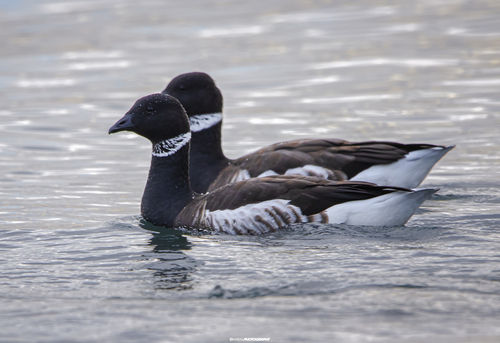 Brent Goose
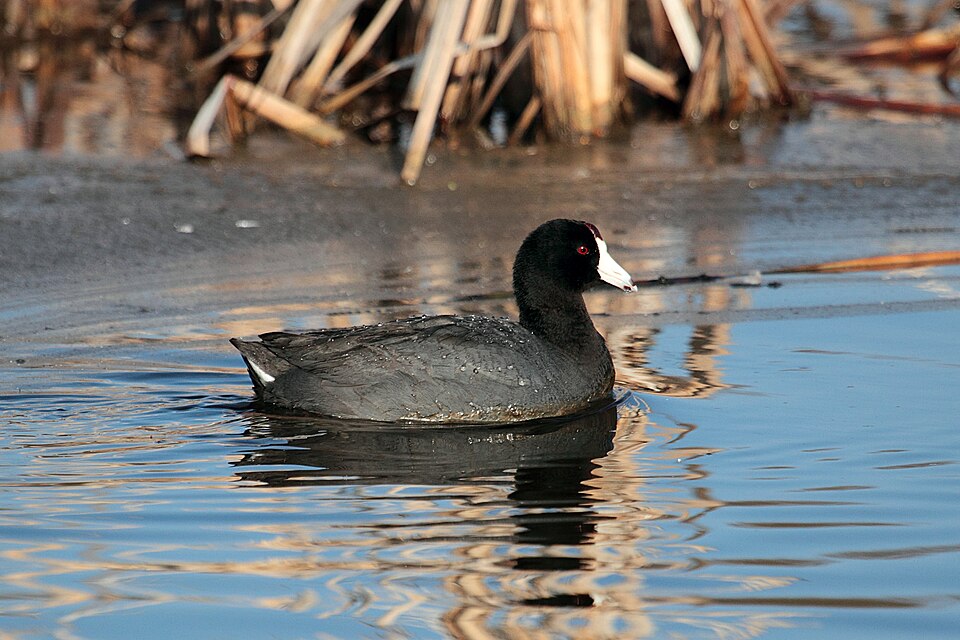 American Coot
In short
The most reliable way to separate Brent Goose from American Coot is by overall structure and bill: Brent Goose is a compact, short-billed goose with a white undertail and very short black tail, while American Coot is a smaller, rail-like waterbird with a distinctive white bill and forehead shield. In flight, Brent Goose shows a white rump and very short tail, whereas American Coot lacks any white in the tail and has a uniform dark body. Juvenile coots are duller and browner but never show the white neck patches or goose-like proportions of Brent Goose. Both species may be found on water in winter, but their shape, bill, and plumage are always diagnostic.
Identification tips
- Bill shape and color: Brent Goose has a short, stubby black bill; American Coot has a thick, white bill with a white frontal shield and often a reddish-brown spot. This is the single most obvious mark at close range.
- Neck and head: Brent Goose has a black head and neck with a small white patch on the side of the neck (all ages/subspecies), never shown by coot. Coot's head and neck are dark gray to black but lack any white patches.
- Tail and undertail: Brent Goose has a pure white undertail and the shortest black tail of any goose, giving a compact rear end. American Coot has a dark tail with no white, and the undertail is not contrasting.
- Body shape: Brent Goose is compact but still goose-shaped, with a rounded body, relatively long neck, and upright stance. American Coot is more chicken- or rail-like, with a shorter neck, more horizontal posture, and a smaller, rounder body.
- Legs and feet: Coots have distinctive greenish legs and large, lobed toes (not webbed), visible when walking or swimming. Brent Goose has dark legs and webbed feet, rarely seen unless close.
- Flight silhouette: Brent Goose in flight shows a white rump, very short tail, and a compact, goose-like shape. American Coot flies with legs trailing, no white in the tail/rump, and a more rounded, rail-like body.
- Juvenile plumage: Juvenile coots are dull olive-brown and gray, lacking any white neck patches or contrasting belly. Juvenile Brent Geese look like duller adults, with the same neck patch and belly pattern as their subspecies.
- Plumage variation: Brent Goose subspecies differ in belly color: dark-bellied are uniformly dark, pale-bellied have a much paler belly, and black brant are sharply black and white with a prominent white flank patch. Coots do not show this variation.
- Habitat context: Brent Goose is almost always coastal in winter; American Coot is almost always on freshwater. If you see a bird on a tidal flat, Brent Goose is likely; on a city pond, it's almost certainly a coot.
- Behavior on water: Brent Goose floats high and moves with a goose's grace; American Coot sits lower, often bobs its head while swimming, and dives for food.
- Group size: Brent Goose is usually in flocks, sometimes large; American Coot is often solitary or in small loose groups.
- Vocalization: Not diagnostic with the provided notes, but Brent Goose gives soft, musical honks; American Coot gives sharp, croaking or grating calls.
- Season and range: Brent Goose is a winter visitor to temperate coasts; American Coot is resident or migratory on freshwater across North America. Out of range or season, check carefully.
- Sex differences: Both species are similar between sexes; size is not a reliable field mark for separation.
- Common pitfalls: At a distance, a coot's dark body and pale bill can look like a goose's neck patch, but the bill is always white and the body never shows a white undertail or rump. Juvenile coots are never as pale-bellied as pale-bellied Brent Goose.
Size
Brent Goose is significantly larger, measuring 55–66 cm in length with a wingspan of 106–121 cm and weighing 0.88–2.2 kg [wikipedia]. American Coot is much smaller, at 34–43 cm long, wingspan 58–71 cm, and mass 0.43–0.85 kg [wikipedia]. Even at a distance, Brent Goose appears bulkier and more robust, while American Coot is more compact and chicken-like.
Plumage
- Juvenile/immature birds: Juvenile American Coots are olive-brown on the crown and gray-bodied, lacking any white neck patches or contrasting belly. Juvenile Brent Geese resemble adults of their respective subspecies, with the same dark or pale belly and white neck patches, but may be slightly duller overall.
- Adults: Brent Goose (all subspecies) shows a black head and neck with a small white patch on the side of the neck, a pure white undertail, and a very short black tail. The belly color varies by subspecies: dark-bellied birds are uniformly dark, pale-bellied birds have a much paler belly, and black brant are sharply black and white with a prominent white flank patch. American Coot adults are dark slate-gray to black overall, with a white bill and frontal shield (often with a reddish-brown spot), and no neck patches or white on the tail. In flight, Brent Goose shows a white rump and very short tail, while American Coot has a uniform dark upperwing and body, with no white in the tail or rump.
Behaviour
Brent Goose is typically seen in flocks, often grazing on coastal grasslands or floating on the sea, moving with a waddling gait on land. In flight, it shows strong, direct flight with rapid wingbeats, often in loose lines or groups. American Coot is much more likely to be seen individually or in small groups, swimming on freshwater ponds or marshes, diving and picking at vegetation. On land, coots walk with a hunched, chicken-like posture and often flick their heads as they swim. In flight, coots are labored and rarely fly far unless flushed or migrating, with legs trailing behind and no flocking formations like geese.
Habitat
Brent Goose is almost exclusively coastal in winter, favoring estuaries, saltmarshes, and tidal flats, rarely venturing far inland except during migration. American Coot is found on freshwater lakes, ponds, and marshes, sometimes on brackish water in winter, but is rarely seen on open sea or tidal flats. If you see a bird on a saltmarsh or tidal estuary, Brent Goose is far more likely; on a freshwater pond or marsh, American Coot is expected.