
Booted Warbler vs Eastern Olivaceous Warbler
Iduna caligata versus Iduna pallida
Play a quiz with Booted Warbler and Eastern Olivaceous Warbler
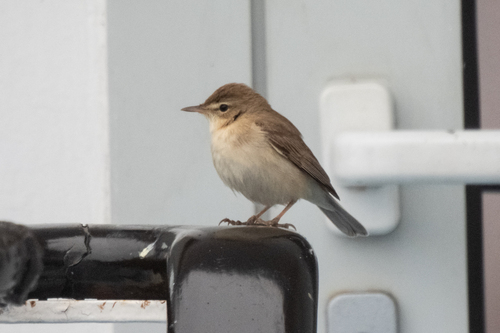 Booted Warbler
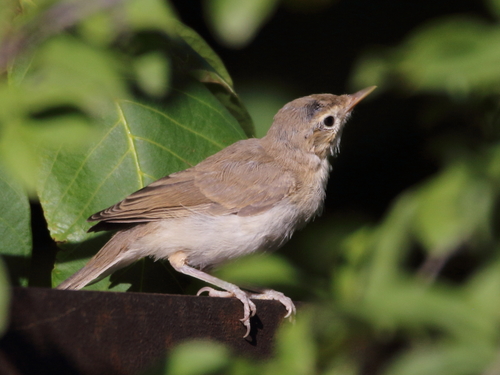 Eastern Olivaceous Warbler
In short
The best field mark to separate Booted Warbler from Eastern Olivaceous Warbler is overall structure and jizz: Booted Warbler is distinctly short-winged and pot-bellied with a square-tipped tail, while Eastern Olivaceous Warbler appears longer-winged, more slender, and often flicks its tail downward. Both species are plain, pale brown warblers with pale underparts and a pale supercilium, but Booted Warbler is smaller and more compact, whereas Eastern Olivaceous is medium-sized and more reed-warbler-like. Bill shape and tail action, along with subtle differences in underpart color (especially in juveniles), provide additional clues. In the field, focus on body shape, tail tip, and behavior before relying on subtle plumage tones.
Identification tips
- Overall structure: Booted Warbler is short-winged, pot-bellied, and has a square-tipped tail. Eastern Olivaceous Warbler is longer-winged, slimmer, and has a more pointed tail. Use this as your primary separator, especially in perched birds.
- Tail shape: Look for the square tip of Booted Warbler's tail versus the more typical pointed tail of Eastern Olivaceous. This is best judged when the tail is spread or the bird is perched with the tail visible.
- Jizz: Booted Warbler often looks compact and upright, while Eastern Olivaceous is sleeker and more elongated. In mixed flocks or during migration, this difference can be subtle but is reliable with practice.
- Tail flicking: Eastern Olivaceous Warbler frequently flicks its tail downward, a behavior not described for Booted Warbler. Watch for this repeated action in the field.
- Bill shape: Booted Warbler has a short bill with a dark tip, while Eastern Olivaceous Warbler's bill is stronger, more pointed, and lacks the dark tip. Bill color and shape can be hard to judge at a distance but are useful at close range.
- Supercilium: Both have a pale supercilium, but Booted Warbler's is often clearer and more defined. This is a subtle mark and not always reliable in worn or young birds.
- Upperpart tones: Booted Warbler is plain greyish-brown above, while Eastern Olivaceous is pale brown and can sometimes show a greenish tinge. Lighting and wear can obscure these differences.
- Underparts: Both are pale below, but juvenile Eastern Olivaceous Warblers are more buff on the belly, while Booted Warbler tends to be cleaner and paler. This is most useful in fresh juveniles.
- Leg color: Eastern Olivaceous Warbler has grey legs; Booted Warbler's leg color is not specified but is unlikely to be a strong separator.
- Flight appearance: No distinctive wing or flight pattern marks are described for either species, so rely on structure and jizz in flight.
- Habitat context: If observed in Western Europe outside the breeding range, Booted Warbler is more likely as a vagrant; in the Middle East or northern Afrotropics in winter, Eastern Olivaceous is more probable. However, overlap is extensive during migration.
- Voice: Only Eastern Olivaceous Warbler's song is described (fast nasal babbling); Booted Warbler's vocalizations are not detailed here, so do not rely on voice unless very familiar with both species.
- Sex and age: Both species are sexually monomorphic. Juvenile underpart color (buff in Eastern Olivaceous) is a minor separator early in the season.
- Confusion with Sykes's Warbler: Both species are also very similar to Sykes's Warbler, so take extra care with any Iduna warbler showing intermediate features.
- When in doubt: Prioritize structure (short vs long-winged, pot-bellied vs slender), tail shape, and tail behavior over subtle plumage shades, especially in poor light or on brief views.
Size
Booted Warbler is a small warbler, similar in size to a chiffchaff, and noticeably more compact than Eastern Olivaceous Warbler. Eastern Olivaceous is medium-sized for an Iduna, appearing more like a small reed warbler. In direct comparison, Booted Warbler will look shorter and more pot-bellied, while Eastern Olivaceous will seem longer and slimmer. No precise measurements are given, but size difference is apparent with experience.
Plumage
- Juvenile/first-year birds: Both species are plain above and pale below, but young Eastern Olivaceous Warblers are more buff on the belly, while Booted Warbler juveniles do not show this buff tone. No distinctive upperwing pattern or flight marks are described for either species at any age.
- Adults: Booted Warbler is plain greyish-brown above and paler below, with a clear pale supercilium and a short bill with a dark tip. Eastern Olivaceous Warbler adults are plain pale brown above and whitish below, with a strong pointed bill and grey legs. Both are drab and lack strong contrasts, but Eastern Olivaceous can sometimes have a greenish tinge to the upperparts. Booted Warbler's tail is square-tipped, while Eastern Olivaceous has a more typical pointed tail.
- Sexes: Both species are sexually monomorphic (no difference between males and females).
Behaviour
Booted Warbler typically appears pot-bellied and short-winged, often sitting upright with a square-tipped tail. Eastern Olivaceous Warbler is more slender and elongated, and is notable for its frequent downward tail flicking, a behavioral trait not described for Booted Warbler. In flight, Booted Warbler may look more compact and less agile, while Eastern Olivaceous Warbler's longer wings and tail give it a sleeker appearance. Both species are active and can be seen foraging in low shrubs or reeds.
Habitat
Both species breed in overlapping regions of southeastern Europe and western Asia, but Booted Warbler is more associated with Eastern Europe and western Asia, wintering in South Asia, and is a regular vagrant to Western Europe. Eastern Olivaceous Warbler breeds further south and east, including the Middle East, and winters in the northern Afrotropics. In the field, both may be found in similar shrubby or reedy habitats during migration, so habitat is not a strong separator except at the extremes of their ranges.
Voice
Only Eastern Olivaceous Warbler's song is described: a fast nasal babbling. No vocalization details are provided for Booted Warbler, so voice is not a reliable separator based on the available notes.
Booted Warbler · Eastern Olivaceous Warbler · My Tricky Birds