

Black-winged Stilt vs Grey Plover
Himantopus himantopus versus Pluvialis squatarola
Play a quiz with Black-winged Stilt and Grey Plover
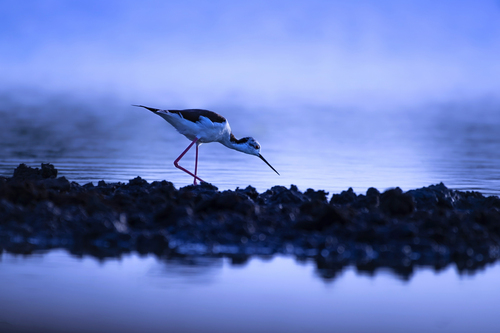 Black-winged Stilt
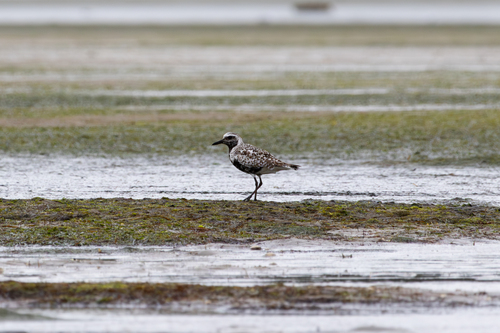 Grey Plover
In short
The most reliable field mark between Black-winged Stilt and Grey Plover is the stilt's extremely long, pink legs, which are obvious both at rest and in flight. For immature birds in flight, Black-winged Stilt shows pale sandy-grey wings with a whitish line, while Grey Plover juveniles have darker backs with creamy edges and, crucially, black axillaries and underwing bases. Structurally, the stilt is taller and slimmer, with a much longer, thinner bill and neck, while Grey Plover is chunkier with a heavier, shorter bill. Both can show mostly white underparts in non-breeding plumage, but their overall shape and leg color are consistently different.
Identification tips
- Leg color and length: Black-winged Stilt always shows extremely long, pink legs, visible at great distance both at rest and in flight. Grey Plover has much shorter, dark legs.
- Flight silhouette: In flight, Black-winged Stilt's legs trail far beyond the tail, giving a stretched appearance. Grey Plover's legs do not extend past the tail, and the bird looks compact and broad-winged.
- Juvenile/first-winter wing pattern: Juvenile Black-winged Stilt has pale sandy-grey wings with a whitish line (from feather fringes) in flight. Juvenile Grey Plover has black axillaries and underwing bases, visible as a dark patch under the wing—never shown by stilt of any age.
- Adult breeding plumage: Breeding Grey Plover is strikingly black and white below, with a black face, neck, and belly, and a white rump. Black-winged Stilt is always white below, with no black on the belly or underwing.
- Bill shape: Black-winged Stilt has a long, thin, straight black bill. Grey Plover has a shorter, heavier, more conical bill.
- Head pattern: Male Black-winged Stilts can show more black on the head and neck in summer, but never the solid black face and throat of breeding Grey Plover. Female stilts and non-breeding males have mostly white heads.
- Back color: Adult male stilts have a glossy black back; females show a browner tone. Grey Plover is plain grey above in winter, with no gloss or brown.
- Juvenile back pattern: Juvenile Grey Plover has blacker upperparts with creamy edges, while juvenile stilt is sandy-grey with pale fringes.
- Underwing in flight: Only Grey Plover shows black axillaries and underwing bases in all plumages—a clincher in flight.
- Leg visibility in flight: Stilt's legs are always visible trailing behind; Grey Plover's are not.
- Size and jizz: Stilt is taller, slimmer, and more elegant; Grey Plover is stockier and heavier-set.
- Habitat: Stilt is almost always in freshwater marshes; Grey Plover is coastal outside the breeding season.
- Feeding behavior: Stilt picks delicately at the water surface; Grey Plover runs and pauses on open ground.
- Tail pattern: Grey Plover has a white tail with black barring; stilt has a plain white tail.
- Seasonal context: If seen in summer with a black belly, it's a breeding Grey Plover; stilt never shows this.
Size
Black-winged Stilt is slightly longer in body (33–36 cm) but much lighter (160 g) than Grey Plover (27–30 cm, 190–280 g). The stilt is much more slender, with extremely long legs that make it appear taller and more delicate. Grey Plover is heavier and more robust, with a stockier build and shorter legs. In flight, Grey Plover's wingspan is broader (71–83 cm) and the bird looks more compact compared to the stilt's long, narrow wings and extended legs.
Plumage
Juvenile and first-winter Black-winged Stilts are grey above with a sandy hue and light feather fringes, which form a whitish line across the wing in flight. Their underparts remain white, and the legs are always pink. Juvenile Grey Plovers, by contrast, have blacker backs with creamy white edging, and in all ages show black axillaries and underwing bases in flight—a key mark. Adult breeding Grey Plovers are boldly patterned with black face, neck, and belly, and a white rump and tail with black barring; in non-breeding and juvenile plumage, they are plain grey above with a speckled breast and white belly. Black-winged Stilts, regardless of age, never show black under the wing or on the belly, and adults have a sharp contrast between black upperparts and white underparts, with males showing a greenish gloss and females a browner back. Head pattern in stilts is variable by sex and season but never approaches the bold black-and-white of breeding Grey Plover.
Behaviour
Black-winged Stilts are typically seen wading in shallow water, often feeding by picking at the surface or probing with their long bills, and their long legs are always visible. They move with a delicate, almost dainty gait. In flight, their legs trail far beyond the tail. Grey Plovers are usually found on open mudflats or coastal beaches, running and pausing to pick at prey, with a more robust, purposeful movement. In flight, Grey Plovers show rapid, strong wingbeats and do not have legs extending beyond the tail.
Habitat
Black-winged Stilts favor freshwater marshes, shallow lakes, and ponds, rarely venturing to open coasts except as migrants. Grey Plovers breed in the Arctic but are seen on migration and in winter along nearly all coastal mudflats and sandy shores worldwide. If you see a bird with long pink legs in a freshwater marsh, it is almost certainly a stilt; a chunky, short-legged plover on a tidal flat is likely a Grey Plover.