

Black-throated Diver vs Pacific Diver
Gavia arctica versus Gavia pacifica
Play a quiz with Black-throated Diver and Pacific Diver
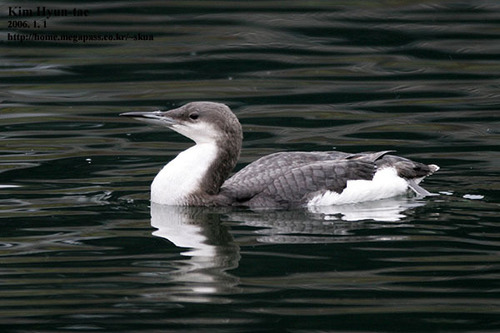 Black-throated Diver
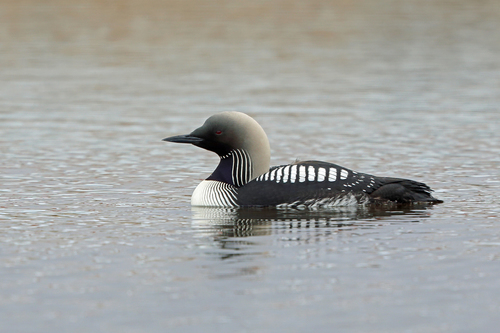 Pacific Diver
In short
The most reliable field mark to separate Black-throated Diver (Gavia arctica) from Pacific Diver (Gavia pacifica) in all plumages is the presence or absence of a white flank patch: Black-throated Diver shows a clear white patch on the flanks (especially in breeding plumage), while Pacific Diver lacks this feature entirely. Both species are similar in size and shape, with overlapping measurements and similar breeding plumage patterns, but careful attention to the flank and throat pattern is essential. In non-breeding and juvenile plumages, both can appear drab, but the flank patch (or its absence) remains a key difference. Structure and bill color are subtle and not always reliable, so focus on flank and throat details for confident identification.
Identification tips
- White Flank Patch (All Ages/Seasons): Black-throated Diver always shows a prominent white patch on the flanks, visible at rest and in flight. Pacific Diver never shows this patch; its flanks are plain grey or dark.
- Throat Patch Color (Breeding Adults): Black-throated Diver's throat patch is black (or green in the eastern subspecies), with a necklace of fine white lines. Pacific Diver's throat is also black with purple gloss, but lacks the necklace effect and the white lines are less distinct.
- Neck Pattern (Breeding Adults): Black-throated Diver shows long, parallel white stripes running down the sides of the neck from the lower throat patch, plus a necklace of short white lines. Pacific Diver's neck is plainer with less obvious striping.
- Upperwing and Mantle (All Ages): Both species have chequered black-and-white mantles, but Black-throated Diver often shows more extensive white squares on the mantle and scapulars. This is subtle and not always visible.
- Bill Color and Shape: Black-throated Diver has a black bill, while Pacific Diver's bill is described as grey or whitish and dagger-shaped. However, bill color can be affected by light and angle, so use with caution.
- Non-breeding/Juvenile Plumage: Both species become drabber, with white throats and less contrast. The white flank patch (present in Black-throated Diver, absent in Pacific Diver) remains the best separator.
- Flight Views: In flight, look for the white flank patch on Black-throated Diver; Pacific Diver's flanks are uniformly dark.
- Head and Neck Tone: Both have grey heads in breeding plumage, but Black-throated Diver's is often paler and more contrasting with the black throat.
- Leg and Toe Color: Black-throated Diver has black legs with pale grey inner legs and grey toes/webs; Pacific Diver's leg colors are not detailed, so not a reliable field mark.
- Habitat and Range: If in Europe, Black-throated Diver is more likely; in Alaska or Arctic Canada, Pacific Diver is more likely. However, vagrancy and overlap occur, so do not rely on range alone.
- Size: Both are similar in size and mass, so do not use size as a separator in the field.
- Behavior: Both species behave similarly in water and require long runways for takeoff. Behavior does not reliably separate them.
- Vocalizations: Calls are broadly similar and not reliable for separation unless very familiar with both species.
- Sex and Age: Sexes are alike in both species. Juvenile Black-throated Diver is browner, but this is subtle and not a strong field mark. Focus on flank and throat pattern.
- Common Pitfall: Immature and non-breeding birds are easily confused due to overall drabness. Always check for the presence or absence of the white flank patch, even in poor light or at distance.
Size
Both species are very close in size, with Pacific Diver averaging around 2232 g [wikidata] and Black-throated Diver ranging from 1.3 to 3.4 kg [wikipedia]. Their lengths and wingspans overlap: Black-throated Diver is 58–73 cm long with a 100–130 cm wingspan, while Pacific Diver is 58–74 cm long with a 110–128 cm wingspan. In the field, size is not a reliable separator between these two, as both appear medium-sized among loons/divers.
Plumage
-
Juvenile and Non-breeding Plumage: Both species are drabber, with white throats and forenecks, and brownish or greyish upperparts. The Black-throated Diver juvenile is browner overall, but this is subtle. The key distinction is that Black-throated Diver retains a white flank patch even in non-breeding and juvenile plumages, while Pacific Diver never shows a white flank patch at any age or season.
-
Adult Breeding Plumage: Both have a grey head, black throat, and chequered black-and-white mantle. Black-throated Diver has a black (or green in viridigularis) throat patch with a necklace of white lines and a prominent white flank patch. Pacific Diver's throat is also black with purple gloss, but lacks the white flank patch. The upperwing pattern is similar, with both showing white spots on the coverts and chequered mantles, but the Black-throated Diver's white squares on the mantle are often more extensive.
-
In Flight: The white flank patch of Black-throated Diver can be visible from above and below, especially in adults. Pacific Diver appears plainer on the flanks in flight.
Behaviour
Both species are strong divers and swimmers, with legs set far back on the body, making them clumsy on land. Both require a long water runway to take off. There is no significant behavioral difference in foraging or locomotion that is diagnostic in the field. Both species are typically seen swimming low in the water and diving frequently.
Habitat
Both species breed on freshwater lakes in northern regions, but Black-throated Diver is more associated with northern Europe and Asia, while Pacific Diver is more common in the North American Arctic and eastern Siberia. In winter, both migrate to sheltered, ice-free coastal waters, including the north-east Atlantic and Pacific coasts. Habitat overlap is possible, especially on migration and in winter, so context alone is not diagnostic.
Voice
Both species have a wide range of calls, including wails and yodels similar to the Common Loon. Pacific Diver is noted for its eerie, far-carrying wails and sharp feeding calls. Black-throated Diver's calls are not described in detail in the provided notes, but are generally similar. Vocalizations are not a reliable field separator between these two, especially for birders unfamiliar with their subtle differences.