
Motmot

Black Grouse vs Common Pheasant

Lyrurus tetrix versus Phasianus colchicus

Play a quiz with Black Grouse and Common Pheasant
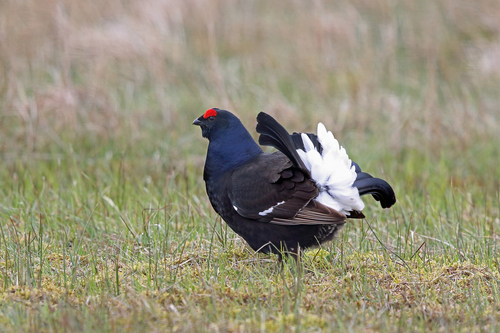
Black Grouse (Lyrurus tetrix) Black Grouse
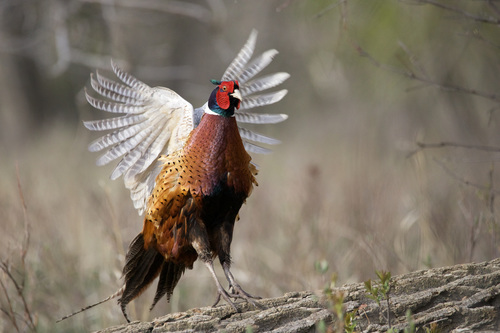
Common Pheasant (Phasianus colchicus) Common Pheasant

Media

Loading…

In short

The most reliable field mark between Black Grouse and Common Pheasant is the shape and pattern of the tail: adult male Black Grouse have a distinctive lyre-shaped tail with strongly outward-curved outer feathers, while male Common Pheasants have an extremely long, straight, pointed tail. In flight, Black Grouse show a bold white wing bar and white undertail coverts, whereas pheasants show more uniform, barred wings and a much longer tail. Females of both species are brown and cryptic, but the grouse is stockier with a shorter, rounded tail, while female pheasants are slimmer and have a proportionally longer, pointed tail. Immature birds can be tricky, but tail shape and wing pattern remain key. Both species can be similar in size, but their structure and jizz are quite different.

Identification tips

  1. Tail shape is diagnostic in adult males: Black Grouse have a lyre-shaped tail with strongly outward-curved outer feathers; male pheasants have a long, straight, pointed tail with heavy barring. This is reliable at all seasons for adult males.
  2. Female and juvenile tail structure: Female and young Black Grouse have a short, rounded tail, while female and juvenile pheasants have a much longer, pointed tail. Use this in all ages when the tail is visible.
  3. White wing bar in flight: Black Grouse (all ages) show a bold white wing stripe in flight; pheasants have more uniform, barred wings without a strong white panel. Especially useful for flushed birds or distant flight views.
  4. Body shape and jizz: Black Grouse are stockier and more compact, especially when perched; pheasants are slimmer, longer-bodied, and often appear elongated due to their tail.
  5. Male head and face: Male Black Grouse have red wattles above the eye and a blue-black sheen; male pheasants have a bottle-green head, red wattles, and sometimes a white neck ring, with a small crest and ear-tufts.
  6. Plumage iridescence: Black Grouse males are glossy blue-black; male pheasants are coppery/golden with green or purple sheen, and often a white neck ring (though not always present).
  7. Female plumage: Both are brown and mottled, but Black Grouse females are more compact and less heavily barred, with a shorter tail. Pheasant females are more elongated, with a longer, pointed, heavily barred tail.
  8. Juvenile confusion: Juvenile pheasants resemble females but have a shorter tail; as they age, males develop bright plumage. Juvenile Black Grouse remain more compact and lack strong barring or iridescence.
  9. Flight style: Black Grouse fly with strong, direct wingbeats and a gliding finish, usually low; pheasants have a noisy, explosive takeoff and glide with the long tail trailing.
  10. Habitat context: Black Grouse are found in moorland, steppe, and open woodland edges; pheasants are common in farmland, hedgerows, and near human habitation.
  11. Display behavior: In spring, groups of male Black Grouse display together (lekking) in open ground, fanning tails and inflating necks; pheasants do not lek in this way.
  12. Vocalization: Black Grouse males give a bubbling, cooing song at dawn; pheasants give a harsh crowing call, often when flushed.
  13. Bill and head structure: Both have short, stout bills, but the Black Grouse's head is rounder and more compact; pheasants have a longer, more angular head with a small crest.
  14. Color morphs in pheasants: Beware of melanistic or pale pheasant morphs, which can confuse the issue; focus on tail shape and wing pattern.
  15. Hybrid confusion: Black Grouse can hybridize with other grouse, but not with pheasants; if the bird shows intermediate features between pheasant and grouse, it's likely a pheasant variant, not a hybrid.

Size

Both species are large gamebirds, but Black Grouse are slightly more compact and stocky. The Black Grouse male averages about 1050 g in mass, with females smaller. Common Pheasant males average around 1200 g, with females about 900 g, but there is much variation due to captive breeding. In length, male Black Grouse are about 60 cm, but much of this is body bulk; male pheasants are 60–89 cm, with up to half their length being the long tail. In the field, the pheasant's tail makes it look longer and more elongated, while Black Grouse appear more rounded and robust.

Plumage

For adults, male Black Grouse are glossy black with blue sheen, a striking white wing bar, and white undertail coverts, plus the unique lyre-shaped tail. Female Black Grouse are mottled brown and cryptic, with a short, rounded tail. Male Common Pheasants are highly variable but typically have a bottle-green head with red wattles, a coppery or golden body, and a very long, pointed, barred tail; some have a white neck ring, others do not. Female pheasants are dull brown with heavy mottling and a long, pointed tail. Juvenile pheasants resemble the female but with a shorter tail, gradually developing male features after about 10 weeks. Juvenile Black Grouse are not described in detail here, but the short, rounded tail and lack of strong barring or iridescence should still separate them from pheasants. In flight, Black Grouse (all ages) show a bold white wing stripe; pheasants have more uniform, barred wings without a strong white panel.

Behaviour

Black Grouse are more likely to be seen in open moorland or at the edge of woods, often displaying in groups (leks) in spring. Their flight is strong and direct but usually low and short, with a burst of noisy wingbeats and a gliding finish. Pheasants are often flushed singly or in small groups from farmland, hedgerows, or woodland edges, flying with a noisy, explosive takeoff and then gliding, with their long tail trailing behind. Pheasants are more likely to be seen walking or running in open fields, while Black Grouse are less often seen on the ground in the open except at leks.

Habitat

Black Grouse favor moorland, steppe, and open woodland edges, especially near dense cover for winter roosting. They avoid the intensive farmland and urban edges where pheasants thrive. Common Pheasants are highly adaptable, found in farmland, hedgerows, woodland margins, and even suburban parks, often due to releases for shooting. If you see a large gamebird in open farmland or near crops, it's more likely a pheasant; in upland moors or birch scrub, Black Grouse is more likely.

Voice

Black Grouse males have a distinctive bubbling, cooing song, especially at dawn during lekking. Pheasants have a loud, harsh crowing call, often given when flushed or from cover. If you hear a bubbling coo, think Black Grouse; a harsh crowing or 'kok-kok' is pheasant.

Submit a better description

Use the same sections as the comparison. Your text is published immediately.

The most reliable field mark between Black Grouse and Common Pheasant is the shape and pattern of the tail: adult male Black Grouse have a distinctive lyre-shaped tail with strongly outward-curved outer feathers, while male Common Pheasants have an extremely long, straight, pointed tail. In flight, Black Grouse show a bold white wing bar and white undertail coverts, whereas pheasants show more uniform, barred wings and a much longer tail. Females of both species are brown and cryptic, but the grouse is stockier with a shorter, rounded tail, while female pheasants are slimmer and have a proportionally longer, pointed tail. Immature birds can be tricky, but tail shape and wing pattern remain key. Both species can be similar in size, but their structure and jizz are quite different.

  1. Tail shape is diagnostic in adult males: Black Grouse have a lyre-shaped tail with strongly outward-curved outer feathers; male pheasants have a long, straight, pointed tail with heavy barring. This is reliable at all seasons for adult males.
  2. Female and juvenile tail structure: Female and young Black Grouse have a short, rounded tail, while female and juvenile pheasants have a much longer, pointed tail. Use this in all ages when the tail is visible.
  3. White wing bar in flight: Black Grouse (all ages) show a bold white wing stripe in flight; pheasants have more uniform, barred wings without a strong white panel. Especially useful for flushed birds or distant flight views.
  4. Body shape and jizz: Black Grouse are stockier and more compact, especially when perched; pheasants are slimmer, longer-bodied, and often appear elongated due to their tail.
  5. Male head and face: Male Black Grouse have red wattles above the eye and a blue-black sheen; male pheasants have a bottle-green head, red wattles, and sometimes a white neck ring, with a small crest and ear-tufts.
  6. Plumage iridescence: Black Grouse males are glossy blue-black; male pheasants are coppery/golden with green or purple sheen, and often a white neck ring (though not always present).
  7. Female plumage: Both are brown and mottled, but Black Grouse females are more compact and less heavily barred, with a shorter tail. Pheasant females are more elongated, with a longer, pointed, heavily barred tail.
  8. Juvenile confusion: Juvenile pheasants resemble females but have a shorter tail; as they age, males develop bright plumage. Juvenile Black Grouse remain more compact and lack strong barring or iridescence.
  9. Flight style: Black Grouse fly with strong, direct wingbeats and a gliding finish, usually low; pheasants have a noisy, explosive takeoff and glide with the long tail trailing.
  10. Habitat context: Black Grouse are found in moorland, steppe, and open woodland edges; pheasants are common in farmland, hedgerows, and near human habitation.
  11. Display behavior: In spring, groups of male Black Grouse display together (lekking) in open ground, fanning tails and inflating necks; pheasants do not lek in this way.
  12. Vocalization: Black Grouse males give a bubbling, cooing song at dawn; pheasants give a harsh crowing call, often when flushed.
  13. Bill and head structure: Both have short, stout bills, but the Black Grouse's head is rounder and more compact; pheasants have a longer, more angular head with a small crest.
  14. Color morphs in pheasants: Beware of melanistic or pale pheasant morphs, which can confuse the issue; focus on tail shape and wing pattern.
  15. Hybrid confusion: Black Grouse can hybridize with other grouse, but not with pheasants; if the bird shows intermediate features between pheasant and grouse, it's likely a pheasant variant, not a hybrid.

Both species are large gamebirds, but Black Grouse are slightly more compact and stocky. The Black Grouse male averages about 1050 g in mass, with females smaller. Common Pheasant males average around 1200 g, with females about 900 g, but there is much variation due to captive breeding. In length, male Black Grouse are about 60 cm, but much of this is body bulk; male pheasants are 60–89 cm, with up to half their length being the long tail. In the field, the pheasant's tail makes it look longer and more elongated, while Black Grouse appear more rounded and robust.

For adults, male Black Grouse are glossy black with blue sheen, a striking white wing bar, and white undertail coverts, plus the unique lyre-shaped tail. Female Black Grouse are mottled brown and cryptic, with a short, rounded tail. Male Common Pheasants are highly variable but typically have a bottle-green head with red wattles, a coppery or golden body, and a very long, pointed, barred tail; some have a white neck ring, others do not. Female pheasants are dull brown with heavy mottling and a long, pointed tail. Juvenile pheasants resemble the female but with a shorter tail, gradually developing male features after about 10 weeks. Juvenile Black Grouse are not described in detail here, but the short, rounded tail and lack of strong barring or iridescence should still separate them from pheasants. In flight, Black Grouse (all ages) show a bold white wing stripe; pheasants have more uniform, barred wings without a strong white panel.

Black Grouse are more likely to be seen in open moorland or at the edge of woods, often displaying in groups (leks) in spring. Their flight is strong and direct but usually low and short, with a burst of noisy wingbeats and a gliding finish. Pheasants are often flushed singly or in small groups from farmland, hedgerows, or woodland edges, flying with a noisy, explosive takeoff and then gliding, with their long tail trailing behind. Pheasants are more likely to be seen walking or running in open fields, while Black Grouse are less often seen on the ground in the open except at leks.

Black Grouse favor moorland, steppe, and open woodland edges, especially near dense cover for winter roosting. They avoid the intensive farmland and urban edges where pheasants thrive. Common Pheasants are highly adaptable, found in farmland, hedgerows, woodland margins, and even suburban parks, often due to releases for shooting. If you see a large gamebird in open farmland or near crops, it's more likely a pheasant; in upland moors or birch scrub, Black Grouse is more likely.

Black Grouse males have a distinctive bubbling, cooing song, especially at dawn during lekking. Pheasants have a loud, harsh crowing call, often given when flushed or from cover. If you hear a bubbling coo, think Black Grouse; a harsh crowing or 'kok-kok' is pheasant.

Discard your changes?

You have unsaved edits. If you leave now, those changes will be lost.

Black Grouse · Common Pheasant · My Tricky Birds