

Black-faced Sandgrouse vs Lichtenstein's Sandgrouse
Pterocles decoratus versus Pterocles lichtensteinii
Play a quiz with Black-faced Sandgrouse and Lichtenstein's Sandgrouse
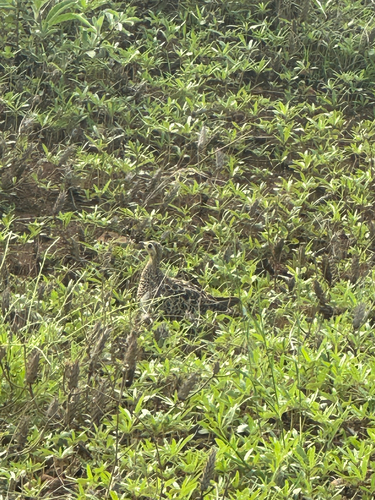 Black-faced Sandgrouse
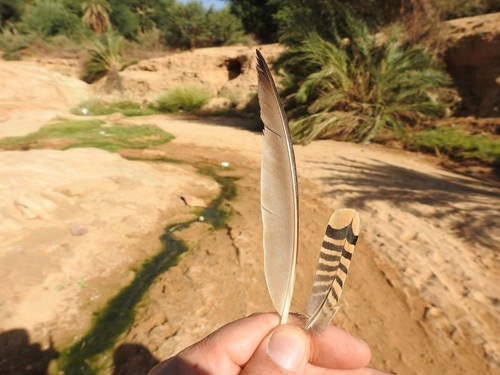 Lichtenstein's Sandgrouse
In short
The most reliable field mark to separate Black-faced Sandgrouse from Lichtenstein's Sandgrouse is the male's bold black facial mask and distinctive black-and-white breast stripes, which are absent in Lichtenstein's. Females and juveniles are trickier, but Black-faced Sandgrouse females show a paler face with a white eyebrow and a diagnostic white breast mark, while Lichtenstein's of both sexes are more uniformly and densely barred above and below. In flight, Black-faced Sandgrouse show black wing tips, while Lichtenstein's are more evenly barred throughout. Both are similar in size and shape, but Black-faced is slightly longer and more compact. Habitat overlap is possible in East Africa, but Lichtenstein's ranges more widely into the Middle East and Asia.
Identification tips
- Male Black-faced Sandgrouse always shows a bold black mask and throat—if you see this, you are not looking at Lichtenstein's. This mark is unique and diagnostic for adult males.
- Black-and-white breast stripes: Male Black-faced Sandgrouse have a thin black stripe followed by a thick white stripe across the breast, which is absent in Lichtenstein's. Females also show a white breast mark, though less bold.
- Facial pattern in females/juveniles: Female and juvenile Black-faced have a pale brown face with a white eyebrow and yellow eye-ring; Lichtenstein's of all ages are more uniformly barred and lack any strong facial markings or pale eyebrows.
- Breast mark in females: The white breast mark in female Black-faced is a key separator from Lichtenstein's, which has no such mark and is instead closely barred across the underparts.
- Upperpart and underpart barring: Lichtenstein's of both sexes and all ages are densely and evenly barred blackish on a buff ground, above and below. Black-faced females and juveniles have barring/streaking but are paler and less densely marked, with a more contrasting face.
- Wing pattern in flight: Black-faced Sandgrouse shows black wing tips in flight, a feature not described for Lichtenstein's, which is more evenly barred throughout the wing. This is useful for all ages, especially in mixed flocks or distant views.
- Tail shape: Both species lack elongated central tail feathers, so this is not a separator. Both appear short-tailed and compact.
- Bill and eye-ring: Male Black-faced has a pinkish-orange bill and yellow eye-ring; female has a greyish bill and yellow eye-ring. Lichtenstein's bill and eye-ring are not described as distinctive, so use with caution.
- Juvenile confusion: Juvenile Black-faced resemble females but have darker barring on the back; Lichtenstein's juveniles are not separately described but likely resemble adults, being densely barred throughout. Look for the white breast mark and pale facial pattern in Black-faced juveniles.
- Size and structure: Black-faced is slightly longer (28 cm vs 25 cm) but both are stocky, dove-like, and similar in mass. Size is not reliable in the field unless you have both side by side.
- Habitat and range: In East Africa, both may occur together. Outside this region, Lichtenstein's is more likely. Habitat alone is not diagnostic where they overlap.
- Behavior at waterholes: Both species may gather together at waterholes; behavior is not a separator.
- Voice: No distinctive vocal differences are described in the sources; do not rely on calls for separation.
- Season and breeding: Both species breed in response to rainfall and are monogamous; breeding timing is not a separator.
- Pitfalls: Female and juvenile Black-faced can be mistaken for other sandgrouse, but the combination of small size, pale facial markings, and white breast mark is unique. Lichtenstein's is always more densely barred and lacks strong facial or breast pattern.
Size
Black-faced Sandgrouse averages about 28 cm in length and 182 g in mass, making it slightly longer but similar in overall build to Lichtenstein's Sandgrouse, which is about 25 cm long and ranges from 175–250 g. Both are small, stocky sandgrouse without elongated central tail feathers, but Black-faced may appear a touch more compact due to its shorter tail and body proportions. In the field, size alone is rarely diagnostic, but the difference in length may be just perceptible in direct comparison.
Plumage
For adults, male Black-faced Sandgrouse are unmistakable with their black face, throat, and bold black-and-white breast stripes. Females and juveniles are more subtle: female Black-faced have a pale brown face, white eyebrow, yellow eye-ring, and a diagnostic white breast mark, with the rest of the body pale brown and blackish barring/streaking. Juveniles resemble females but show darker barring on the back. Lichtenstein's Sandgrouse of both sexes and all ages are closely and evenly barred blackish on a buff ground, both above and below, lacking any strong facial pattern or breast stripes. In flight, Black-faced Sandgrouse show black wing tips, while Lichtenstein's wings are more uniformly barred. The absence of a black mask and breast stripes in Lichtenstein's is key, especially for separating adult males, while the dense barring and lack of pale facial markings help distinguish Lichtenstein's females and juveniles from Black-faced.
Behaviour
Both species are ground-dwelling and well-camouflaged, often gathering at waterholes in arid regions. Black-faced Sandgrouse is less social than some other sandgrouse but will join mixed flocks at water, sometimes with Lichtenstein's. Both species dust bathe rather than bathe in water. Males of both species are known to carry water in their belly feathers to chicks, a typical sandgrouse behavior. There are no strong behavioral differences in the field that are diagnostic between these two species.
Habitat
Black-faced Sandgrouse is mainly sedentary in East Africa (Ethiopia, Kenya, Somalia, Tanzania, Uganda), favoring arid and semi-arid environments. Lichtenstein's Sandgrouse overlaps in East Africa but ranges much more widely across northern and eastern Africa, the Middle East, and southwestern Asia to Pakistan. Both prefer stony deserts and arid hills, so habitat is not a strong separator where their ranges overlap, but Lichtenstein's is more likely outside East Africa.
Black-faced Sandgrouse · Lichtenstein's Sandgrouse · My Tricky Birds