

Black-and-white Warbler vs Blackpoll Warbler
Mniotilta varia versus Setophaga striata
Play a quiz with Black-and-white Warbler and Blackpoll Warbler
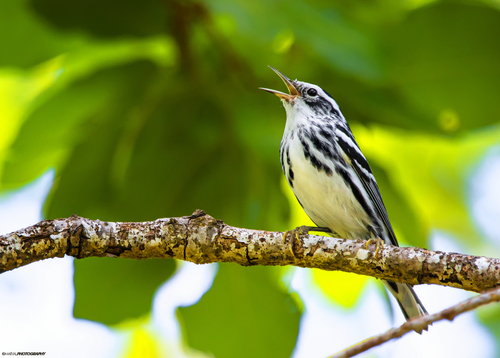 Black-and-white Warbler
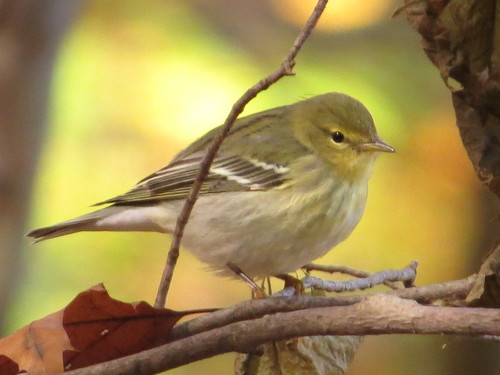 Blackpoll Warbler
In short
The most reliable field mark between Black-and-white Warbler and Blackpoll Warbler is the head pattern in adults: Blackpoll males in breeding plumage show a solid black cap and white cheeks, while Black-and-white Warbler always has a boldly streaked black-and-white head with a white eyebrow and no solid cap. For immature birds, focus on leg color (black-and-white: gray-black; blackpoll: orangish-pink) and overall streaking—Black-and-white Warbler is streaked all over, while Blackpoll is less so, especially in non-breeding plumages. Both have two white wing bars, but their body patterns and structure differ. Watch for confusion in fall, when Blackpolls become greenish and less distinct, while Black-and-white remains streaked and monochrome.
Identification tips
- Head pattern (adults, spring/summer): Blackpoll Warbler males have a solid black cap and white cheeks; Black-and-white Warbler always has a streaked black-and-white head with a white eyebrow and no solid cap. Females Blackpoll lack the strong cap but still have a pale face and less streaking than Black-and-white.
- Leg color (all ages): Blackpoll Warbler has bright orangish-pink legs, especially obvious in spring and fall; Black-and-white Warbler has gray-black legs and feet. This is a key field mark in all plumages.
- Overall streaking: Black-and-white Warbler is heavily streaked black-and-white all over (including back, flanks, and undertail), while Blackpoll Warbler is streaked only on the back and flanks in breeding plumage; non-breeding Blackpolls are much less streaked and more olive or yellowish.
- Throat and cheek (breeding): Black-and-white Warbler males have a black-and-white streaked throat and black cheek; females have a gray cheek and pale throat. Blackpoll Warbler has a plain white cheek and throat, with no streaking.
- Back color: Black-and-white Warbler's back is streaked black-and-white; Blackpoll Warbler's back is dark-streaked brown in breeding plumage, greenish in non-breeding.
- Wing bars: Both have two white wing bars, so this is not diagnostic alone. However, Black-and-white's wing bars are set against a more monochrome black-and-white wing; Blackpoll's are on a brown or greenish background depending on season.
- Juvenile/first-fall: Black-and-white Warbler juveniles are heavily spotted and streaked, while Blackpoll juveniles are greenish above, yellowish below, and lack heavy streaking. Both have wing bars, but leg color and overall tone are more useful.
- Foraging behavior: Black-and-white Warbler creeps along trunks and limbs, nuthatch-like; Blackpoll Warbler forages in foliage, often higher up.
- Bill and structure: Blackpoll Warbler is slightly larger and has a stouter bill, but this is subtle and rarely diagnostic in the field.
- Seasonal change: In fall, Blackpoll Warbler becomes greenish above and yellowish below, with less distinct head pattern; Black-and-white Warbler remains streaked black-and-white year-round, though first-fall birds are duller.
- Habitat: Black-and-white Warbler is often low on trunks in mature forests; Blackpoll is more often in canopy or open woodland during migration.
- Sex differences: Female Blackpolls are paler and lack the strong head pattern of males, but still do not show the all-over streaking or monochrome pattern of Black-and-white.
- Flight views: Both show two white wing bars, but Black-and-white Warbler's streaked body and monochrome wings contrast with Blackpoll's more washed-out or greenish/yellowish tones in non-breeding plumage.
- Pitfalls: In fall, Blackpoll Warbler can look very different from spring, leading to confusion. Always check leg color and overall streaking.
- Not diagnostic: Size and structure differences are subtle and rarely helpful without direct comparison.
Size
Blackpoll Warbler is slightly larger on average, with a length of 12.5–15 cm and mass around 12.3 g [wikidata], compared to Black-and-white Warbler's 11–13 cm and 8–15 g (typically closer to 11 g) [wikipedia]. Blackpoll also has a broader wingspan (20–25 cm vs. 18–22 cm). In the field, this difference is subtle and rarely diagnostic except in direct comparison.
Plumage
- Juvenile/First-fall: Black-and-white Warbler juveniles are heavily spotted and streaked, with a black-and-white overall look and two white wing bars. First-fall birds resemble duller adults, with less streaking and a buffy wash. Blackpoll Warbler juveniles and non-breeding birds are greenish above, have yellowish breasts, and always show two white wing bars, but lack the all-over streaking of Black-and-white. Their legs are bright orangish-pink, a strong contrast to the gray-black legs of Black-and-white.
- Adult breeding: Black-and-white Warbler males are boldly streaked black-and-white everywhere, including the throat and cheek (black in males, gray in females), with a white eyebrow and no solid cap. Blackpoll Warbler breeding males have a solid black cap, white cheeks, white underparts with black streaks, and brown-streaked backs. Females are paler, with grayish crowns and faces, and less distinct head pattern.
- In flight: Both show two white wing bars, but Black-and-white Warbler is more uniformly streaked and monochrome; Blackpoll in non-breeding plumage may appear greenish or yellowish, especially on the head and breast.
Behaviour
Black-and-white Warbler is often seen creeping along trunks and branches, nuthatch-like, probing bark for insects. Blackpoll Warbler behaves more like a typical warbler, foraging in foliage and often higher in the canopy. In flight, both are active, but Black-and-white's foraging style is distinctive and can help with identification.
Habitat
Both species breed in northern forests, but Black-and-white Warbler is more likely found in mature deciduous and mixed forests, often lower in the understory or on trunks. Blackpoll Warbler breeds farther north and west, favoring boreal and spruce forests, and during migration is more likely in higher canopy or open woodlands. During migration, both can turn up in a variety of wooded habitats, but Black-and-white is more likely to be seen working tree trunks and limbs.
Black-and-white Warbler · Blackpoll Warbler · My Tricky Birds