

Bar-tailed Lark vs Desert Lark
Ammomanes cinctura versus Ammomanes deserti
Play a quiz with Bar-tailed Lark and Desert Lark
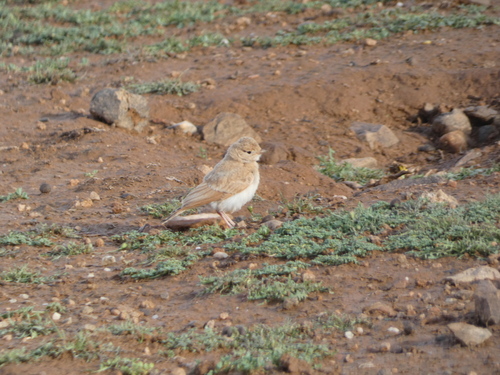 Bar-tailed Lark
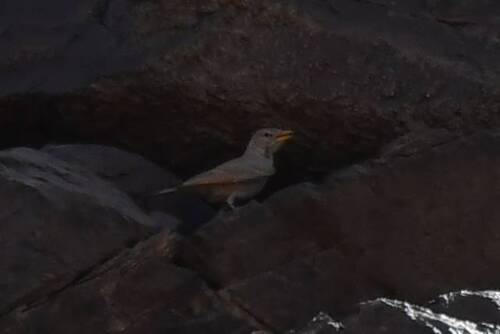 Desert Lark
In short
The most reliable field mark to separate Bar-tailed Lark from Desert Lark is the tail pattern: Bar-tailed Lark shows a sharp, black terminal band on a rufous tail, while Desert Lark lacks this, having at most a diffuse dark patch. Bar-tailed Lark is also smaller and more compact, with a more domed head, thinner legs, and a shorter tail. In flight or perched, Desert Lark is bulkier, with a longer tail and a larger, broader bill. Underpart streaking is another key difference: Desert Lark shows much more streaking, especially on the breast, while Bar-tailed Lark is nearly unstreaked below. Habitat can help, but both species overlap widely, so focus on structure and tail pattern for confident separation.
Identification tips
- Tail pattern is key: Look for a sharply defined black terminal band on a rufous tail for Bar-tailed Lark. Desert Lark lacks this feature, showing at most a diffuse dark area at the tail tip. This works for all ages and is visible both perched and in flight.
- Size and structure: Bar-tailed Lark is smaller and more compact, with a noticeably shorter tail, smaller and more domed head, and finer bill. Desert Lark is bulkier, with a longer tail, larger, less domed head, and a broad, strong bill. These differences are subtle but reliable with experience.
- Legs: Bar-tailed Lark has thinner legs than Desert Lark, which has stouter legs. This is best seen when birds are side by side or with practice.
- Underpart streaking: Desert Lark shows much heavier streaking on the breast and flanks, while Bar-tailed Lark is nearly unstreaked below, with only a faint buff wash. This is a strong mark in good light.
- Upperpart color: Bar-tailed Lark is sandy-buff with a grey wash; Desert Lark is more variable, from pale greyish-brown to deep, dull tones. Some Desert Larks can be quite pale, so use with caution.
- Rufous in wings and tail: Both can show rufous, but Bar-tailed Lark's rufous is more uniform and contrasted, especially in the tail with the black tip. Desert Lark may show rufous, but less distinctly and without the sharp tail band.
- Head shape: Bar-tailed Lark has a more domed crown; Desert Lark's head is flatter. This is subtle but useful in profile.
- Bill shape: Bar-tailed Lark's bill is smaller and finer; Desert Lark's is larger and broader, giving a heavier look to the face.
- Habitat preference: Bar-tailed Lark prefers flat, sandy or stony ground with sparse vegetation; Desert Lark is more often on rocky slopes or hillsides. Use this as a supporting mark, not primary.
- Behavior: Bar-tailed Lark is shier and keeps to open, level ground, often running or crouching low. Desert Lark is bolder, often perching on rocks or boulders.
- Voice: Desert Lark's song is more mellow and less squeaky than Bar-tailed Lark's. Use song only when heard well.
- Subspecies variation: Desert Lark is highly variable in plumage, especially upperparts, which can cause confusion. Always prioritize structural and tail pattern marks over color alone.
- No strong age-specific flight marks: Neither species has described juvenile or immature upperwing patterns that are diagnostic, so focus on tail and structure for all ages.
- Sexes similar: Both species are sexually monomorphic, so all marks apply to both males and females.
- Overlap and pitfalls: Both species can occur in the same region and habitat, especially in transition zones. Pale Desert Larks can look similar to Bar-tailed, but the lack of a sharp black tail band and heavier streaking below are decisive.
Size
Bar-tailed Lark is distinctly smaller, measuring 14–15 cm in length, while Desert Lark is 16–17 cm long. The difference is subtle at a distance but becomes apparent with direct comparison or experience. Desert Lark is also bulkier overall, with a proportionally bigger head and bill, and stouter legs. These size and structural differences are consistent across ages and sexes, as both species are sexually monomorphic.
Plumage
- Tail pattern (all ages): Bar-tailed Lark always shows a well-defined black terminal band on a rufous tail, visible both perched and in flight. Desert Lark lacks this clear band; its tail may have a diffuse dark area but never a crisp black tip.
- Upperparts: Bar-tailed Lark is sandy-buff with a grey wash, while Desert Lark is more variable, ranging from pale greyish-brown to deep, dull tones depending on subspecies and habitat. Desert Lark can sometimes show rufous tones on the wings and tail, but not as distinctly as Bar-tailed Lark.
- Underparts: Bar-tailed Lark is whitish below with little or no streaking, just a buff wash on breast and flanks. Desert Lark has pale pinkish-grey underparts with much heavier and more extensive streaking, especially on the breast.
- Wings in flight: Both species can show rufous in the wings, but Bar-tailed Lark has more uniform rufous wings with dark trailing edges, while Desert Lark's wing color is more variable and often duller. No age-specific upperwing marks are described for either species.
- Head and bill: Bar-tailed Lark has a smaller, more domed head and a finer bill; Desert Lark's head is less domed and the bill is noticeably larger and broader.
Behaviour
Bar-tailed Lark tends to be shier and prefers level, open ground, often running or crouching low when disturbed. Desert Lark is more likely to be found on rocky slopes or hillsides, and may perch on boulders or elevated rocks. Both species are ground-dwelling and feed in open areas, but Bar-tailed Lark is generally more furtive and less likely to be seen in rocky terrain.
Habitat
Both species inhabit deserts and semi-deserts from North Africa to western Asia, but Bar-tailed Lark favors sandy or stony flats with sparse, low vegetation, while Desert Lark is more often found in rocky or hilly areas, including slopes and basalt deserts. Habitat overlap is extensive, but Bar-tailed Lark avoids steep or rocky ground where Desert Lark is common. If you find a lark on a flat, sandy plain, Bar-tailed is more likely; on rocky hillsides, Desert Lark is favored.
Voice
Desert Lark's song is a mellow, mournful series of notes ("choo-wee-chacha wooee"), usually delivered from the ground, a boulder, or in undulating flight. It is less squeaky and more mellow than Bar-tailed Lark's song. When flushed, Desert Lark gives a short "churree" or "chee-lu". Bar-tailed Lark's song is not described in detail here, but is noted to be squeakier. Voice is a supporting mark, best used when the bird is singing.