

Motmot

Bahama Woodstar vs Rufous Hummingbird

Nesophlox evelynae versus Selasphorus rufus

Play a quiz with Bahama Woodstar and Rufous Hummingbird
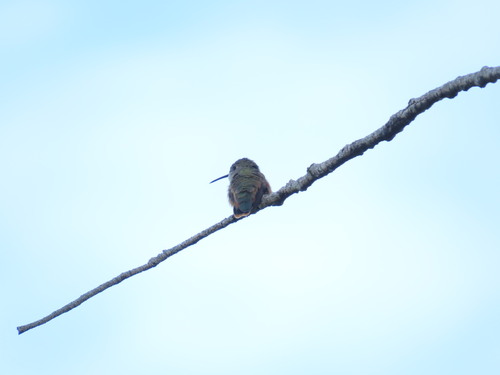
Bahama Woodstar (Nesophlox evelynae) Bahama Woodstar
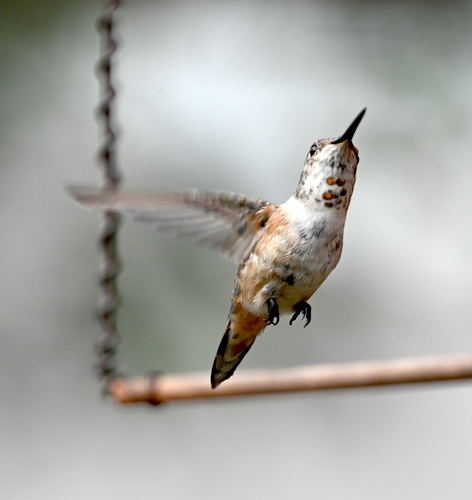
Rufous Hummingbird (Selasphorus rufus) Rufous Hummingbird

Media

Loading…

In short

The most reliable field mark for separating Bahama Woodstar from Rufous Hummingbird is the tail: Bahama Woodstar males have a deeply forked, blackish-purple tail, while Rufous Hummingbird males show a rufous tail with a less pronounced fork and females of both species have differently shaped tails. Both species are small hummingbirds, but Bahama Woodstar males have a striking purple gorget with a white border (when fresh and in sunlight), whereas Rufous Hummingbird males have an orange-red gorget and extensive rufous coloration on the body and tail. Females are trickier: Bahama Woodstar females show cinnamon flanks and a rounded tail with broad feathers, while Rufous females have green upperparts, white underparts, and a tail with rufous at the base and white tips. Bill shape is similar, but context and range are also strong clues: Bahama Woodstar is endemic to the Bahamas and Turks and Caicos, while Rufous Hummingbird is a long-distance migrant of western North America.

Identification tips

  1. Tail shape (adult males): Bahama Woodstar males have a deeply forked, blackish-purple tail; Rufous Hummingbird males have a rufous tail that is less deeply forked. This is the single most reliable mark in perched or hovering males.
  2. Tail shape (females): Bahama Woodstar females have a rounded tail with broad feathers and lack rufous tones; Rufous Hummingbird females have a dark tail with rufous at the base and white tips. Look for the color and shape when the bird fans its tail.
  3. Gorget color (adult males): Bahama Woodstar males show a bright purple iridescent gorget with a white border (when fresh and in sunlight); Rufous Hummingbird males have an orange-red iridescent gorget without a white border.
  4. Underpart color (females): Bahama Woodstar females have olive-buff underparts with cinnamon flanks; Rufous Hummingbird females have white underparts and green upperparts, sometimes with a few orange throat feathers.
  5. Back color: Bahama Woodstar shows green and gold on the back; Rufous Hummingbird males are mostly rufous with some green possible, while females are green above.
  6. Flank color: Cinnamon flanks in Bahama Woodstar females vs. rufous flanks in Rufous Hummingbird males and white flanks in females.
  7. Bill shape: Both species have black, slightly curved bills of similar length; not a reliable separator.
  8. Size: Both are tiny, with almost identical measurements; size is not a useful field mark.
  9. Display behavior: Bahama Woodstar males perform shuttle displays with tail snapping and wing trills; Rufous Hummingbird males are aggressive but display behavior is not unique enough for separation.
  10. Wing sound: Bahama Woodstar males produce a distinct buzzing or humming from the wings during display; Rufous Hummingbird also produces mechanical sounds, but these are not described as distinctive.
  11. Range: Bahama Woodstar is only found in the Bahamas and Turks and Caicos; Rufous Hummingbird is a North American migrant. If seen outside these areas, reconsider the ID.
  12. Female gorget: Bahama Woodstar females lack a gorget; Rufous Hummingbird females may show a few iridescent orange feathers in the throat.
  13. Tail color (in flight): Look for blackish-purple in Bahama Woodstar vs. rufous and white in Rufous Hummingbird.
  14. Habitat context: If in gardens or scrub in the Bahamas, Bahama Woodstar is expected; in western North America or Mexico, Rufous Hummingbird is expected.
  15. Confusion with Allen's Hummingbird: Rufous Hummingbird females and green-backed males are very similar to Allen's Hummingbird, but Bahama Woodstar is not likely to be confused with Allen's due to range and tail shape.

Size

Both species are very small hummingbirds, with nearly overlapping size ranges. Bahama Woodstar measures 8–9.5 cm in length and weighs 2.4–3 g [wikipedia], while Rufous Hummingbird is 7–9 cm long and weighs 2–5 g [wikipedia]. In practice, size is not a reliable separator in the field, as both are tiny and differences are subtle. Rufous Hummingbird females are slightly larger than males, but this is only apparent in direct comparison.

Plumage

Juvenile and immature plumages are not described in detail for either species, but adult males are distinctive: Bahama Woodstar males have green and gold backs, olive-buff underparts, a bright purple iridescent gorget with a white border (when fresh), and a deeply forked blackish-purple tail. Rufous Hummingbird males have a white breast, rufous face, flanks, and tail, and an iridescent orange-red gorget; some show green on the back or crown. Females are more challenging: Bahama Woodstar females have cinnamon flanks, olive-buff underparts, and a rounded tail with broad feathers, lacking the purple gorget. Rufous Hummingbird females have green upperparts, white underparts, a dark tail with white tips and a rufous base, and sometimes a few iridescent orange throat feathers. In both species, the bill is black and slightly curved, but tail shape and color are more diagnostic. No distinctive upperwing or flight pattern marks are described for either species.

Behaviour

Both species are territorial and display aggressive defense of feeding territories. Bahama Woodstar males perform shuttle displays with rapid lateral flight, tail snapping, and wing trills, followed by aerial dives. Rufous Hummingbird males are notably aggressive, defending dense flower patches and chasing intruders, including females. Rufous males have shorter wings and higher wingbeat frequencies, while females have longer wings for more efficient flight. Both species hover to feed and may chase other birds, but these behaviors are not unique enough for reliable field separation.

Habitat

Bahama Woodstar is strictly endemic to the Bahamas and Turks and Caicos islands, favoring gardens, scrub, and open woodlands. Rufous Hummingbird breeds in western North America, migrates through the Rockies, and winters in Mexican woodlands. In the field, range is a strong separator: Bahama Woodstar is not found outside its limited Caribbean range, while Rufous Hummingbird is absent from the Bahamas and Turks and Caicos. Overlap is extremely unlikely except in captivity or vagrancy.

Voice

Bahama Woodstar is noted for a distinct humming or buzzing sound from its wings during display flights, especially the male's wing trill. Rufous Hummingbird's vocalizations are not described in detail here, but both species produce mechanical sounds with their wings during display. No clear vocal or mechanical sound difference is described that would allow reliable separation in the field.

Submit a better description

Use the same sections as the comparison. Your text is published immediately.

The most reliable field mark for separating Bahama Woodstar from Rufous Hummingbird is the tail: Bahama Woodstar males have a deeply forked, blackish-purple tail, while Rufous Hummingbird males show a rufous tail with a less pronounced fork and females of both species have differently shaped tails. Both species are small hummingbirds, but Bahama Woodstar males have a striking purple gorget with a white border (when fresh and in sunlight), whereas Rufous Hummingbird males have an orange-red gorget and extensive rufous coloration on the body and tail. Females are trickier: Bahama Woodstar females show cinnamon flanks and a rounded tail with broad feathers, while Rufous females have green upperparts, white underparts, and a tail with rufous at the base and white tips. Bill shape is similar, but context and range are also strong clues: Bahama Woodstar is endemic to the Bahamas and Turks and Caicos, while Rufous Hummingbird is a long-distance migrant of western North America.

  1. Tail shape (adult males): Bahama Woodstar males have a deeply forked, blackish-purple tail; Rufous Hummingbird males have a rufous tail that is less deeply forked. This is the single most reliable mark in perched or hovering males.
  2. Tail shape (females): Bahama Woodstar females have a rounded tail with broad feathers and lack rufous tones; Rufous Hummingbird females have a dark tail with rufous at the base and white tips. Look for the color and shape when the bird fans its tail.
  3. Gorget color (adult males): Bahama Woodstar males show a bright purple iridescent gorget with a white border (when fresh and in sunlight); Rufous Hummingbird males have an orange-red iridescent gorget without a white border.
  4. Underpart color (females): Bahama Woodstar females have olive-buff underparts with cinnamon flanks; Rufous Hummingbird females have white underparts and green upperparts, sometimes with a few orange throat feathers.
  5. Back color: Bahama Woodstar shows green and gold on the back; Rufous Hummingbird males are mostly rufous with some green possible, while females are green above.
  6. Flank color: Cinnamon flanks in Bahama Woodstar females vs. rufous flanks in Rufous Hummingbird males and white flanks in females.
  7. Bill shape: Both species have black, slightly curved bills of similar length; not a reliable separator.
  8. Size: Both are tiny, with almost identical measurements; size is not a useful field mark.
  9. Display behavior: Bahama Woodstar males perform shuttle displays with tail snapping and wing trills; Rufous Hummingbird males are aggressive but display behavior is not unique enough for separation.
  10. Wing sound: Bahama Woodstar males produce a distinct buzzing or humming from the wings during display; Rufous Hummingbird also produces mechanical sounds, but these are not described as distinctive.
  11. Range: Bahama Woodstar is only found in the Bahamas and Turks and Caicos; Rufous Hummingbird is a North American migrant. If seen outside these areas, reconsider the ID.
  12. Female gorget: Bahama Woodstar females lack a gorget; Rufous Hummingbird females may show a few iridescent orange feathers in the throat.
  13. Tail color (in flight): Look for blackish-purple in Bahama Woodstar vs. rufous and white in Rufous Hummingbird.
  14. Habitat context: If in gardens or scrub in the Bahamas, Bahama Woodstar is expected; in western North America or Mexico, Rufous Hummingbird is expected.
  15. Confusion with Allen's Hummingbird: Rufous Hummingbird females and green-backed males are very similar to Allen's Hummingbird, but Bahama Woodstar is not likely to be confused with Allen's due to range and tail shape.

Both species are very small hummingbirds, with nearly overlapping size ranges. Bahama Woodstar measures 8–9.5 cm in length and weighs 2.4–3 g [wikipedia], while Rufous Hummingbird is 7–9 cm long and weighs 2–5 g [wikipedia]. In practice, size is not a reliable separator in the field, as both are tiny and differences are subtle. Rufous Hummingbird females are slightly larger than males, but this is only apparent in direct comparison.

Juvenile and immature plumages are not described in detail for either species, but adult males are distinctive: Bahama Woodstar males have green and gold backs, olive-buff underparts, a bright purple iridescent gorget with a white border (when fresh), and a deeply forked blackish-purple tail. Rufous Hummingbird males have a white breast, rufous face, flanks, and tail, and an iridescent orange-red gorget; some show green on the back or crown. Females are more challenging: Bahama Woodstar females have cinnamon flanks, olive-buff underparts, and a rounded tail with broad feathers, lacking the purple gorget. Rufous Hummingbird females have green upperparts, white underparts, a dark tail with white tips and a rufous base, and sometimes a few iridescent orange throat feathers. In both species, the bill is black and slightly curved, but tail shape and color are more diagnostic. No distinctive upperwing or flight pattern marks are described for either species.

Both species are territorial and display aggressive defense of feeding territories. Bahama Woodstar males perform shuttle displays with rapid lateral flight, tail snapping, and wing trills, followed by aerial dives. Rufous Hummingbird males are notably aggressive, defending dense flower patches and chasing intruders, including females. Rufous males have shorter wings and higher wingbeat frequencies, while females have longer wings for more efficient flight. Both species hover to feed and may chase other birds, but these behaviors are not unique enough for reliable field separation.

Bahama Woodstar is strictly endemic to the Bahamas and Turks and Caicos islands, favoring gardens, scrub, and open woodlands. Rufous Hummingbird breeds in western North America, migrates through the Rockies, and winters in Mexican woodlands. In the field, range is a strong separator: Bahama Woodstar is not found outside its limited Caribbean range, while Rufous Hummingbird is absent from the Bahamas and Turks and Caicos. Overlap is extremely unlikely except in captivity or vagrancy.

Bahama Woodstar is noted for a distinct humming or buzzing sound from its wings during display flights, especially the male's wing trill. Rufous Hummingbird's vocalizations are not described in detail here, but both species produce mechanical sounds with their wings during display. No clear vocal or mechanical sound difference is described that would allow reliable separation in the field.

Discard your changes?

You have unsaved edits. If you leave now, those changes will be lost.

Bahama Woodstar · Rufous Hummingbird · My Tricky Birds