

Motmot

Audouin's Gull vs Mediterranean Gull

Ichthyaetus audouinii versus Ichthyaetus melanocephalus

Play a quiz with Audouin's Gull and Mediterranean Gull
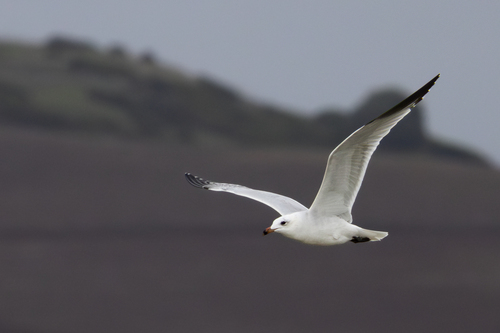
Audouin's Gull (Ichthyaetus audouinii) Audouin's Gull
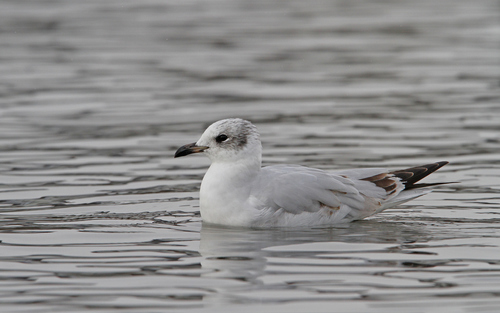
Mediterranean Gull (Ichthyaetus melanocephalus) Mediterranean Gull

Media

Loading…

In short

The most reliable field mark between Audouin's Gull and Mediterranean Gull is the wingtip pattern in adults: Audouin's Gull shows a 'string of pearls'—small white spots at the tips of the primaries—while Mediterranean Gull adults have pure white wingtips with no black or mirrors at all. For immatures, Mediterranean Gull first-years show a black terminal tail band and more extensive black in the upperwings, while Audouin's Gull immatures lack these features. Structurally, Audouin's Gull is larger and longer-winged, with a short, stubby red bill and grey-green legs, compared to the Mediterranean Gull's heavier, parallel-sided red bill (with a black band in breeding) and longer, darker legs. Mediterranean Gull adults in breeding plumage are strikingly white with a full black hood, while Audouin's never shows a full black hood. Both species are coastal, but Audouin's is more strictly pelagic and rarely scavenges.

Identification tips

  1. Juvenile/first-winter upperwing and tail pattern: Mediterranean Gull immatures show a black terminal tail band and more extensive black in the upperwings, especially visible in flight. Audouin's Gull immatures lack the black tail band and have less black in the upperwing. Use this mark for birds in their first calendar year.
  2. Adult wingtip pattern: Audouin's Gull adults have black primaries with a 'string of pearls'—small white spots at the tips. Mediterranean Gull adults have pure white wingtips without any black or mirrors. This is the most reliable mark for adults in flight or at rest.
  3. Head pattern in breeding plumage: Mediterranean Gull adults have a full, deep black hood extending down the nape, with distinct white eye crescents. Audouin's Gull never shows a full black hood; its head remains white with fine streaking outside breeding.
  4. Bill shape and color: Audouin's Gull has a short, stubby red bill. Mediterranean Gull's bill is heavier, parallel-sided, dark red with a black subterminal band in breeding plumage. Bill color is helpful at close range but can be hard to judge at distance.
  5. Leg color: Audouin's Gull has grey-green legs; Mediterranean Gull's are longer and darker, usually reddish. This is best seen when birds are standing.
  6. Structure and jizz: Audouin's Gull is longer-winged, slimmer, and more elegant in flight, with a more attenuated look. Mediterranean Gull is bulkier, with a relatively larger head and shorter neck, and appears more compact overall.
  7. Mantle color: Both have pale grey mantles, but Mediterranean Gull's is very pale, almost white, while Audouin's is a slightly darker pale grey. This is a subtle mark and not always reliable.
  8. Non-breeding head pattern: Mediterranean Gull loses the full hood in winter, replaced by a broad dusky mask through the eye. Audouin's Gull retains a white head with fine streaking.
  9. Tail pattern in flight: Mediterranean Gull first-years have a black terminal tail band; Audouin's Gull does not. This is only useful for immatures.
  10. Habitat preference: Audouin's is almost always strictly coastal and rarely inland, while Mediterranean Gull can be found in a wider range of habitats, including fields and estuaries.
  11. Feeding behavior: Audouin's Gull is a specialist fish eater, often feeding at night and rarely scavenging. Mediterranean Gull is more opportunistic and may scavenge or feed inland.
  12. Range and abundance: Audouin's Gull is much rarer and more localized to the Mediterranean and adjacent coasts; Mediterranean Gull is more widespread and locally common.
  13. Flight style: Audouin's Gull appears more graceful and buoyant in flight, with longer wings and a more attenuated profile. Mediterranean Gull is bulkier and less elongated.
  14. Age to maturity: Audouin's Gull takes four years to reach adult plumage; Mediterranean Gull matures in two years. This affects the age structure seen in flocks.
  15. Pitfalls: Beware of confusion with Black-headed Gull for Mediterranean Gull, but Audouin's Gull is unlikely to be confused with that species due to size and structure.

Size

Audouin's Gull is the larger species, appearing closer in size to a small European Herring Gull, while Mediterranean Gull is smaller and bulkier than Black-headed Gull but still noticeably smaller than Audouin's. Audouin's has a longer, slimmer build with proportionally longer wings and a more attenuated look in flight. Mediterranean Gull is more compact, with a heavier, shorter-necked appearance and a relatively larger head. Leg color also differs: Audouin's has grey-green legs, Mediterranean Gull's are longer and darker (reddish).

Plumage

Juvenile and first-winter Mediterranean Gulls show a distinctive black terminal tail band and more extensive black in the upperwings, especially obvious in flight; their underwings are pale. Audouin's Gull immatures lack the black tail band and have less black in the upperwing. Adult Audouin's Gulls have a pale grey mantle, white head, and a unique 'string of pearls'—small white spots at the tips of the black primaries, never a pure white wingtip. Mediterranean Gull adults in breeding plumage are almost entirely white with a very pale grey mantle and pure white wings and primaries, lacking any black at the wingtips. Their black hood extends down the nape and is sharply defined, with white eye crescents; in non-breeding, the hood recedes to a dusky mask. Audouin's never shows a full black hood, only a white head with fine streaking outside breeding. Bill color is diagnostic: Audouin's has a short, stubby red bill, while Mediterranean Gull's bill is heavier, parallel-sided, dark red with a black subterminal band in breeding.

Behaviour

Audouin's Gull is more strictly coastal and pelagic, specializing in fish and rarely scavenging. It often feeds at night, sometimes far out to sea, and may be seen patrolling beaches, occasionally dragging its legs to slow down. Mediterranean Gull is less strictly pelagic and more likely to be seen in a wider range of coastal and near-coastal habitats, sometimes feeding inland or in fields, and is more likely to scavenge. In flight, Audouin's appears longer-winged and more graceful, while Mediterranean Gull is bulkier and more compact.

Habitat

Audouin's Gull is highly restricted to the Mediterranean, western Saharan Africa, and the Iberian Peninsula, breeding mainly on small islands and staying close to marine environments. It is rarely seen far from the coast and almost never inland. Mediterranean Gull, while also coastal, is less restricted and can be found in a broader range of habitats, including estuaries, lagoons, and sometimes inland fields, especially outside the breeding season. Mediterranean Gull is generally more widespread and locally abundant in its range.

Submit a better description

Use the same sections as the comparison. Your text is published immediately.

The most reliable field mark between Audouin's Gull and Mediterranean Gull is the wingtip pattern in adults: Audouin's Gull shows a 'string of pearls'—small white spots at the tips of the primaries—while Mediterranean Gull adults have pure white wingtips with no black or mirrors at all. For immatures, Mediterranean Gull first-years show a black terminal tail band and more extensive black in the upperwings, while Audouin's Gull immatures lack these features. Structurally, Audouin's Gull is larger and longer-winged, with a short, stubby red bill and grey-green legs, compared to the Mediterranean Gull's heavier, parallel-sided red bill (with a black band in breeding) and longer, darker legs. Mediterranean Gull adults in breeding plumage are strikingly white with a full black hood, while Audouin's never shows a full black hood. Both species are coastal, but Audouin's is more strictly pelagic and rarely scavenges.

  1. Juvenile/first-winter upperwing and tail pattern: Mediterranean Gull immatures show a black terminal tail band and more extensive black in the upperwings, especially visible in flight. Audouin's Gull immatures lack the black tail band and have less black in the upperwing. Use this mark for birds in their first calendar year.
  2. Adult wingtip pattern: Audouin's Gull adults have black primaries with a 'string of pearls'—small white spots at the tips. Mediterranean Gull adults have pure white wingtips without any black or mirrors. This is the most reliable mark for adults in flight or at rest.
  3. Head pattern in breeding plumage: Mediterranean Gull adults have a full, deep black hood extending down the nape, with distinct white eye crescents. Audouin's Gull never shows a full black hood; its head remains white with fine streaking outside breeding.
  4. Bill shape and color: Audouin's Gull has a short, stubby red bill. Mediterranean Gull's bill is heavier, parallel-sided, dark red with a black subterminal band in breeding plumage. Bill color is helpful at close range but can be hard to judge at distance.
  5. Leg color: Audouin's Gull has grey-green legs; Mediterranean Gull's are longer and darker, usually reddish. This is best seen when birds are standing.
  6. Structure and jizz: Audouin's Gull is longer-winged, slimmer, and more elegant in flight, with a more attenuated look. Mediterranean Gull is bulkier, with a relatively larger head and shorter neck, and appears more compact overall.
  7. Mantle color: Both have pale grey mantles, but Mediterranean Gull's is very pale, almost white, while Audouin's is a slightly darker pale grey. This is a subtle mark and not always reliable.
  8. Non-breeding head pattern: Mediterranean Gull loses the full hood in winter, replaced by a broad dusky mask through the eye. Audouin's Gull retains a white head with fine streaking.
  9. Tail pattern in flight: Mediterranean Gull first-years have a black terminal tail band; Audouin's Gull does not. This is only useful for immatures.
  10. Habitat preference: Audouin's is almost always strictly coastal and rarely inland, while Mediterranean Gull can be found in a wider range of habitats, including fields and estuaries.
  11. Feeding behavior: Audouin's Gull is a specialist fish eater, often feeding at night and rarely scavenging. Mediterranean Gull is more opportunistic and may scavenge or feed inland.
  12. Range and abundance: Audouin's Gull is much rarer and more localized to the Mediterranean and adjacent coasts; Mediterranean Gull is more widespread and locally common.
  13. Flight style: Audouin's Gull appears more graceful and buoyant in flight, with longer wings and a more attenuated profile. Mediterranean Gull is bulkier and less elongated.
  14. Age to maturity: Audouin's Gull takes four years to reach adult plumage; Mediterranean Gull matures in two years. This affects the age structure seen in flocks.
  15. Pitfalls: Beware of confusion with Black-headed Gull for Mediterranean Gull, but Audouin's Gull is unlikely to be confused with that species due to size and structure.

Audouin's Gull is the larger species, appearing closer in size to a small European Herring Gull, while Mediterranean Gull is smaller and bulkier than Black-headed Gull but still noticeably smaller than Audouin's. Audouin's has a longer, slimmer build with proportionally longer wings and a more attenuated look in flight. Mediterranean Gull is more compact, with a heavier, shorter-necked appearance and a relatively larger head. Leg color also differs: Audouin's has grey-green legs, Mediterranean Gull's are longer and darker (reddish).

Juvenile and first-winter Mediterranean Gulls show a distinctive black terminal tail band and more extensive black in the upperwings, especially obvious in flight; their underwings are pale. Audouin's Gull immatures lack the black tail band and have less black in the upperwing. Adult Audouin's Gulls have a pale grey mantle, white head, and a unique 'string of pearls'—small white spots at the tips of the black primaries, never a pure white wingtip. Mediterranean Gull adults in breeding plumage are almost entirely white with a very pale grey mantle and pure white wings and primaries, lacking any black at the wingtips. Their black hood extends down the nape and is sharply defined, with white eye crescents; in non-breeding, the hood recedes to a dusky mask. Audouin's never shows a full black hood, only a white head with fine streaking outside breeding. Bill color is diagnostic: Audouin's has a short, stubby red bill, while Mediterranean Gull's bill is heavier, parallel-sided, dark red with a black subterminal band in breeding.

Audouin's Gull is more strictly coastal and pelagic, specializing in fish and rarely scavenging. It often feeds at night, sometimes far out to sea, and may be seen patrolling beaches, occasionally dragging its legs to slow down. Mediterranean Gull is less strictly pelagic and more likely to be seen in a wider range of coastal and near-coastal habitats, sometimes feeding inland or in fields, and is more likely to scavenge. In flight, Audouin's appears longer-winged and more graceful, while Mediterranean Gull is bulkier and more compact.

Audouin's Gull is highly restricted to the Mediterranean, western Saharan Africa, and the Iberian Peninsula, breeding mainly on small islands and staying close to marine environments. It is rarely seen far from the coast and almost never inland. Mediterranean Gull, while also coastal, is less restricted and can be found in a broader range of habitats, including estuaries, lagoons, and sometimes inland fields, especially outside the breeding season. Mediterranean Gull is generally more widespread and locally abundant in its range.

Discard your changes?

You have unsaved edits. If you leave now, those changes will be lost.

Audouin's Gull · Mediterranean Gull · My Tricky Birds