

Motmot

Audouin's Gull vs Common Gull

Ichthyaetus audouinii versus Larus canus

Play a quiz with Audouin's Gull and Common Gull
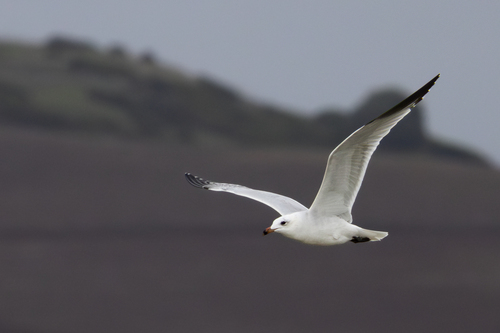
Audouin's Gull (Ichthyaetus audouinii) Audouin's Gull
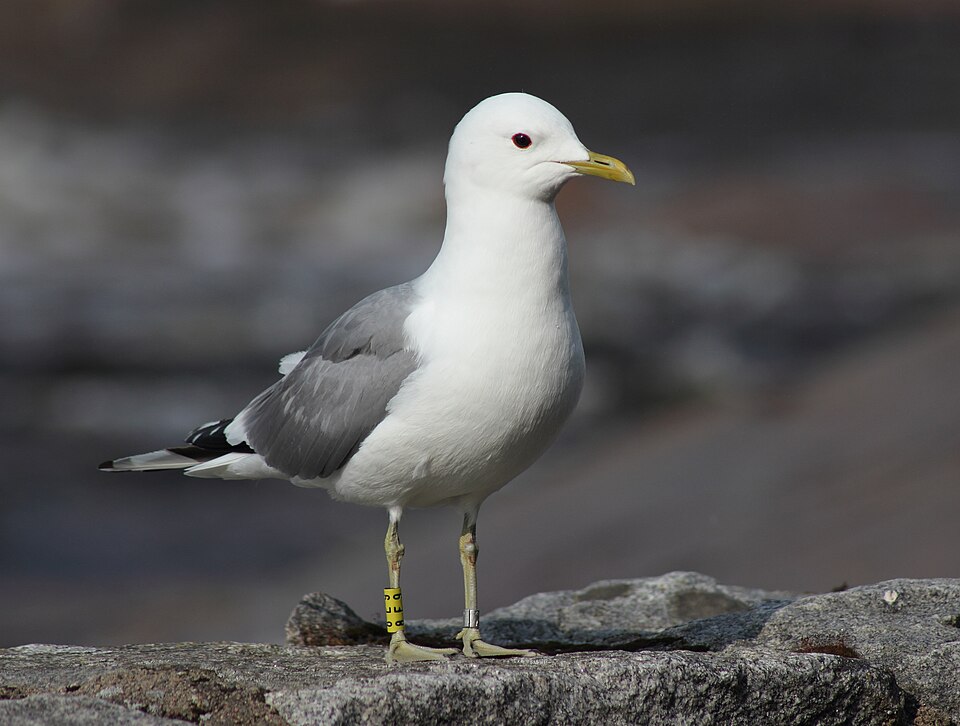
Common Gull (Larus canus) Common Gull

Media

Loading…

In short

The most reliable field mark to separate Audouin's Gull from Common Gull is the adult wingtip pattern: Audouin's shows a 'string of pearls'—small white spots on the primary tips—while Common Gull has larger white 'mirrors' on the outermost primaries. Bill and leg color are also key: Audouin's has a short, stubby red bill and grey-green legs, whereas Common Gull sports a slimmer, greenish-yellow bill and yellow (breeding) or duller (nonbreeding) legs. Immature plumages can be confusing, but Common Gull juveniles have a scaly brown upperwing and pinkish legs, while Audouin's is less well described but lacks the same neat scaly pattern. Audouin's is strictly coastal and rarely scavenges, while Common Gull is more generalist and often found inland.

Identification tips

  1. Adult wingtip pattern: Audouin's Gull shows a 'string of pearls'—small, evenly spaced white spots on the black wingtips. Common Gull has large white 'mirrors' on the outer primaries (p9 and p10). This is most useful on perched or flying adults.
  2. Bill color and shape: Audouin's has a short, stubby red bill (all ages after juvenile). Common Gull's bill is slimmer, greenish-yellow, and unmarked in breeding season, sometimes with a faint dark band in winter.
  3. Leg color: Audouin's has grey-green legs; Common Gull's legs are yellow in breeding season, duller in winter, and pinkish in juveniles.
  4. Head pattern in winter: Common Gull adults show grey streaking on the head in winter; Audouin's remains clean white.
  5. Juvenile/immature upperwing: Juvenile Common Gull has a neat, scaly black-brown upperwing and pink legs, turning greyish before yellow. Audouin's immature upperwing is less well described but does not show the same neat scaly pattern.
  6. Habitat: Audouin's is strictly coastal and pelagic, rarely found inland. Common Gull is often inland, especially in winter, and is far more likely away from the sea.
  7. Feeding behavior: Audouin's specializes in fish, often feeding at night and rarely scavenging. Common Gull is omnivorous and frequently scavenges.
  8. Geographic range: Audouin's is restricted to the Mediterranean, western Saharan Africa, and Iberian Peninsula. Common Gull is widespread across the northern Palearctic and winters widely.
  9. Perched jizz: Audouin's appears more compact with a shorter, thicker bill; Common Gull is slimmer overall.
  10. Flight behavior: Audouin's may dangle its legs in flight to increase drag, especially when feeding close to beaches.
  11. Seasonal context: If seen in the Mediterranean in summer, Audouin's is possible; elsewhere, especially inland or in northern Europe, Common Gull is far more likely.
  12. Population context: Audouin's is rare (about 10,000 pairs), while Common Gull is abundant (about a million pairs worldwide).
  13. Voice: Only Common Gull's call is described (high-pitched 'laughing'); lack of a distinctive call from Audouin's means voice is not a strong separator.
  14. Scavenging: If seen scavenging at rubbish tips or far inland, it is almost certainly Common Gull.
  15. Maturity timing: Audouin's takes four years to reach adult plumage; Common Gull takes three (sometimes four). This may affect the proportion of immatures seen in each species.

Size

Common Gull is a medium-sized gull with an average adult mass of about 386.5 g [wikidata], noticeably smaller than large gulls like Herring Gull, and slightly smaller than Ring-billed Gull. Audouin's Gull is described as 'large' but direct mass or length figures are not given; in the field, it appears similar in size to Common Gull, perhaps slightly larger, but not dramatically so. Size alone is not reliable for separation between these two, especially at a distance.

Plumage

For adults in flight, focus on the wingtips: Audouin's Gull has small, evenly spaced white spots ('string of pearls') on the black primary tips, lacking the large white 'mirrors' seen in Common Gull, which has prominent white patches on the outer primaries (p9 and p10). Adult Audouin's has a clean white head year-round, while Common Gull shows grey streaking on the head in winter. Bill color is a strong clue: Audouin's has a short, stubby red bill, while Common Gull's bill is slimmer, greenish-yellow, and unmarked in breeding season (with a faint dark band in winter). Leg color also differs: Audouin's legs are grey-green, Common Gull's are yellow (breeding) or duller in winter. Juvenile and immature Common Gulls have scaly black-brown upperparts and a neat wing pattern, with pink legs turning greyish before yellow; Audouin's immature plumage is less well detailed but does not share the same neat scaly pattern. Both species take several years to reach adult plumage (Audouin's: four years; Common Gull: three to four).

Behaviour

Audouin's Gull is a specialist fish-eater, rarely scavenging, and is almost always found along coasts or at sea, often feeding at night and sometimes patrolling close to beaches. It may dangle its legs in flight to increase drag. Common Gull is far more generalist, omnivorous, and often scavenges; it is frequently seen inland as well as along coasts, and is more likely to be found in a variety of habitats, including fields, lakes, and urban areas. Both species breed colonially or singly, but Audouin's is more strictly tied to small islands and coastal sites.

Habitat

Audouin's Gull is highly restricted to the Mediterranean, western Saharan Africa, and the Iberian Peninsula, breeding on small islands and remaining strictly coastal or pelagic. It rarely strays far from these areas. Common Gull breeds across the northern Palearctic, from Iceland to Kamchatka, and winters widely, including in the Mediterranean and as far as East Asia. Common Gull is often found inland as well as on coasts, and is much more likely to be seen away from the sea, especially in winter. If you are far inland, Audouin's is extremely unlikely.

Voice

Common Gull gives a high-pitched, 'laughing' call, which is typical for the species. There is no vocal description for Audouin's Gull in the provided notes, so voice is not a reliable separator based on current information.

Submit a better description

Use the same sections as the comparison. Your text is published immediately.

The most reliable field mark to separate Audouin's Gull from Common Gull is the adult wingtip pattern: Audouin's shows a 'string of pearls'—small white spots on the primary tips—while Common Gull has larger white 'mirrors' on the outermost primaries. Bill and leg color are also key: Audouin's has a short, stubby red bill and grey-green legs, whereas Common Gull sports a slimmer, greenish-yellow bill and yellow (breeding) or duller (nonbreeding) legs. Immature plumages can be confusing, but Common Gull juveniles have a scaly brown upperwing and pinkish legs, while Audouin's is less well described but lacks the same neat scaly pattern. Audouin's is strictly coastal and rarely scavenges, while Common Gull is more generalist and often found inland.

  1. Adult wingtip pattern: Audouin's Gull shows a 'string of pearls'—small, evenly spaced white spots on the black wingtips. Common Gull has large white 'mirrors' on the outer primaries (p9 and p10). This is most useful on perched or flying adults.
  2. Bill color and shape: Audouin's has a short, stubby red bill (all ages after juvenile). Common Gull's bill is slimmer, greenish-yellow, and unmarked in breeding season, sometimes with a faint dark band in winter.
  3. Leg color: Audouin's has grey-green legs; Common Gull's legs are yellow in breeding season, duller in winter, and pinkish in juveniles.
  4. Head pattern in winter: Common Gull adults show grey streaking on the head in winter; Audouin's remains clean white.
  5. Juvenile/immature upperwing: Juvenile Common Gull has a neat, scaly black-brown upperwing and pink legs, turning greyish before yellow. Audouin's immature upperwing is less well described but does not show the same neat scaly pattern.
  6. Habitat: Audouin's is strictly coastal and pelagic, rarely found inland. Common Gull is often inland, especially in winter, and is far more likely away from the sea.
  7. Feeding behavior: Audouin's specializes in fish, often feeding at night and rarely scavenging. Common Gull is omnivorous and frequently scavenges.
  8. Geographic range: Audouin's is restricted to the Mediterranean, western Saharan Africa, and Iberian Peninsula. Common Gull is widespread across the northern Palearctic and winters widely.
  9. Perched jizz: Audouin's appears more compact with a shorter, thicker bill; Common Gull is slimmer overall.
  10. Flight behavior: Audouin's may dangle its legs in flight to increase drag, especially when feeding close to beaches.
  11. Seasonal context: If seen in the Mediterranean in summer, Audouin's is possible; elsewhere, especially inland or in northern Europe, Common Gull is far more likely.
  12. Population context: Audouin's is rare (about 10,000 pairs), while Common Gull is abundant (about a million pairs worldwide).
  13. Voice: Only Common Gull's call is described (high-pitched 'laughing'); lack of a distinctive call from Audouin's means voice is not a strong separator.
  14. Scavenging: If seen scavenging at rubbish tips or far inland, it is almost certainly Common Gull.
  15. Maturity timing: Audouin's takes four years to reach adult plumage; Common Gull takes three (sometimes four). This may affect the proportion of immatures seen in each species.

Common Gull is a medium-sized gull with an average adult mass of about 386.5 g [wikidata], noticeably smaller than large gulls like Herring Gull, and slightly smaller than Ring-billed Gull. Audouin's Gull is described as 'large' but direct mass or length figures are not given; in the field, it appears similar in size to Common Gull, perhaps slightly larger, but not dramatically so. Size alone is not reliable for separation between these two, especially at a distance.

For adults in flight, focus on the wingtips: Audouin's Gull has small, evenly spaced white spots ('string of pearls') on the black primary tips, lacking the large white 'mirrors' seen in Common Gull, which has prominent white patches on the outer primaries (p9 and p10). Adult Audouin's has a clean white head year-round, while Common Gull shows grey streaking on the head in winter. Bill color is a strong clue: Audouin's has a short, stubby red bill, while Common Gull's bill is slimmer, greenish-yellow, and unmarked in breeding season (with a faint dark band in winter). Leg color also differs: Audouin's legs are grey-green, Common Gull's are yellow (breeding) or duller in winter. Juvenile and immature Common Gulls have scaly black-brown upperparts and a neat wing pattern, with pink legs turning greyish before yellow; Audouin's immature plumage is less well detailed but does not share the same neat scaly pattern. Both species take several years to reach adult plumage (Audouin's: four years; Common Gull: three to four).

Audouin's Gull is a specialist fish-eater, rarely scavenging, and is almost always found along coasts or at sea, often feeding at night and sometimes patrolling close to beaches. It may dangle its legs in flight to increase drag. Common Gull is far more generalist, omnivorous, and often scavenges; it is frequently seen inland as well as along coasts, and is more likely to be found in a variety of habitats, including fields, lakes, and urban areas. Both species breed colonially or singly, but Audouin's is more strictly tied to small islands and coastal sites.

Audouin's Gull is highly restricted to the Mediterranean, western Saharan Africa, and the Iberian Peninsula, breeding on small islands and remaining strictly coastal or pelagic. It rarely strays far from these areas. Common Gull breeds across the northern Palearctic, from Iceland to Kamchatka, and winters widely, including in the Mediterranean and as far as East Asia. Common Gull is often found inland as well as on coasts, and is much more likely to be seen away from the sea, especially in winter. If you are far inland, Audouin's is extremely unlikely.

Common Gull gives a high-pitched, 'laughing' call, which is typical for the species. There is no vocal description for Audouin's Gull in the provided notes, so voice is not a reliable separator based on current information.

Discard your changes?

You have unsaved edits. If you leave now, those changes will be lost.

Audouin's Gull · Common Gull · My Tricky Birds