

Ashy Prinia vs Yellow-billed Babbler
Prinia socialis versus Argya affinis
Play a quiz with Ashy Prinia and Yellow-billed Babbler
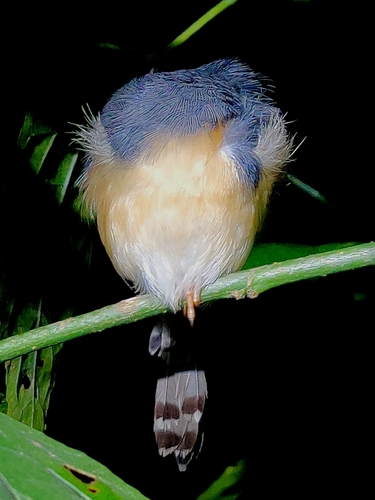 Ashy Prinia
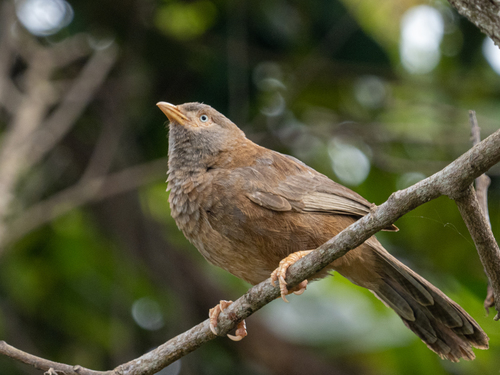 Yellow-billed Babbler
In short
The most reliable field mark to separate Ashy Prinia from Yellow-billed Babbler is size and social behavior: Ashy Prinia is a tiny, solitary or paired warbler with a distinctly upright, often cocked tail, while Yellow-billed Babbler is much larger, always in noisy groups, and never cocks its tail. Ashy Prinia shows rufous underparts and a short, fine black bill, contrasting with the babbler's pale buff belly, grey-brown upperparts, and thick, yellow bill. In flight or perched, the prinia's small size, long graduated tail with black tips, and energetic, hopping movements are diagnostic, versus the babbler's heavy, rounded body and broad tail. Juvenile and seasonal variation in both species can cause confusion, but the combination of structure, tail shape, and flocking behavior is decisive.
Identification tips
- Size and structure: Ashy Prinia is tiny (8 g), with a fine, short black bill; Yellow-billed Babbler is much larger and bulkier, with a thick, yellow bill. Size difference is obvious in direct comparison or when familiar with both.
- Tail shape and carriage: Prinia has a long, graduated tail with black subterminal spots, usually held upright or cocked; babbler has a broad, rounded tail with a dark tip, never cocked, and held more horizontally.
- Social behavior: Ashy Prinia is solitary or in pairs; babbler is always in noisy, tight-knit groups. If you see a flock, it's almost certainly babblers.
- Plumage (adults, breeding): Prinia (northern) is ash-grey above with black crown/cheek, rufous underparts, and coppery-brown wings; babbler is grey-brown above, pale buff below, with a pale or whitish crown/nape (Indian race) or drab grey (Sri Lankan race).
- Plumage (adults, non-breeding): Prinia (northern) becomes warmer brown above with a short white supercilium and longer tail; babbler shows little seasonal change but may be greyer in Sri Lanka.
- Juvenile confusion: Juvenile prinia (Sri Lankan race) has yellowish underparts but remains small and upright-tailed; babbler juveniles are not described but will be in groups and show bulkier structure.
- Bill color: Prinia always has a short, fine black bill; babbler has a thick, yellow bill, easily seen at close range.
- Crown and face: Prinia (breeding, northern) has a black crown and cheek with no supercilium; babbler has a pale or whitish crown/nape (Indian race) or uniform grey (Sri Lankan race), with a pale bluish-white eye.
- Underparts: Prinia has rufous or yellowish underparts (depending on race/age); babbler has pale buff belly and grey-mottled throat/breast.
- Upperparts: Prinia is ash-grey or slaty above (depending on race/season); babbler is grey-brown or drab grey.
- Flight style: Prinia makes a loud snapping noise in flight and has short, rounded wings; babbler has weak, fluttery flight and is rarely seen flying far.
- Vocalizations: Listen for the prinia's sharp snapping flight sound (mechanical); babbler is very vocal in groups, with higher-pitched, varied calls.
- Habitat context: Both use gardens and scrub, but babbler is southern India/Sri Lanka only; prinia is widespread. Single birds in open areas are likely prinias, groups in denser vegetation are babblers.
- Jizz: Prinia is energetic, hops and clambers with frequent tail flicks; babbler is slower, more deliberate, and often seen preening or bathing in groups.
- Pitfalls: Non-breeding prinia can appear browner and less contrasting, but remains tiny and upright-tailed. Babbler may be confused with Jungle Babbler, but not with prinia if size and social behavior are noted.
Size
Ashy Prinia is much smaller (body mass ~8 g [wikidata]), with a delicate, warbler-like build and short rounded wings. Yellow-billed Babbler is considerably larger and bulkier (no mass given, but much heavier by direct comparison), with a broad, rounded body typical of babblers. In the field, the prinia appears tiny and agile, while the babbler is noticeably bigger, often described as 'chunky' or 'heavyset.'
Plumage
- Juvenile/immature birds: Ashy Prinia juveniles (notably the Sri Lankan race) have yellowish underparts, but still show the small size and upright tail. Yellow-billed Babbler juveniles are not described in detail, but group behavior and structure remain distinctive.
- Adults, breeding: Ashy Prinia (northern populations) shows ash-grey upperparts, black crown and cheek, no supercilium, coppery-brown wings, and rufous underparts. Yellow-billed Babbler adults have grey-brown upperparts, grey throat and breast with some mottling, pale buff belly, and a pale or whitish crown/nape (Indian race) or uniform pale grey (Sri Lankan race). Babbler's tail is broad with a dark tip, not graduated or black-tipped like prinia.
- Adults, non-breeding/winter: Ashy Prinia (northern) becomes warmer brown above, with a longer tail and a short, narrow white supercilium. Other races retain summer plumage. Yellow-billed Babbler shows little seasonal change, but the Sri Lankan form is drabber grey.
Behaviour
Ashy Prinia is almost always seen singly or in pairs, moving actively through low shrubs or hopping on the ground, with frequent tail flicking and upright tail posture. It often makes a loud snapping noise in flight, possibly from the wings or tail. In contrast, Yellow-billed Babbler is gregarious, always in noisy groups (often 6–10 or more), foraging together, preening, and roosting communally. Babblers are less active and more deliberate in movement, rarely flicking the tail, and often seen allopreening or bathing together.
Habitat
Both species occur in gardens, scrub, and cultivated land, but Ashy Prinia is widespread across the Indian subcontinent and can be found in a variety of open habitats, often lower in vegetation. Yellow-billed Babbler is restricted to southern India and Sri Lanka, and is especially common in dense shrubbery, gardens, and cultivated areas, but always in groups. If you see a single small bird in low bushes, it's likely a prinia; a noisy group in denser vegetation is likely babblers.
Voice
Ashy Prinia is best known for its loud, sharp snapping noise during flight (mechanical, not vocal), and its song is delivered from bush tops, but details are not provided here. Yellow-billed Babbler has a variety of vocalizations, higher-pitched than Jungle Babbler, and is very vocal in groups, often calling with wing-fluttering and hopping. The babbler’s calls are more varied and social, while the prinia’s snapping sound is unique and diagnostic if heard.