
Motmot

Arabian Eagle Owl vs Pharaoh Eagle Owl

Bubo milesi versus Bubo ascalaphus

Play a quiz with Arabian Eagle Owl and Pharaoh Eagle Owl
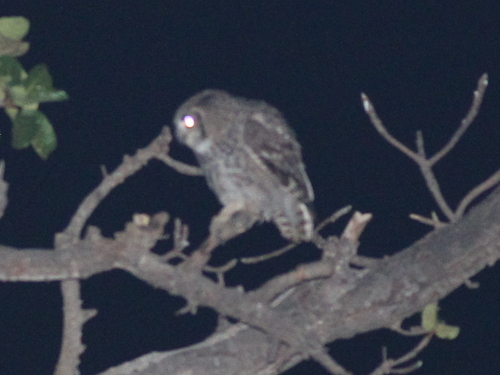
Arabian Eagle Owl (Bubo milesi) Arabian Eagle Owl
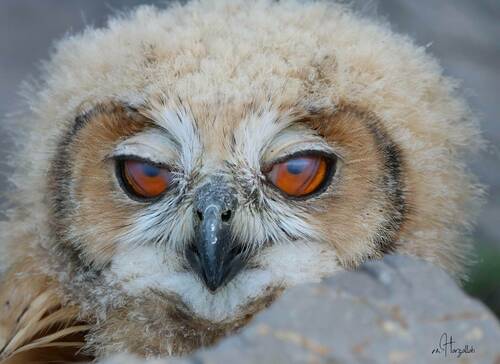
Pharaoh Eagle Owl (Bubo ascalaphus) Pharaoh Eagle Owl

Media

Loading…

In short

The most reliable field mark between Arabian Eagle Owl and Pharaoh Eagle Owl is eye color: Arabian Eagle Owl has bright yellow eyes, while Pharaoh Eagle Owl shows large orange-yellow eyes. Both species are medium-sized eagle-owls with prominent ear-tufts and similar overall structure, but Arabian Eagle Owl is slightly smaller and has darker plumage. In the field, subtle differences in overall coloration and eye color are key, as their shapes and behaviors are very similar. Habitat can help: Arabian Eagle Owl is restricted to the Arabian Peninsula, while Pharaoh Eagle Owl is found further north and west in the Middle East and North Africa.

Identification tips

  1. Eye Color: Arabian Eagle Owl has bright yellow eyes, while Pharaoh Eagle Owl's eyes are large and orange-yellow. This is the most reliable field mark if seen well in good light.
  2. Overall Plumage Tone: Arabian Eagle Owl is slightly darker overall, with duskier tones, while Pharaoh Eagle Owl is paler and sandier, especially on the underparts. This difference is subtle and best judged in direct comparison or good light.
  3. Underparts Pattern: Pharaoh Eagle Owl shows pale creamy-white underparts with black streaks on the upper breast and fine reddish-brown vermiculations on the lower breast and belly. Arabian Eagle Owl's underparts are less distinctly marked and appear duskier overall.
  4. Facial Disc: Both species have a disc-like facial structure with a dark rim, but this is not a reliable separator between the two.
  5. Ear-tufts: Both have prominent ear-tufts; this feature does not separate them.
  6. Bill: Both species have a robust, black, hooked bill. Not useful for separation.
  7. Size: Pharaoh Eagle Owl is slightly larger (46–50 cm), but this is difficult to judge unless both species are seen side-by-side.
  8. Habitat and Range: Arabian Eagle Owl is restricted to the Arabian Peninsula and avoids the most barren deserts. Pharaoh Eagle Owl is found further north and west, in North Africa and the Middle East. In the Arabian Peninsula, a medium-sized eagle-owl in rocky or vegetated coastal areas is more likely Arabian Eagle Owl.
  9. Geographic Context: If seen in southwestern Saudi Arabia, Yemen, Oman, or UAE, Arabian Eagle Owl is the expected species. In North Africa or the broader Middle East, Pharaoh Eagle Owl is more likely.
  10. Juvenile/Immature Plumage: No distinctive age-specific marks are described for either species, so use adult field marks for all ages.
  11. Flight Views: No diagnostic differences in wing or flight pattern are described; both show typical eagle-owl structure and flight style.
  12. Perched Views: Focus on eye color and overall darkness of plumage when viewing perched birds.
  13. Voice: No vocal differences are described in the notes; do not rely on voice for separation.
  14. Pitfalls: Both species are very similar in structure and general appearance. Poor light can make eye color unreliable; always try to confirm with multiple features.
  15. Sex and Season: No seasonal or sexual plumage differences are described for either species.

Size

Both species are medium-sized eagle-owls, but Arabian Eagle Owl is slightly smaller than Pharaoh Eagle Owl. Pharaoh Eagle Owl is listed at 46–50 cm in length, making it one of the smaller eagle-owls, but still a bit larger than Arabian Eagle Owl. In the field, the size difference is subtle and may not be obvious unless seen side-by-side; both have a robust, powerful build typical of Bubo owls. There is no evidence of significant sexual dimorphism in size for either species.

Plumage

No age-specific wing or flight pattern differences are described for these two species, so separation relies on overall coloration and facial features in all plumages. Arabian Eagle Owl is slightly darker overall than Pharaoh Eagle Owl, which tends to have a paler, sandier appearance with more extensive creamy-white on the underparts. Pharaoh Eagle Owl's upperparts are tawny with dense black and creamy-white streaks and blotches, while its underparts are pale creamy-white with black streaks on the upper breast and fine reddish-brown vermiculations below. Arabian Eagle Owl also has prominent ear-tufts and a facial disc, but its eyes are bright yellow (not orange-yellow), and its plumage is generally duskier. Both species have a dark rim to the facial disc and a black, hooked bill. Juvenile and immature plumages are not described as distinctive between the two, so these marks apply to all ages.

Behaviour

Both species are nocturnal hunters with similar behaviors typical of eagle-owls: they perch quietly by day and hunt rodents and small animals at night. Both use their prominent ear-tufts and facial discs for enhanced hearing and night vision. There are no described behavioral differences that are diagnostic in the field.

Habitat

Arabian Eagle Owl is endemic to the Arabian Peninsula, especially southwestern Saudi Arabia, Yemen, Oman, and the UAE, and is usually found in coastal areas, wadis, cliffs, canyon walls, and large palms or trees, avoiding the most barren desert interiors. Pharaoh Eagle Owl is found in the Middle East and North Africa, often in arid or semi-arid regions, but the notes do not specify fine-scale habitat differences. In areas of overlap, Arabian Eagle Owl is more likely in rocky or vegetated coastal and near-coastal habitats, while Pharaoh Eagle Owl can be found in broader desert and semi-desert landscapes.

Submit a better description

Use the same sections as the comparison. Your text is published immediately.

The most reliable field mark between Arabian Eagle Owl and Pharaoh Eagle Owl is eye color: Arabian Eagle Owl has bright yellow eyes, while Pharaoh Eagle Owl shows large orange-yellow eyes. Both species are medium-sized eagle-owls with prominent ear-tufts and similar overall structure, but Arabian Eagle Owl is slightly smaller and has darker plumage. In the field, subtle differences in overall coloration and eye color are key, as their shapes and behaviors are very similar. Habitat can help: Arabian Eagle Owl is restricted to the Arabian Peninsula, while Pharaoh Eagle Owl is found further north and west in the Middle East and North Africa.

  1. Eye Color: Arabian Eagle Owl has bright yellow eyes, while Pharaoh Eagle Owl's eyes are large and orange-yellow. This is the most reliable field mark if seen well in good light.
  2. Overall Plumage Tone: Arabian Eagle Owl is slightly darker overall, with duskier tones, while Pharaoh Eagle Owl is paler and sandier, especially on the underparts. This difference is subtle and best judged in direct comparison or good light.
  3. Underparts Pattern: Pharaoh Eagle Owl shows pale creamy-white underparts with black streaks on the upper breast and fine reddish-brown vermiculations on the lower breast and belly. Arabian Eagle Owl's underparts are less distinctly marked and appear duskier overall.
  4. Facial Disc: Both species have a disc-like facial structure with a dark rim, but this is not a reliable separator between the two.
  5. Ear-tufts: Both have prominent ear-tufts; this feature does not separate them.
  6. Bill: Both species have a robust, black, hooked bill. Not useful for separation.
  7. Size: Pharaoh Eagle Owl is slightly larger (46–50 cm), but this is difficult to judge unless both species are seen side-by-side.
  8. Habitat and Range: Arabian Eagle Owl is restricted to the Arabian Peninsula and avoids the most barren deserts. Pharaoh Eagle Owl is found further north and west, in North Africa and the Middle East. In the Arabian Peninsula, a medium-sized eagle-owl in rocky or vegetated coastal areas is more likely Arabian Eagle Owl.
  9. Geographic Context: If seen in southwestern Saudi Arabia, Yemen, Oman, or UAE, Arabian Eagle Owl is the expected species. In North Africa or the broader Middle East, Pharaoh Eagle Owl is more likely.
  10. Juvenile/Immature Plumage: No distinctive age-specific marks are described for either species, so use adult field marks for all ages.
  11. Flight Views: No diagnostic differences in wing or flight pattern are described; both show typical eagle-owl structure and flight style.
  12. Perched Views: Focus on eye color and overall darkness of plumage when viewing perched birds.
  13. Voice: No vocal differences are described in the notes; do not rely on voice for separation.
  14. Pitfalls: Both species are very similar in structure and general appearance. Poor light can make eye color unreliable; always try to confirm with multiple features.
  15. Sex and Season: No seasonal or sexual plumage differences are described for either species.

Both species are medium-sized eagle-owls, but Arabian Eagle Owl is slightly smaller than Pharaoh Eagle Owl. Pharaoh Eagle Owl is listed at 46–50 cm in length, making it one of the smaller eagle-owls, but still a bit larger than Arabian Eagle Owl. In the field, the size difference is subtle and may not be obvious unless seen side-by-side; both have a robust, powerful build typical of Bubo owls. There is no evidence of significant sexual dimorphism in size for either species.

No age-specific wing or flight pattern differences are described for these two species, so separation relies on overall coloration and facial features in all plumages. Arabian Eagle Owl is slightly darker overall than Pharaoh Eagle Owl, which tends to have a paler, sandier appearance with more extensive creamy-white on the underparts. Pharaoh Eagle Owl's upperparts are tawny with dense black and creamy-white streaks and blotches, while its underparts are pale creamy-white with black streaks on the upper breast and fine reddish-brown vermiculations below. Arabian Eagle Owl also has prominent ear-tufts and a facial disc, but its eyes are bright yellow (not orange-yellow), and its plumage is generally duskier. Both species have a dark rim to the facial disc and a black, hooked bill. Juvenile and immature plumages are not described as distinctive between the two, so these marks apply to all ages.

Both species are nocturnal hunters with similar behaviors typical of eagle-owls: they perch quietly by day and hunt rodents and small animals at night. Both use their prominent ear-tufts and facial discs for enhanced hearing and night vision. There are no described behavioral differences that are diagnostic in the field.

Arabian Eagle Owl is endemic to the Arabian Peninsula, especially southwestern Saudi Arabia, Yemen, Oman, and the UAE, and is usually found in coastal areas, wadis, cliffs, canyon walls, and large palms or trees, avoiding the most barren desert interiors. Pharaoh Eagle Owl is found in the Middle East and North Africa, often in arid or semi-arid regions, but the notes do not specify fine-scale habitat differences. In areas of overlap, Arabian Eagle Owl is more likely in rocky or vegetated coastal and near-coastal habitats, while Pharaoh Eagle Owl can be found in broader desert and semi-desert landscapes.

Discard your changes?

You have unsaved edits. If you leave now, those changes will be lost.

Arabian Eagle Owl · Pharaoh Eagle Owl · My Tricky Birds