

Alpine Accentor vs Black-throated Accentor
Prunella collaris versus Prunella atrogularis
Play a quiz with Alpine Accentor and Black-throated Accentor
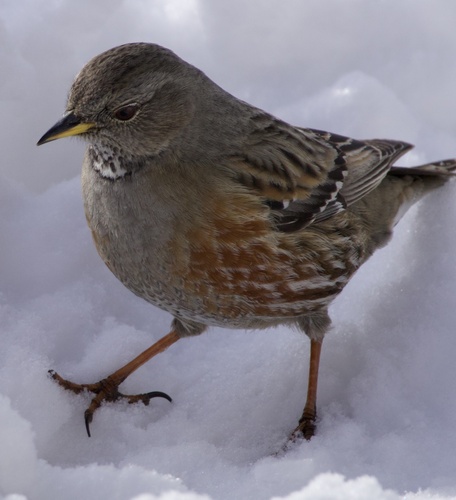 Alpine Accentor
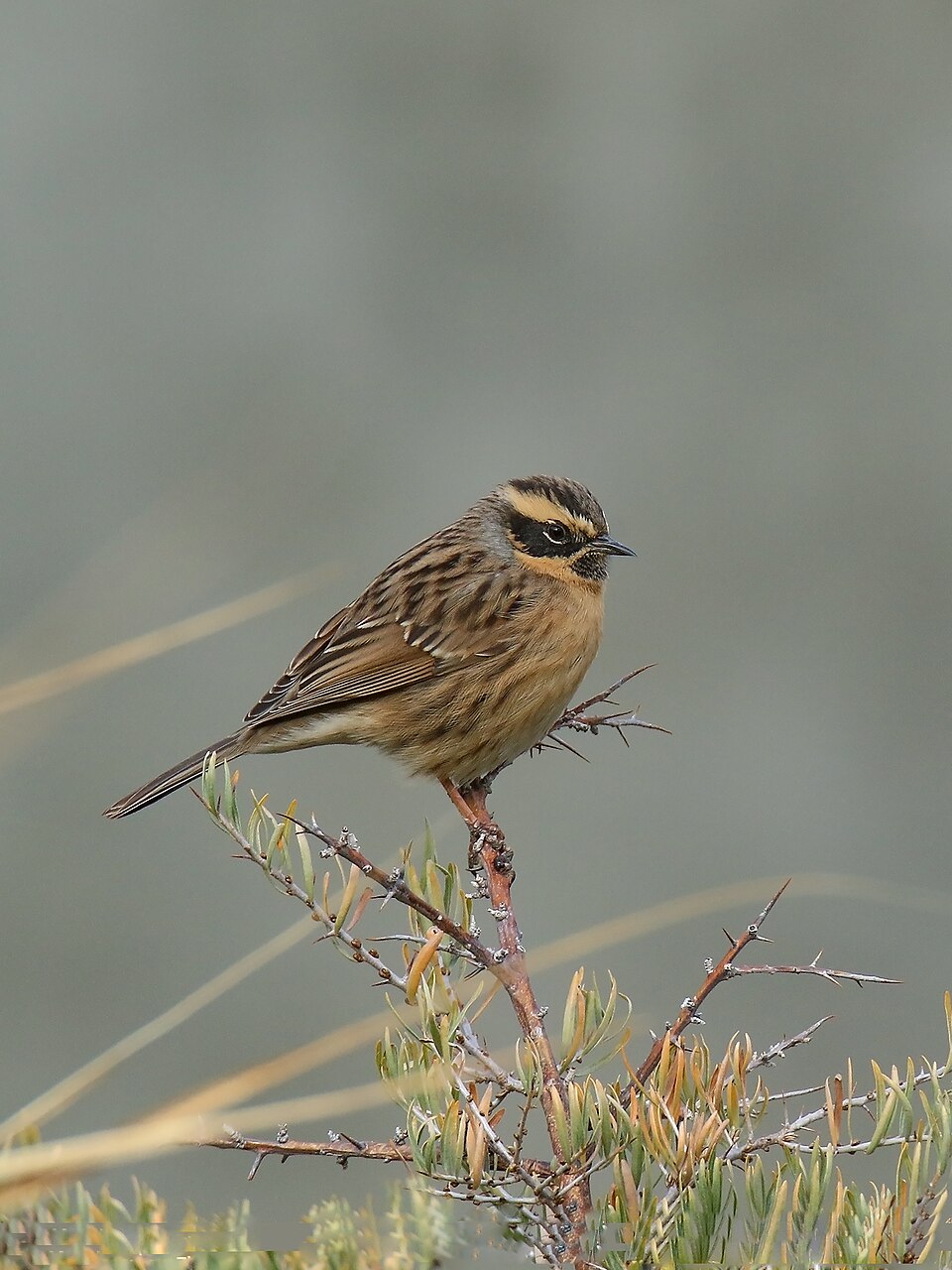 Black-throated Accentor
In short
The most reliable way to separate Alpine Accentor from Black-throated Accentor is by head and throat pattern in adults: Alpine Accentor shows an all-grey head with no black, while Black-throated Accentor has a striking black throat, crown, and face patch with a contrasting white supercilium. Juvenile and winter birds can be trickier, as the black throat of Black-throated Accentor may be faint or missing, but Alpine Accentor never shows a black throat or crown at any age. Alpine Accentor is also noticeably larger and bulkier, with a robin-like size, compared to the smaller, dunnock-sized Black-throated Accentor. Both have streaked brown backs, but the underparts differ: Alpine Accentor has red-brown spotting, while Black-throated Accentor shows orange breast and white belly with orange stripes. Structure and habitat can help, but focus on head pattern and size for the quickest field separation.
Identification tips
- Head and throat pattern (adults): Alpine Accentor always shows an all-grey head with no black on the throat or crown. Black-throated Accentor has a bold black throat, crown, and face patch, plus a white supercilium—this is the fastest and most reliable field mark in adults.
- Juvenile and winter birds: Young and winter Black-throated Accentors may lack a strong black throat, but still often show a dark face and some supercilium contrast. Juvenile Alpine Accentors are browner but never show black on the throat or crown. If you see any black on the throat or crown, rule out Alpine Accentor.
- Underparts: Alpine Accentor has red-brown spotting on the underparts, while Black-throated Accentor shows an orange breast and a white belly with orange stripes. This is visible when the bird is perched or foraging.
- Back and mantle: Both species have a streaked brown back reminiscent of a house sparrow, so this is not a useful separator.
- Size and structure: Alpine Accentor is noticeably larger (robin-sized, 15–17.5 cm) and bulkier than the smaller, more delicate Black-throated Accentor (dunnock-sized, 13.5–14 cm). Use this when you have a good sense of scale or see both together.
- Bill: Both have a fine, pointed bill, so this is not a separator.
- Supercilium: Black-throated Accentor has a strong white supercilium, especially in adults, which is lacking in Alpine Accentor.
- Crown color: Alpine Accentor's crown is grey, while Black-throated Accentor's is black in adults.
- Flight and upperwing pattern: No distinctive flight or upperwing marks are described for either species in these sources; do not rely on wing pattern for separation.
- Habitat and range: Alpine Accentor is found in high mountains of southern Europe and Asia, usually above 2,000 m, and is mostly resident. Black-throated Accentor breeds further east and is migratory; in western Europe, it is only a rare vagrant. Use range and habitat context as supporting evidence, not primary ID.
- Behavior: Both forage on the ground in open or rocky areas; Alpine Accentor may appear more robust in movement due to its size.
- Voice: Black-throated Accentor gives a fine 'ti-ti-ti' call and a twittering song, but Alpine Accentor's voice is not described here—do not rely on voice unless you know the calls from other sources.
- Sex differences: Both species are similar between sexes, but male Alpine Accentor may appear more contrasted, though this is subtle and not a primary field mark.
- Pitfalls: In poor light or at distance, a juvenile or winter Black-throated Accentor with a faint throat patch may look superficially like Alpine Accentor, but look for any hint of black on the face or throat and the white supercilium to clinch the ID.
- Summary tip: If you see a black throat or crown and a white supercilium, it's Black-throated Accentor; if the head is all grey with no black, it's Alpine Accentor.
Size
Alpine Accentor is distinctly larger, measuring 15–17.5 cm in length (robin-sized), while Black-throated Accentor is smaller at 13.5–14 cm (dunnock-sized) [wikipedia]. This size difference is often apparent in direct comparison or with experience. Both have a fine, pointed bill typical of accentors, but Alpine Accentor appears bulkier overall.
Plumage
Adult Alpine Accentor has an all-grey head and lacks any black on the throat or crown, with red-brown spotting on the underparts. In contrast, adult Black-throated Accentor features a bold black crown, face patch, and throat, with a crisp white supercilium, orange breast, and white belly with orange streaks. Juvenile and winter Black-throated Accentors lose much of the black on the throat and face, sometimes appearing only faintly marked, but still show some contrast around the face and a suggestion of the supercilium. Juvenile Alpine Accentors have browner heads and underparts than adults, but never show black on the throat or crown. Both species have streaked brown backs reminiscent of a house sparrow, but the underparts pattern and head are key. No distinctive upperwing or flight pattern marks are noted for either species in the sources.
Behaviour
Both species forage on the ground and in low vegetation, often in open or rocky areas. Alpine Accentor may appear more robust and deliberate in movement due to its larger size, while Black-throated Accentor is more delicate and quick. Social behavior is not diagnostic in the field, though Alpine Accentor's complex breeding groups are unlikely to be observed casually.
Habitat
Alpine Accentor is found in high mountain areas of southern temperate Europe, Lebanon, and Asia, typically above 2,000 m, favoring bare rocky slopes with sparse vegetation. It is mostly resident, though it may descend lower in winter. Black-throated Accentor breeds in the Ural, Tian Shan, and Altai Mountains and is migratory, wintering in Afghanistan and nearby regions. It is a rare vagrant in western Europe. Overlap is rare except as vagrants, but both prefer open, rocky, or shrubby mountain habitats.
Voice
Black-throated Accentor gives a fine 'ti-ti-ti' call and has a pleasant twittering song similar to the dunnock. No specific vocal description is provided for Alpine Accentor in these notes, so voice is not a reliable separator based on this information.