

Scaly-breasted Hummingbird
Phaeochroa cuvierii
Hummingbirds (Trochilidae) · Apodiformes · Hummingbirds
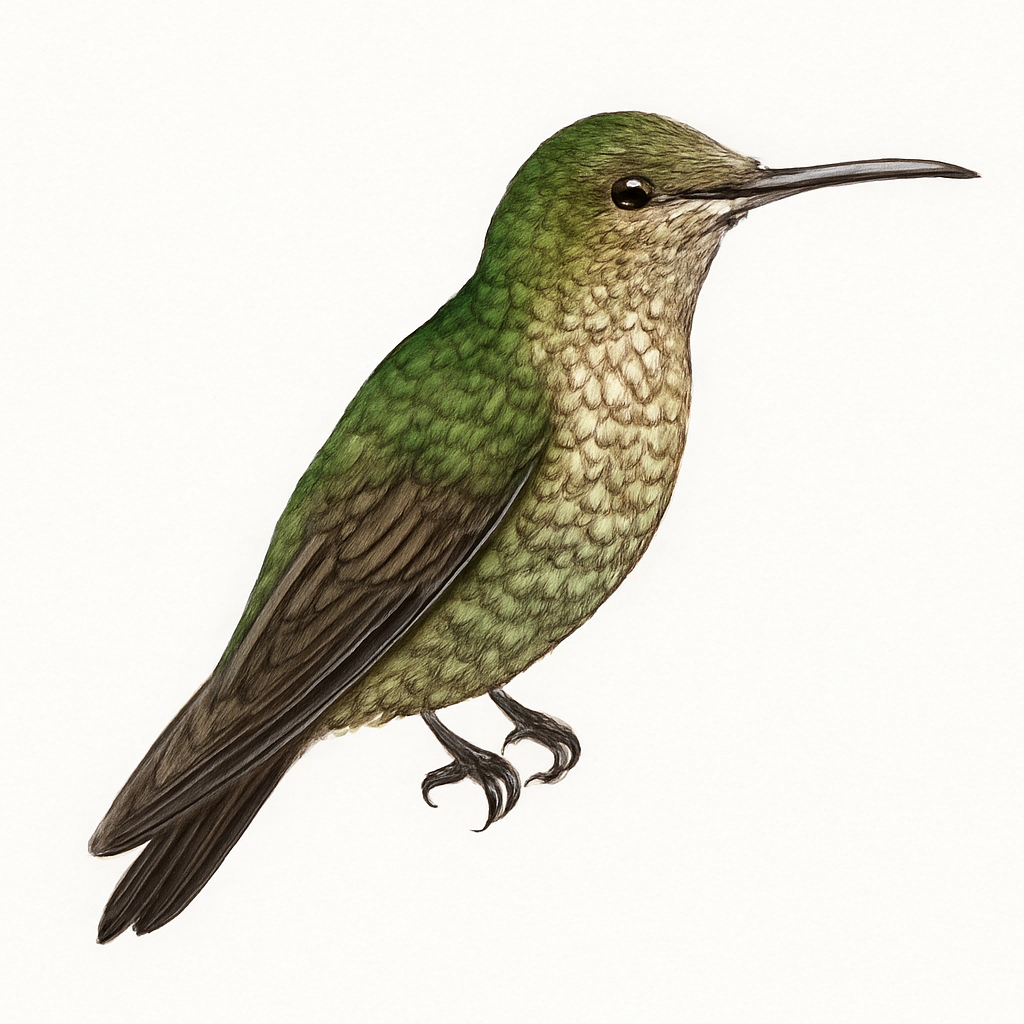
Play a quiz with Scaly-breasted Hummingbird and similar species
View all photos, video and sound
Review needed
Motmot is a community-driven project, and many photos still need a human check. If you know this bird, you can help by reviewing its images.
O-o, we ran out of AI credits. I develop Motmot in my spare time, and there is no funding behind it right now. If you would like to help it grow, write to me at info@motmot.club.
How to identify Scaly-breasted Hummingbird
Writing identification notes…
This looks up identification notes in open sources, then asks the model to write them. It can take a minute.
Log in to generate identification notes for this bird.
Often mixed up with
In quizzes, players most often confuse Scaly-breasted Hummingbird with these birds—either this species was picked by mistake, or the other way around.
| Species | Mix-ups |
|---|---|
| White-tailed Emerald Microchera chionura | 6 |
| Blue-tailed Hummingbird Saucerottia cyanura | 4 |
| Stripe-tailed Hummingbird Eupherusa eximia | 3 |
| Azure-crowned Hummingbird Saucerottia cyanocephala | 1 |
Family
Hummingbirds are birds native to the Americas and comprise the biological family Trochilidae. With approximately 375 species and 113 genera, they occur from Alaska to Tierra del Fuego, but most species are found in Central and South America. As of 2026, 21 hummingbird species are listed as endangered or critically endangered, with about 255 species declining in population.
Order
The Apodiformes is an order, or taxonomic grouping, of birds which traditionally contained three living families—the Apodidae (swifts), the Hemiprocnidae (treeswifts), and the Trochilidae (hummingbirds); however, in the Sibley-Ahlquist taxonomy, this order is elevated to the superorder Apodimorphae, in which hummingbirds are separated into a new order, the Trochiliformes. With nearly 450 species identified to date, it is the most diverse order of birds after the Passeriformes (the "perching" birds).