Motmot

Bird course · Lesson 14 · 12 minutes

Reeds and wetlands

Five birds from the reed beds and the open water

Today we visit a reed bed. A nature reserve with reeds, a few pools and a hide is one of the best places to practise bird watching, and all five of today's birds live there, or on a river nearby.

Reed bed birds are easy to hear and hard to see. In spring they sing from the top of a stem, which gives you a few seconds to look. On the open water, grebes are much easier: they dive, but they come up again. And then there is the one everyone wants to see, a flash of electric blue along the river.

At the end there's a quiz of ten questions, with birds from the last two lessons mixed in.

Today: 5 birds

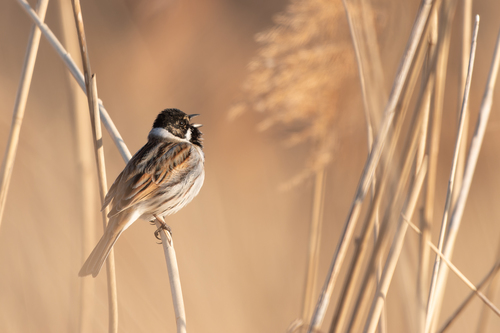
Reed Bunting, adult male, summer adult male, summer
Photo: tomasbroucek · CC BY

Bird 1 of 5

Reed Bunting

Emberiza schoeniclus

How to recognise it

  • Black head and black bib
  • White moustache and white collar
  • Streaky brown back
collar A narrow ring of a different colour around the neck.

Where and when

Reed beds, ditches and wet fields. The male sings from the top of a reed or a bush in spring, a plain, short song.

Song A simple, halting "tink... tink... tink-tink-tissik", a few notes with pauses. Recording: Dries Van de Loock · xeno-canto

In winter the male's black head is hidden behind brown feather tips, and looks like the female.

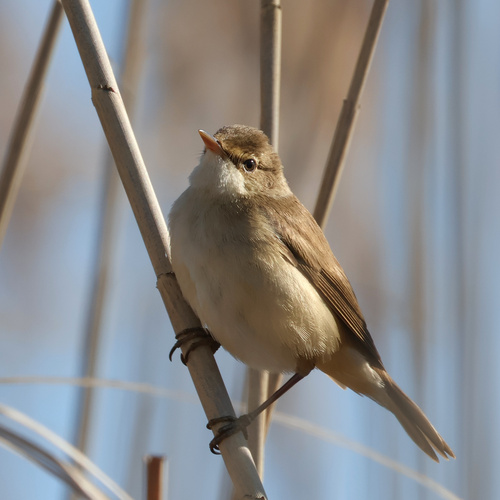
Reed Warbler, adult adult
Photo: Mileta Čeković · CC BY-NC

Bird 2 of 5

Reed Warbler

Acrocephalus scirpaceus

How to recognise it

  • Plain warm brown, with no streaks
  • Pale throat, long pointed bill
  • Clings to reed stems

Where and when

Reed beds, from April to September. Slides up and down the stems and sings from deep inside the reeds. It winters in Africa.

Song A steady, chattering stream: "churr-churr, chirruc-chirruc, jag-jag", each phrase repeated two or three times. Recording: Lars Edenius · xeno-canto

A Cuckoo's favourite foster parent: it often lays its egg in a Reed Warbler's nest.

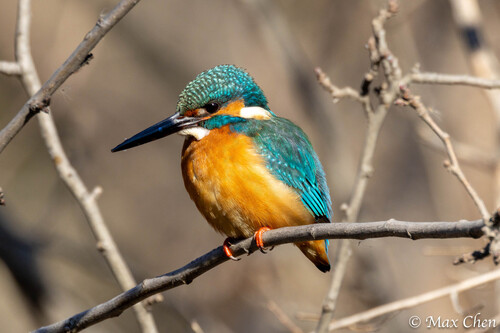
Kingfisher, adult adult
Photo: Sihan (Max) Chen · CC BY-NC

Bird 3 of 5

Kingfisher

Alcedo atthis

How to recognise it

  • Electric blue-green back, orange underneath
  • Dagger-shaped bill, short tail
  • Perches low over water, then dives

Where and when

Slow rivers, canals and lakes with overhanging branches, all year. Usually seen as a blue flash flying low over the water.

Call A high, piercing "chee!" or "chi-kee", usually in flight. Recording: GIRARD · xeno-canto

You hear one far more often than you see one. If you hear that whistle, look low, over the water.

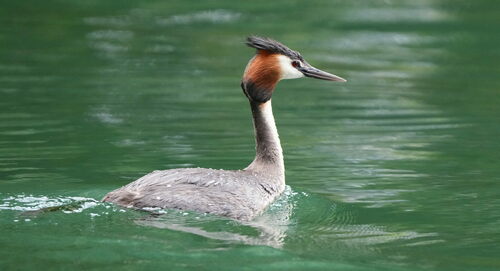
Great Crested Grebe, adult, summer adult, summer
Photo: william-harland · CC BY

Bird 4 of 5

Great Crested Grebe

Podiceps cristatus

How to recognise it

  • Long white neck, pointed bill
  • Orange-brown ruff with a black edge
  • Two black ear tufts on the head
ruff A frill of long feathers around the head and neck.

Where and when

Lakes, reservoirs and gravel pits. Dives for fish, and in spring the pairs perform a famous courtship dance, shaking their heads and offering weed.

Call A barking "rah-rah" and a growling "gorr". Recording: Peter Boesman · xeno-canto
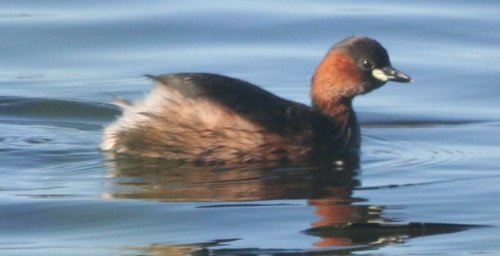
Little Grebe, adult, summer adult, summer
Photo: phoekman · CC BY

Bird 5 of 5

Little Grebe

Tachybaptus ruficollis

How to recognise it

  • Small and round, like a fluffy ball
  • Chestnut cheeks and neck
  • Pale yellow spot at the gape
gape The corner where the upper and lower bill meet.

Where and when

Small ponds, ditches, lakes and slow rivers. Dives often, and pops up again somewhere else. Hides in vegetation.

Call A whinnying trill, like a small horse: "bibibibibibi". Recording: Olivier SWIFT · xeno-canto

Also called a Dabchick.

Great Crested Grebe or Little Grebe?

Great Crested GrebeGreat Crested Grebe
Little GrebeLittle Grebe

Size is the clue. The Great Crested Grebe is big and elegant, with a long white neck. The Little Grebe is tiny and round, and looks like a fluffy ball with a short neck.

Quiz

10 questions, with a few birds from earlier lessons mixed in. Your answers stay in this browser.

Out and about this week

Visit a nature reserve with reeds and open water this week, or a river bank. Which of the five can you find? Listen first, then look. If you are near a river, scan the overhanging branches for a small blue-and-orange bird.