Motmot

Advanced birding · Lesson 34 · 22 minutes

Southern overshoots and autumn falls

Hoopoe, Bee-eater, Woodchat Shrike, Squacco Heron, Glossy Ibis, Subalpine Warbler, Rosefinch and Wryneck

When a warm spell and south winds arrive in April and May, a few birds from the Mediterranean fly past their breeding grounds and arrive on the coasts of north-west Europe. These are 'overshoots'. Hoopoes, Bee-eaters, Woodchat Shrikes and Subalpine Warblers are the best-known, and each year a handful appear in southern England, the Netherlands and Denmark. Some of them stay to breed in a warm year.

In autumn the pattern is different: east winds and low cloud in September bring a 'fall' of migrants from Scandinavia: thousands of thrushes, warblers and flycatchers on the east coast overnight. Rosefinches and Wrynecks are two birds that turn up in falls.

Both are a matter of weather. Check the forecast, and go to the coast the morning after.

Today: 8 birds

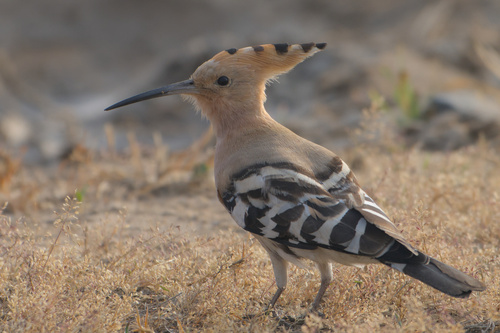
Common Hoopoe, adult adult
Photo: Dhruva Punde · CC BY-NC

Bird 1 of 8

Common Hoopoe

Upupa epops

How to recognise it

  • Pinkish-cinnamon, with a long, curved bill and a fan-shaped crest
  • Boldly striped black-and-white wings and tail
  • Probes the ground on a lawn, with a bobbing, undulating flight
crest A tuft of long feathers on the head. A Hoopoe has a large, fan-shaped one.

Where and when

FR: fairly common breeder, April to September. NL, BE, DE, DK, UK: rare overshoots in March to May and in autumn. IE, NO, SE, FI: rare to very rare. A bird that can turn up in a garden for a day or two.

Call A soft, deep, far-carrying “hoop-hoop-hoop”, three notes. Recording: Stanislas Wroza · xeno-canto

Probably the most obvious of all overshoots. A bird that stands on a lawn is an event.

Don’t confuse with: Eurasian Jay (beginners): a crest-less, pink-brown bird with blue wing patches.

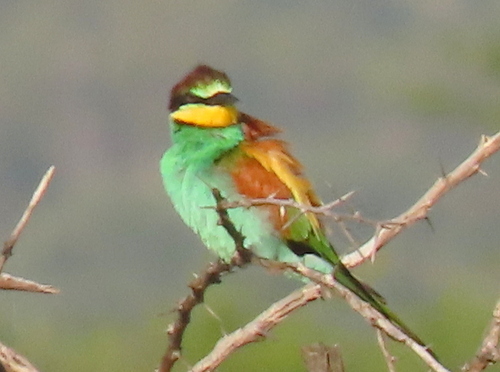
European Bee-eater, adult adult
Photo: Gigi Laidler · CC BY-NC

Bird 2 of 8

European Bee-eater

Merops apiaster

How to recognise it

  • Blue underparts, chestnut crown and back, and a golden-yellow throat
  • Long, pointed wings and a slender, curved bill
  • Hawks insects from a wire or a branch, in groups

Where and when

FR: fairly common breeder in the south, April to September. NL, BE, DE, DK, UK: rare overshoots in May and June, with a few breeding attempts. IE, NO, SE, FI: very rare. A bird that can arrive in a flock.

Call A rolling, liquid “prrip-prrip”, often heard before the bird is seen. Recording: Gianluca Congi · xeno-canto

A bird of unbelievable colour that you hear first. It is regular in small flocks that stay a day or two.

Don’t confuse with: Common Kingfisher (beginners): a blue back with orange underparts, and a long, dagger-shaped bill.

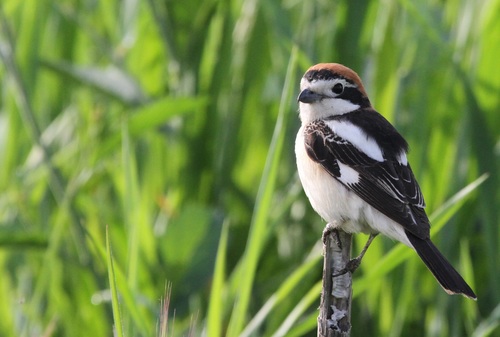
Woodchat Shrike, adult adult
Photo: karimhaddad · CC BY

Bird 3 of 8

Woodchat Shrike

Lanius senator

How to recognise it

  • A chestnut cap and nape, a black mask and a white shoulder patch
  • White underparts and a black back with white at the base of the tail
  • Sits upright on a bush, scanning for insects

Where and when

FR: scarce breeder in the south. NL, BE, DE, DK, UK: rare overshoots, in April to June, and a few in autumn. IE, NO, SE, FI: very rare. A bird that is easy to find when it sits in the open.

Call A short, harsh “kwik”, and a soft, warbling song. Recording: Dominique Guillerme · xeno-canto

A bright, striking shrike that turns up almost every spring. Juveniles in autumn are scaly brown-grey.

Don’t confuse with: Red-backed Shrike (week 38): a grey head and a black mask, and a chestnut back.

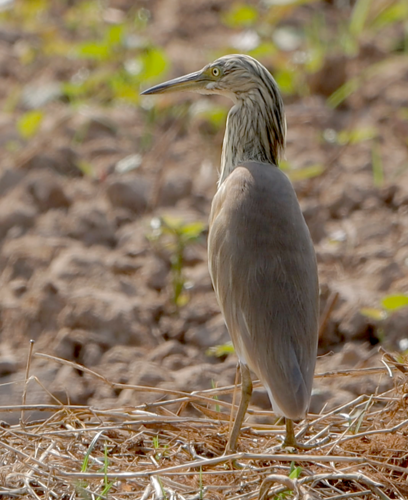
Squacco Heron, adult adult
Photo: Florin Feneru · CC BY

Bird 4 of 8

Squacco Heron

Ardeola ralloides

How to recognise it

  • A small, buff-brown heron, streaked, with a short neck
  • In flight, bright white wings appear, like a pale butterfly
  • A thin yellow bill with a dark tip, and a hunched posture

Where and when

FR: scarce summer visitor in the south, April to September. NL, BE, DE, DK, UK: very rare overshoots in May and June. IE, NO, SE, FI: almost never. A bird that can sit for hours, hidden in the reeds.

Call A short, harsh croak, “kra”, usually silent. Recording: Cedric Mroczko · xeno-canto

A hidden bird, until it flies and the white wings flash. A small, buff bird crouched at the edge of a pond.

Don’t confuse with: Little Egret (beginners): all white, with a long black bill and black legs.

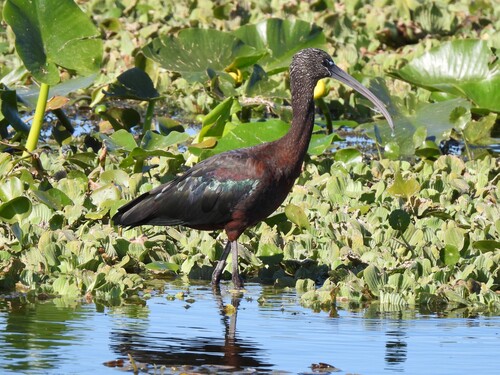
Glossy Ibis, adult adult
Photo: geosesarma · CC BY

Bird 5 of 8

Glossy Ibis

Plegadis falcinellus

How to recognise it

  • Dark, with a dull, glossy sheen, chestnut and green in good light
  • A long, downcurved bill and long legs, and a slim, curved shape
  • In flight: a neck held straight out, and a flap-and-glide action

Where and when

FR: uncommon, breeding in the south. UK, NL, BE, DE, DK, IE: rare but increasing, mostly from April to October, with regular winter flocks in the UK and IE. SE, NO, FI: very rare. A bird that is spreading north.

Call A deep, grunting “graaa”, hoarse and croaking. Recording: Irish Wildlife Sounds · xeno-canto

Not so long ago a very rare bird; now flocks overwinter in Ireland and England, and birds breed in the UK.

Don’t confuse with: Eurasian Curlew (beginners): a brown, streaked bird with a long, curved bill.

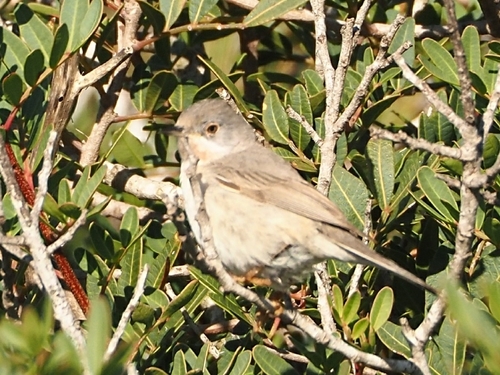
Eastern Subalpine Warbler, adult male adult male
Photo: katerinakalogerini · CC BY

Bird 6 of 8

Eastern Subalpine Warbler

Curruca cantillans

How to recognise it

  • Slate-grey above, with brick-pink throat and breast
  • A bold white moustache and a red eye ring
  • A long, dark tail with white outer feathers, cocked and flicked
moustache A stripe on the side of the throat. A Subalpine Warbler male has a white one.

Where and when

UK, NL, DE, DK, NO, SE: rare overshoots, in April and May, and a few in autumn. FR: uncommon in the south. BE, FI, IE: very rare. A bird of Mediterranean scrub that turns up on the east and south coasts.

Call A dry, ticking “tek-tek” like a Stonechat, and a fast, rattling song. Recording: François Grimal · xeno-canto

A pale, pink warbler of the spring overshoots. A male is easy; females and autumn birds are paler and harder.

Don’t confuse with: Common Whitethroat (week 9): a rusty wing panel and a white throat, but no moustache.

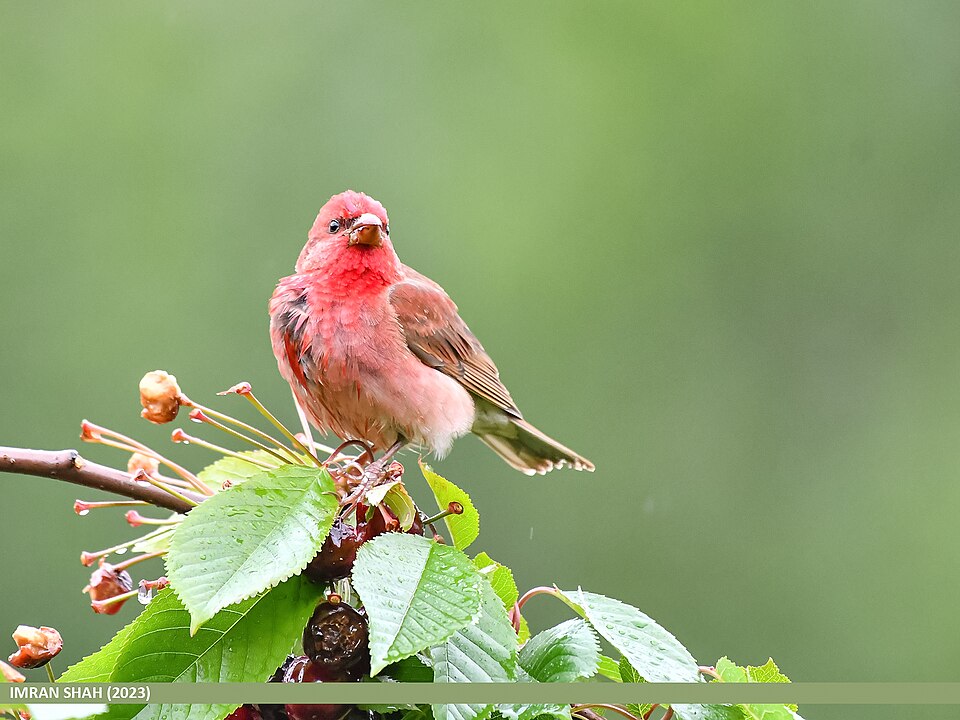
Common Rosefinch, adult male adult male
Photo: Birds of Gilgit-Baltistan · CC BY-SA

Bird 7 of 8

Common Rosefinch

Carpodacus erythrinus

How to recognise it

  • A bright raspberry-red head, breast and rump on a brown back
  • A stout, short bill and a plain, round head
  • In autumn, most birds are streaked olive-brown with a big, dark eye

Where and when

SE, FI, NO, DE, DK, NL: uncommon to common breeders in the east and north, from May. UK, BE, FR, IE: rare in spring and in autumn falls. A bird that is spreading west.

Sound A loud, whistled, rising “pleased to meet you!”, and a clear “too-ee” call. Recording: Peter Boesman · xeno-canto

A male in spring is a spectacular red bird. In autumn, the plain, big-eyed young birds in a fall are harder to find.

Don’t confuse with: House Sparrow (beginners): no red, a grey crown and a black bib.

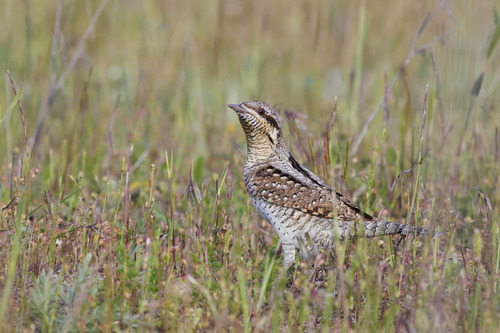
Eurasian Wryneck, adult adult
Photo: mikhail_golomysov · CC BY

Bird 8 of 8

Eurasian Wryneck

Jynx torquilla

How to recognise it

  • A bark-patterned grey-brown plumage, like a nightjar's, with a dark central stripe
  • A woodpecker that does not climb: it sits on the ground, eating ants
  • Twists its head round like a snake, when disturbed

Where and when

SE, FI, NO, DE, FR, DK: uncommon to fairly common breeders, from April. NL, BE, UK: rare in spring and in autumn falls (August to September). IE: very rare. A migrant to Africa.

Sound A repeated series of piercing, nasal “quee-quee-quee-quee”, like a small falcon. Recording: Joost van Bruggen · xeno-canto

A bird to find by luck after an autumn east wind: on the ground, in a bramble hedge, in the early morning.

Don’t confuse with: Great Spotted Woodpecker (beginners): black and white, and climbs on trees.

Quiz

12 questions, with birds you have to repeat mixed in. Your answers decide when each bird comes back.

Out and about this week

Watch the weather forecast for south winds in April and May and check a coastal park or scrub the morning after. In September, with east winds and low cloud, go to the nearest coast at dawn and see what has arrived overnight.